
 KOR
KOR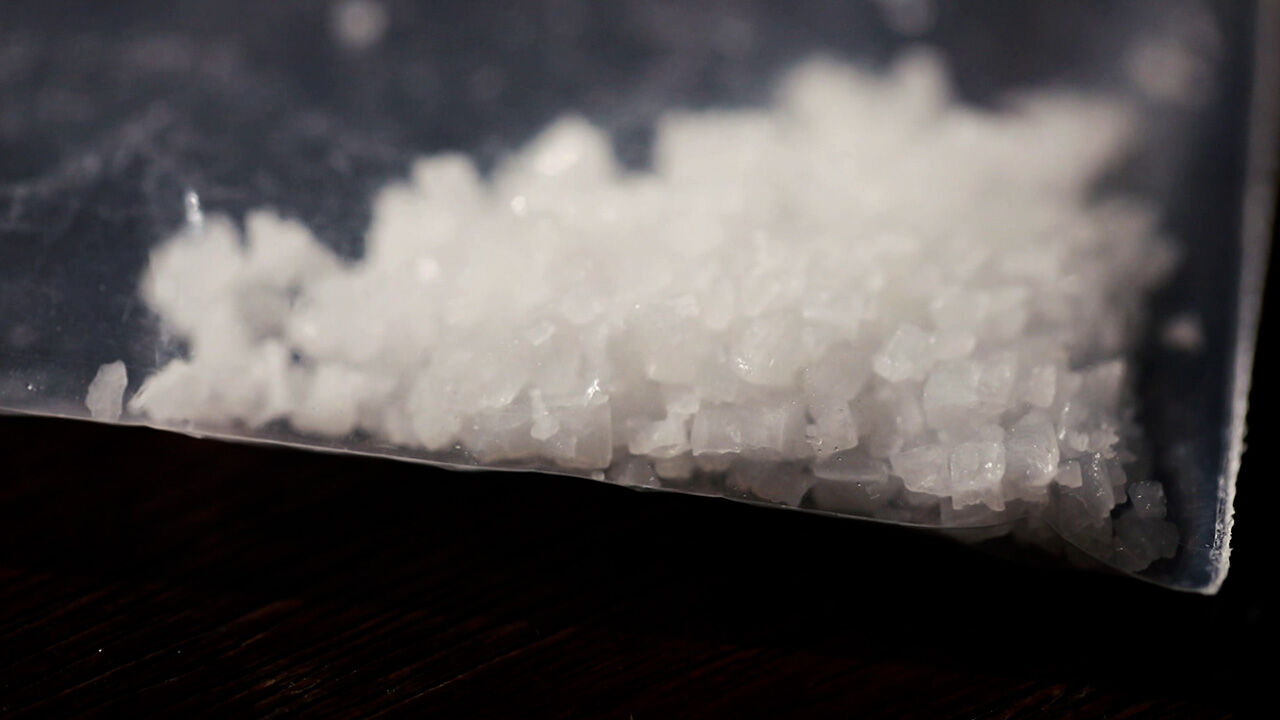
'Post-Release High' Right After Leaving Prison
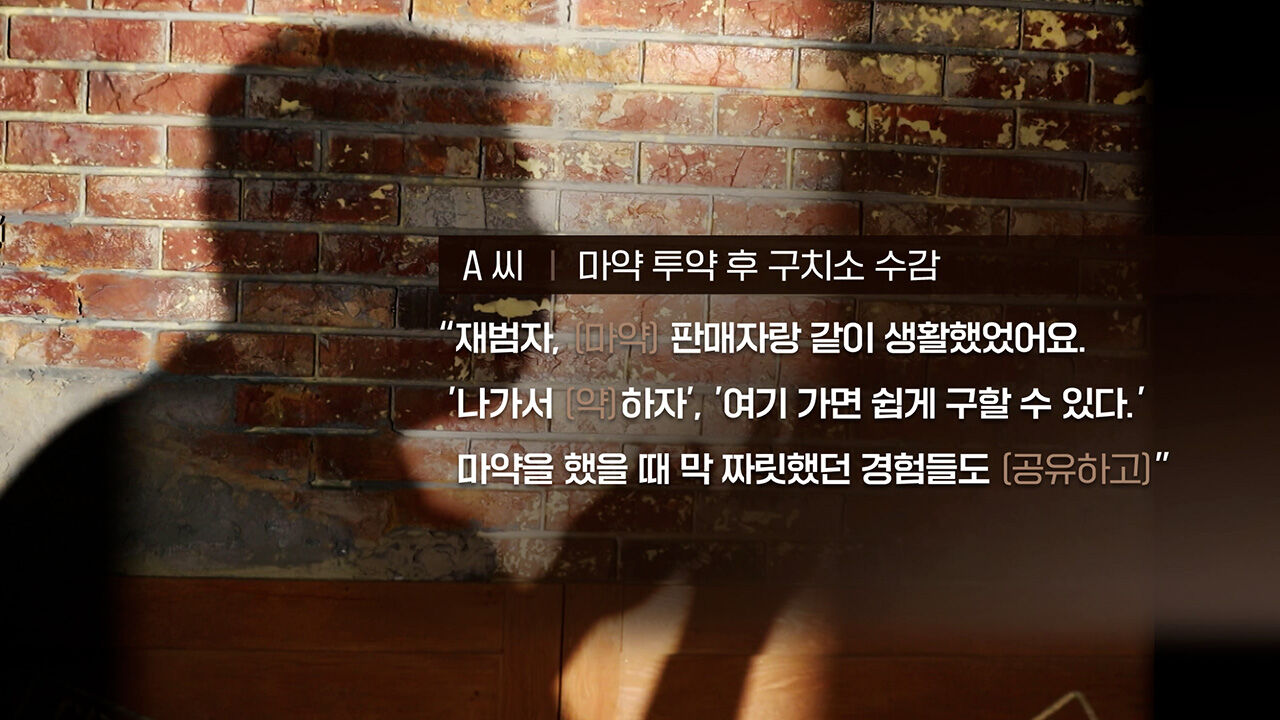
Mr. A / Incarcerated in detention center after using drugs
"They would openly share information, talking about doing something (drugs) after getting out or where to go to get it easily."
Some boasted about how taking drugs felt as if sharing heroic tales, and many touched drugs again immediately upon release.
Mr. A / Incarcerated in detention center after using drugs
"In fact, a case I saw inside was someone receiving information a week before being released, purchasing drugs based on that information once out, and ending up back inside just one week after leaving."
Internal guidelines exist to separately house first-time and repeat offenders, as well as drug users and dealers. In reality, however, correctional facilities are severely overcrowded, so living together is not uncommon. This is why taking a so-called 'post-release high' as a celebration right after release is possible. Can a structure where people enter intending to quit drugs but instead learn about new supply sources really break the chain of drug abuse?
'Release from Prison is the End; Discharge from Hospital is the End'
What is the fundamental reason why a 'post-release high' is possible? It is because a management gap occurs after release. Unless individuals voluntarily enter a rehabilitation facility, they are left neglected with the disease of drug addiction. Even if they take drugs after release, as long as they are not caught by the judicial system, it seems fine to them. Prison ends with release, and entering a hospital ends with discharge. Under the current system, because linkage among criminal punishment, imprisonment, hospital rehabilitation, and the Together One Step Centers operated by the Ministry of Food and Drug Safety is insufficient, individuals inevitably fall into drug temptations in the gaps. Although Together One Step Centers, where education is conducted by the Ministry of Justice and the Ministry of Food and Drug Safety, are preparing to link such management, it remains largely insufficient. While punishment and crackdowns are important, shifting the focus of drug management toward treatment and rehabilitation to fill the care gap appears necessary.
Zero Government-Operated Addiction Rehabilitation Facilities?
Quitting drugs alone is not enough to return to society. Individuals must plan their futures again and gain new employment through vocational rehabilitation so they do not feel the need to resort to drugs. This is why residential rehabilitation facilities that facilitate social reintegration are necessary. Facilities that serve as a bridge to recovery, connecting individuals back to society after criminal punishment, are needed. While people do not go to prison for alcohol addiction, they do for drug addiction. Yet, while there are four addiction rehabilitation centers for alcoholics operated by the Ministry of Health and Welfare, there is not a single government-operated 'addiction rehabilitation center' where former drug addicts can reside and focus solely on rehabilitation. Incheon DARC, introduced on the 8 O'Clock News, is a private communal living community, and such private drug rehab facilities remain only in two locations nationwide: Incheon and Gimhae. Under the Educational Environment Protection Act, 'addiction rehabilitation facilities' cannot be established within 200m of a school, making it difficult to build additional facilities in communities. Due to these circumstances, Incheon DARC is registered and operated as a 'communal living facility' and thus cannot receive subsidies as an addiction rehabilitation facility.
How About Overseas?
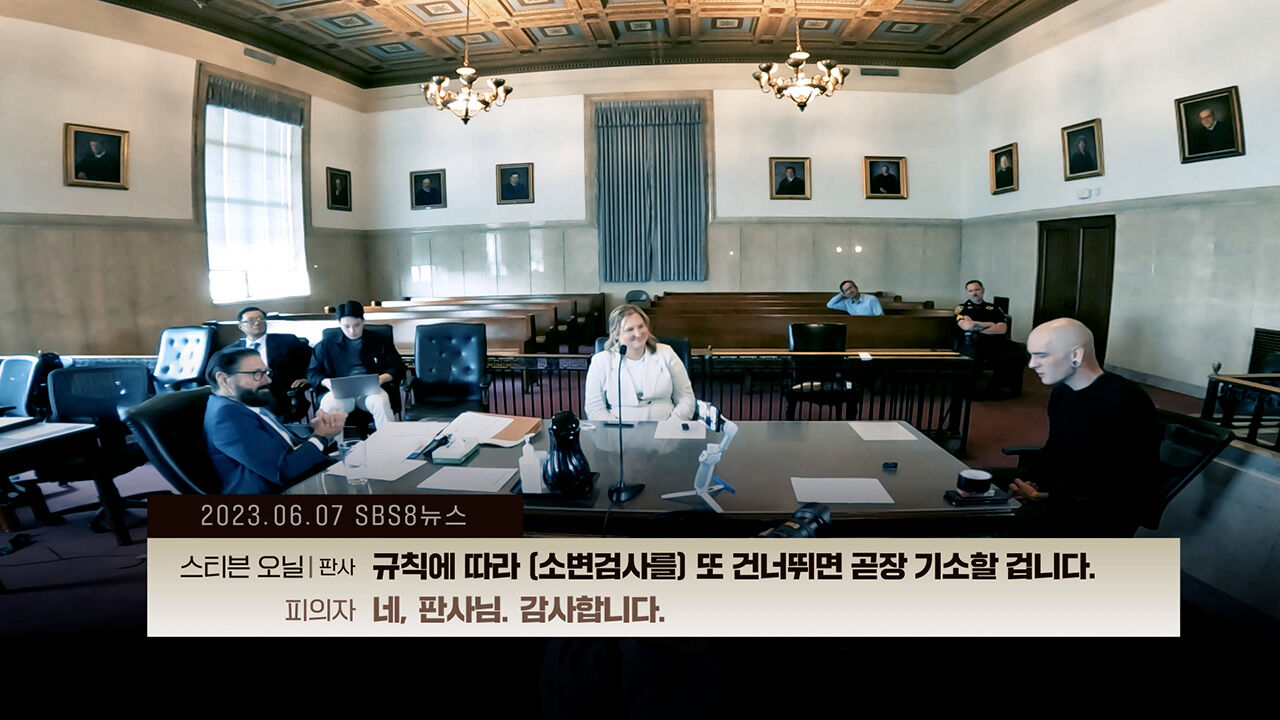
Steven O'Neill / Judge
"If you skip another urine test against the rules, I will prosecute you immediately."
Defendant
"Yes, Your Honor. Thank you."
The results were astonishing. The reoffending rate for people who completed the program was about three times lower. Australia saw similar results. The reoffending rate between those who completed treatment and those who dropped out differed by more than double.
"The Opposite of Addiction is Connection"
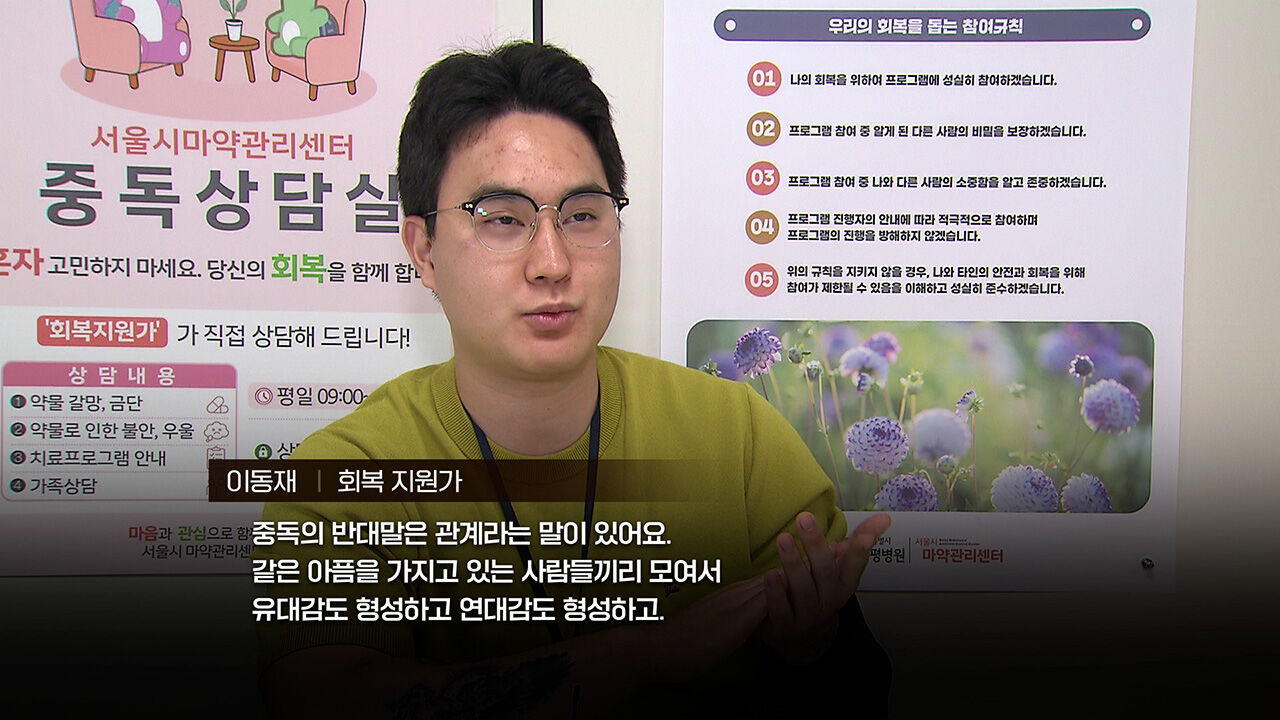
Lee Dong-jae / Recovery Specialist
"As I recovered, I filled my life with healthy, new relationships. I believe the opposite of addiction is connection."
Prisons Must Become the Starting Point for Rehabilitation, Not a Place to Learn 'Post-Release Highs'
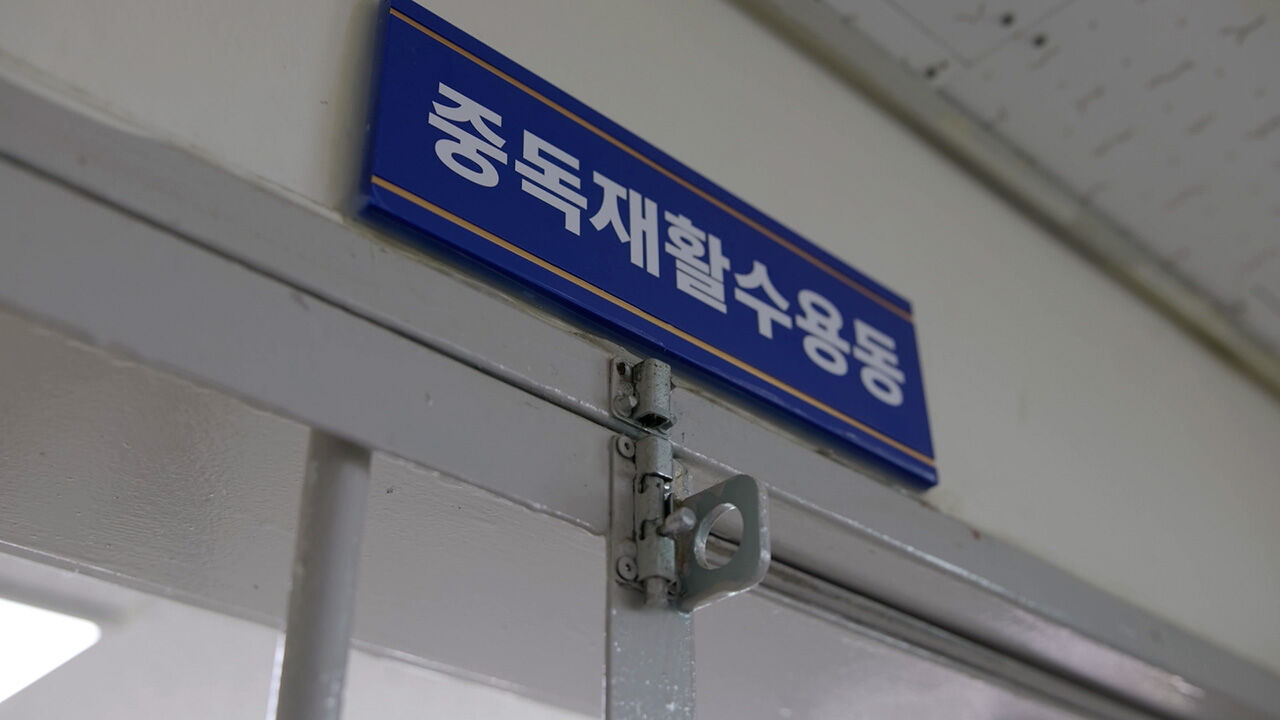
Cheongju Women's Correctional Institution runs a program called the 'Recovery Connection Program.' Observing the classes firsthand, I saw prisoners learning how to control drug urges, participating in group counseling, and planning their futures.
Ms. B / Participant in the Recovery Connection Program
"Because it approached things in a way that asked me to search for myself and my inner self, it was actually extremely difficult in the beginning."
Ms. B now has a dream of helping others who fell into drug addiction just like her.
Ms. B / Participant in the Recovery Connection Program
"Honestly, the end of drug problems is prison, a psychiatric hospital, or death. I thought to myself that I had to live. I didn't want to die."
Inmates participating in the Recovery Connection Program also live separately in a dedicated 'Recovery Connection Ward.' Living together, they rely on and encourage one another. The effectiveness of the Recovery Connection Program was clear. Those who completed the program showed a 27% decrease in substance dependence and a 38% increase in their willingness to quit drugs. In contrast, general inmates showed an increase in substance dependence and a decrease in their willingness to quit drugs.
Jeon Byeong-mi / Correctional Officer, Drug Offender Rehabilitation Division
"In prison, they just stay there doing nothing. Without any stimulus, there's no way for them to think, 'Ah, I need to recover, I need to break free from this addiction.'"
The problem is that too few people can take this program. The national target for this year is 230 people—only 8% of the drug-using offenders incarcerated in prisons last year.
Jeon Byeong-mi / Correctional Officer, Drug Offender Rehabilitation Division
"The Recovery Connection Program must be maintained and expanded to more prisons. What I hope for is that if every prison has a Drug Offender Rehabilitation Division, they will all run the Recovery Connection Program."
It is time for a transformation so that prisons become the starting point for addiction rehabilitation rather than places to learn about 'post-release highs.' The government will continue to strictly crack down on drugs, which is absolutely necessary. However, one thing became clear to me while reporting: the fight against drugs does not end with apprehension; it only truly ends when it leads to recovery. Isn't it time for South Korea to also ask not just "How many were caught?" but "How many returned to a normal life?"
※ Please note: This article was translated by AI and may contain errors.





 Video News
 Video News