
 KOR
KOR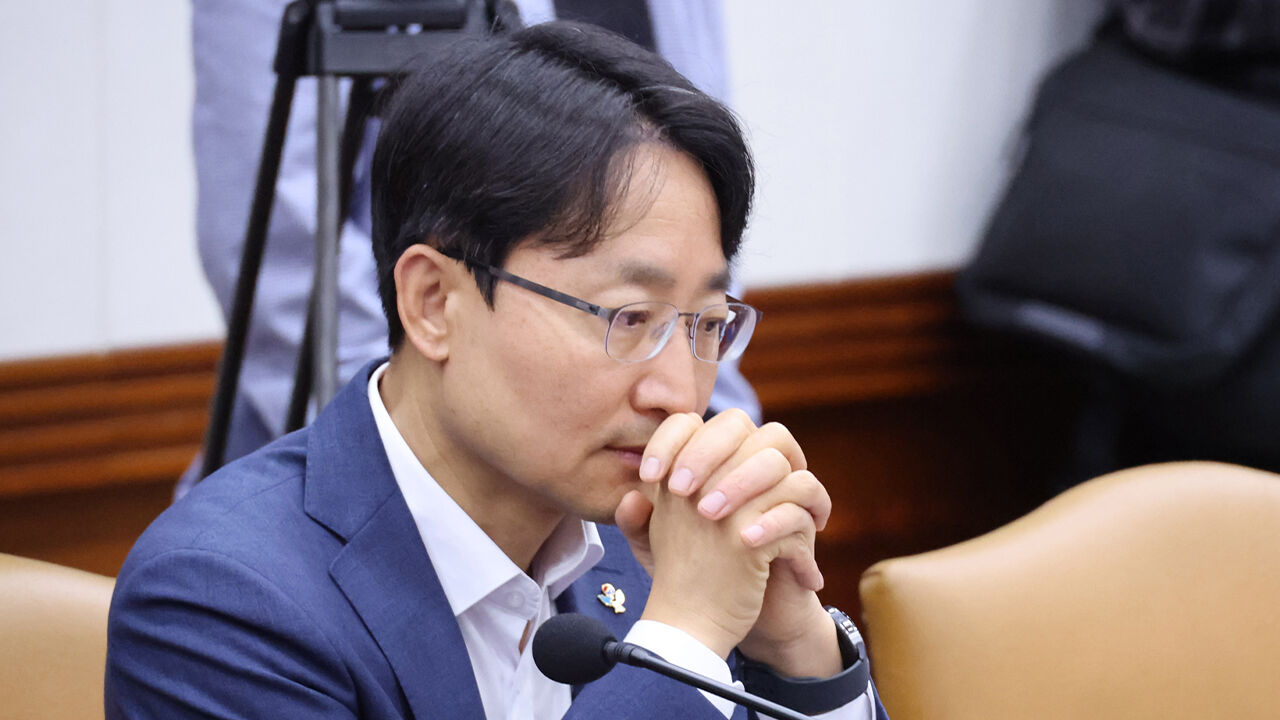
▲ Lim Kwang-hyun, Commissioner of the National Tax Service
Ahead of the government's announcement on real estate tax code revisions, National Tax Service Commissioner Lim Kwang-hyun pointed out that the long-term holding special deduction needs to be overhauled.
Today (July 26), Commissioner Lim posted on X (formerly Twitter) stating, "The current long-term holding deduction allows up to an 80% deduction on taxable capital gains without any limit for those who have owned and resided in a property for 10 years, making it excessively regressive." He added, "The structure provides larger deductions for more expensive homes and, consequently, for larger capital gains."
The long-term holding special deduction is a system intended to reduce the capital gains tax burden on properties held for a long time. It provides single-home households with transaction prices exceeding 1.2 billion won with up to a 40% deduction each for the holding period and residency period, offering a combined maximum deduction of 80%.
Commissioner Lim pointed out problems in the system by releasing an analysis of capital gains tax reporting statistics for houses sold in 2024.
He pointed out, "Across the country, 24,816 single-home households received 5.032 trillion won in long-term holding deductions. Among them, Seoul accounted for 4.5 trillion won, meaning 90% of the deduction benefits were concentrated in Seoul."
He continued, "Out of the 4.5 trillion won in Seoul, the three Gangnam districts and Yongsan District accounted for 3.5 trillion won, representing 78.6%." He added, "In contrast, districts such as Dobong, Geumcheon, Jungnang, Nowon, Dongdaemun, Gwanak, Eunpyeong, and Guro received almost no long-term holding deduction benefits."
Looking at the deduction statistics table, while Gangnam District received 2,873 cases totaling 1.5459 trillion won (540 million won per case) in deductions, Dobong District had only 2 cases totaling 20 million won (10 million won per case).
An analysis of the top 100 properties by long-term holding deduction amount showed that 99 of them were concentrated in Seoul.
Among them, 87 were in Gangnam District (68) and Seocho District (19).
The average deduction amount reached 4.1 billion won in Gangnam District and 3.3 billion won in Seocho District.
Commissioner Lim criticized, "There was even a case where someone sold a single house in Gangnam District and received a long-term holding deduction exceeding 20 billion won. This is truly the peak of regressivity."
He noted, "The fundamental principle of taxation is progressivity, where individuals with higher incomes bear a larger tax burden. However, the long-term holding deduction has created regressivity that fully guarantees unearned income," pointing out that "the system is encouraging the ownership of a 'single prized asset'."
He continued, "17 years have passed since the single-home household long-term holding deduction rate was raised to a maximum of 80% without any limit in 2009." He emphasized, "While it is desirable to maintain consistency in tax codes as much as possible, fine-tuning them when unexpected side effects arise is naturally the government's duty."
He concluded his post by asking, "Tax benefits must be normalized fairly so that everyone can understand. While protecting the long-term holding deduction for the middle class, what do you think about providing unlimited long-term holding deductions for ultra-luxury homes like this?"
(Photo: Yonhap News)
※ Please note: This article was translated by AI and may contain errors.



 Video News


 Video News