KOR
KOR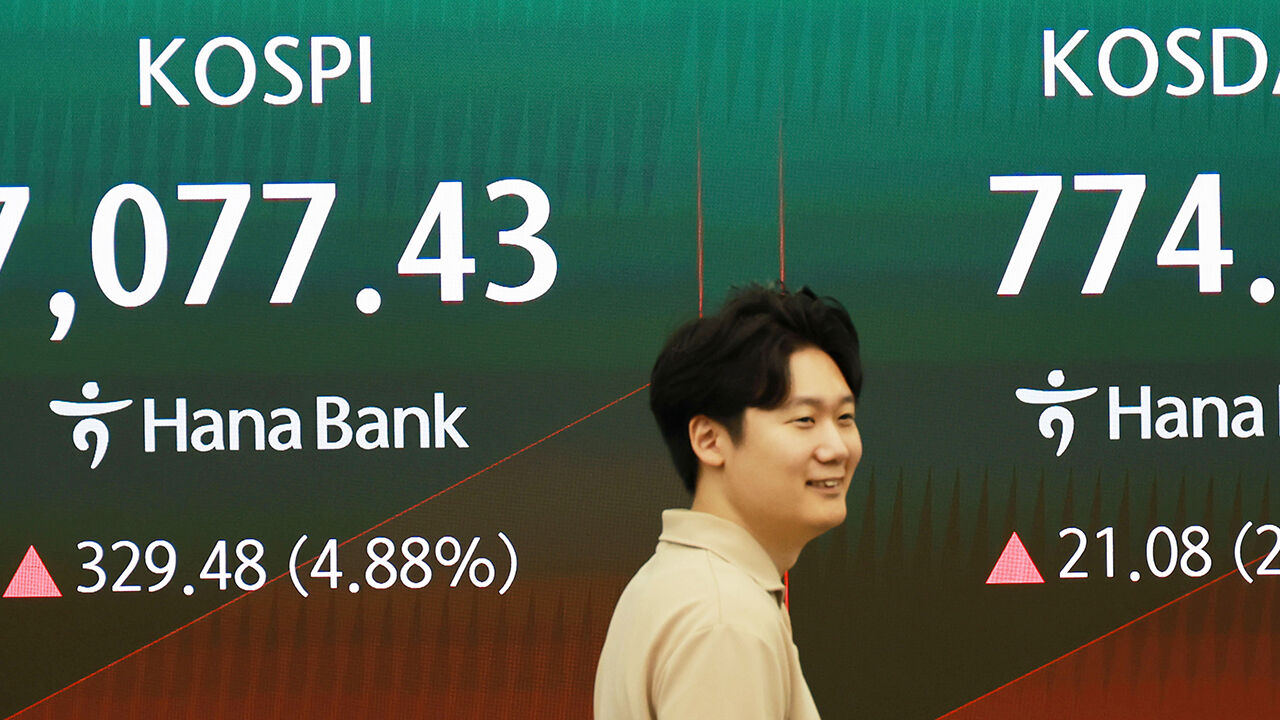
▲ The dealing room of the Hana Bank headquarters in Jung-gu, Seoul, on the 22nd.
As the Kospi surged today (the 22nd), a day ahead of U.S. tech giant Alphabet's earnings release, expectations are growing that the global semiconductor correction is reaching its final stage.
As of 10:05 a.m. today, the Kospi is up 5.41% from the previous session at 7,113.23.
The index opened 4.51% higher at 7,052.09, reclaiming the "7,000-point" mark for the first time in four trading sessions.
Right after the market opened, it soared 6.01% to 7,153.42, triggering a buy sidecar that suspended program buy quotes for five minutes.
As a result, two-way sidecars have been triggered on the main bourse for three consecutive days.
On the day before yesterday, the index plummeted by more than 5% during the session, triggering a sell sidecar, but for the past two days, buy sidecars have been triggered consecutively.
Foreigners are leading the rebound.
As of this hour, foreign investors are the sole net buyers on the Kospi, net purchasing 1.6031 trillion won and strongly driving up the index.
On the other hand, retail and institutional investors are net sellers, offloading 1.04 trillion won and 565.1 billion won, respectively.
Among institutions, net selling by financial investment (387 billion won) stands out, which appears to be driven by the liquidation of ETF-related profit-taking shares.
Entering this week, foreign investors have net purchased a total of 2.2017 trillion won on the main bourse, turning to a net buyer for the first time in 12 weeks.
Samsung Electronics and SK Hynix are surging by 5.50% and 8.12%, respectively.
Stock markets in major Asian countries also rose together for a change.
As of this hour, Japan's Nikkei 225 index rose 1.60%, and Taiwan's Taiex gained 2.38%.
The atmosphere from Wall Street overnight, where the three major stock indices rose together and major semiconductor stocks posted double-digit gains, appears to have spilled over into Asian stock markets, including South Korea.
The Dow Jones Industrial Average rose 0.74%, the S&P 500 index gained 0.89%, and the tech-heavy Nasdaq composite index jumped 1.29%.
In particular, major memory chipmakers such as Micron (+12.17%), SanDisk (+14.27%), Western Digital (+12.51%), and Seagate (+11.14%) surged, driving the Philadelphia Semiconductor Index up by 5.21%
Although international oil prices are surging due to escalating military clashes between the U.S. and Iran, the market is largely unaffected, betting on a recurrence of U.S. President Donald Trump's "taco" pattern.
A pattern of funds moving from defensive consumer staples and software companies, which had shown relative strength recently, into semiconductors was also observed.
Since the U.S. and Iran signed a ceasefire MOU in mid-last month, there has been a rotation from previously strong AI industry-related stocks to other sectors, but on this day, a "reverse rotation" occurred in the opposite direction.
News that NVIDIA's next-generation AI server platform, Vera Rubin, has entered mass production and is already being supplied to major clients significantly alleviated concerns that AI infrastructure investment would contract.
Diagnoses that Moonshot AI's latest model "Kimi K3," a Chinese AI startup, requires massive amounts of memory also lent weight to the outlook that the semiconductor supply shortage, which was the main driving force behind the surge in semiconductor stocks, will be prolonged further.
Global investment banks such as UBS and Morgan Stanley have also successively diagnosed that the AI semiconductor correction is nearing its end, helping to restore investment sentiment.
UBS analyzed that the recent drop in AI semiconductors was not due to weakening fundamentals, but rather a supply-demand shock caused by massive position-cutting by hedge funds, and that additional selling pressure has been largely resolved. Meanwhile, Morgan Stanley maintained its target of 9,000, stating that the Kospi is approaching a bottom.
Domestic experts generally expect that the semiconductor rebound is likely to gather full momentum starting from the end of this month.
Because the Kospi 200 Volatility Index (VKOSPI) remains high at 82.97 as of today, and single-stock leverage products still account for a large portion of total Kospi trading value, the possibility of intraday volatility expansion remains.
However, given that valuation appeal has become very high after recording financial crisis-level declines over the past month and that signs of improving foreign supply and demand are actually visible, experts diagnose that this is not a situation to worry about further declines.
At the same time, some point out that option supply and demand—one of the backgrounds for the overnight surge in U.S. semiconductor stocks—has a strong short-term trading nature and must be taken into account.
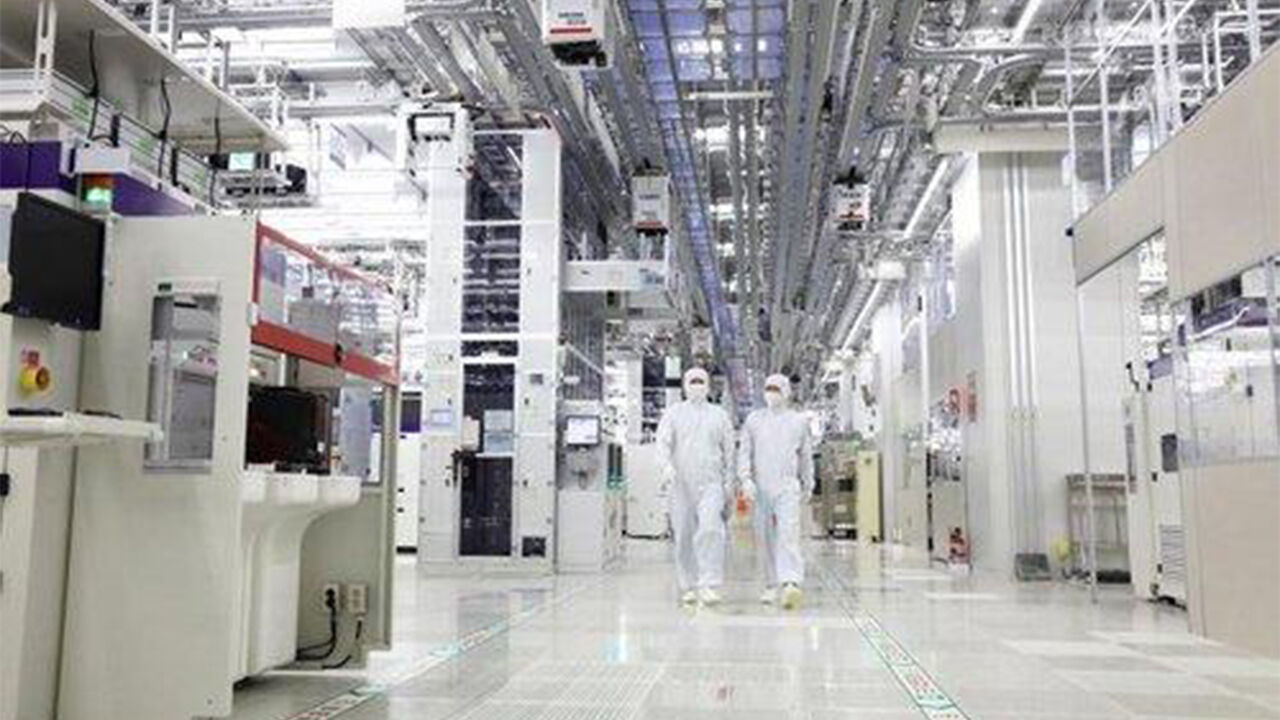
(Photo provided by Samsung Electronics, Yonhap News)
※ Please note: This article was translated by AI and may contain errors.




 Video News