
 KOR
KOR
However, there are several reasons why I became interested in Chitose, where the Rapidus factory is located. First, it shares similarities with South Korea's Mega Project. Instead of "external blood transfusions" by attracting foreign companies like TSMC or Micron, it is a "self-cultivation" hub to foster Japanese enterprises. It is also similar in that there was significant government intervention, and the hub was established in a regional area rather than the metropolitan area. It is also worth noting in terms of the "speed battle" emphasized by President Lee Jae-myung regarding South Korea's Mega Project. Above all, I believe Japan's true intention and real strategic bet lies in Chitose's Rapidus. In order to regain its past status as a leader in various advanced technologies, including semiconductors, a technological gamble is underway here to leap directly from 40-nanometer (nm)—the last node Japan mass-produced—to 2-nm. "Rapidus" means "rapid" in Latin, and true to its name, it has shown record-breaking speed so far. Today, let's look into what goals Japan hopes to achieve through Rapidus, its likelihood of success, and what lessons we can draw from it.
Is Rapidus Japan's Real Strategic Bet?
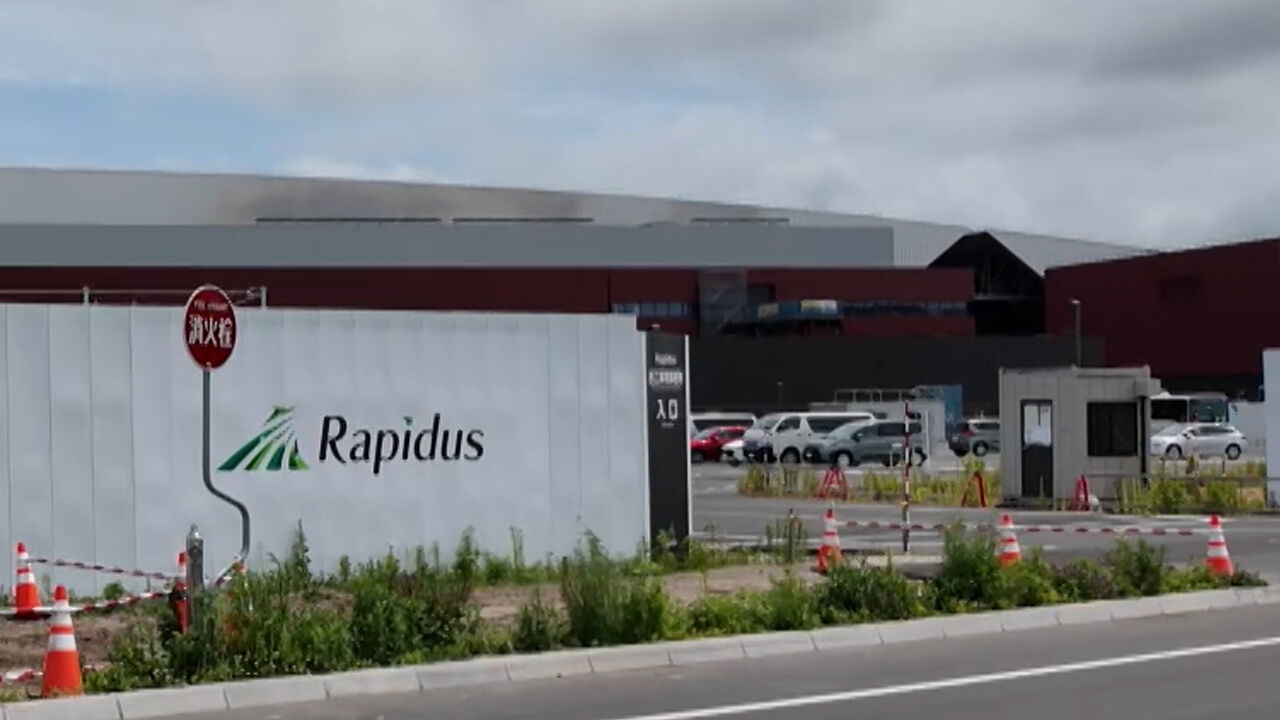
With this as a turning point, the Japanese government made semiconductors a national priority and pursued a dual strategy of "external blood transfusions" and "self-cultivation" simultaneously. In this light, it can be seen as having started for somewhat defensive reasons compared to South Korea's Mega Project. While the Mega Project began with the aggressive goal of expanding global market share, Rapidus's primary goal was to protect domestic industries. This is even clearer when looking at the actual shareholding structure. There are currently 32 private investors, including many major Japanese corporations that need semiconductors, such as Toyota, NTT, and Sony. They have essentially established a domestic ecosystem that can immediately purchase the chips once mass production succeeds. This is also why Rapidus has been able to speed ahead without hesitation.
Kiyoshi Hashimoto / Head of Public Relations, Rapidus
"There are semiconductor companies, automotive companies, and companies like NTT that want to pioneer new technologies in the telecommunications field. The investing companies are likely thinking about various business synergies in the future."
Will Rapidus Succeed?
The Japanese Government's Full Support, Even Amending Laws

Sanae Takaichi / Prime Minister of Japan (Speaking last month during a meeting with Rapidus executives)
"I will make sure to promote this actively to other countries, including the UK and Italy, focusing on our allies."
This means the government itself will pitch semiconductors, much like it does for nuclear power plants or the defense industry. Since Japan is mobilizing its full economic and diplomatic power, there is an expectation that it will not let the venture fail.
Securing Professional Talent
Kiyoshi Hashimoto / Head of Public Relations, Rapidus
"We are proceeding with technology sharing from IBM. We sent 160 engineers to the IBM Research Center in New York to conduct research together. More than 100 of them have already returned."
Efforts to foster talent at the regional level have also begun.
Shuichi Mori / Director of the Next-Generation Semiconductor Hub Promotion Office, Chitose City
"We are cooperating with local educational institutions with the goal of training around 600 people annually, which is the estimated number of semiconductor-related employees and personnel working for related companies needed each year."
I visited the Chitose Institute of Science and Technology, which is located near the Rapidus factory, and the students there were also filled with anticipation.
Keita Shima / Freshman, Chitose Institute of Science and Technology
"Rapidus is a fairly big career option at our school. Right now, there aren't that many semiconductor classes, but I heard a semiconductor-related department will be established starting next year."
A Market Preempted by TSMC and Samsung: How to Secure Customers?
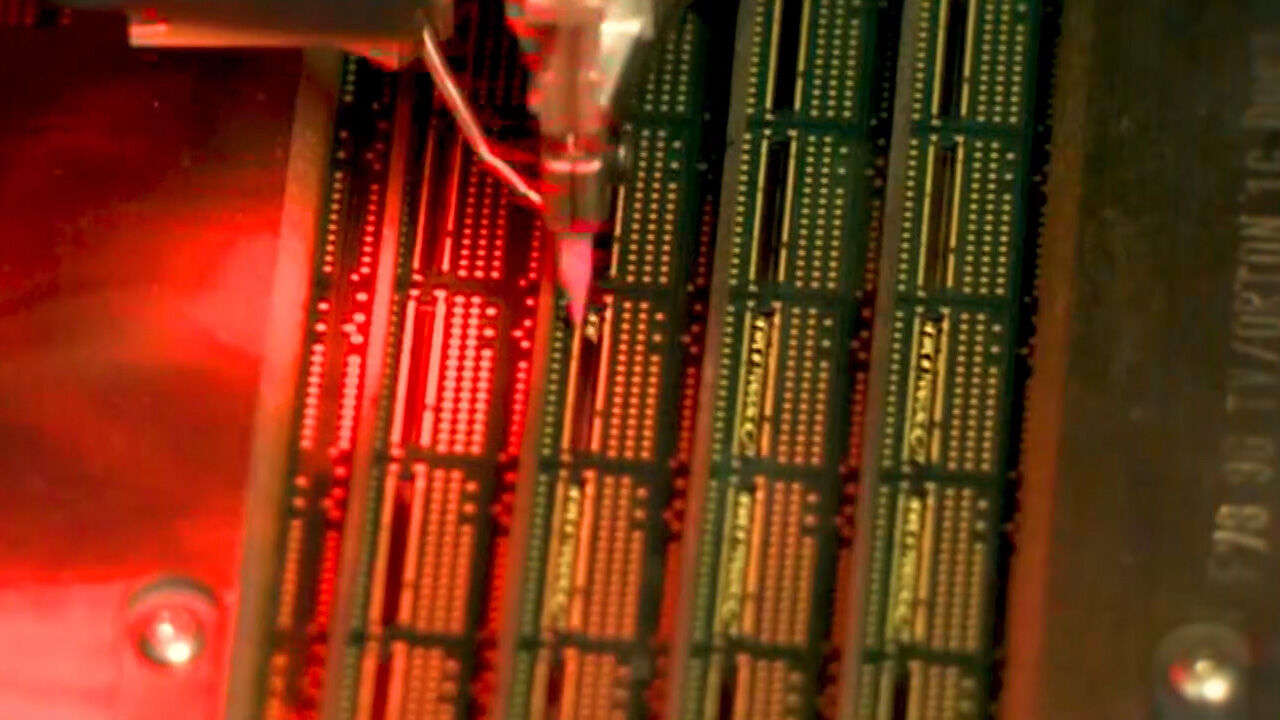
Whether they can secure enough customers in a market already dominated by TSMC and Samsung is also a crucial point. Rapidus suggested that TSMC would find it difficult to handle all of the exponentially growing demand, indicating that they plan to target that niche.
Kiyoshi Hashimoto / Head of Public Relations, Rapidus
"For the next three years or so, looking at the supply-demand balance, demand will be very strong. There may be cases where customers want to order advanced semiconductors from TSMC, but orders cannot be placed immediately due to business reasons."
This means their goal is not to immediately become number one in the world. The important thing is for Japan to acquire advanced semiconductor technology, and Rapidus calculates that customers will naturally follow once that happens. Whether Rapidus will ultimately succeed remains to be seen until the mass production stage next year. What is more noteworthy is the process of how they got here. The fact that the Japanese government, starting from former Prime Minister Abe and Prime Minister Kishida, drew a big picture including the semiconductor industry and has consistently supported it even as prime ministers changed, is something South Korea, which has started its own Mega Project, could learn from.
Park Sang-joon / Economics Professor, Waseda University
"Since it takes at least 10 or 20 years to see the results, rather than the government trying to quickly produce outcomes or make announcements just to show off, improving step-by-step is also an achievement in itself."
※ Please note: This article was translated by AI and may contain errors.


 Video News

 Video News

 Video News