
 KOR
KOR
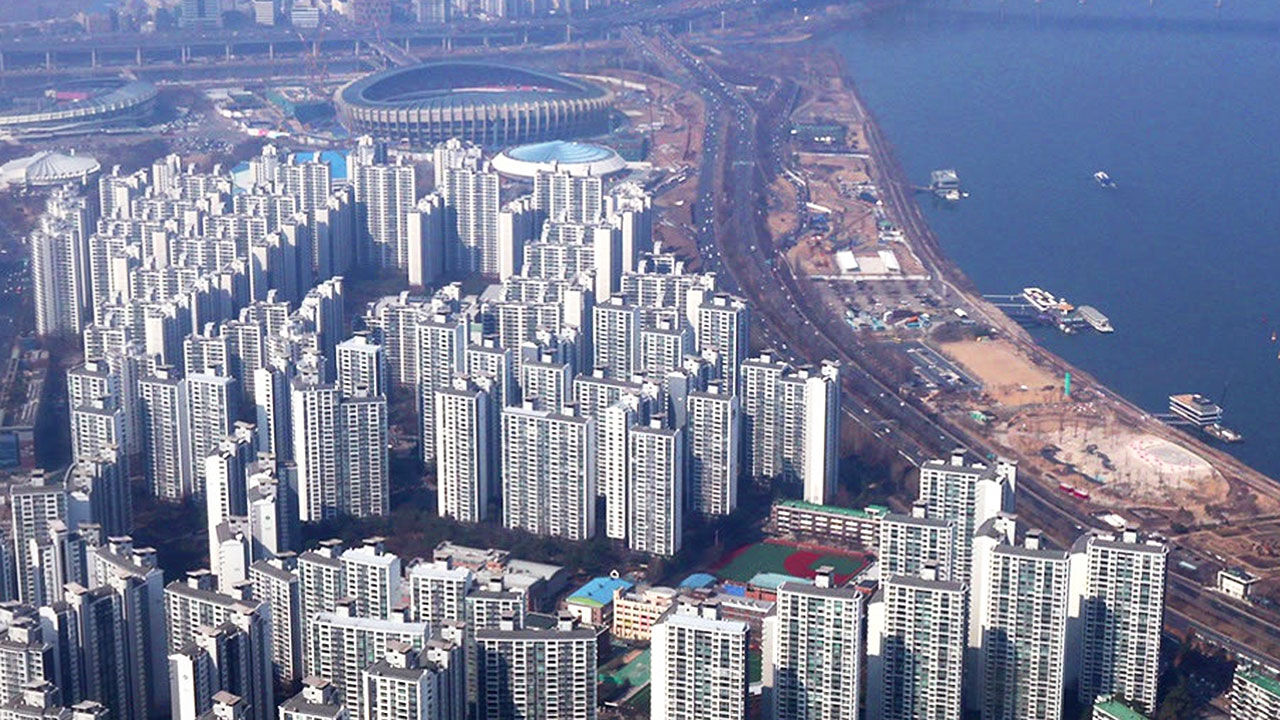
The weekly growth rate of apartment sale prices in Seoul maintained its previous level, continuing a steady upward trend.
The areas surrounding the semiconductor belt in southern Gyeonggi Province continued to show strength.
According to the weekly apartment price trend report for the second week of July (as of July 13) released by the Korea Real Estate Board today (July 16), the average sale price of apartments in Seoul rose by 0.30%.
The rate of increase remained the same as the previous week.
The Korea Real Estate Board stated, "While a wait-and-see approach among buyers and sellers is appearing in some areas, price increases were recorded in Seoul overall, driven by high-preference, high-demand areas such as those near subway stations, large-scale complexes, and areas undergoing reconstruction."
Seongbuk-gu (0.49%) showed a high growth rate, centered on large complexes in Jeongneung-dong and Hawolgok-dong, while the upward trend continued in mid-to-lower tier areas, including Guro-gu (0.44%), Jung-gu (0.40%), Gangseo-gu (0.38%), Jungnang-gu (0.37%), and Nowon-gu (0.37%).
In the three districts of Gangnam, the growth rates showed little change from the previous week: Seocho-gu (0.11% to 0.11%), Gangnam-gu (0.18% to 0.16%), and Songpa-gu (0.34% to 0.32%).
In Gyeonggi Province (0.21%), Dongtan-gu in Hwaseong (0.73%) saw its growth rate slow by 0.56 percentage points compared to the previous week, but it still maintains a high level of growth.
Semiconductor-adjacent areas such as Yeongtong-gu in Suwon (0.64%) and Giheung-gu in Yongin (0.59%), as well as Gwangmyeong (0.59%), also recorded high growth rates.
Incheon rose by 0.03%, and the Seoul metropolitan area as a whole saw an increase of 0.21%.
Outside the metropolitan area (0.01%), the four major metropolitan cities remained flat (0.00%), while Sejong (0.02%), Gwangju and South Jeolla Province (0.03%), and the seven provinces (0.01%) saw increases.
The average national sale price growth rate was recorded at 0.11%.
Nationwide, apartment jeonse (long-term deposit rental) prices rose by 0.11% compared to the previous week.
In Seoul (0.31% to 0.28%), the growth rate narrowed slightly, but prices rose overall as rental demand continued, particularly in areas with good living conditions, such as those near subway stations and school districts, leading to new contracts at higher prices.
Seongbuk-gu (0.49%) saw a high jeonse growth rate, centered on large complexes in Gireum-dong and Donam-dong, while Gangdong-gu (0.44%), Nowon-gu (0.41%), Songpa-gu (0.41%), Dobong-gu (0.40%), Geumcheon-gu (0.40%), and Gangbuk-gu (0.37%) also saw significant increases in jeonse prices.
In Gyeonggi Province (0.16%), high jeonse growth rates were recorded in Gwangmyeong (0.53%), Dongtan-gu in Hwaseong (0.50%), and Guri (0.35%).
Incheon rose by 0.07%, and the Seoul metropolitan area as a whole increased by 0.19%.
Jeonse prices outside the metropolitan area rose by an average of 0.04%.
The four major metropolitan cities rose by 0.05%, Sejong by 0.04%, and the seven provinces by 0.03%, while Gwangju and South Jeolla Province (0.00%) remained flat.
※ Please note: This article was translated by AI and may contain errors.
Apartment Prices in Southern Gyeonggi Semiconductor Belt Remain Strong; Dongtan Rises 0.73%

Copyright Ⓒ SBS & SBSi. All rights reserved.
Copying, redistribution, and unauthorized use in AI training are strictly prohibited.
Copying, redistribution, and unauthorized use in AI training are strictly prohibited.

Trending Now
-
 Video News
Young People Ditching Smartphones? The Return of the Flip Phone
-
Body Believed to Be Missing Man in His 70s Found After Falling During Walk
-
Video News
Identity of 24-Year-Old 'Naked Murderer' Jung Jae-hwan Revealed After Brutal Killing of Friend
-
"I Killed Your Mother": Father's Phone Call Leads to Heavy Sentence Request
-
Video News
Teacher Horrified to Find Sticky Substance in Belongings: "Identity Kept Secret," Victim Outraged
 Video News

 Video News

 Video News