
 KOR
KOR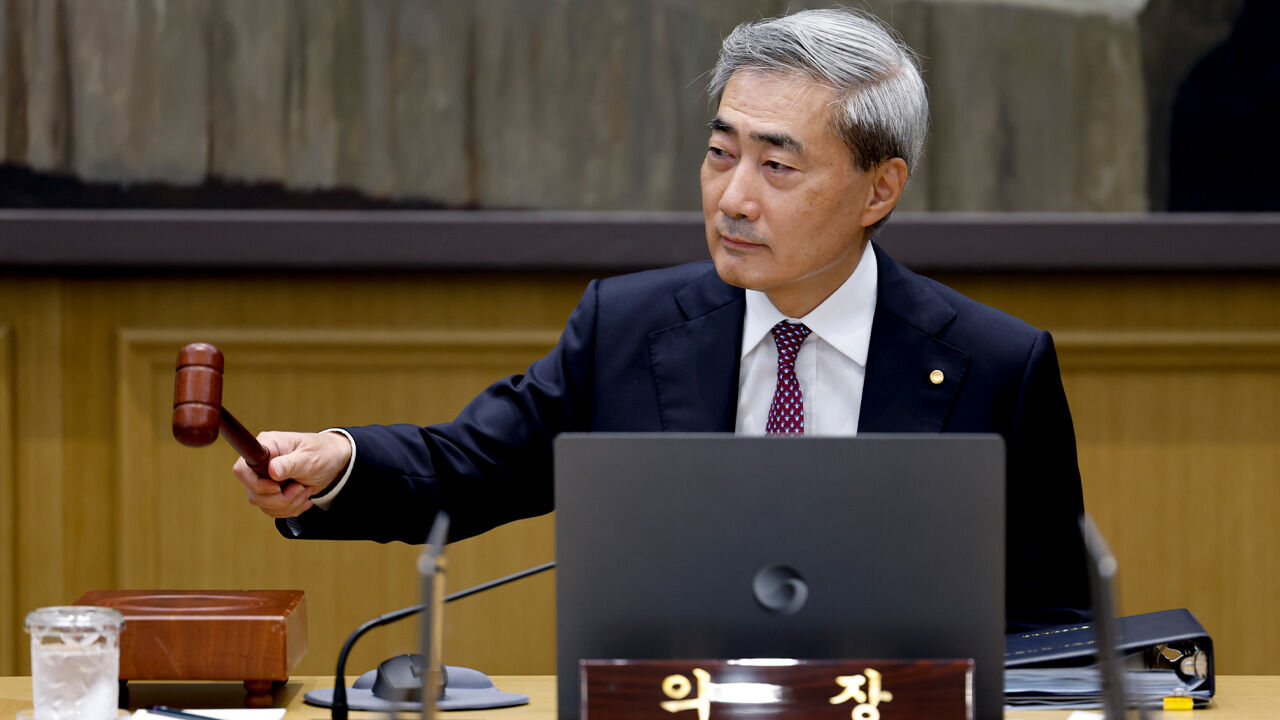
▲ Bank of Korea Governor Shin Hyun-song strikes the gavel during the Monetary Policy Committee meeting held at the Bank of Korea in Jung-gu, Seoul, on July 16.
The Monetary Policy Committee of the Bank of Korea (BOK) raised the base rate by 0.25 percentage points (p) from 2.50% to 2.75% today (July 16) to ensure price stability.
This marks the first monetary tightening decision in three years and six months since January 2023, when the rate was raised from 3.25% to 3.50%.
Previously, the Monetary Policy Committee had focused on stimulating the economy by cutting the base rate four times—in October and November 2024, and in February and May of last year—for a total reduction of 1.00%p.
In particular, last year, monetary easing was inevitable due to overlapping adverse factors, including political uncertainty following the emergency martial law declaration, a downturn in the domestic construction sector, and the shock of U.S. reciprocal tariffs.
Since then, as household debt continued to rise and the won-dollar exchange rate remained high, the committee had kept the base rate on hold for eight consecutive meetings while monitoring internal and external variables.
The committee's shift toward tightening after 14 months of rate freezes is analyzed as a response to growing inflation concerns coupled with a clear rebound in the economy.
Inflationary pressure has intensified due to the prolongation of the Middle East war, which began with U.S. and Israeli airstrikes on Iran in late February of this year.
The Strait of Hormuz, a bottleneck for crude oil supply, was blocked, causing international oil prices (based on Brent crude) to soar from around $72 per barrel just before the war to $126 by the end of April.
Consequently, the consumer price inflation rate gradually rose from 2.0% in January–February of this year to 2.2% in March and 2.6% in April, before recording 3% levels for two consecutive months in May (3.1%) and June (3.2%).
The living necessities price index, which reflects perceived inflation, also continued to climb from 1.8% in February to 2.3% in March, 2.9% in April, 3.3% in May, and 3.4% in June.
The BOK is concerned about the secondary ripple effects of rising oil prices, which could increase not only energy costs but also the prices of other goods in the medium to long term.
On the other hand, real gross domestic product (GDP) growth for this year is expected to improve significantly compared to last year (1.0%) due to strong semiconductor exports.
The real GDP growth rate for the first quarter of this year reached 1.8%, the highest in five years and six months since the third quarter of 2020 (2.3%).
In nominal terms, the economy grew by 10.5%, the highest in 50 years since the first quarter of 1976 (13.0%).
Financial markets analyze that the annual current account surplus this year will likely far exceed the record high of $123.05 billion set last year.
In response, the government projected an economic growth rate of 3.0% for this year on July 14.
This is 0.4%p higher than the BOK's May forecast of 2.6%, and it is considered certain that the BOK will also upwardly adjust its forecast in August.
Household debt and housing prices are also cited as key considerations.
At the end of last month, the balance of household loans at banks increased by 7.6 trillion won from the previous month, marking the largest increase in one year and 10 months since August 2024.
It appears that the surge in housing transactions ahead of the expiration of the grace period for the heavy taxation of capital gains for multi-home owners (May 9) has led to an increase in household loans with a time lag.
Seoul apartment prices have shown a high upward trend of 10–15% on an annualized basis recently, driven by concerns over supply shortages and expectations of further price increases.
Voices calling for monetary tightening to raise the threshold for loans and curb rapidly rising home prices have grown louder.
The won-dollar exchange rate, which reached the 1,560 won range early last month, has recently fallen to the 1,480 won range, partly due to expectations of won conversion of funds raised through SK Hynix's American Depositary Receipts (ADR), but it remains higher than the long-term average.
With this base rate hike, the gap between the policy rates of South Korea and the U.S. (3.50–3.75%) narrows from 1.25%p to 1.00%p.
BOK Governor Shin Hyun-song has repeatedly stated an unusually clear position since May, saying, "It is judged that there is a need to raise the base rate at an appropriate time."
The dot plot reflecting the committee members' base rate outlook for six months after May 28 also shows that 19 out of the 21 total dots are placed at points higher than 2.50%.
This is also in line with the trend of major central banks, such as the European Central Bank (June 11) and the Bank of Japan (June 16), raising their base rates one after another.
As a result, the market believes that the Monetary Policy Committee may raise the base rate by an additional 0.25%p in August or October of this year.
This suggests an expectation of entering a full-scale rate hike cycle.
(Photo: Yonhap News)
※ Please note: This article was translated by AI and may contain errors.


 Video News

 Video News

 Video News