
 KOR
KOR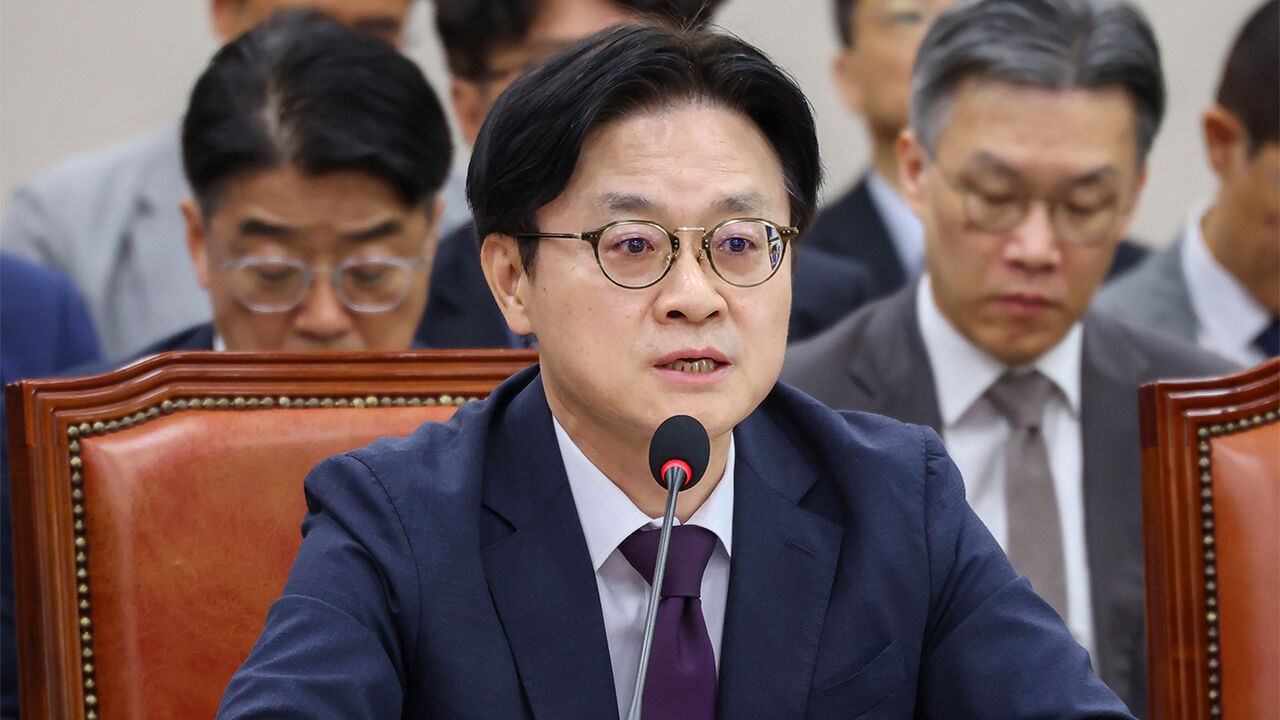
▲ Minister of Trade, Industry and Energy Kim Jeong-gwan
Amid ongoing debates over the distribution of excess profits at major semiconductor companies, sparked by the recent performance bonus issue at Samsung Electronics, Minister of Trade, Industry and Energy Kim Jeong-gwan has made it clear that investments for the future must take priority.
Minister Kim made these remarks while attending a forum titled "Corporate Investment and the Future of Labor in the AI Era," held at the Korea Growth Investment Corp. in Yeouido, Seoul, on the morning of July 15.
In his opening address, Minister Kim posed three questions: "What should companies invest in, how should labor evolve, and what should labor-management relations look like to secure a leading position in the midst of an AI revolution that is reshaping the global economy?" He then emphasized, "First and foremost, in the AI era, corporate profits must be converted into investments for the future."
Regarding the future of labor, he stated that "innovation in the way we work is more important than the quantity of work." He further noted that labor-management culture in the AI era "should not be a culture of competing over who gets a larger share, but rather a culture of contemplating how to grow larger together."
Ahn Dong-hyun, a professor of economics at Seoul National University, who delivered a keynote presentation at the forum, emphasized, "Excess profits are difficult to measure, and creating arbitrary standards could weaken corporate innovation capabilities and only exacerbate social confusion." He added, "The semiconductor industry is seeing accelerated international competition in facility and R&D investments, and given its characteristics of high volatility and significant risk of investment failure, corporate profits should be utilized as resources for reinvestment to generate future returns."
Kim Dong-wook, a professor at Korea University Law School, diagnosed the situation by stating, "Our labor legislation was structured during the industrialization era and is failing to bridge the gap between companies and the law in the high-speed race of the AI and semiconductor hegemony war."
He further suggested, "Rigid legislation may paradoxically fail to help protect vulnerable workers, so there is a need to evolve toward a 'flexicurity' model that supports flexible workforce management while strengthening retraining and social safety nets."
(Photo: Yonhap News)
※ Please note: This article was translated by AI and may contain errors.





 Video News
 Video News