
 KOR
KOR
"Lost Consciousness"... The Truth Revealed by the Black Box
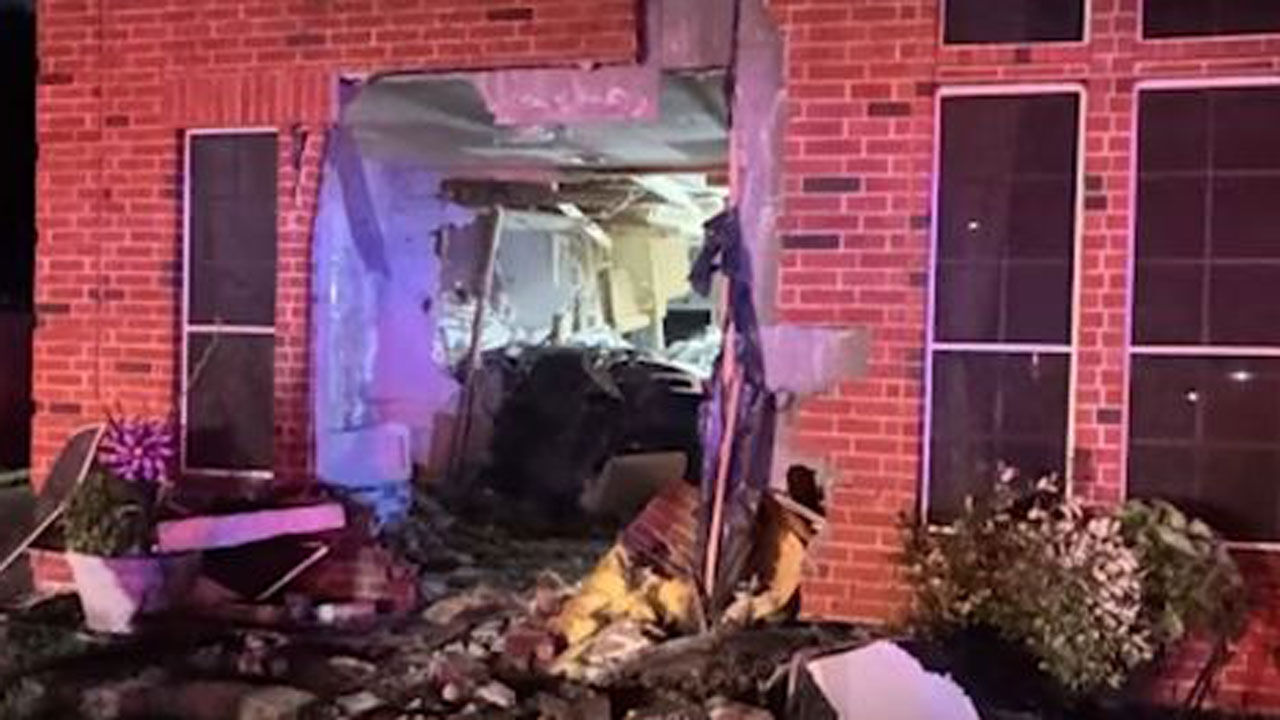
However, two weeks later, the case was completely turned on its head. Butler, the driver, was indicted on a charge of manslaughter, a felony carrying a maximum sentence of 20 years in prison, which is more severe than involuntary manslaughter under South Korean legal standards. Butler claimed that while driving in FSD mode, he only remembered changing the music on the touchscreen before losing consciousness, and woke up to find the crash had occurred. However, when investigators searched the vehicle's black box, cameras, and even his phone, a completely different picture emerged. It was true that FSD was engaged. However, Butler had manually pressed the accelerator pedal, overriding FSD's speed control. For the six seconds leading up to the crash, he floored the pedal, reaching a speed of 117 km/h (73 mph)—more than double the speed limit for a residential area. He did not step on the brakes even once during the final minute. His claim of "losing consciousness" also crumbled. Medical tests showed absolutely no signs of alcohol, drugs, seizures, or heart abnormalities. The decisive blow came from his phone. A string of Google search records from weeks before the accident was found, with queries like "Tesla FSD too timid" and "FSD not aggressive enough for city driving." Prosecutors are using these search records as evidence that Butler intentionally sped up.
Human Controls Speed, Machine Holds Steering Wheel
In short, it boils down to this: what was initially thought to be an accident caused by an autonomous driving feature turned out to be a case where a human pressed the pedal to speed up, resulting in a fatality. Tesla is pushing back with a similar argument. Elon Musk stated that "FSD drives slowly in residential areas," while Tesla's head of AI software noted that "the driver overrode the system by pressing the accelerator pedal to 100%". Up to this point, it seems Butler is solely to blame. However, there is one point that warrants closer examination. In Tesla's FSD, when the accelerator pedal is pressed, only control over "speed" is handed over to the driver, while steering, lane-keeping, and navigation continue to be managed by the system. In other words, up until the moment of impact, while the human provided the speed, the machine was holding the steering wheel.
There is also reason to consider why drivers feel compelled to keep their feet on the pedal. Many complain that FSD is frustrating because it comes to a complete stop at every stop sign, yet in its "Mad Max" driving mode, it travels well over the speed limit. Because it crawls at times and speeds at others, drivers develop a habit of "correcting" it with the pedal. Consequently, the family of the late Martha Avila filed a lawsuit not only against Butler but also against Tesla. They are seeking damages of over $1 million, alleging that FSD has a design defect and lacked adequate warnings. The National Highway Traffic Safety Administration (NHTSA) and the National Transportation Safety Board (NTSB) have also launched simultaneous investigations into how much the automated driving system contributed to the crash.
Driver 67 : Tesla 33…The Reason Behind the 300 Billion Won Verdict?
What kind of legal consequences will Butler and Tesla face going forward? There is a case that might offer a clue. In 2019, in Florida, a man driving with Autopilot engaged struck a parked vehicle and a couple standing next to it while he was picking up a phone he had dropped on the floor. A woman in her 20s was killed, and her boyfriend was severely injured. After a trial spanning several years, a federal jury in Miami concluded in August last year that the driver was 67% liable and Tesla was 33% liable. This was the first federal jury verdict to hold Tesla liable in a fatal Autopilot crash. The jury found that "driver inattention" was entirely foreseeable, yet safety safeguards were inadequate, and that executives aggressively marketed the system as safer than it actually was, instilling excessive trust. Tesla was ordered to pay more than $240 million—consisting of about $43 million (one-third of the total compensatory damages) plus $200 million in punitive damages. This amounts to over 300 billion Korean won. Naturally, Tesla is appealing the verdict. However, the two cases are not identical. While the Miami crash involved a driver who was "distracted," this recent incident involves a driver who "actively intervened" by flooring the pedal for six seconds. Whether the logic that Tesla should have prepared for driver distraction can also apply to a driver intentionally pressing the accelerator is the key point to watch in this trial.
Eliminate the Pedals vs. Cameras Can't See
When an accident occurs due to human intervention while using an autonomous driving feature, who should bear the responsibility, and to what extent? In response to this question, the U.S. government is moving in a surprising direction. On June 25, the NHTSA proposed eliminating the requirement to install brake pedals in "vehicles designed never to be driven by a human." The logic is that in a car driven by a system, a human stepping on a pedal—whether by mistake or intentionally—could interfere with the system and actually pose a greater danger. This logic aligns eerily well with Butler's accident, where human intervention caused the crash. Human intervention was indeed what caused the crash. While this is not yet finalized and is in the public comment phase until the end of this month, it is a clear signal that "human intervention" is starting to be viewed as a risk factor rather than a safety safeguard in the era of autonomous driving.
Yet, a counter-movement is also underway within the very same NHTSA. The Office of Defects Investigation (ODI) is conducting an intensive probe into Tesla's FSD. The core issue is that when cameras are blinded by glare or fog, FSD fails to even recognize that it cannot see and does not warn the driver. Nine accidents, including one that killed a pedestrian, have been identified due to this issue, and the investigation office has placed approximately 3.2 million Tesla vehicles under an engineering analysis—the final step before a potential recall. Of course, one might argue against this. They might say that the rule to eliminate pedals applies to driverless vehicles with no driver's seat at all, while the investigation targets consumer vehicles, making them two entirely different matters. However, the brain of those driverless vehicles is an evolved version of the FSD currently under investigation, and they use the exact same cameras to see the world. On one hand, there is a push to eliminate pedals under the premise of "trust the machine, human intervention is dangerous," while on the other, evidence is mounting that "the machine does not even know when it is blind."
Model Y Ranks No. 1 in Sales, South Korea's Timeline
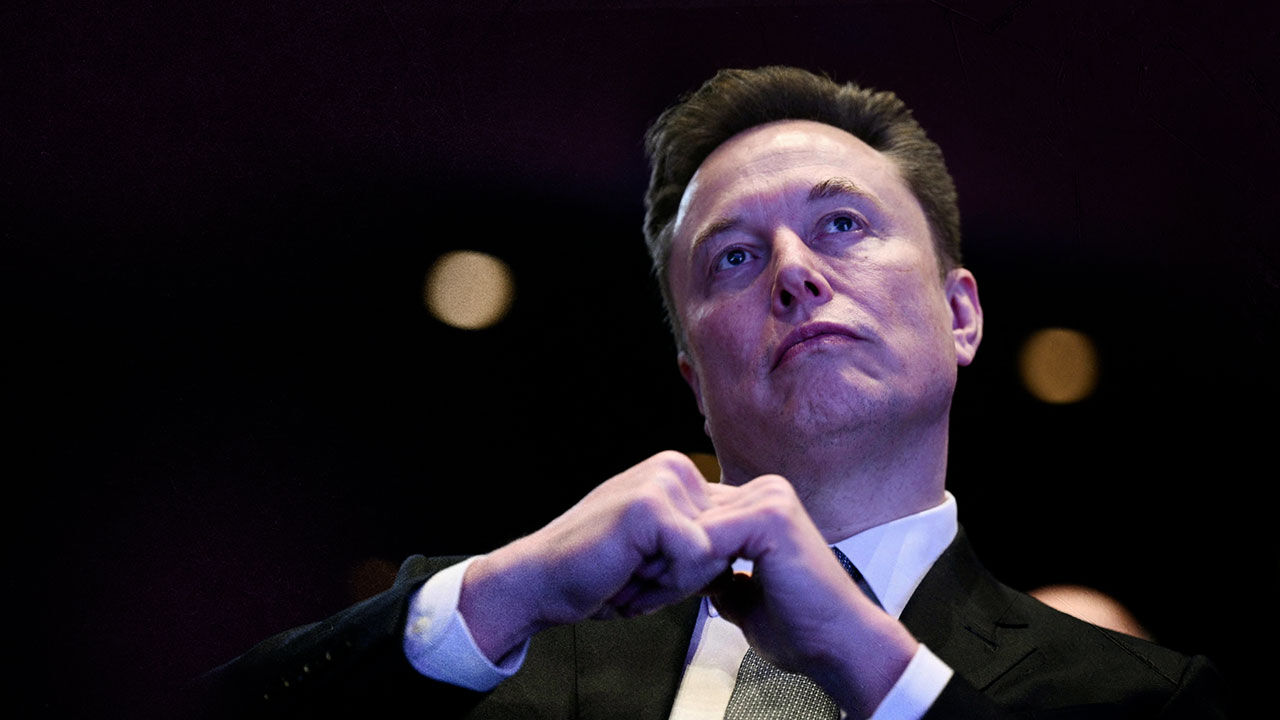
Tesla has long claimed that FSD is 10 times safer than human drivers, but the methodology behind this statistic is also a subject of ongoing controversy.
[Elon Musk / Tesla CEO (Source: YouTube Tesla): "I think it's important to emphasize that Tesla's FSD is not just 'equivalent' to a human in terms of safety. Ultimately, it will be 10 times safer than a human."]
A fact-checking report by Reuters revealed that Tesla compared its own data—which only counted severe accidents where airbags deployed—with general statistics that included minor fender-benders requiring a tow truck. When recalculated using the same standards, the claimed tenfold safety advantage shrank to about threefold. Even more painful are the voices from within. Out of nine former Tesla employees who trained the AI by reviewing FSD driving footage daily, seven responded, "I wouldn't trust this system with my life." What is certain is that before that verification is complete, autonomous driving is entering our lives, whether we want it to or not. In South Korea, FSD became available on some Tesla models late last year, and in May, the Tesla Model Y ranked first in domestic car sales, beating out all domestic and imported models. This marks the first time in history that an imported car or an electric vehicle has taken the top spot in sales. Starting in the second half of this year, 200 autonomous vehicles are scheduled to be deployed on the roads of Gwangju.
As cars on the road gradually transition to autonomous driving, unexpected accidents are bound to happen. Who will be held responsible if autonomous vehicles crash into each other? What if one car was self-driving and the other was driven by a human? This is why the Supreme Court Sentencing Commission brought this issue to the discussion table for the first time last month. At the current Level 3 stage, where the driver must immediately intervene when requested by the system, the core responsibility for an accident still lies with the driver. However, discussions have just begun on whether manufacturers and operators, rather than the passengers, should bear responsibility starting from Level 4, where occupants do not even hold the steering wheel. There are numerous questions to address: is a driver who still has a duty to keep their eyes on the road truly free of all liability? To what extent should a system operator be held responsible if the network is disconnected or hacked? Announcing the proposal to eliminate brake pedals, the NHTSA administrator said, "We are on the cusp of the greatest technological revolution since the Model T." More than a century after Ford's Model T introduced the assembly line and ushered in the era of "everyone driving a car," this revolution is heading in the opposite direction toward an era of "no one driving a car." Before unexpected accidents catch our society off guard, a deep discussion on human roles and responsibilities seems necessary.
※ Please note: This article was translated by AI and may contain errors.


 Video News
 Video News
 Video News
 Video News
 Video News