
 KOR
KOR
▲ The Dosan Ahn Chang-ho submarine visiting CFB Esquimalt in Canada on May 24 to support the bid for Canada's Patrol Submarine Project (CPSP)
While it is rare for the government to actively promote exports of semiconductors or automobiles, when a contract for domestic weapons is signed, the Blue House eagerly issues press releases and promotes it. To improve the national economy, the government should focus more on industries that generate significant revenue, yet the presidential special envoys from the Blue House operate almost exclusively to support defense exports.
Even so, the record high for K-defense's annual export volume is $17 billion. This is less than a single month's revenue for Samsung Electronics or Hyundai-Kia Motors, yet the political establishment's love for K-defense is incredibly passionate. The media and YouTubers pour out articles and videos full of praise, treating every single domestic weapon as if it were an absolute powerhouse. Fueled by this enthusiasm, the stock prices of defense companies have skyrocketed. This is the K-defense bubble.
K-defense has suffered consecutive failures in several recent major overseas weapon procurement projects, including the U.S. Navy's trainer aircraft, Australia's frigates, and Poland's submarines. In Canada's Patrol Submarine Project (CPSP), where the government took the lead in raising expectations, K-defense once again tasted bitter defeat. The disappointment is profound. It is time to calmly and objectively diagnose the past few years and the current state of K-defense.
K-defense, which had plummeted after being swept up in defense procurement corruption scandals during the Park Geun-hye and Moon Jae-in administrations, turned its attention to exports to find a way out. It regained momentum through export contracts for the K9 self-propelled howitzer to Egypt and the Cheongung-II to the UAE, and met a once-in-a-lifetime opportunity in Poland, which was thrown into a security panic by the Russia-Ukraine war. As Poland opened its wallet, K-defense enjoyed a brief boom. However, due to the Russia-Ukraine war, the conflict involving Iran, and Donald Trump's obstinacy, defense giants in Europe and Japan have awakened. Can K-defense continue to enjoy these good times?
If the period when K-defense was condemned for corruption is considered its first crisis, then the current situation—where it has struggled to find export destinations other than Poland and has suffered a crushing defeat in the CPSP—could easily be called its second crisis. Given that government agencies like the Defense Acquisition Program Administration (DAPA) have become noticeably subdued following the CPSP failure, they also seem to feel a sense of crisis. This is a golden opportunity to promote innovation by removing the obstacles blocking K-defense's progress. And there are many obstacles.
Glacial Pace of Government-Led R&D
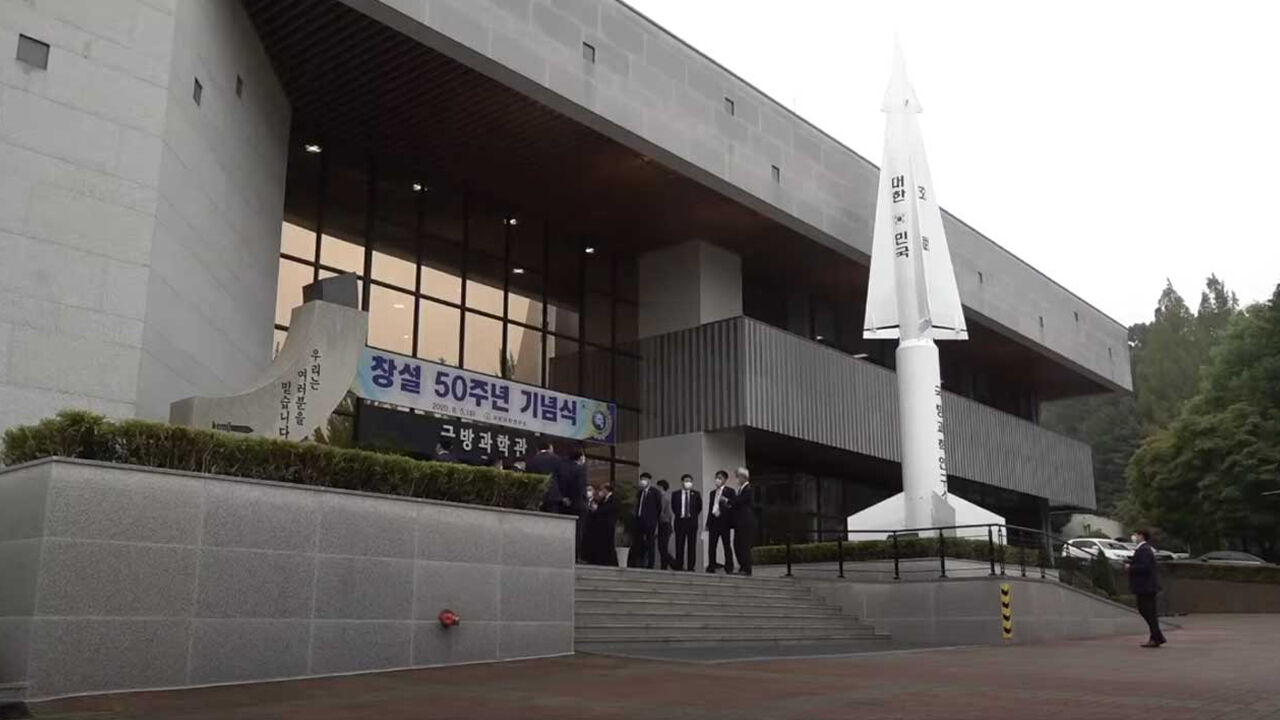
If K-defense moves quickly, a window of opportunity could open in the missile and drone markets. However, this is nearly impossible. Developing a new weapon in South Korea takes an eternity. Preliminary procedures alone—such as requirement generation, requirement determination, requirement verification, preliminary research, establishment of basic project promotion strategies, formulation of the mid-term defense plan, project feasibility studies, and budget formulation and requests—easily consume more than five years.
The actual research and development phases—exploratory development, system development, and prototype development—take another five years or more. If even a minor dispute arises between companies, or between a company and the government, the schedule drags on endlessly. Even for a minor weapon, development takes at least 10 years at the absolute shortest. That is enough time for a decade to pass, during which the global arms market races far ahead. In this way, K-defense's R&D is already starting at a disadvantage in terms of speed.
Can these procedures be cut with a single stroke? That, too, is difficult because it is directly linked to the jobs of the public servants who manage each step. Around 7,000 people are directly or indirectly connected to the R&D process, including 1,600 at DAPA, 800 at the Defense Agency for Technology and Quality (DTaQ), 400 at the Korea Research Institute for Defense Technology Planning and Advancement (KRIT), 500 at the Korea Institute for Defense Analyses (KIDA), and 3,800 at the Agency for Defense Development (ADD). Professor A, from a defense-related department at a regional university, pointed out, "Having 7,000 public servants involved in R&D procedures means there are 7,000 regulations."
Despite these circumstances, an influential defense-related research institute argues, "To overcome the CPSP failure and rise again, we must establish a clear K-defense control tower." Yet, K-defense is already weighed down by layers of redundant bureaucracy. The CPSP failed even with a robust control tower in place.
Defense Companies' Unwavering Reliance on the Government
Whenever I see this, I cannot help but wonder. Why do large defense companies like LIG Nex1 and Hanwha Aerospace stake their survival solely on government-funded projects instead of investing their own money to develop systems independently? Why do they ask the government for money when they want to develop fighter jet engines? Why can they not develop weapons with their own funds? This is vastly different from the semiconductor industry, which invests hundreds of trillions of won of its own corporate funds to build factories and develop products.
Because defense companies are merely chasing after DAPA and ADD, K-defense's slow-paced R&D formula is bound to become even more entrenched. With little willingness to develop weapons independently without relying on DAPA and ADD, it is difficult to expect the rapid private-sector development of precision missiles and drones, which have become crucial in the Russia-Ukraine war and the conflict involving Iran.
Since R&D is led by ADD and exports are jointly handled by the government and companies, mass production is the only area where companies operate independently. One might expect a defense company to emerge that conducts independent R&D without ADD and treats assistance from the government and the Export-Import Bank of Korea as secondary, but in reality, this is hard to imagine. The inherent strengths of private enterprises—such as dynamism, flexibility, creativity, and breakthrough capability—are rarely seen in K-defense. An executive from the Korea Association of Defense Industry Studies said, "Because the eyes and ears of private companies are more sensitive than those of DAPA and ADD, companies must be able to preemptively identify and pursue future projects to ensure the success of the post-K-defense era."
Jingoism and Delusional Self-Consolation Fueling the Bubble
The defense industry likely accounts for less than 5% of the South Korean economy. The security contribution of defense exports is also minimal; it is simply a business that increases corporate profits. Nevertheless, political powers, regardless of whether they are conservative or progressive, love defense exports. A senior staff member of the National Assembly's National Defense Committee pointed out, "Defense exports fuel jingoism, which directly translates into approval ratings and votes, so those in power have no choice but to love defense exports." The defense companies' reliance on the government also seems to stem from the political establishment's love for defense exports.
Furthermore, because defense exports enjoy bipartisan support, they can be praised unconditionally without any backlash. It is an area that has secured a so-called "shield from criticism." Consequently, YouTubers repeatedly chant that "defense exports are highly likely." Backed by excessive nationalism, their view counts easily hit hundreds of thousands.
The media also scrambled to churn out irresponsible articles claiming that South Korea had "secured a victory in the CPSP." Even after the CPSP failure, they continue to hype up expectations, claiming that "Germany's submarine construction plans have run into trouble, creating an opportunity for the South Korean shipbuilding industry," and that "a 1,600 trillion won ($1.16 trillion) U.S. Navy warship market awaits." However, building U.S. Navy warships in South Korean shipyards, which are easily peered into by Chinese commercial drones, is not as easy as it sounds. Forgetting their public duty and lacking objective reporting, they are writing fiction.
Perhaps due to reports and YouTube videos chasing profitable views, along with political cheerleading, the stock prices of defense companies have risen excessively. As of July 10, Hanwha Aerospace stood at 960,000 won, LIG Nex1 at 740,000 won, Hyundai Rotem at 170,000 won, and KAI at 140,000 won. Although these prices are slightly down from their peaks, they have jumped by as much as 20 times compared to before the Polish jackpot. An executive-level analyst at a mid-sized brokerage firm evaluated, "Compared to their sales and order backlogs, the stock prices of defense companies have risen too much."
Proliferation of Exhibitions and Forums
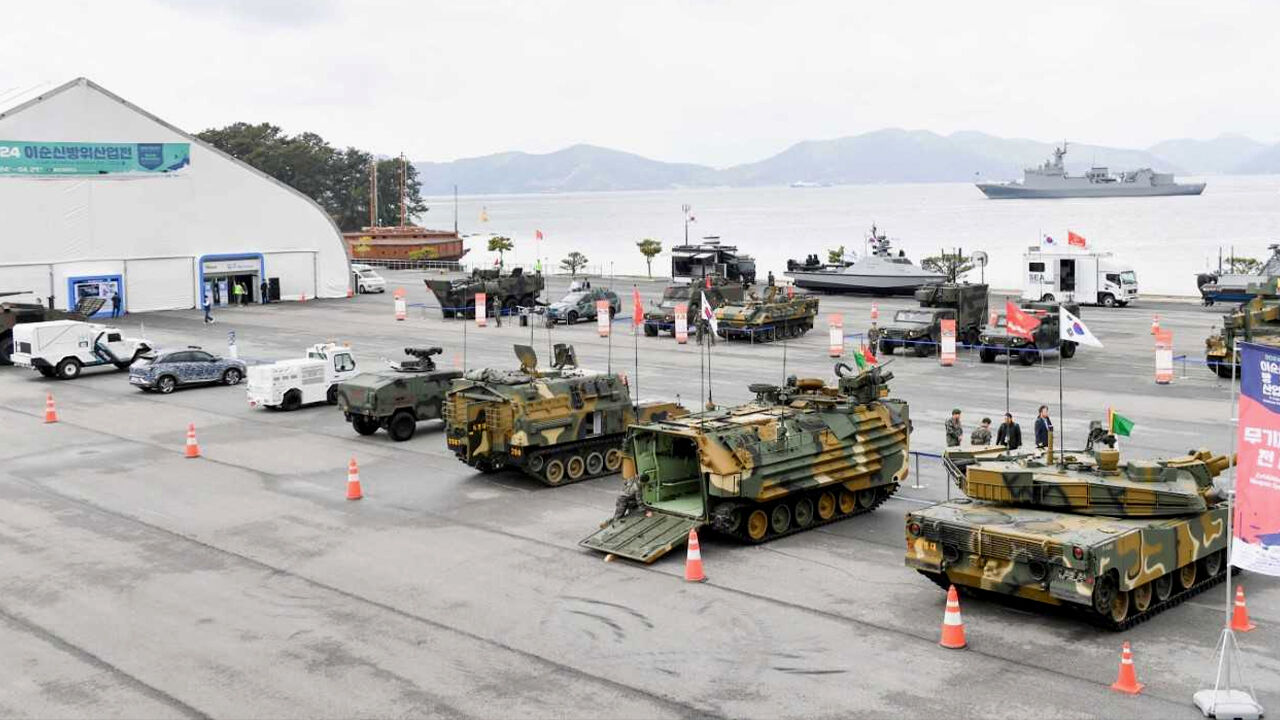
The reality is quite different. Capitalizing on the popularity of K-defense, there is a frenzy to establish new defense exhibitions. These include spin-off exhibitions such as the Yi Sun-sin Defense Industry Exhibition (YIDEX), Defense Expo Korea (DX Korea), and the Korea Army International Defense Exhibition (KADEX). YIDEX was hastily created during the Moon Jae-in administration. DX Korea and KADEX were originally a single event, but they split during the Yoon Suk-yeol administration due to a dispute between the host, the Korea Army Association, and the organizing company. Even after the split, the struggle for dominance has continued, and the Ministry of National Defense has been trying to mediate a merger.
Defense companies unanimously agree that DX Korea, KADEX, and YIDEX are all "necessary evils"—or rather, monsters that consume the money and time of defense firms. An executive from the Korea Defense Industry Association (KDIA) lamented, "Abolishing DX Korea, KADEX, and YIDEX, which were born to parasitize the popularity of K-defense, is the way to help K-defense, but no one in the government or the industry dares to say it out loud."
There are other things that, like these spin-off exhibitions, offer little help while draining the money and time of defense companies: various defense forums hosted by media outlets. These are events where discussions on defense topics are held under the sponsorship of defense firms. High-ranking officials from the Ministry of National Defense, DAPA, and defense companies participate reluctantly. A senior DAPA official complained, "We have to go to these defense forums that pop up like mushrooms after rain just to make money, greet the heads of media companies, and pretend to listen to discussions that offer no real insight," adding, "I believe the Ministry of National Defense and the companies also just fill the seats out of obligation."
The Regression of State-Owned KAI
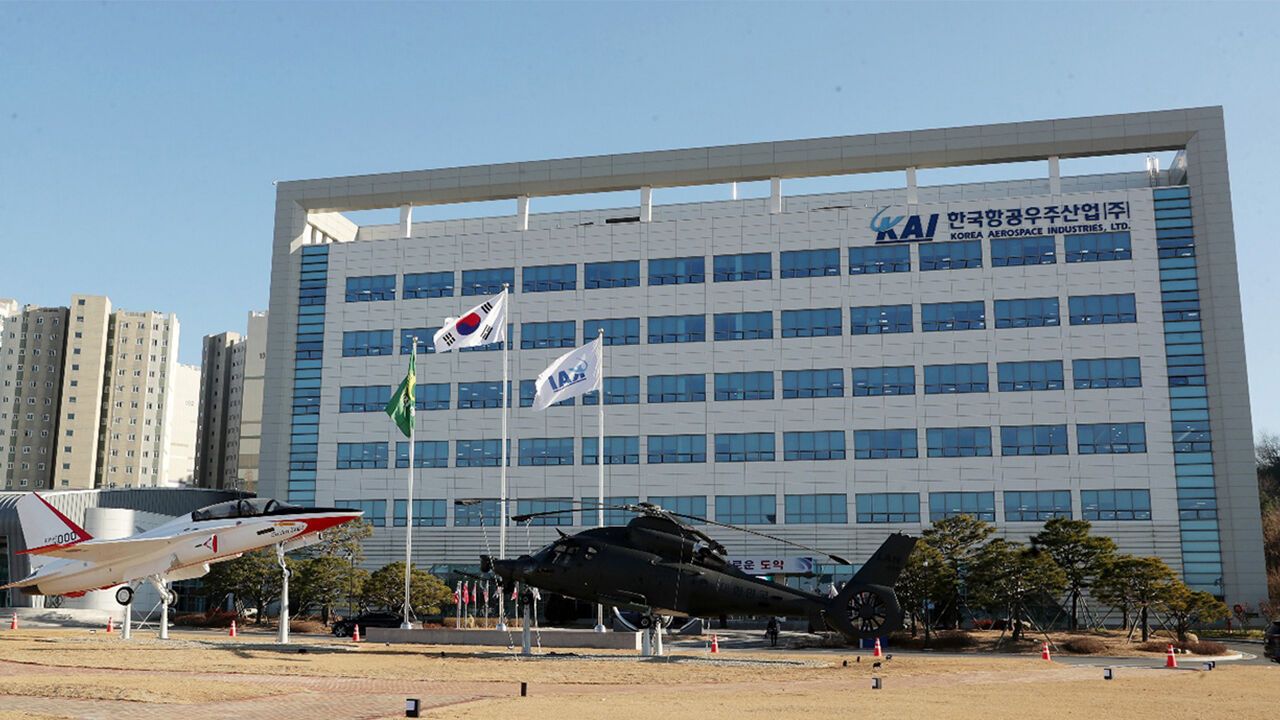
The government controls KAI using the Export-Import Bank of Korea's 26% stake as leverage. Political powers parachute non-expert CEOs into KAI, and these CEOs often treat KAI like a government bureaucracy rather than a business. Instead of going all-in on KAI's growth, their priority is to align with the government's defense policies. Rather than securing a large KF-21 budget quickly to increase production, they focus on slowing down the mass production of the KF-21 out of concern for the government's budget deficit. They also show no intention of breaking away from the government's outdated scenarios for KF-21 exports.
The employees do not oppose these parachute appointments either. Since these figures are connected to political power, they ensure that salaries are paid on time regardless of the company's financial health. The labor union is reportedly focused on aligning with the parachuted management rather than the welfare and survival of the employees. A mid-level KAI employee pointed out, "Even when employees make extreme choices or die suddenly, the union behaves exactly like the management, keeping a tight lid on external leaks."
Are slow-paced R&D, defense companies' dependence on the government, jingoism and delusional self-consolation, the proliferation of exhibitions and forums, and the delayed privatization of KAI the only things holding K-defense back? If you gathered defense company employees for a discussion, several times more obstacles would pour out. I look forward to the emergence of a K-defense leadership that sets priorities and dismantles these obstacles one by one.
An innovative K-defense leadership will pursue a "post-K-defense" era. If innovation succeeds in clearing away these obstacles, the post-K-defense era is highly likely to take the form of private companies leading the rapid development of cutting-edge weapons tailored to modern warfare and exporting them abroad. To make up for lacking technology and capital, we will also see companies proactively partnering with foreign firms, breaking away from outdated pure-blood nationalism. Now, with K-defense on edge due to consecutive export contract failures, is the perfect time for innovation. If we do not embark on innovation, K-defense may degenerate into an unwanted burden suffering through a period of stagnation, much like during the defense corruption crisis.
※ Please note: This article was translated by AI and may contain errors.


 Video News


 Video News