
 KOR
KOR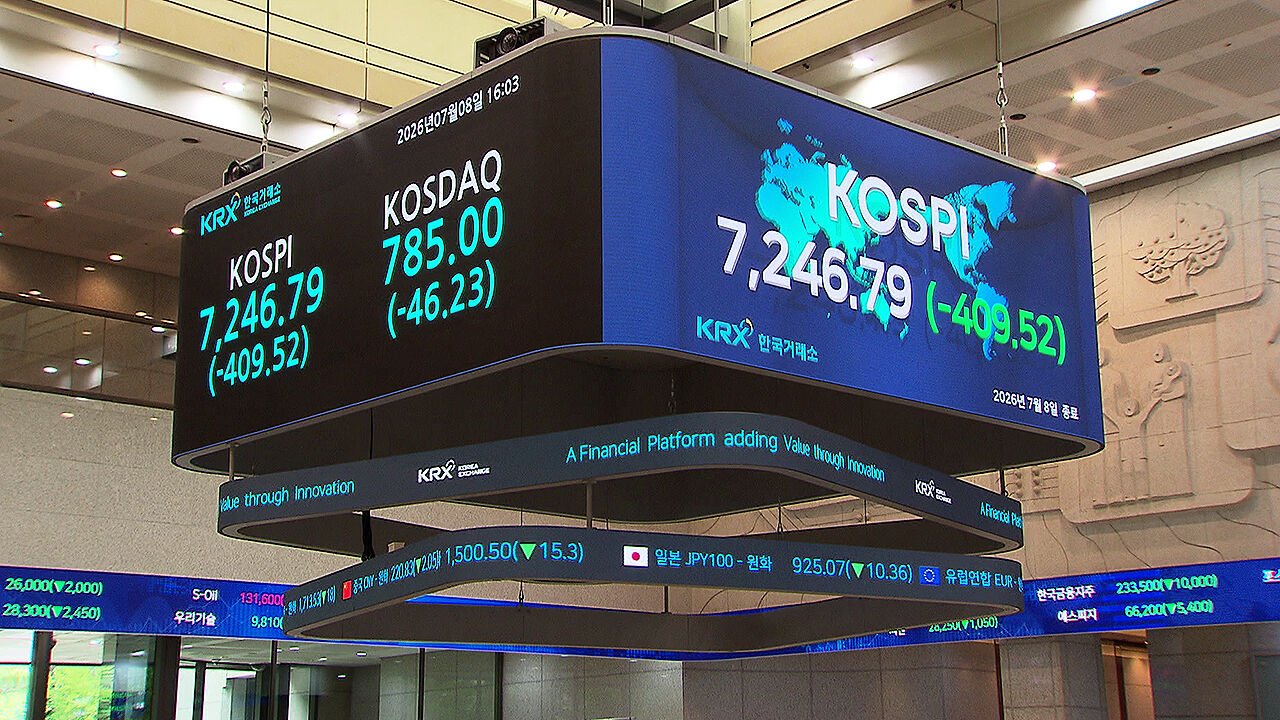
▲ KOSPI
Bloomberg reported on July 12 (local time) that the valuation of the KOSPI is currently lower than it was during the global financial crisis.
Bloomberg stated that as of July 9, the KOSPI's 12-month forward price-to-earnings ratio (PER) stood at 6.35, which is lower than the 6.82 recorded on October 26, 2008, at the height of the financial crisis.
This is nearly half the level of its 52-week high of 11.98, recorded on October 27 of last year.
The KOSPI has surged 77% this year, driven by a sharp increase in profits from Samsung Electronics and SK Hynix.
Unlike most bull markets, this rally is not because investors are willing to pay higher valuations, but because corporate earnings have grown much faster than expected.
Since the beginning of this year, the 12-month forward earnings per share (EPS) estimate for the KOSPI has been revised upward by approximately 170%.
This marks the highest growth rate since 2006.
Furthermore, the EPS estimate has been raised for 17 consecutive months, the longest streak in over nine years.
The KOSPI's valuation remains at just one-third the level of Taiwan's Taiex index, which also has a high concentration of semiconductor stocks.
Bloomberg noted that the KOSPI has long been undervalued due to the so-called Korea Discount, stemming from corporate governance issues and the cyclical profit structures of Samsung Electronics and SK Hynix.
These two companies account for more than half of the KOSPI's total market capitalization.
Investor sentiment remains divided.
Francis Tan, an Asia investment strategist at Indosuez Wealth Management, said, "If you don't have much exposure to these names, it's a good time to get some growth elements in your portfolio linked to the AI theme."
On the other hand, Charu Chanana, a senior investment strategist at Saxo Markets, pointed out that undervaluation alone is not a reason to buy, stating, "Korea needs more evidence that the memory supercycle still has legs."
Traders are looking for other catalysts for buying beyond earnings.
A prime example is the potential U.S. listing (ADR) of SK Hynix, which is expected to help narrow the valuation gap with its competitor, Micron Technology.
Meanwhile, risk factors cited include the growing competitive threat from companies such as China's ChangXin Memory Technologies (CXMT) and the volatility of semiconductor stocks, which is making trading increasingly unstable.
※ Please note: This article was translated by AI and may contain errors.



 Video News

 Video News