
 KOR
KOR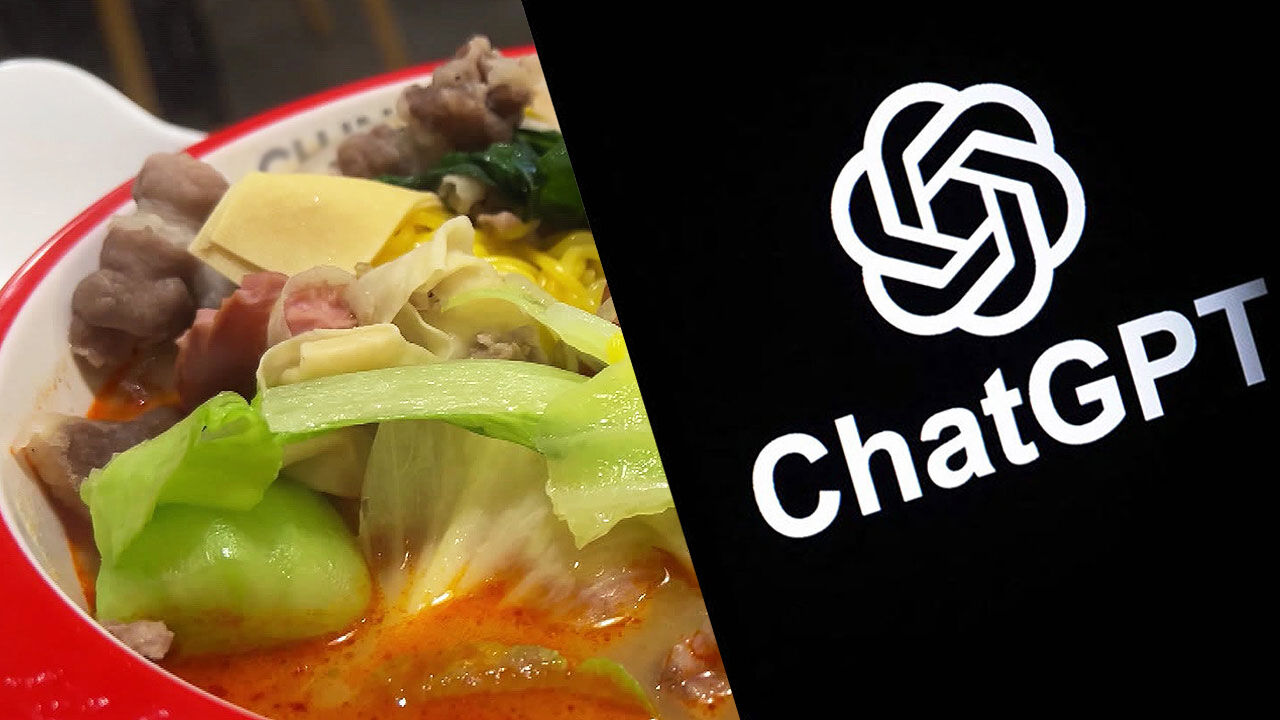
⚡ Spre Core Summary
Reflecting Real-World Consumption: Through the Consumer Price Index (CPI) reorganization conducted every five years by the Ministry of Data and Statistics, subscription fees for generative AI such as ChatGPT, along with malatang and salad, will be newly included, while peanuts, bracken, and kindergarten tuition will be excluded.
Digital Quality Adjustment Challenge: While the inclusion of AI subscription fees is a step forward, similar to the precedent set by the U.S. Bureau of Labor Statistics (BLS), the key to precise inflation measurement lies in how to apply 'quality adjustment' (Hedonic Regression) in response to diversifying pricing plans and expanding features.
Evolution of Data: Similar to the case of big data adoption in the UK, South Korea's inflation statistics are also moving beyond simple sample surveys and entering the realm of complex data science aligned with international classification systems.
Subscription fees for ChatGPT are set to be included in the Consumer Price Index (CPI) survey. Malatang and salad will also be added. On the other hand, peanuts, bracken, and kindergarten tuition will be excluded. These are the key details of the plan to reorganize the base year of the CPI (from 2020 to 2025) announced by the Ministry of Data and Statistics on July 7, 2026. On the surface, it might look like "they just added everything that is trendy these days," but looking deeper reveals a completely different story. This is not a simple replacement of items, but a signal that the South Korean economy is fully transitioning into a digital subscription economy.
1. What Does It Mean to "Change Every Five Years"?
The CPI fundamentally undergoes a comprehensive overhaul of its representative items every five years. The Ministry of Data and Statistics is changing the base year from 2020 to 2025, adjusting the number of representative items from 458 to 455 to match changing consumption trends. Why five years? It is because economic and social structures, as well as household consumption patterns, change significantly over that period. The UK's Office for National Statistics (ONS) adjusts its basket every year, and South Korea also periodically updates its weights. South Korea is now aligning with this trend.
2. ChatGPT Subscription Fees Enter the Inflation Basket
The newly added items consist of 10 products and services: meal kits, ready-to-assemble storage furniture, smartwatches, electric vehicle charging fees, cloud storage fees, software subscription fees, online shopping subscription fees, infant and toddler lesson fees, malatang, and salad.
The most eye-catching addition is software subscription fees. An official from the Ministry of Data and Statistics stated during a briefing, "We are reviewing plans to include subscription fees for generative AI like ChatGPT and Gemini, as well as office program subscription fees." Cloud storage fees and online shopping membership subscription fees (such as Coupang Wow and Naver Plus) will also be newly included. Digital living expenses have now officially become part of inflation statistics.
3. Why Now? Because the Subscription Economy Has Become Daily Life
Timing is crucial. According to data from Statistics Canada, Canadian households spent 11.3 billion Canadian dollars (approximately 11.8 trillion won) on cable, satellite, and streaming services in 2024. The prices of video and audio subscription services rose by 21.0% compared to 2019 and by 52.7% compared to 2014. The same goes for South Korea. As online subscriptions became a part of daily life after COVID-19, these expenditures can no longer be left out of inflation measurements.
4. Why Malatang and Salad? The Dining Out Structure Has Changed
Dining out items are also changing. Malatang and salad are newly added, while kimchi stew set meals and soybean paste stew set meals will be integrated into "stew set meals." This means that due to changes in consumption trends, these specific menus have become observation points that representatively show price fluctuations. The UK's ONS also explains that when choosing basket items, they look at "ease of price collection, year-round availability, and representation of the market." Malatang was included because its statistical representativeness grew due to changes in consumption trends.
5. Why Were Peanuts and Bracken Excluded? There Is a Standard
Fifth, the excluded items also have clear reasons. According to the guidelines of the Ministry of Data and Statistics, an item must have an average monthly household consumption expenditure of 312 won or more to be included, and the dropped items fell short of this standard. Four items—kindergarten tuition, supplementary school education fees, childcare facility fees, and painting tools—lost their significance for investigation due to the expansion of free education and government support. Dashcams (black boxes) and packed lunches (dosirak) were excluded because continuous price tracking is difficult. In other words, item selection is determined by data, not emotion.
6. Pork Is Divided into Domestic and Imported
Some items will be further subdivided. Pork will be divided into domestic and imported, and electric vehicles will be split into hybrid passenger cars and electric passenger cars. Air purifiers will be separated into air purifiers and humidity control devices, while online content fees will be split into online game fees and streaming service fees. This is intended to track items with growing consumption shares more precisely.
7. Weights Are What Truly Matter
More important than the inclusion of items is their weight. Looking at the recent weight reorganization trends of the Ministry of Data and Statistics, weights for housing costs, heating, and utilities are being adjusted in line with changes in household expenditures. On the other hand, some items within "transportation and transit" are affected by a decrease in the share of petroleum expenditure as the adoption of electric and hybrid vehicles increases. Based on the 2025 standard, services will account for 57.8% of the total inflation weight, meaning the share of services has expanded compared to 2022, while the share of goods has decreased to 42.2%. The UK's ONS also explains that "changes to the basket of goods are to ensure representativeness, and weights are updated annually using separate expenditure data." Even if ChatGPT subscription fees are included, the actual impact on inflation will be determined by its weight.
8. International Standards Change Together
This reorganization also reflects revisions to international classification systems. South Korea will simultaneously apply the UN Statistics Division's new Classification of Individual Consumption According to Purpose (COICOP-2018) and the revised Korean Classification of Individual Consumption by Purpose (COICOP-K). This is the first such revision since 2006. One of the reasons why the release of the Harmonised Index of Consumer Prices (HICP), managed by Eurostat (the statistical office of the European Union), is pushed from January to late February every year is the annual weight updates and classification changes. South Korea's current reorganization is also an effort to enhance alignment with international standards.
9. Here Is the Twist
We should not overinterpret the inclusion of ChatGPT subscription fees. The U.S. Bureau of Labor Statistics (BLS) already measures internet services, video and game subscriptions, and music content as detailed items. However, the BLS explains that it uses quality adjustments based on hedonic regression (a statistical technique that prices individual characteristics making up a good) for changes in internet speed or the number of channels in telecommunication and TV services. Similarly, for AI subscriptions, it is difficult to maintain "the price of the same quality for the same product" due to differences in pricing plans, free-to-paid transitions, bundling, promotions, and feature expansions. In other words, while the inclusion is a step forward, it is hard to say that it perfectly captures the entirety of digital living expenses.
10. The UK Already Collects 300 Million Prices
South Korea's current reorganization is just the beginning. The UK's ONS announced that starting in 2026, it will introduce scanner data from supermarkets and other retailers into the grocery CPI, covering about 50% of the grocery market. The number of collected prices will increase from the previous 25,000 per month to approximately 300 million price data points. In the long run, South Korea has no choice but to move toward tracking digitized consumption more frequently and in greater detail. The bigger change that this reorganization signals is this: inflation statistics are now moving beyond simple sample collection by surveyors and shifting toward more complex systems, such as international classification revisions, large-scale transaction data, and quality adjustments for digital products.
The inclusion of ChatGPT subscription fees in inflation measurements is not a sign that inflation statistics have gone awry, but rather a signal that they are catching up with reality. The real point to watch starts now: how the actual weights of these items, quality adjustment methods, and promotions, bundles, and transaction data will be reflected. If South Korea progresses to this point, this reorganization can be evaluated not as a simple replacement of items, but as a full-scale transition to a CPI for the digital era. The final results of this CPI reorganization are scheduled to be announced on December 18, 2026.
Deep Dive Q&A
Q1. If ChatGPT subscription fees rise, will next year's Consumer Price Index (CPI) increase significantly?
A1. Even if it is included in the basket, the actual impact on the overall price index is determined by its "weight." The Ministry of Data and Statistics allocates expenditure shares to each item based on a total index of 1,000, and the weight of the software category, which will include generative AI subscription fees, is expected to be very low compared to groceries or housing costs. Therefore, even if individual subscription fees rise, they will not significantly drive up the overall CPI, though the symbolic impact on "perceived inflation" is substantial.
Q2. How are major foreign countries, such as the U.S. and Europe, handling generative AI subscription fees?
A2. The U.S. Bureau of Labor Statistics (BLS) and Eurostat (the statistical office of the European Union) also monitor digital subscription services by including them in the "information, communication, and software services" category. However, as AI models become more advanced, cases arise where the price remains the same but performance improves significantly (quality change). Intense discussions are ongoing among statisticians worldwide regarding "quality adjustment" (Hedonic Quality Adjustment) methodologies, such as whether this should be calculated as a price decrease.
※ Please note: This article was translated by AI and may contain errors.



 Video News
 Video News
 Video News
 Video News