
 KOR
KOR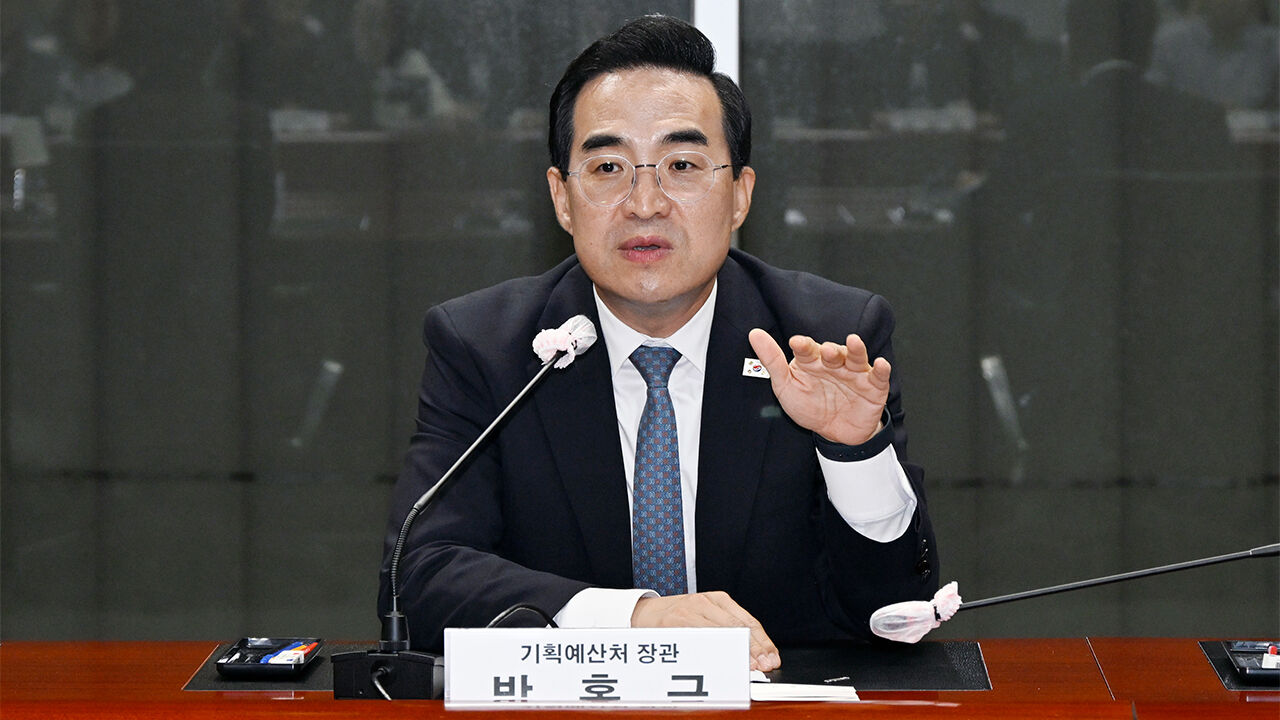
▲ Minister of Planning and Budget Park Hong-keun
It has been diagnosed that the essence of the anxiety felt by the youth generation lies in a weakened ladder for social mobility and deepening inequalities stemming from gaps in labor, housing, and assets.
There is a call for increased youth participation in the decision-making process for fiscal policies, including the budget.
The Ministry of Planning and Budget announced that it held a "Youth Policy Expert Forum" at the Korea Press Center in Jung-gu, Seoul, today (July 10).
Minister of Planning and Budget Park Hong-keun and various experts attended the forum to diagnose the instability factors appearing throughout the life paths of young people and to discuss the role and investment direction of fiscal policy.
Cho Eun-ju, CEO of Rework Research Institute, who served as the general keynote speaker, emphasized, "The essence of the youth generation's anxiety is the weakening of the social mobility ladder and the deepening of gaps and unfairness in labor, housing, and assets."
She further suggested, "We must expand youth participation in policy decision-making processes, such as budget and performance evaluations, and shift policy directions based on intergenerational coexistence and solidarity."
In the subsequent discussion on employment, experts pointed out that the lack of quality entry-level jobs, delays in entering the labor market, and the spread of hiring practices focused on experienced workers are major factors hindering the stable settlement of young people in the labor market.
In response, they proposed providing career development packages that combine job training, competency development, and support for housing and transportation costs for young people employed at small and medium-sized enterprises (SMEs).
They also suggested strengthening direct support for the youth rather than employment subsidies targeting companies.
In the discussion on startups, experts pointed out that while the survival rate of youth-led startups is low, there are insufficient pathways for them to try again.
As a solution, they voiced the need to shift from startup support centered on free grants to investment-based and conditional support methods.
Opinions were also raised regarding the need for living expense support for entrepreneurs and the integration of housing and startup support.
Experts in the field of asset formation argued that asset inequality between generations and within the youth generation is widening due to gaps in real assets such as real estate and differences in inherited assets.
To address this, they suggested the need for a customized asset formation support system based on an individual's income, employment status, debt situation, and life goals, as well as increasing linkages with other asset formation policy products, such as the youth-type Individual Savings Account (ISA).
In the housing sector, plans to upgrade housing welfare platforms, such as the Ministry of Land, Infrastructure and Transport's MyHome, were discussed to ensure that young people can easily check and apply for housing policies they can actually use.
Additionally, opinions were exchanged regarding ways to link the diligent repayment ability of jeonse loan users with subsequent financial support.
Experts in the field of marriage identified employment instability, rising housing prices, and the burden of asset formation as major factors restricting marriage and childbirth among the youth.
Consequently, they suggested that it is necessary to expand youth asset formation programs to include childhood and to alleviate the burden of childcare and private education costs by expanding childcare services.
Minister of Planning and Budget Park Hong-keun emphasized, "The lives of young people are a complex and difficult high-degree equation," adding, "Now is the golden time to carry out bold and full-scale investment in the youth generation, who will become the leaders of South Korea 20 years from now."
The Ministry of Planning and Budget plans to review the opinions raised by experts at the forum and reflect them in the government's budget proposal for next year and the process of establishing mid- to long-term development strategies.
(Photo: Provided by the Ministry of Planning and Budget, Yonhap News)
※ Please note: This article was translated by AI and may contain errors.


 Video News


