
 KOR
KOR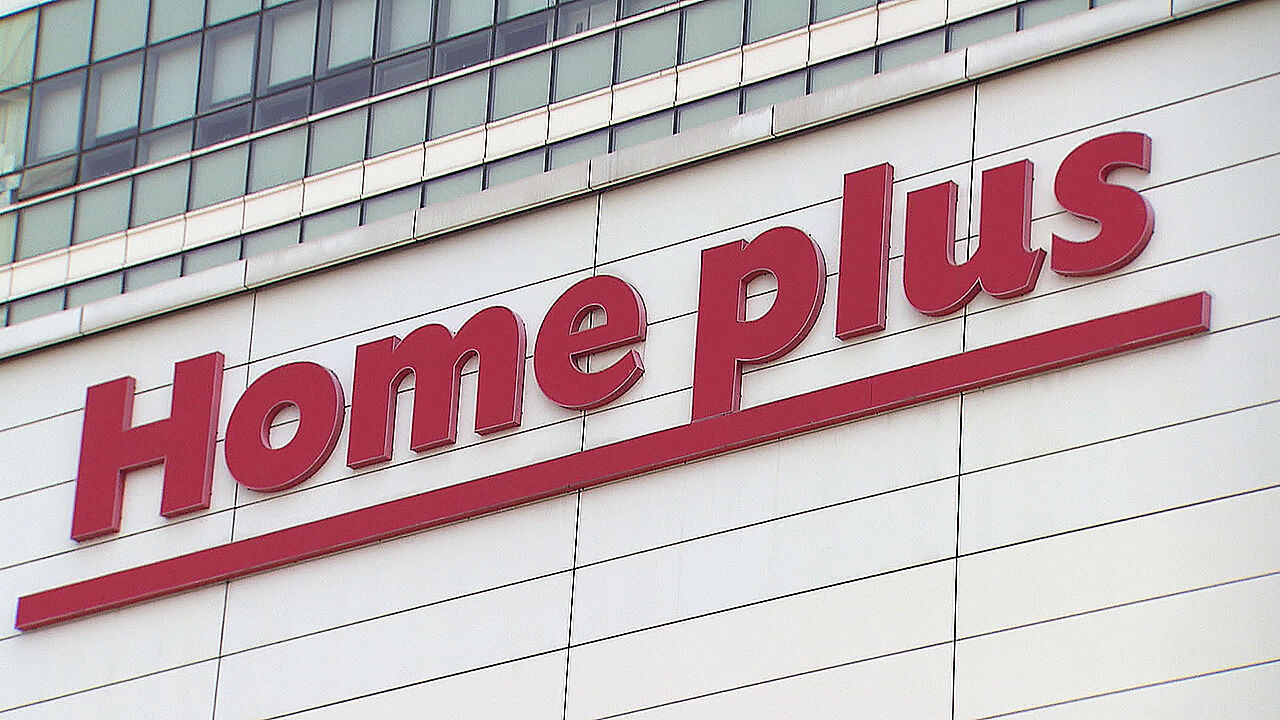
⚡ SBS Premium Key Summary
Ultimatum: The Seoul Bankruptcy Court decided to terminate Homeplus's corporate rehabilitation proceedings due to its failure to raise the minimum operating funds of 200 billion won, giving the retailer a 14-day window to file an immediate appeal.
Blame Game: As controlling shareholder MBK Partners and largest creditor Meritz Financial Group shift the responsibility for funding onto each other, the livelihoods of 12,000 workers and over 4,600 supplier partners are placed in jeopardy.
Structural Headwinds: This crisis goes beyond simple management failure, resulting from a combination of a rapid shift to the online era and the inherent limitations of the private equity fund (PEF) leveraged buyout (LBO) model.
Homeplus, South Korea's second-largest hypermarket chain, had its corporate rehabilitation proceedings terminated by a court on July 3, 2026. Only two weeks remain. If the company fails to raise 200 billion won, 12,000 employees and approximately 4,600 supplier partners will be thrown out onto the streets. Controlling shareholder MBK Partners and largest creditor Meritz Financial Group are repeatedly trading blame, while the government has only proposed measures based on the premise of liquidation. What is happening to Homeplus, which is facing its biggest crisis since its founding in 1997?
1. "End of the Road Without 200 Billion Won": The Court's Ultimatum
Why did the court terminate the rehabilitation proceedings? On July 3, the Seoul Bankruptcy Court decided to terminate Homeplus's corporate rehabilitation proceedings, stating that "there is no feasibility of executing the rehabilitation plan." There was only one core reason: the failure to raise the minimum operating funds of 200 billion won required for rehabilitation. The court explained, "Although the sale of Homeplus Express was completed, the remaining hypermarket business unit continued operations without a merger and acquisition (M&A), leading to falling sales while administrative expense claims—such as wages and payments for goods—surged." However, the court left open the possibility that the rehabilitation proceedings could resume if the company raises the funds and files an immediate appeal within 14 days. If 200 billion won is not secured within two weeks, Homeplus will practically enter liquidation proceedings.
2. MBK and Meritz: Shifting Blame to Each Other
Why was the 200 billion won not raised? It was because controlling shareholder MBK Partners and largest creditor Meritz Financial Group engaged in a blame game. Meritz claims, "We deposited 100 billion won into an escrow account on the condition of a joint guarantee from MBK and Chairman Michael ByungJu Kim," adding, "MBK must take responsibility for the remaining 100 billion won." On the other hand, MBK maintains, "If Meritz loans the entire 200 billion won, we are willing to provide a joint guarantee for 100 billion won of that amount," stating that they "have already injected hundreds of billions of won and have no capacity to raise additional funds." Even immediately after the court's decision, both sides repeated their existing stances. Homeplus stated, "Meritz is refusing financial support, claiming that a joint guarantee of 100 billion won is insufficient," while Meritz countered, "The Homeplus crisis is the miserable result of management over the past 10 years, during which MBK focused solely on recovering its investment."
3. What Happened to MBK's Promise of a "200 Billion Won Additional Grant"?
What promise did MBK make in the past? In a public apology in September 2025, MBK stated, "To ease the financial burden on the acquiser, we will provide an additional interest-free grant of up to 200 billion won to Homeplus in the future, using future operating revenues as the source of funds." This is the exact amount requested by the court. However, nine months after this promise was announced, its actual execution remains unconfirmed. According to Homeplus's recently disclosed audit report, no direct cash-equivalent financial support, such as capital injection or interest-free loans from MBK, was recorded from March 2025 to February 2026 following the filing for rehabilitation. During the same period, Homeplus only raised approximately 60.7 billion won through borrowings from financial institutions.
Regarding this, MBK has conveyed its position that it has already fulfilled support worth 200 billion won. The firm explained that it had already provided 100 billion won through 40 billion won in cash personally contributed by Chairman Michael ByungJu Kim and the waiver of indemnity rights (subrogation) for a 60 billion won DIP loan, and in March, Chairman Kim and the management raised and provided 100 billion won in emergency operating funds using their homes and other assets as collateral. On top of this, they added a conditional commitment to provide an additional joint guarantee of 100 billion won if the Meritz Financial loan is finalized. However, more explanation seems necessary to determine whether this qualifies as the "interest-free grant funded by Homeplus's operating revenues" that was originally promised, and thus whether it can be considered a fulfillment of that promise.
4. 12,000 Job Losses, Chain Reaction Inevitable for 100,000 People
Who will suffer if Homeplus is liquidated? First, 12,000 directly employed workers and 1,000 indirectly employed workers—a total of 13,000 people—will lose their jobs. Analysts estimate that if over 4,600 supplier partners, tenant small business owners, delivery drivers, and electronic short-term bond investors are included, the scale of damage could affect up to 100,000 people. According to a survey by the Korea Federation of SMEs (KBIZ), the unpaid supply payments for 150 small- and medium-sized suppliers and small business owners supplying Homeplus averaged 774 million won per company. The damage to electronic short-term bond investors also reaches around 400 billion won. A self-employed business owner operating inside a closed Homeplus store said, "I haven't even recovered the hundreds of millions of won spent on installing store facilities, and I feel helpless because I don't even know how long I can keep operating." Labor groups argue, "If we include directly and indirectly employed workers, supplier partners, tenant small business owners, and their families, the livelihoods of 300,000 people are at stake."
5. What Is the Government's Response? Only Temporary Measures Premised on Liquidation
What is the government doing? On July 3, the government held a meeting of the interagency task force and announced support measures. These include paying up to 21 million won per person in substitute payments to workers affected by unpaid wages, providing low-interest loans of up to 10 million won, and offering livelihood stability loans of up to 20 million won for low-income employees. For supplier partners, a liquidity support plan worth a total of 440 billion won was also discussed. However, all government measures are post-facto support "premised on liquidation." Emergency intervention for rehabilitation or plans to inject public funds were not included. The Mart Industry Union criticized, "This is the result of even the state standing by during a 'money war' of giant capital," and urged, "The government must devise a rehabilitation plan through all possible emergency measures, including the injection of public funds within 14 days." However, the likelihood of the government changing its stance within two weeks appears low.

6. Not Just a Homeplus Problem: The Hypermarket Business Model Itself Is Collapsing
Is the Homeplus crisis solely due to management failure? The South Korean hypermarket sector itself is facing structural headwinds. According to data from the Ministry of Trade, Industry and Energy (MOTIE), online retail accounted for 60.3% of the South Korean retail market, while hypermarkets (large discount stores) accounted for only 7.9%. Sluggish sales for hypermarkets have persisted since the second quarter of 2024. The Korea Development Institute (KDI) analyzed, "The expansion of online retail absorbs the general demand of hypermarkets, while creating a dual structure that opens up new opportunities for neighborhood-based SSMs (Super Supermarkets) and convenience stores." In other words, it is not that the entire offline retail sector is collapsing, but rather that the hypermarket format—which relies on large stores, bulk purchases, and car travel—is taking the most direct hit. This is why it is difficult to narrow down the failure of Homeplus to just "mistakes by specific management."
7. Regulations: Protection or Shackles?
What role did hypermarket regulations play? An academic paper from 2013 evaluated that South Korea's regulations on large-scale stores had a policy basis to protect traditional markets and small merchants. However, a 2026 KDI report suggests that under the current market environment, this system should be re-examined from the perspective of regulatory imbalance between online and offline retail. It points out that even though online distribution accounts for the majority of consumption, regulations are heavily concentrated on offline hypermarkets, altering the competitive landscape. KDI proposed a flexible redesign of the Distribution Industry Development Act, along with support for offline O2O (online-to-offline) integration and digital transformation as future policy directions. While it cannot be concluded that regulations directly caused Homeplus's bankruptcy, they were highly likely an environmental factor that narrowed the room for offline hypermarkets to recover.
8. The 2015 MBK Acquisition: What Went Wrong?
How did MBK operate Homeplus? According to a Reuters report, Tesco sold Homeplus to a consortium led by MBK Partners in 2015 for $6.1 billion (approximately 7.2 trillion won). At the time, the MBK consortium announced plans to invest 1 trillion won over the following two years. The starting point did not seem to be a transaction aimed solely at "buying cheap and chasing short-term gains." However, the problem was that over the next 10 years, a combination of structural deterioration in the offline hypermarket sector, real estate and lease structures, a debt-based capital structure, and reinvestment priorities weakened the company's financial health.
A study by the National Bureau of Economic Research (NBER) reports that compensation per worker decreased by 1.7% after private equity buyouts, with particularly large job losses and higher bankruptcy risks observed in public-to-private transactions. In cases like Homeplus, where the industry itself is facing headwinds, leverage and cash flow pressures can become far more prominent than the private equity firm's operational improvement logic.
9. Why Is the Impact on Supplier Partners So Severe?
Why is the damage to supplier partners so serious? According to a 2025 paper published in the KDI Journal of Economic Policy, approximately 1,500 supply partners were linked to the hypermarket sector (E-Mart, Lotte Mart, and Homeplus), and this sector accounted for 23% of the total retail transaction volume surveyed. The primary transaction method for large supermarkets is direct purchasing (especially 55% for processed foods). This means that if delays in payment settlements or business suspensions occur, the shock does not stop inside the stores but quickly spreads to suppliers' inventory, working capital, and cash flow. The reason the government proposed emergency liquidity of 440 billion won plus alpha, along with closure and transition support, is that it views Homeplus not just as a single "retail corporation" but as a critical node in the chain of cash flows for small- and medium-sized supplier partners.
10. What Lies Ahead: Three Scenarios
How will the fate of Homeplus be decided? There are three scenarios. First, successful fundraising within 14 days. If Homeplus secures 200 billion won and files an immediate appeal, the rehabilitation proceedings can resume. However, since the court has already questioned the "feasibility," it will only be persuasive if a mid-to-long-term business plan and a new funding structure are presented alongside, rather than a simple bridge loan. Second, failure to appeal or secure funding. In this case, Homeplus is highly likely to head toward liquidation or bankruptcy. The government's preemptive rollout of support packages for workers and suppliers seems to be a response with this possibility in mind. Third, a third-way restructuring. Theoretically, a partial sale combining some stores, online assets, and logistics networks, or a business-split reorganization, is possible. However, in the current market environment, it is difficult to expect a high corporate valuation based solely on hypermarket assets.
The Homeplus crisis is not simply the failure of a single company. It is an event where a hypermarket model, already weakened by the online transition, failed to survive under the constraints of a private equity-style capital structure and rehabilitation financing. Behind the figure of 200 billion won lie the livelihoods of over 10,000 workers and tens of thousands of supplier partners. And all of this will be decided now, in exactly two weeks. What is certain is that Homeplus should no longer be viewed as an easy partner. Or perhaps, it is already too late.

Deep Dive Q&A
Q1. What was the decisive factor behind the court's decision to terminate Homeplus's rehabilitation proceedings?
A1. The core factor was the "failure to raise the minimum operating funds of 200 billion won." Although the sale of Homeplus Express was successful, the merger and acquisition (M&A) of the main hypermarket business unit faced difficulties. In the meantime, administrative expense claims—which are fixed costs such as wages and payments for goods—surged, leading the court to judge that "there is no feasibility of executing the rehabilitation plan."
Q2. How do global foreign media and economic academia view the private equity fund (PEF) acquisition that forms the background of the Homeplus crisis?
A2. Synthesizing analyses from foreign media like Reuters and the National Bureau of Economic Research (NBER), the private equity leveraged buyout (LBO) model reveals critical weaknesses during periods when the industrial structure rapidly shifts online. It is pointed out that an excessively debt-heavy capital structure pressures cash flows and limits reinvestment, thereby increasing the risk of bankruptcy.
Q3. What social impact is expected if the fundraising fails within the next 14 days?
A3. In addition to the job losses of 13,000 directly and indirectly employed workers, the "direct purchasing (especially 55% for processed foods)" structure characteristic of hypermarket distribution will exacerbate the burden of unpaid receivables and inventory for over 4,600 supplier partners. This could deal a direct blow to up to 100,000 people, including a chain of bankruptcies among small- and medium-sized suppliers and the collapse of small business owners.
※ Please note: This article was translated by AI and may contain errors.


 Video News
 Video News
 Video News
 Video News
 Video News