
 KOR
KOR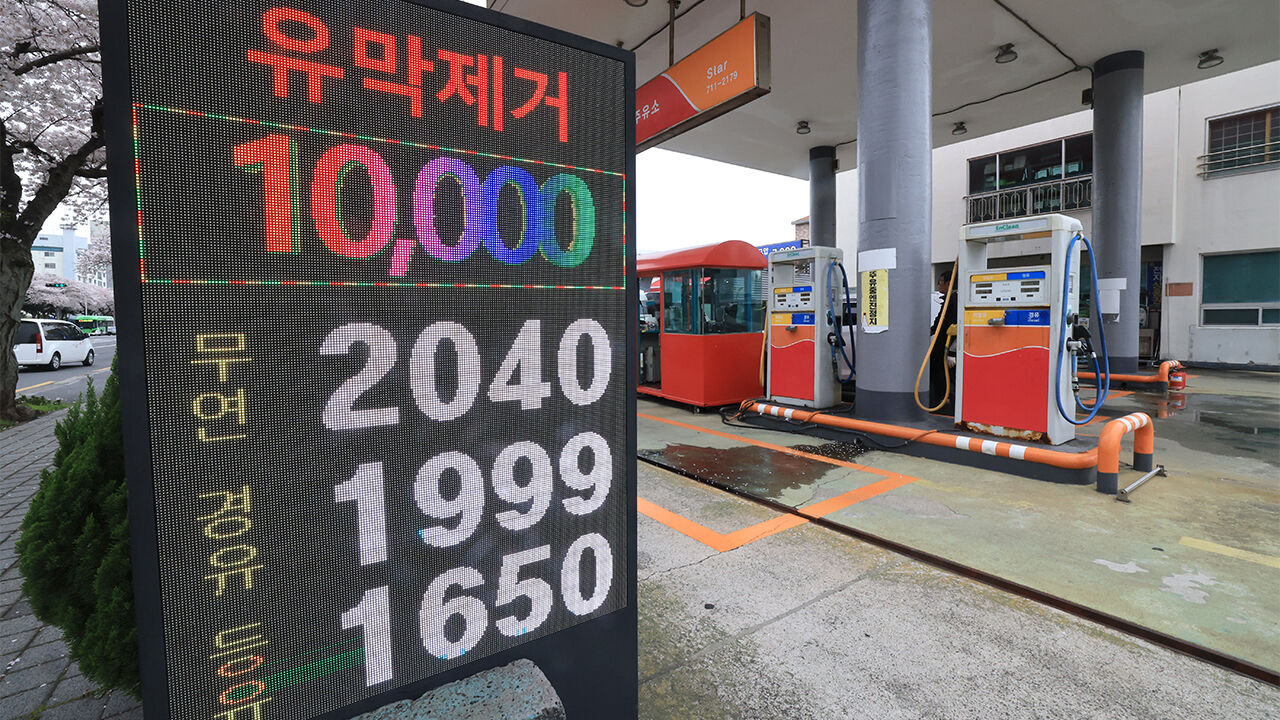
▲ A price board at a gas station in Jeju City displays gasoline at 2,040 won, diesel at 1,999 won, and kerosene at 1,650 won on April 6.
The Jeju branch of the Korea Oil Station Association (Jeju Gas Station Association), along with the Jeju Agricultural Cooperative and the Seogwipo Agricultural Cooperative, have been penalized for alleged price-fixing of light oil products, including gasoline, diesel, and kerosene, in the Jeju region.
The Korea Fair Trade Commission (KFTC) announced on July 6 that it has decided to issue corrective orders and impose a total of 2.05 billion won in fines on the Jeju Gas Station Association, the Jeju Agricultural Cooperative, and the Seogwipo Agricultural Cooperative for violating the Monopoly Regulation and Fair Trade Act.
Specifically, the fines are 30 million won for the Jeju Gas Station Association, 987 million won for the Jeju Agricultural Cooperative, and 1.033 billion won for the Seogwipo Agricultural Cooperative.
The Seogwipo Agricultural Cooperative received a larger fine due to its higher related sales volume.
The Jeju Gas Station Association is accused of receiving the next day's light oil selling prices in advance from the Jeju and Seogwipo Agricultural Cooperatives between September 2022 and July 2024 and setting them as the benchmark prices.
It was found that the association notified its member companies of these prices via group KakaoTalk chats and text messages, requiring them to comply.
The Jeju Gas Station Association was aware that setting and notifying benchmark prices violated the Fair Trade Act.
In fact, whenever news of other KFTC investigations into price-fixing surfaced, the association stopped posting benchmark prices in group chats and instead communicated them via phone calls, text messages, or in-person visits.
Furthermore, it requested that member companies delete price notifications and refrain from leaking them externally.
The investigation revealed that the Jeju Gas Station Association consistently urged both member and non-member gas stations to adhere to the benchmark prices, often via phone.
The Jeju and Seogwipo Agricultural Cooperatives were found to have actively participated in determining light oil prices by providing their next-day selling prices to the Jeju Gas Station Association before disclosing them on Opinet.
They also identified member gas stations selling below the benchmark price and reported them to the Jeju Gas Station Association to pressure them into compliance.
Additionally, they requested that the Jeju Gas Station Association urge non-member gas stations near their own facilities to comply with the prices.
As of the end of 2024, the Jeju Gas Station Association had 116 member companies, accounting for approximately 60 percent of all gas stations in Jeju.
The Jeju Agricultural Cooperative operates three gas stations, while the Seogwipo Agricultural Cooperative operates two.
Agricultural cooperative gas stations are classified as budget gas stations, which typically supply fuel at lower prices than regular stations.
This collusion was the result of aligned interests between the Jeju and Seogwipo Agricultural Cooperatives and other gas stations.
Operators of regular gas stations struggled to sell fuel if their self-determined prices were higher than those of the agricultural cooperative stations, so they sought to know the cooperatives' prices in advance to reflect them in their own pricing.
The Jeju and Seogwipo Agricultural Cooperatives also had an incentive to provide their prices in advance to the Jeju Gas Station Association to prevent intensified price competition caused by others selling at lower prices than their own.
The fact that Jeju is an island region, making it difficult for new external businesses to enter, served as a favorable condition for the collusion.
As a result of the price-fixing, the average price of gasoline in Jeju was up to 83 won per liter higher than on the mainland, while diesel was up to 150 won higher.
Kerosene was 53 won more expensive.
The KFTC stated that it plans to continue closely monitoring anti-competitive practices by business associations in the light oil market, which is closely tied to the daily lives of the public, and will take strict measures if violations are confirmed.
(Photo: Yonhap News)
※ Please note: This article was translated by AI and may contain errors.




 Video News