
 KOR
KOR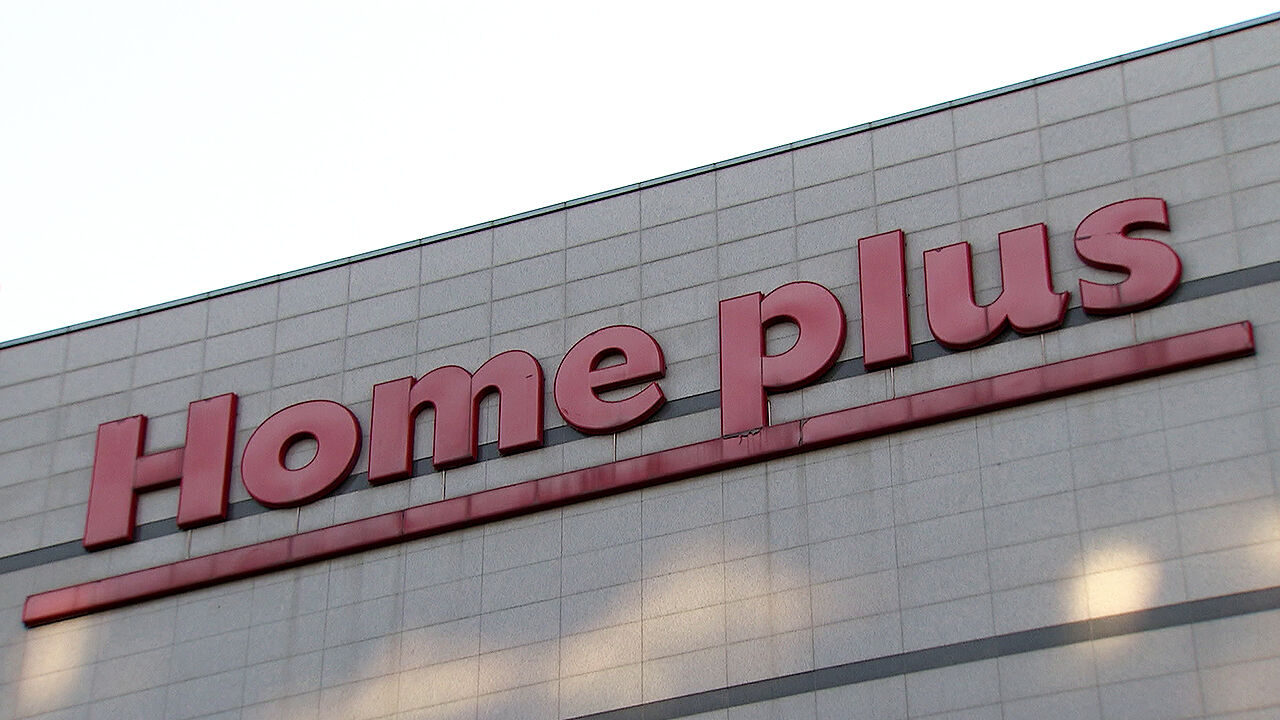
▲ Seoul Rehabilitation Court decides to terminate Homeplus rehabilitation proceedings
Homeplus, struggling with a stagnant market and cut off from funding, has effectively received a bankruptcy declaration.
The 4th Division of the Seoul Rehabilitation Court (Presiding Judge Jung Joon-young) decided today (July 3) to terminate the rehabilitation proceedings for Homeplus.
This comes one year and four months after Homeplus filed for corporate rehabilitation in March of last year.
Once the second-largest hypermarket chain in the country with over 140 stores, Homeplus has faced its worst-case scenario—corporate liquidation—following its acquisition by private equity firm MBK Partners and subsequent management difficulties amid the growth of e-commerce.
Concerns are mounting over widespread damage, affecting direct and indirect employees, store tenants, suppliers, and investors in electronic short-term bonds.
When the deadline for the rehabilitation plan was extended in March and May, there was a strategy to alleviate financial distress by selling the Homeplus Express business unit. However, even after the sale to NS Home Shopping was completed for 200 billion won, the liquidity crisis persisted.
The company attempted to streamline operations by closing 37 underperforming stores out of its 104 hypermarket locations and sought to sell the main hypermarket business, but no progress was made due to the downturn in the offline retail industry.
The primary reason for the failure to secure another extension was the inability to raise 200 billion won, the minimum capital required for rehabilitation.
The court had issued what was effectively an ultimatum, ordering the company to provide a plan for raising the 200 billion won by the end of June. However, the revised rehabilitation plan submitted by Homeplus failed to include a concrete plan for external funding.
The funding lifeline was cut off as a blame game dragged on between Homeplus's major shareholder, MBK Partners, and its largest creditor, Meritz Financial Group.
Meritz Financial Group had deposited 100 billion won in emergency operating funds into an escrow account, conditional on guarantees from MBK Partners and MBK Chairman Kim Byung-ju, but maintained that MBK must provide the remaining 100 billion won.
MBK countered that it had agreed to provide a corporate-level joint guarantee for the 100 billion won and argued that it had already borne hundreds of billions of won in direct and indirect financial and credit burdens through personal donations by Chairman Kim.
While the private equity firm and the financial holding company shifted responsibility to each other, Homeplus employees received their wages for April and May with delays and did not receive their June salaries at all.
The court appears to have concluded that there was no justification for further extensions, as the situation had not improved—and had in fact worsened—since March, when the deadline for the rehabilitation plan was previously extended.
In a press release issued today, the court explained, "As the rehabilitation plan is not feasible, we are terminating the rehabilitation proceedings without submitting it for deliberation and resolution at the creditors' meeting."
If an immediate appeal against the termination decision is not filed within 14 days, the decision will become final.
Even after the decision to terminate rehabilitation proceedings, Homeplus can file an immediate appeal within 14 days under the Debtor Rehabilitation and Bankruptcy Act.
However, the funding issue must be resolved, and in such a case, a re-application for rehabilitation proceedings is possible.
The court left a window open, stating, "If Homeplus files an immediate appeal after securing the funds, a justifiable reason may be recognized. In that case, the Seoul Rehabilitation Court panel could revoke the termination decision itself and designate a date for a creditors' meeting to deliberate and resolve the rehabilitation plan."
Nevertheless, observers note that the possibility of this is low, as it requires resolving the funding issue that has been the main obstacle to the approval of the rehabilitation plan, all within a two-week timeframe.
In this scenario, it is highly likely that Homeplus will eventually undergo a separate bankruptcy filing process within July.
If Homeplus files for bankruptcy, the court will appoint a bankruptcy trustee, who will then distribute the company's assets to creditors.
Given that Meritz holds trust collateral on 62 of Homeplus's self-owned stores, the role of the bankruptcy trustee is expected to be limited.
Ultimately, it appears Meritz will proceed with separate enforcement of its collateral rights, such as selling the stores.
Widespread damage is expected for Homeplus employees, store tenants, small and medium-sized enterprises (SMEs) that have not been paid for their supplies, and investors in electronic short-term bonds.
As of the end of last month, Homeplus had approximately 12,000 employees.
The social impact is expected to be significant, as these individuals, along with 1,000 indirectly employed workers in areas such as parking, cart management, and cleaning, face the prospect of unemployment.
The 150 SMEs and small business owners that supply Homeplus have yet to receive payments averaging 774 million won per company, and it is virtually impossible for them to recover these funds.
General commercial claims are subordinate, and Homeplus's cash assets amounted to only 10.4 billion won as of the end of February.
Investors in electronic short-term bonds, who are also considered subordinate creditors, are unlikely to recover their losses, which total 401.9 billion won.
※ Please note: This article was translated by AI and may contain errors.


 Video News
 Video News
 Video News
 Video News
 Video News