
 KOR
KOR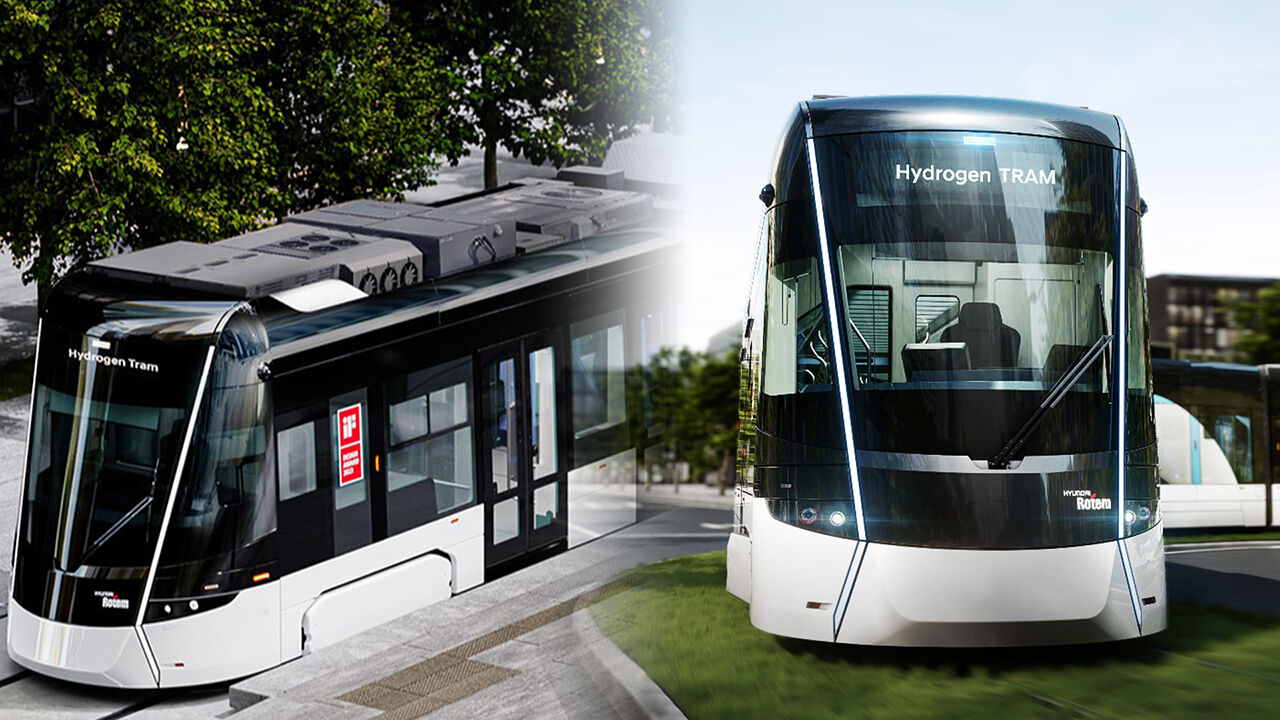
⚡ Spre Key Summary
While electric trams are gaining attention again as a carbon-free urban transportation option, hydrogen-electric trams that can run without overhead lines are emerging as an alternative.
The hydrogen-electric tram, developed and mass-produced by Hyundai Rotem, generates power using its own fuel cell and is scheduled to operate in cities like Daejeon and Ulsan after 2027.
With policies to replace diesel railways with hydrogen spreading, particularly in Europe, the hydrogen railway market is growing by nearly 30% annually. However, updating domestic regulations and securing price competitiveness remain challenges.
Why Electric Trams Are Gaining Attention Again
Decarbonizing urban transportation is no longer a task for the distant future. This is why electric vehicles and electric trams are drawing attention. Trams have consistently been considered a key option for eco-friendly urban public transit, as they can carry many passengers at once without emitting exhaust fumes.
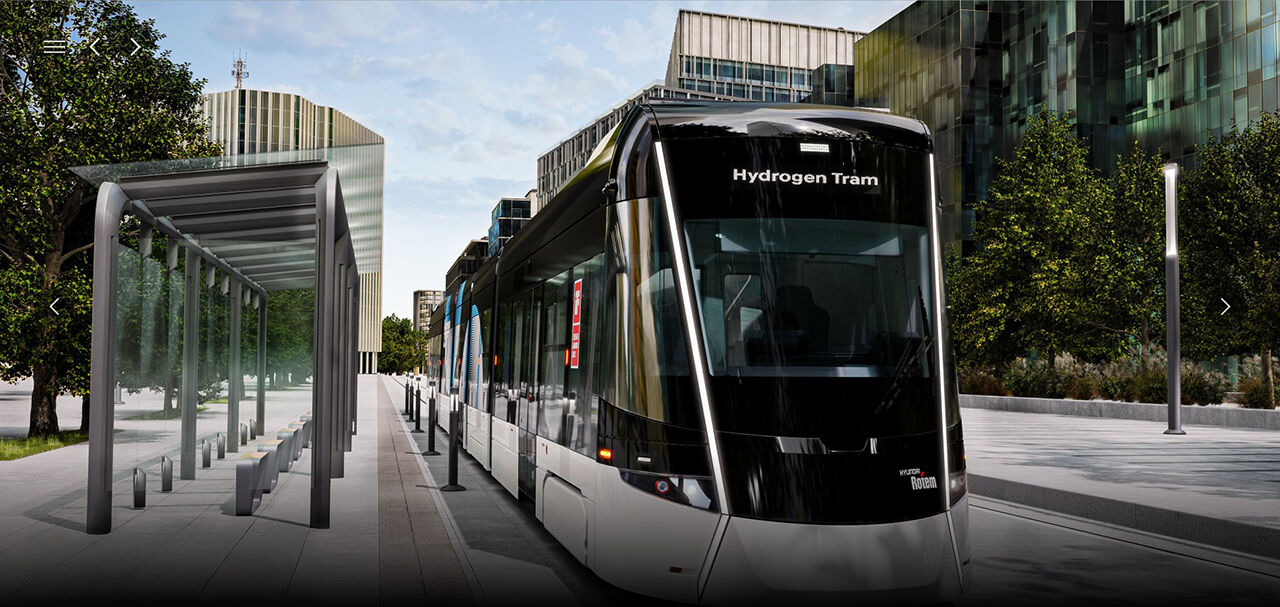
The issue is "how to supply electricity." Traditional electric trams must draw power from overhead catenary lines to move. Because this setup lines city centers with wires and utility poles, it can spoil the cityscape and often becomes a source of complaints, especially on routes near cultural heritage sites.
As a result, demand has grown for "catenary-free" trams that can run without overhead lines, leading to various attempted solutions such as batteries, supercapacitors, and hydrogen.
Why Hydrogen?
The reason hydrogen is drawing attention lies in its energy density. The supercapacitor method requires frequent, short charges at every stop, limiting the distance between stations to around 500 meters. The battery method is disadvantageous for long-distance operations due to storage capacity limits.
On the other hand, hydrogen allows for long-distance travel with short charging times. Another major advantage is that it produces zero carbon emissions, as the only byproduct of the process where hydrogen and oxygen meet to generate electricity is pure water.
This trend is not unique to South Korea. In Europe, efforts to replace diesel-powered railways with hydrogen to reduce carbon emissions are spreading rapidly. The Spanish government has provided policy funds for the development of high-speed hydrogen trains and the construction of hydrogen supply facilities, while the EU has begun standardization work to allow the construction of hydrogen fuel cell railway routes even on non-electrified sections. The UK has set a plan to replace all of its diesel railway vehicles with hydrogen and other eco-friendly alternatives by 2040. Although the hydrogen railway market is still in its early stages, it is growing at a rate of nearly 30% annually and is projected to reach approximately 30 trillion won in 10 years.
In South Korea, Hyundai Rotem is leading this trend. After completing the development of its hydrogen-electric tram between 2019 and 2024, the company has entered mass production, with commercial operations scheduled to begin in cities like Daejeon and Ulsan after 2027. However, with Hyundai Rotem's global railway vehicle market share standing at 2.1% (ranking 10th in the world), the key will be how it expands its presence in this emerging hydrogen railway market.
35 Meters Long, the Secret on the Roof
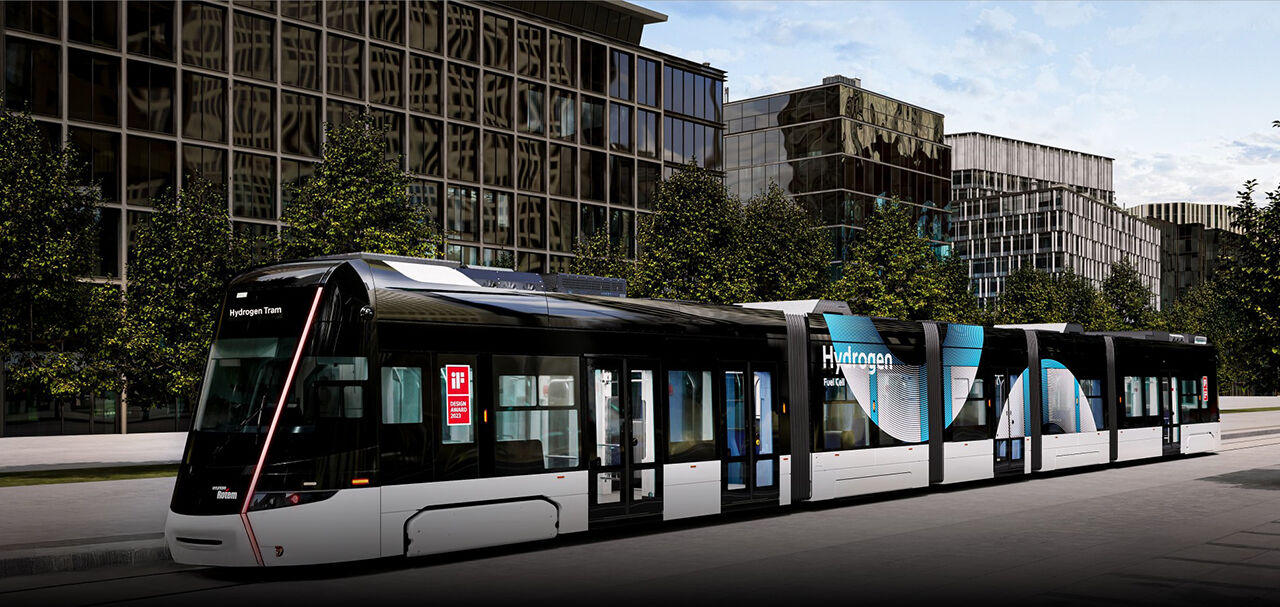
Hydrogen-electric trams generate power using their own fuel cells without the need for overhead lines. Kim Myeong-han, head of the Hydrogen Mobility Development Team at Hyundai Rotem, explains that this structure avoids spoiling the city's appearance and increases safety by eliminating high-voltage overhead lines.
The size is equivalent to four regular buses. It is 35 meters long, 2.65 meters wide, and 4 meters high, consisting of five modules with a passenger capacity of 245 people (up to 305 people). The mass-produced tram is equipped with twelve 175-liter hydrogen tanks, which translates to about 84 kilograms of hydrogen. When fully charged, it can travel more than 200 kilometers even when fully loaded.
The most expensive component is the fuel cell. Although the unit cost is high because a mass production system is not yet in place, prices are expected to gradually decrease as technology advances and production volume increases. While Hyundai Rotem has not disclosed the specific unit price of the vehicle, it is around 7.8 billion won based on Ulsan City's bidding announcement.
The design also incorporates meticulous details throughout. The flashing lights for night visibility follow standards similar to general road traffic laws, and the hydrogen fueling port is designed to communicate with the charging station during fueling, eliminating the risk of backflow. The doors are designed to be 1.3 meters wide, allowing wheelchairs and strollers to easily roll on and off horizontally.
In the driver's cabin, a monitor displaying fuel cell output, remaining hydrogen and battery levels, and malfunction information at a glance, along with 18 cameras, allows the driver to check the vehicle's internal and external conditions in real time. This design led to winning a main prize at the 2023 iF Design Award in Germany.
The fuel cells and hydrogen tanks are not easily visible to passengers. Because of the low-floor structure, which lowers the floor height to 35 centimeters above the ground, there is no space to place equipment underneath, so all key devices are positioned on the roof.
The Heart, Fuel Tank, Battery, Motor, and Safety Devices
There are four core components: the hydrogen fuel cell system that converts chemical energy into electrical energy, the hydrogen tank that safely stores hydrogen, the high-voltage battery that stores the generated electricity, and the motor that drives the wheels.
The operating principle is the same as Hyundai Motor's Nexo hydrogen fuel cell vehicle, but the shape is different. Instead of a vehicle-type engine structure, a newly developed "flat system" that minimizes height was applied. This system, installed on the roof under the name "FCPS (Fuel Cell Power System)," is designed by combining two fuel cells into a single module and adding a cooling device, as trams require much higher output than the Nexo or Xcient (hydrogen-electric truck) and sometimes need to generate power even when stationary.
The system is designed so that even if one fuel cell system stops, the remaining system can double its output to ensure a safe return to the depot.
Regarding safety concerns, Hyundai Rotem responded, "The applied fuel cells and hydrogen tanks are based on systems already proven in automobiles, have passed flame tests, bullet penetration tests, and drop tests in accordance with international standards, and are equipped with double and triple protection devices."
The manufacturing process is also demanding. Unlike regular trams, stainless steel is used to satisfy both the rigidity required to support heavy equipment and lightweighting. The completed vehicle undergoes load testing for over a month to inspect for any deformation or welding defects. It takes more than a year from body fabrication to completion, relying mostly on manual labor rather than automated lines.
Not Immediately, but the Direction Is Clear

It is difficult for hydrogen-electric trams to become a common mode of transportation immediately. In South Korea, mixed-use routes where cars and trams run on the same road are not yet permitted. Unlike in Europe, both the Road Traffic Act and the Railroad Safety Act apply overlappingly in Korea, meaning that for the time being, trams will only operate on dedicated tram tracks. It is also difficult for vehicle prices and fuel cell unit costs to be competitive until mass production is achieved.
However, the long-term direction seems clear. The advantages of hydrogen trams as a catenary-free transportation method that can simultaneously solve the three challenges of urban aesthetics, safety, and carbon emissions are distinct. As advanced railway nations, including those in Europe, push for a transition from diesel to hydrogen through policy, the market itself is expected to continue growing.
Hyundai Rotem has also announced plans to expand the technology accumulated from trams to hydrogen-electric cars, hydrogen locomotives, and eventually high-speed hydrogen trains. The key lies in how quickly regulatory frameworks can be updated and price competitiveness secured.
Deep Dive Q&A
Q. Why use hydrogen for electric trams?
While regular electric trams receive power from overhead lines, these lines can spoil the urban landscape and often lead to complaints near cultural heritage sites. Hydrogen can generate power through its own fuel cell, eliminating the need for overhead lines. It also has a higher energy density than battery or supercapacitor methods, allowing for long-distance travel with short charging times.
Q. What is the likelihood of hydrogen-electric trams establishing themselves as an eco-friendly mode of transportation?
With policies to replace diesel railways with hydrogen spreading, particularly in Europe, the hydrogen railway market is growing by about 30% annually. However, in South Korea, mixed-use routes with cars are not yet possible due to conflicts between the Road Traffic Act and the Railroad Safety Act. Additionally, because fuel cell unit costs will remain high until mass production is achieved, the technology is more likely to expand gradually, focusing on dedicated routes rather than becoming widely adopted immediately.
Q. Why are the fuel cells and hydrogen tanks installed on the roof of the tram?
Trams have a low-floor structure that lowers the floor height to 35 centimeters above the ground, leaving no space to place equipment underneath. For this reason, the vehicle is designed with all core equipment, including the fuel cell power system (FCPS) and hydrogen tank modules, positioned on the roof.
※ Please note: This article was translated by AI and may contain errors.





 Video News
 Video News