
 KOR
KOR
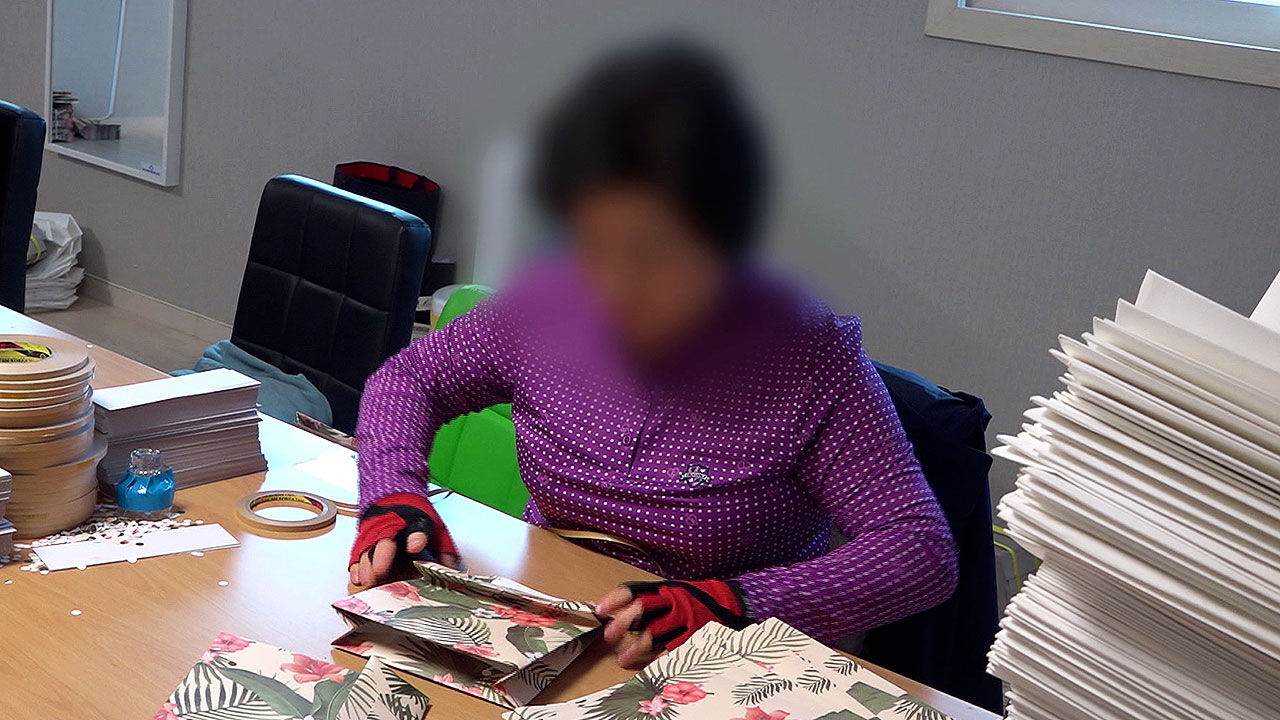
A study has revealed that while the number of working elderly women is increasing, the income gap between them and their male counterparts remains significant.
The Korean Women's Development Institute released the results of its analysis on "The Status of Old-Age Income for Elderly Women and Employment Support" today (June 17).
According to the analysis, the employment rate for women aged 60 and older rose by 9.5 percentage points (p) from 29.5% in 2015 to 39.0% last year.
During the same period, the employment rate for men aged 60 and older increased by 4.4 percentage points from 51.2% to 55.6%, narrowing the gender employment gap from 21.7 percentage points to 16.6 percentage points.
Although the employment gap has narrowed, the income gap remains persistent.
As of 2022, the average personal income for men aged 60 to 79 was 22.78 million won, while the average personal income for women in the same age group was 9.2 million won, which is 40.4% of the men's level.
Looking specifically at earned income, the average for men aged 60 to 79 was 14.74 million won, whereas the average for women in the same age group was 5.38 million won, amounting to only 36.5%. The gap was even wider for public pension income, with the women's average at 1.86 million won, just 30.9% of the men's average (6.02 million won).
The study also confirmed that elderly female workers are relatively more vulnerable in terms of social insurance and retirement benefits.
Among wage earners aged 60 to 79, the rates of non-enrollment in the National Pension and employment insurance were both higher for women than for men, and women were also more likely to be excluded from retirement benefits than men.
Kim Nan-joo, a research fellow, emphasized, "While the number of elderly female workers is increasing, they remain more vulnerable than men in terms of personal income, social insurance, and retirement benefits," adding, "Employment support for elderly women should not stop at simply increasing the number of jobs, but should lead to stable income and financial safety nets."
※ Please note: This article was translated by AI and may contain errors.
Elderly Women's Personal Income at 40% of Men's; Vulnerable to Lack of Social Insurance and Retirement Benefits
Copyright Ⓒ SBS & SBSi. All rights reserved.
Copying, redistribution, and unauthorized use in AI training are strictly prohibited.
Copying, redistribution, and unauthorized use in AI training are strictly prohibited.

![[단독] 해외 출장마다 배우자 동행…철저히 숨긴 선관위](http://img.sbs.co.kr/newimg/news/20260617/202193703_300.jpg) Video News
Video News
![[단독] 친부 때문에 사망한 아이…블랙박스에 충격 장면](http://img.sbs.co.kr/newimg/news/20260617/202193736_300.jpg) Video News
Video News
 Video News
 Video News
 Video News