
 KOR
KOR
▲ A pear orchard destroyed due to an outbreak of fire blight
"How would you feel having to bury apple and pear trees in the ground that you've grown for six years?"
Farmer A, who runs a 300-square-meter orchard of apples, pears, and peaches in Ilsandong-gu, Goyang, Gyeonggi Province, could not continue speaking, letting out a deep sigh.
On May 27, he noticed that the branches of his apple trees had turned pitch black as if burned, and reported it to the Agricultural Technology Center.
The test result came back as a bolt from the blue: the trees were infected with fire blight.
Fire blight is a highly contagious bacterial disease that mainly affects plants in the Rosaceae family, such as apples and pears. When infected, the leaves, flowers, branches, stems, and fruits of the plants wither and turn reddish-brown or black.
Since its first outbreak in Anseong, Gyeonggi Province, in 2015, the disease has consistently occurred. Because there is no vaccine or cure and it spreads rapidly, containment relies mostly on burying the infected trees, earning it the nickname "orchard plague."
For Goyang, which had not previously recorded any cases of fire blight, the shock was even greater for Farmer A.
Farmer A expressed his heartbreak, saying he could not bear to watch all 40 of his cherished trees being uprooted and buried in the ground in accordance with quarantine protocols.
What makes it even more painful for Farmer A is that the damage from fire blight is not just an immediate issue.
Orchards shut down due to fire blight cannot plant new fruit trees until 18 months have passed.
Considering it takes about six years from planting saplings to harvesting, farming is effectively blocked for nearly eight years.
Farmer B, who has been growing apples for 16 years in Miwon-myeon, Sangdang-gu, Cheongju, North Chungcheong Province, also suffered from fire blight for the first time this year.
One of his 13 orchards, measuring 2,640 square meters, had to be completely buried.
"I thought it might cross over to our side since fire blight occurs every year in neighboring Goesan County, but experiencing it firsthand leaves me feeling utterly lost," Farmer B lamented. "I am anxious every day, worrying whether the bacteria has already spread to neighboring orchards."
He added, "If there are trees where the bacteria is dormant, I am even more worried about next year and the future, so I cannot let my guard down."
Farmers also complain that fire blight has changed the atmosphere of their neighborhoods.
On June 16, a heavy silence hung around an apple orchard in Yesan County, South Chungcheong Province, following quarantine work.
After the diagnosis was confirmed, excavators came in to uproot the infected trees. The site, where workers in protective suits had been moving around the orchard, was left empty, exposing only bare soil.
Fearing a potential spread, neighboring farmers frequently checked the condition of branches and leaves while keeping conversations with neighbors to a minimum.
According to farmers, when fire blight occurs, there is also significant concern over secondary damage caused by the stigma of being an affected farm, going beyond the simple loss of fruit trees.
Once a farm is known to have an outbreak, it draws cold stares from neighbors and can negatively impact transactions for other agricultural products.
An official from Yesan County said, "Since Yesan is a major apple-producing region, the issue of fire blight is directly linked to farmers' livelihoods. Farmers are extremely sensitive, and even phone calls are handled with great caution."
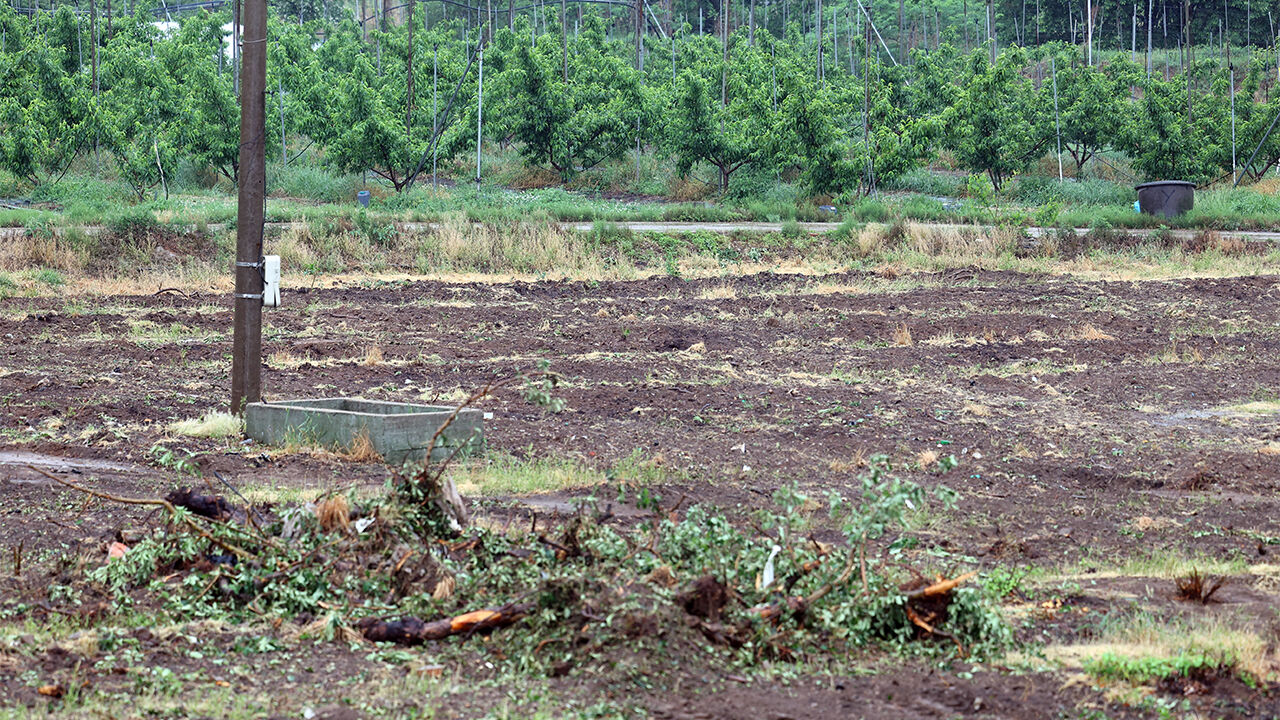
According to agricultural authorities on Wednesday (June 17), since the year's first case of fire blight was confirmed at an apple farm in Chungju on May 14, a cumulative damage of 44.62 hectares has been recorded across 106 farms nationwide as of June 15.
By region, North Chungcheong Province had the most cases with 46 locations (18.57 hectares), followed by Gyeonggi Province with 24 locations (11.04 hectares), South Chungcheong Province with 19 locations (9.6 hectares), North Jeolla Province with 8 locations (2.76 hectares), Gangwon Province with 6 locations (2.21 hectares), and Sejong with 3 locations (0.44 hectares).
The Ministry of Agriculture, Food and Rural Affairs raised the fire blight crisis level to "Warning" (issued when multiple outbreaks occur in existing areas or when it spreads to new provinces) on May 5 and has since been strengthening its response system.
To this end, the ministry has set up control rooms at the Rural Development Administration and municipal and county Agricultural Technology Centers to strengthen monitoring and quarantine efforts, while also tracking supply and demand trends for apples and pears.
In addition, a cooperative system among related organizations is being operated to ensure prompt reporting, precise diagnosis, and emergency quarantine measures when suspected symptoms are detected.
An official from the agricultural authorities urged, "To prevent the spread of fire blight, active reporting by farms when suspected symptoms appear is crucial. Furthermore, please thoroughly disinfect tools during farm work and refrain from visiting other orchards as much as possible."
Reports regarding fire blight can be made to the hotline (1833-8572) or related organizations, including municipal and county Agricultural Technology Centers.
(Photo: Yonhap News)
※ Please note: This article was translated by AI and may contain errors.

![[단독] 해외 출장마다 배우자 동행…철저히 숨긴 선관위](http://img.sbs.co.kr/newimg/news/20260617/202193703_300.jpg) Video News
Video News
![[단독] 친부 때문에 사망한 아이…블랙박스에 충격 장면](http://img.sbs.co.kr/newimg/news/20260617/202193736_300.jpg) Video News
Video News
 Video News
 Video News
 Video News