SBS NEWS
'Final Interview' Earns a Passing Grade for Fresh Concept and Stellar Ensemble Cast
Published : Nov 4, 2026 2:40 PM

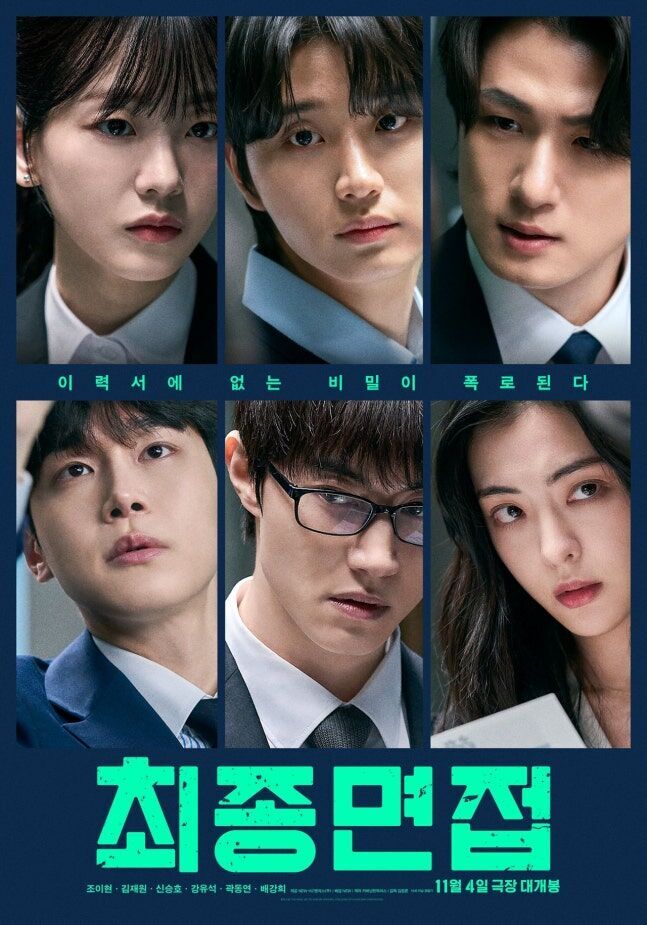
The anxiety and uncertainty embedded in the term "job seeker" eat away at the boundless potential and hope of youth. Job hunting entails a level of fierce, ruthless competition often likened to war, as countless young people struggle to beat slim odds.
Released on November 4, the film "Final Interview" (directed by Kim Jung-hoon) blends the realistic subject of job hunting with psychological warfare inside an interview room to craft an engaging mystery thriller.
Amid a job market frozen solid by COVID-19, applicants Hyein (Cho Yi-hyun), Jinwoo (Kim Jaewon), Seungbin (Shin Seungho), Heechan (Kang Youseok), Yohan (Kwak Dong-yeon), and Joowon (Bae Gang-Hee) advance to the final interview for a prominent conglomerate. Having bonded and fostered friendships throughout the recruitment process while holding onto the hopeful dream that all of them would be hired, they are confronted just before the final interview with the company's announcement that only one person will pass.
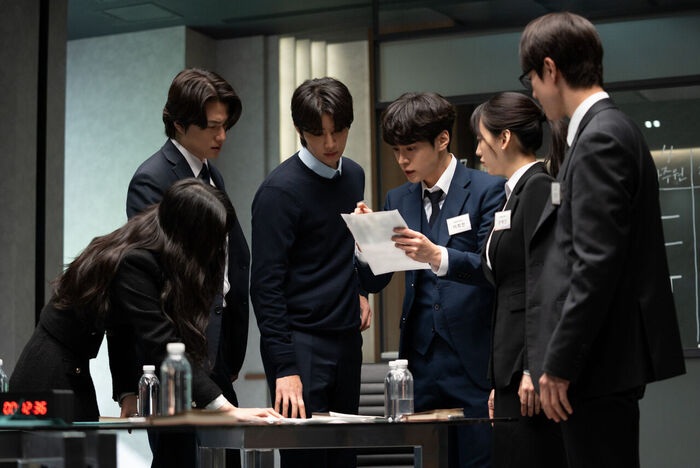
The mission assigned by the company for the final interview is to "decide on a single passing candidate through an open vote over the course of two hours". At this point, they receive anonymous envelopes bearing the names of each of the six applicants, and an eerie tension begins to fill the interview room.
United under the shared cause of "everyone passes," the six candidates had already begun showing invisible cracks upon the company's notice that only one would be selected. Here, the envelopes serve as a trigger. With each envelope opened, the unexpected flaws and dark secrets of the contenders are revealed, providing fuel for them to turn on and attack one another. While opening each envelope leads to a collapse of trust and disappointment in others, it also creates opportunities for individual gain. As the situation escalates into one where competitors must be eliminated to secure votes for oneself, the six contenders unleash their latent desires and selfishness.
"Final Interview" seeks the distinct appeal of a locked-room thriller. By setting the story within the confined space of an interview room and a physical time frame of two hours, it drives the narrative like a survival game where passing or failing directly equates to life or death. This setup effectively conveys an intense sense of urgency and tension, making viewers feel as though they are inside the interview room themselves.
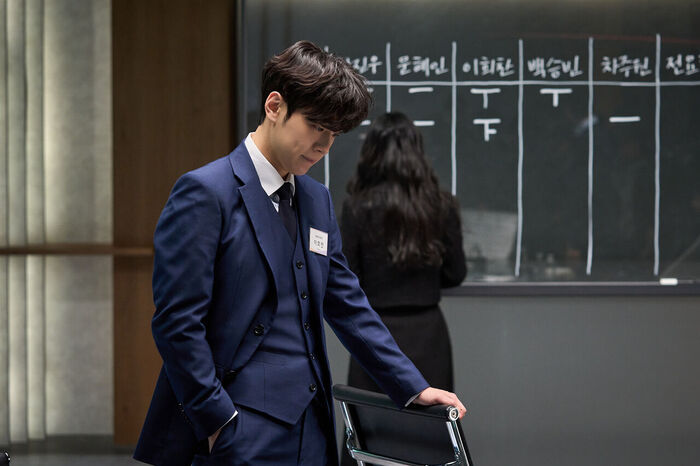
The film also adopts a structure that moves between past and present, as the sole candidate who passed the interview interviews the contenders who were eliminated. Presenting the two-hour final interview in near real-time creates a continuous sense of present tension, while the editing that crosscuts between past and present deepens the mystery by prompting viewers to deduce both the identity of the final hire and the sender of the envelopes.
The film is based on Japanese author Asakura Akinari's novel "Six Lying College Students". Director Kwon Oh-kwang, who helmed "Tazza: One Eyed Jack," penned the screenplay, incorporating the unique societal conditions and culture of South Korea's job-hunting landscape. In particular, the pandemic-era COVID-19 setting functions as a steep threshold heightening the hurdles of the job market, while themes such as cults, school bullying, and academic and social elitism are woven into the narratives of individual characters to deliver extreme realism.
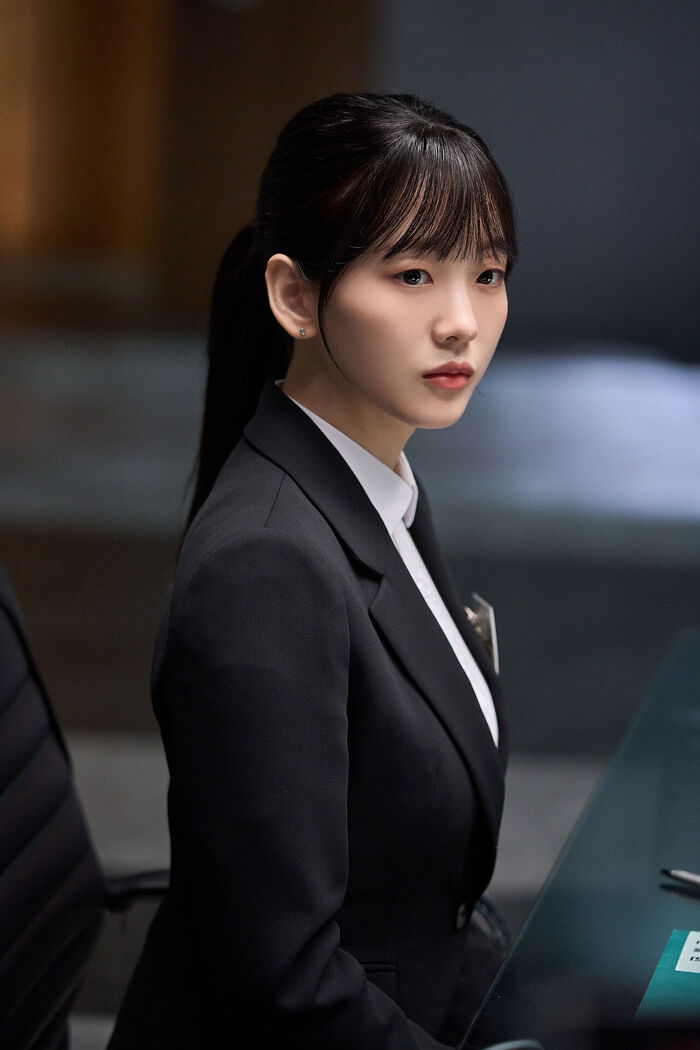
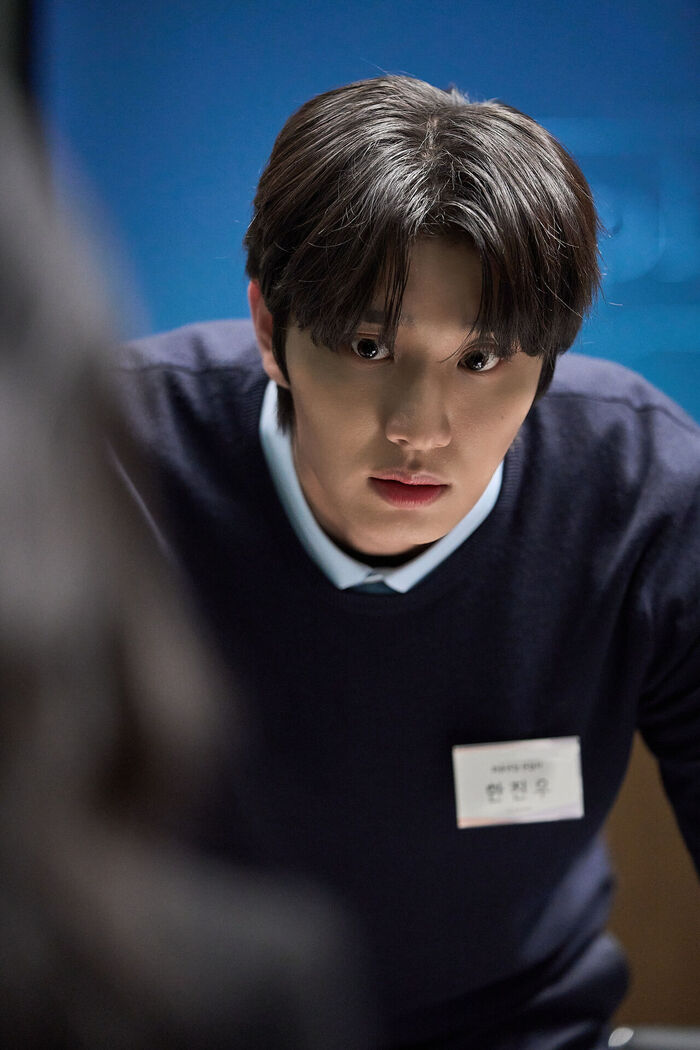
In films adopting this genre and structure, the most crucial elements are the density of the deduction and the freshness of the plot twists. In that regard, "Final Interview" exposes some shortcomings. After sustaining the desperation of the employment battle well through its midpoint, the story blurs its core with the complacent choice of injecting romance into the latter half. Furthermore, a rushed conclusion that fails to give sufficient narrative weight to the envelope sender's actions and motives leaves a sense of disappointment, as the tight mystery and tension maintained until the middle abruptly unravel.
Nevertheless, the skill with which the realistic subject matter is integrated into genre conventions remains impressive. Above all, the fresh faces of the actors playing the six central characters and the fiery energy they radiate bring brightness to the film.
"Final Interview" is a film made with a production budget of approximately 4 billion won. In a theatrical landscape where big-budget films wage war, it represents a rare, frugal, and clever low-budget project.
(SBS Entertainment News | Kim Ji-hye)
Copyright Ⓒ SBS. All rights reserved. Unauthorized reproduction, redistribution, and use for AI training are prohibited.