SBS NEWS


Stolen Bitcoin Alone Equals Three Times North Korea's Annual Exports
However, it appears unlikely that the hacking organization or North Korea will be able to take all $6.3 billion. The issuers of stablecoins pegged to the U.S. dollar, such as USDT and USDC, have the ability to intervene. Tether and others can blacklist wallets suspected of being used to siphon funds, immobilizing those assets. Indeed, Binance stated that it has frozen or secured approximately $3 billion of the total stolen funds. It hopes to reduce actual losses by recovering and neutralizing a significant portion of the stolen assets through partnerships with global law enforcement agencies.
Why the Plunder Could Not Be Stopped Despite Being Watched
1. Theft of Private Keys and the Irreversibility of Currency Transfers
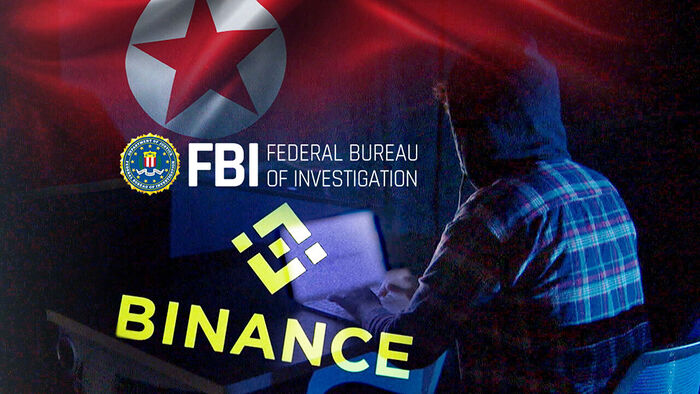
Cryptocurrencies like Bitcoin and Ethereum operate on blockchains. This means there is no centralized authority governing currency issuance and circulation. Consequently, cryptocurrency movements possess the irreversible characteristic of not being arbitrarily undoable. In this incident, the hacking group reportedly infiltrated the laptop of an internal Binance engineer. Through this, they seized core administrator privileges and multisignature private keys, thereby securing legitimate signing authority. Therefore, from the perspective of the blockchain network, this heist was processed not as an exploit, but as legitimately signed withdrawal transfers. Once the master key to the vault has fallen into wrong hands, it is nearly impossible to stop the perpetrators even by setting up barricades along the path carrying out the stolen cash.
2. Automated, Large-Scale Distributed Withdrawal Speed
Binance's security team detected abnormal withdrawal patterns through monitoring and moved to shut down systems or freeze deposits and withdrawals. However, during the several to dozens of minutes it took to execute these measures, the attackers utilized pre-designed automated trade execution systems and automated instruction generation to simultaneously trigger hundreds of transactions per second across wallets on more than 10 major chains.
Through this, North Korean hackers split and moved the stolen virtual assets multiple times, crossing between different cryptocurrency networks to convert them into assets like Bitcoin and Ether. This method involves converting assets residing on one network into non-freezable Bitcoin or Ether and moving them to new electronic wallets on other networks. As hackers fragmented funds across hundreds of addresses and repeatedly hopped across blockchains, tracing became increasingly complex over time. Points where asset movements could be frozen dwindled, and the flow of funds spread into unmanageable on-chain realms.
The Culprit Is North Korea, Yet Action or Punishment Remains Impossible
1. Complete Economic Isolation and 'Sanctions Immunity'
North Korea has already been completely severed from the international financial system due to decades of accumulated UN Security Council resolutions and unilateral U.S. financial sanctions. For an ordinary country, economic sanctions or asset freezes would deal a fatal blow. But for North Korea, which has virtually no target assets subject to sanctions and no normal trade relations left, additional economic levers of pressure are essentially exhausted.
2. Absence of Judicial Jurisdiction over Cyber Criminals
Operatives from groups like Lazarus and Andariel, who spearheaded the hack, operate from locations such as Pyongyang under state orders and under the protection of North Korea's Reconnaissance General Bureau. Unless North Korea complies with extradition, there are no physical or judicial enforcement mechanisms to bring them before U.S. or South Korean courts. Naturally, it is unthinkable that North Korea would ever hand over these operatives, who serve as its greatest foreign currency earners, to foreign judicial authorities.
3. Non-cooperation from China and Russia and a Paralyzed UN Security Council
The mandate extension of the UN Security Council Sanctions Committee's Panel of Experts, which oversaw the enforcement and monitoring of sanctions against North Korea, previously fell through due to Russia's veto. In effect, the related functions of the Security Council have been paralyzed. The primary conduits through which North Korean hackers convert laundered cryptocurrency into physical cash such as yuan or rubles are Chinese and Russian brokers or black markets. Given the posture of both nations, which even paralyzed the UN Security Council, it is difficult to expect cooperation in cutting off the final cash-out channels at their source.
4. Impossibility of Physical Retaliation, Including Military Action
Launching physical airstrikes or all-out war against North Korea, a nuclear-armed state, over a cyberattack is out of the question. The risk of escalation is far too great for it to be a realistic or proportional response. Consequently, the only options are technical blocks, such as blacklisting identified wallet addresses or attempting on-chain freezes. This means there are no effective punitive measures available.
'Modern-Day Vikings' North Korea
The most representative historical example of obtaining the core output of a national economy through plunder is the Vikings. The Vikings also expanded across all of Europe, and even down into the Mediterranean regions of southern Europe, to pillage goods and enslave populations. A barbaric practice carried out 1,000 years ago, before civilization and order were firmly established, is now taking place in the 21st century with only its stage relocated to digital financial assets. What is more, it requires shedding no physical blood, crossing no borders, and taking virtually no risks while hiding behind a nuclear deterrent. In an environment now augmented with the new weapon of AI, there are genuine concerns that North Korea's cyber plundering might prove to be a more promising enterprise than South Korea's semiconductors.
※ Please note: This article was translated by AI and may contain errors.
Copyright Ⓒ SBS. All rights reserved. Unauthorized reproduction, redistribution, and use for AI training are prohibited.