SBS NEWS
US-Iran 'Indirect Talks' Underway Amid Pressure of Renewed Attacks
Published : Oct 29, 2026 11:20 AM

▲ US President Donald Trump
While the United States is preparing for large-scale attacks against Iran following the midterm elections on November 3, it also appears to be pursuing behind-the-scenes talks through mediators.
As the United States uses military pressure as leverage to demand "nuclear concessions" from Iran, attention is focused on whether the two sides can narrow their differences over the nuclear issue and avoid a resumption of war.
US online media outlet Axios reported on the 28th, local time, that Middle Eastern mediators led by Qatar are pushing for a diplomatic agreement to resume negotiations between the US and Iran and prevent the war from restarting after the midterm elections.
The United States has been building up its military forces in the Middle East and coordinating with Israel on additional strikes against Iran.
Observers note that if a last-minute agreement is not reached, bombing operations could resume immediately after the midterm elections.
President Trump has also signaled multiple times that he could launch a major attack on Iran once the midterm elections are over.
However, he has not ruled out the possibility of reaching an agreement with Iran at the same time.
In an interview with Axios, President Trump confirmed that negotiations with Iran are underway through mediators.
He stated, however, that it remains to be seen whether the negotiations will yield results.
"We have to get it done, whether it's through a deal or some other way," he said, adding, "We'll see if a deal can be made."
The United States is also reported to have attempted direct contact.
The Wall Street Journal (WSJ) reported that US Vice President JD Vance, at the direction of President Trump, sent a letter to Mohsen Rezaei, secretary-general of Iran's Supreme National Security Council and a hardline security figure, to propose the resumption of negotiations.
The letter reportedly focused mainly on establishing a framework for negotiations rather than a specific peace plan.
Iran has also left the door open for a diplomatic solution.
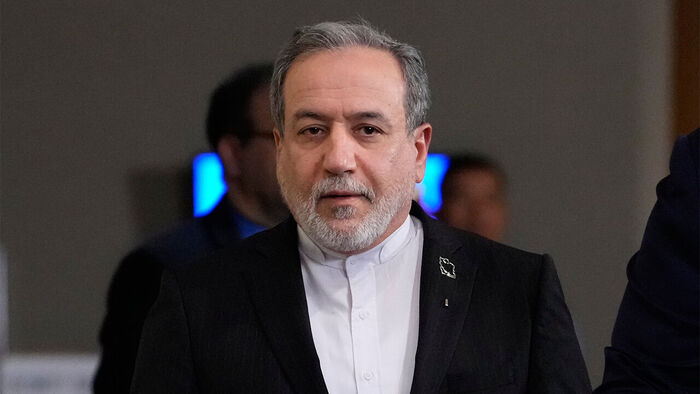
Iranian Foreign Minister Abbas Araghchi posted on X (formerly Twitter) on this day, stating, "While our armed forces are fully prepared to defend our homeland, Iran continues to give diplomacy a chance to succeed."
He added, "We are in close and continuous contact with mediators and are reviewing ideas to implement our 7-day plan even faster than within a week."
The "7-day plan" entails reopening the Strait of Hormuz if the United States fulfills conditions such as lifting maritime blockades, releasing frozen assets, and exempting Iranian crude oil exports from sanctions.
Iran proposed this to the United States last month.
The core issues in the negotiations between the two sides are Iran's nuclear program and the easing of US sanctions.
The United States has maintained its stance that the nuclear issue must be addressed from the early stages of negotiations, demanding that Iran give up its stockpiles of enriched uranium.
In particular, President Trump faced domestic criticism that he made excessive concessions to Iran when he signed a memorandum of understanding (MOU) on ending the war with Iran last June.
Given the political situation within the United States, he is now in a position where he must pull off a more advanced agreement than before.
Consequently, observers note that a certain level of concession from Iran is necessary regarding the nuclear issue, which was previously pushed to the back burner.
On the other hand, Iran has countered that the focus of negotiations should be prioritized on reopening the Strait of Hormuz and ensuring safe navigation.
Its stance is that the United States must first lift the maritime blockade and release frozen funds, and that nuclear issues should be discussed thereafter.
In response, the Qatari side has reportedly proposed a compromise to narrow the gap between the two sides' positions.
According to Axios, one of the proposals currently under discussion is for Iran to restore the agreement it signed with the International Atomic Energy Agency (IAEA) last year, permitting inspections of nuclear facilities damaged by US and Israeli airstrikes.
Under this plan, in exchange for Iran allowing inspections of its nuclear facilities, it would receive partial exemptions from sanctions on crude oil exports and be allowed to use a portion of its frozen funds to purchase humanitarian goods.
This would allow the United States to secure justification for having extracted some concessions regarding the nuclear issue while Iran would not have to immediately abandon its enriched uranium.
Mediators are persuading Iran that accepting this proposal may be the only way to avoid a large-scale attack after the midterm elections.
Security officials from Saudi Arabia, Turkey, and Pakistan who recently visited Tehran delivered the same message, and sources cited by Axios reported that the Iranian side responded by saying it would seek approval from Supreme Leader Ayatollah Mojtaba Khamenei.
(Photo: AP, Yonhap News)
※ Please note: This article was translated by AI and may contain errors.
Copyright Ⓒ SBS. All rights reserved. Unauthorized reproduction, redistribution, and use for AI training are prohibited.