SBS NEWS
"Either Far Left or Far Right": Why Exhausted Youths Are Splitting into Political Extremes
Published : Oct 16, 2026 9:04 AM
Oh-Graph

⚡ Quick Summary
Young voters in Berlin, Germany, and New York, United States, are overwhelmingly backing radical socialist parties and candidates, fueled by heavy housing cost burdens and deep distrust in the capitalist system.
Frustrated by incomes failing to keep pace with soaring housing prices, youth are turning away from mainstream moderate parties and rallying behind political extremes that voice their grievances.
Globally, including across the United States and Europe, the ideological gender divide among younger generations has widened sharply, with South Korea emerging as the most extreme example of this gender polarization.
Today's story begins with the state parliament election held in Berlin, Germany, this past September. For the first time in history, The Left (Die Linke) emerged as the single largest party in this election.
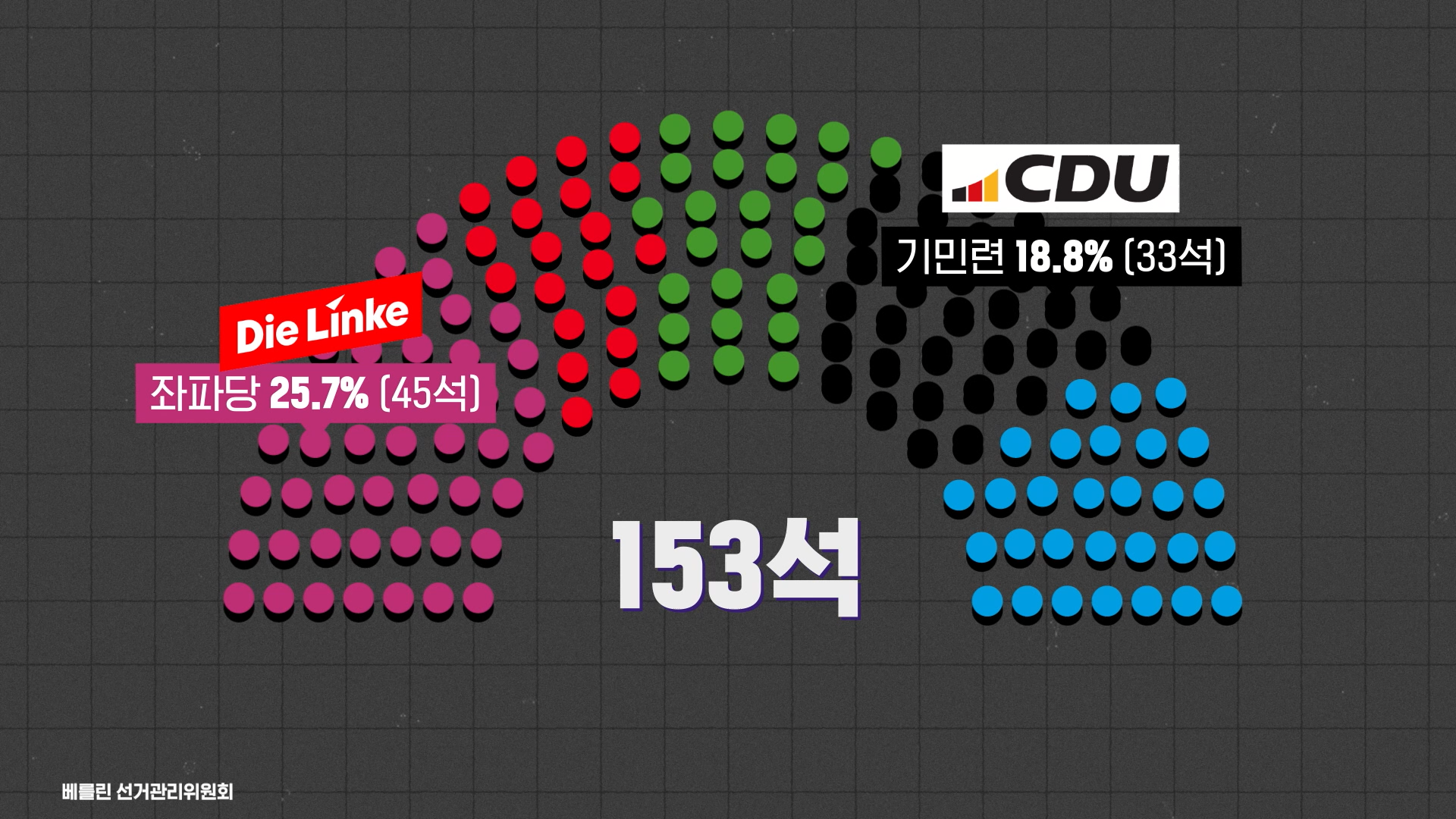
The Christian Democratic Union (CDU), the incumbent top party, secured 18.8% of the vote, while The Left garnered a remarkable 25.7%, winning a total of 45 seats. However, as the Berlin state parliament has 153 seats in total, this falls short of the 77 seats required for a majority. Because The Left cannot govern alone, it must form a coalition with other parties; if successful, it could produce Berlin's first-ever mayor from The Left.
The reason this outcome is particularly striking lies in the fact that The Left had traditionally enjoyed strong support only in the former East Berlin area. By origin, The Left traces its roots back to East Germany's Socialist Unity Party of Germany. Naturally, genuine communist members are scarce in The Left today, with the vast majority adhering to democratic socialism—seeking democracy as their political system and socialism as their economic framework. Yet in this election, The Left pulled off an extraordinary vote share right in central Berlin.
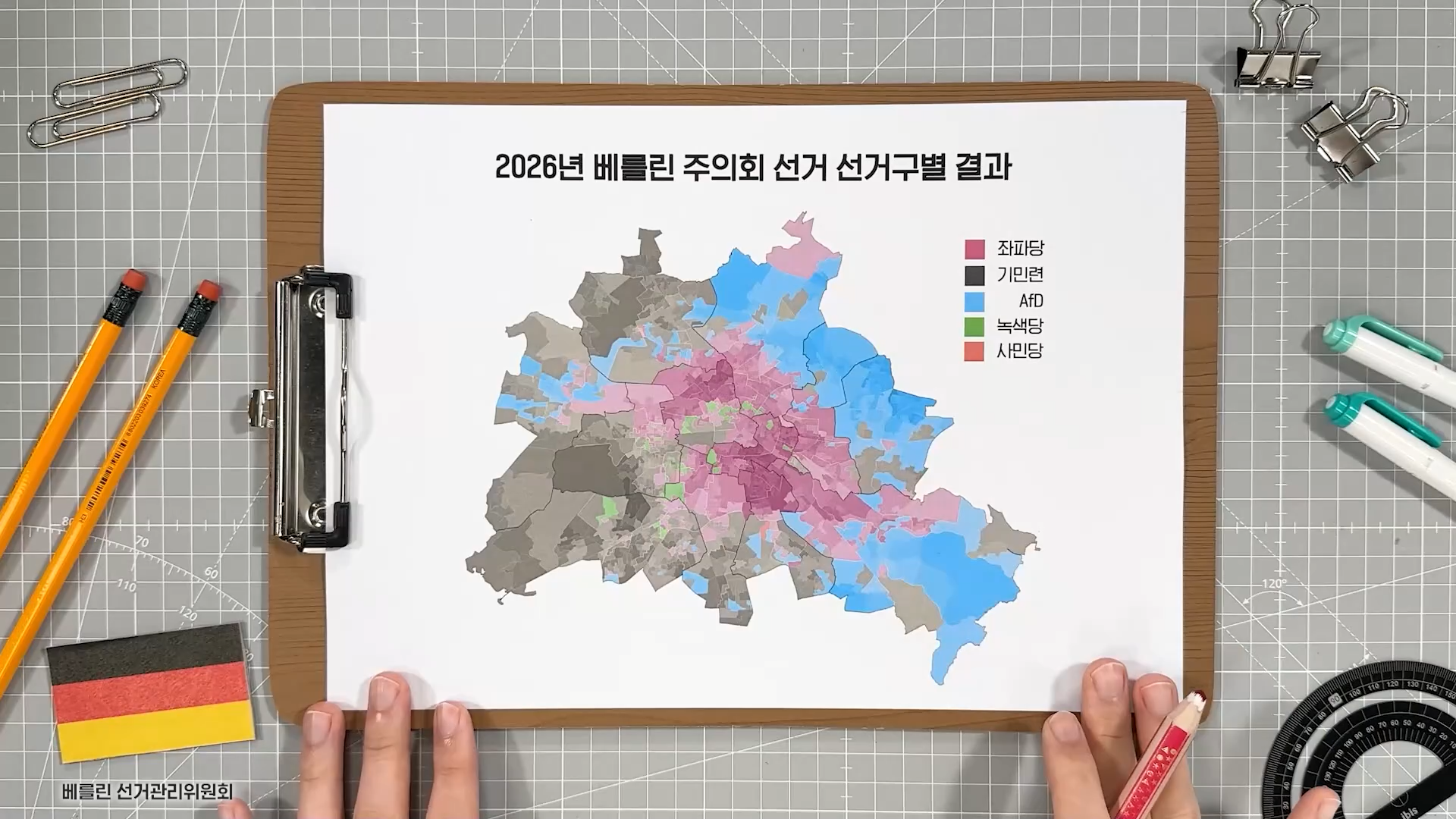
The map above displays the vote shares by Berlin electoral district. As shown, support for The Left is considerable across downtown Berlin. This region previously favored the Green Party, but The Left surged this time around. In contrast, the far-right Alternative for Germany (AfD) showed persistent strength in outer districts.
Just two years ago, The Left was a party facing the threat of losing parliamentary representation altogether. Back then, a prominent figurehead left the party to establish a new political faction, sending poll numbers plunging. Furthermore, its traditional strongholds in the former East German states continued to erode, with the far-right AfD filling that vacuum.
The Left pursued a sweeping organizational overhaul, and the pivot succeeded. Around 70% of new party recruits came from western Germany, and the proportion of female members rose substantially. The leadership successfully executed a generational shift, capturing young people by actively communicating through platforms like TikTok. After hovering around 50,000 members at the end of 2023, The Left staged a comeback, surpassing 120,000 members by the end of 2025.
The decisive factor behind this revival was housing. Before the 2000s, Berlin stood out among major European cities as a place where real estate was relatively affordable. Following reunification, however, population inflows and capital concentration triggered a steep climb in property values. The price increases did not halt right after reunification; they continue to this day.
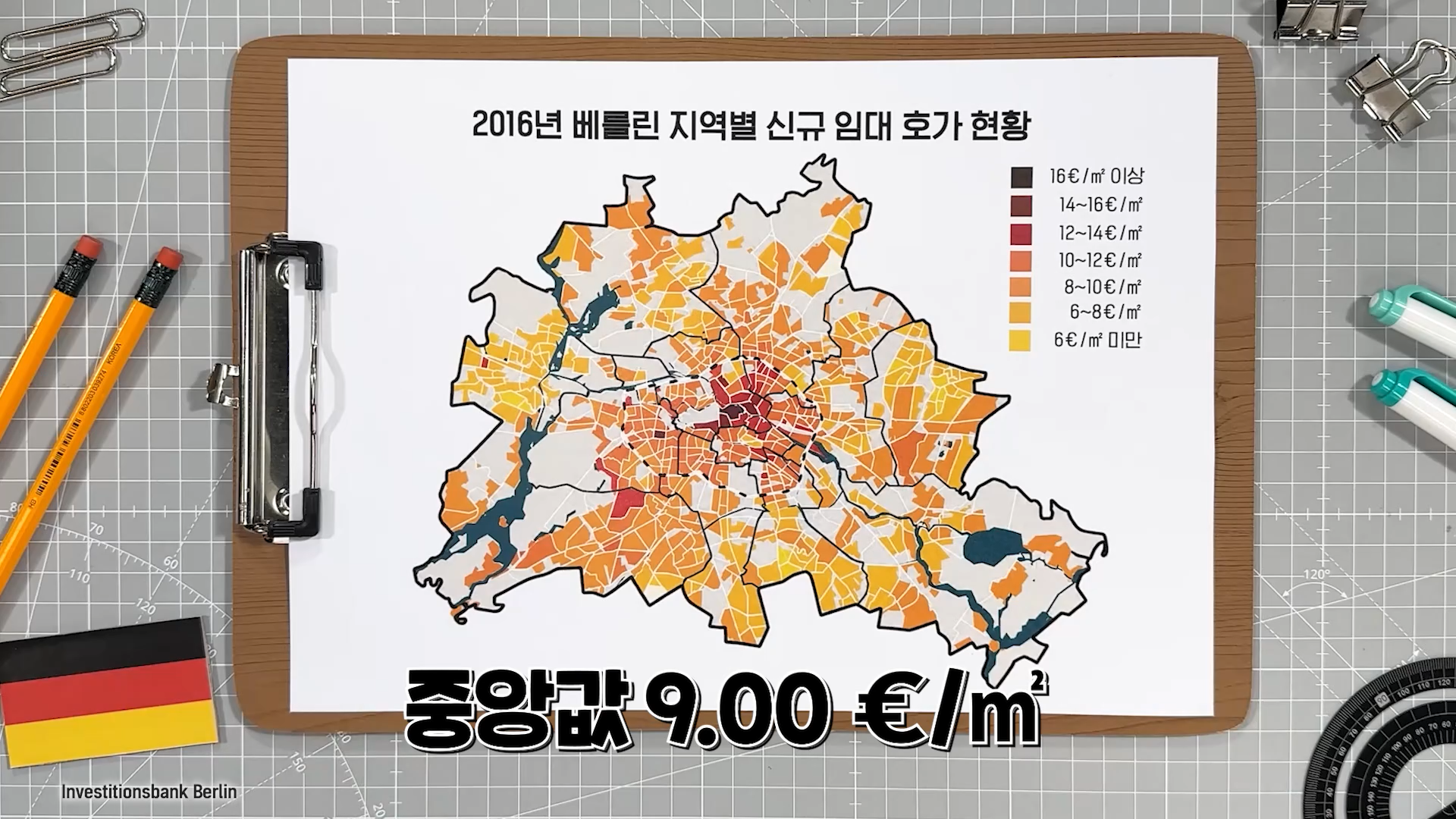
According to the housing market report by Investitionsbank Berlin (IBB), the median asking rent for newly listed apartments in Berlin in 2016 stood at 9 euros per square meter.
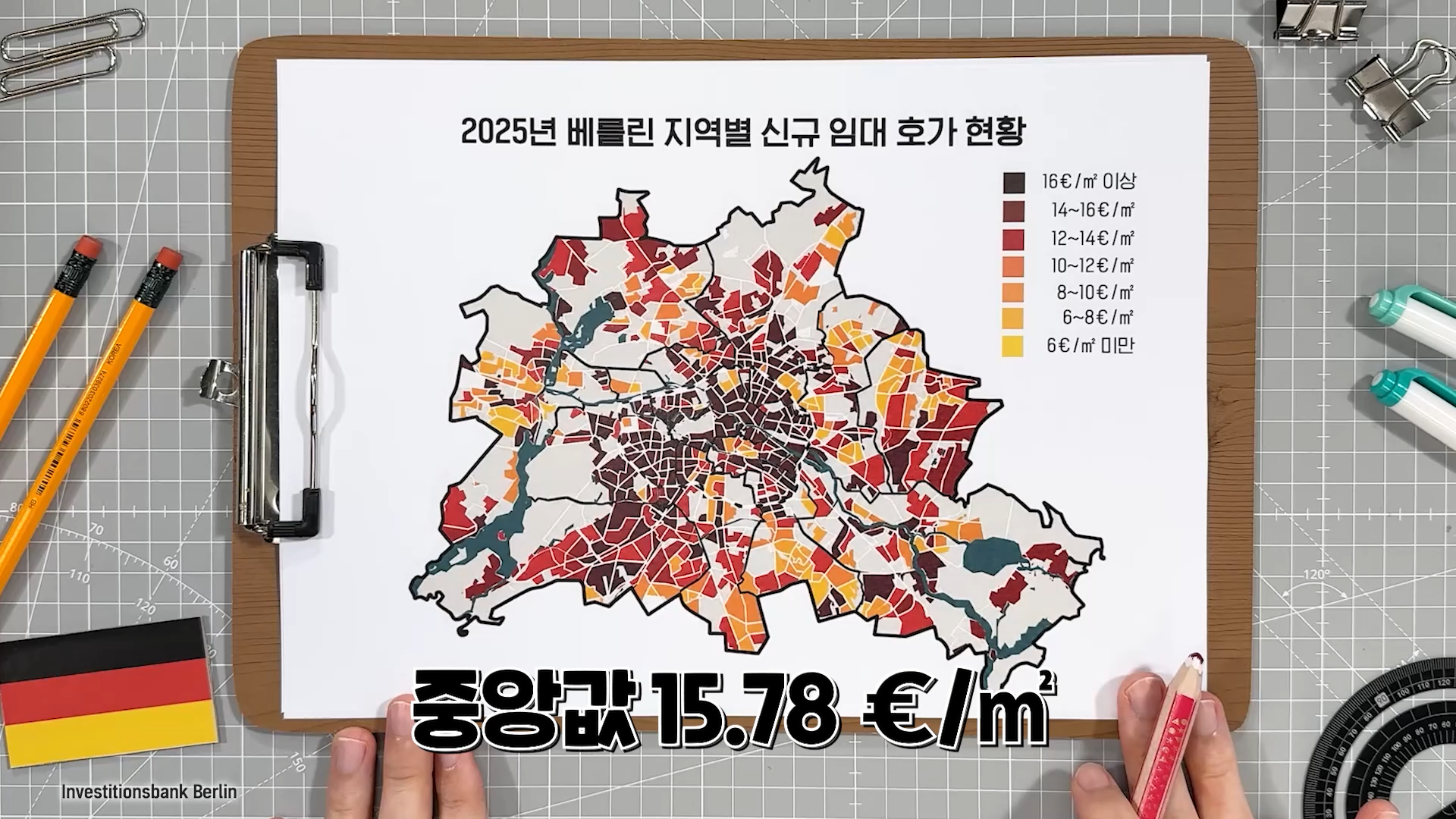
What happened by 2025? Asking rents surged, reaching a median of 15.78 euros. With new listing rents far higher than existing contracts, tenant burdens inevitably mounted. For young renters, the cost became especially unmanageable. The Left zeroed in precisely on this pressure point.
The Left put forward measures aimed at relieving young people's housing insecurity and financial strain. It pledged to expropriate 220,000 homes owned by corporate mega-landlords to turn them into affordable housing, and promised to impose rent caps on roughly 400,000 public apartments owned by municipal authorities to reduce the burden on tenants. On election day, 53% of voters cited the housing market and rent levels as their top priority, and The Left addressed that core frustration head-on.
Most notably, younger voters responded with particular enthusiasm to The Left.
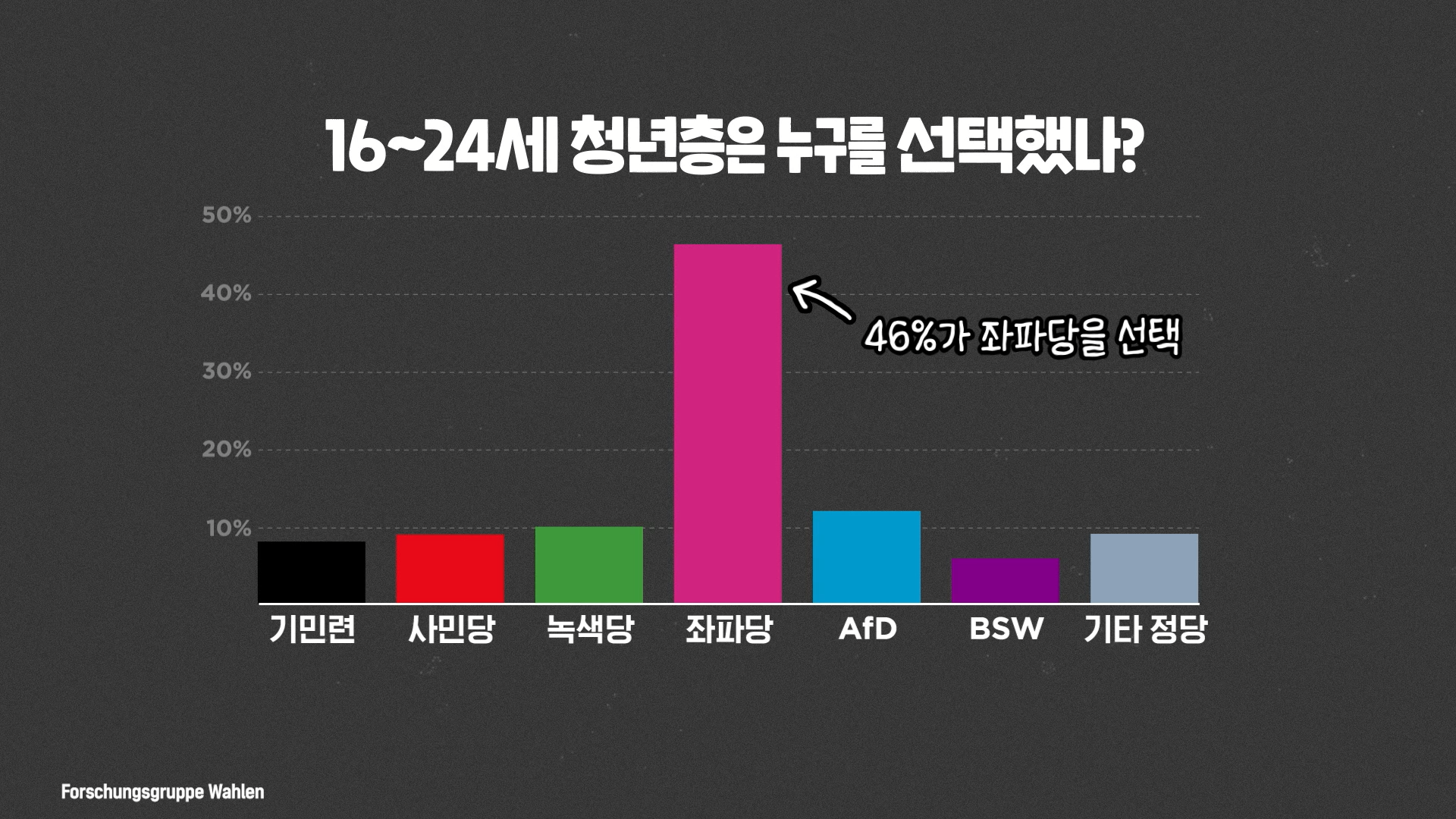
Exit poll data from Forschungsgruppe Wahlen (FGW), a major German polling institute, shows that nearly half—46%—of voters aged 16 to 24 cast their ballots for The Left, demonstrating overwhelming support.
Socialism Stirring in the Heart of Capitalism?
A story of a progressive political force winning by rallying young voters sounds familiar. It happened just last year in New York City. The victor in last year's New York City mayoral election was Zohran Mamdani. The city saw its first-ever Muslim, Asian American, and democratic socialist mayor take office. At the time, Mamdani drew intense attention after President Trump criticized him as a "lunatic communist."
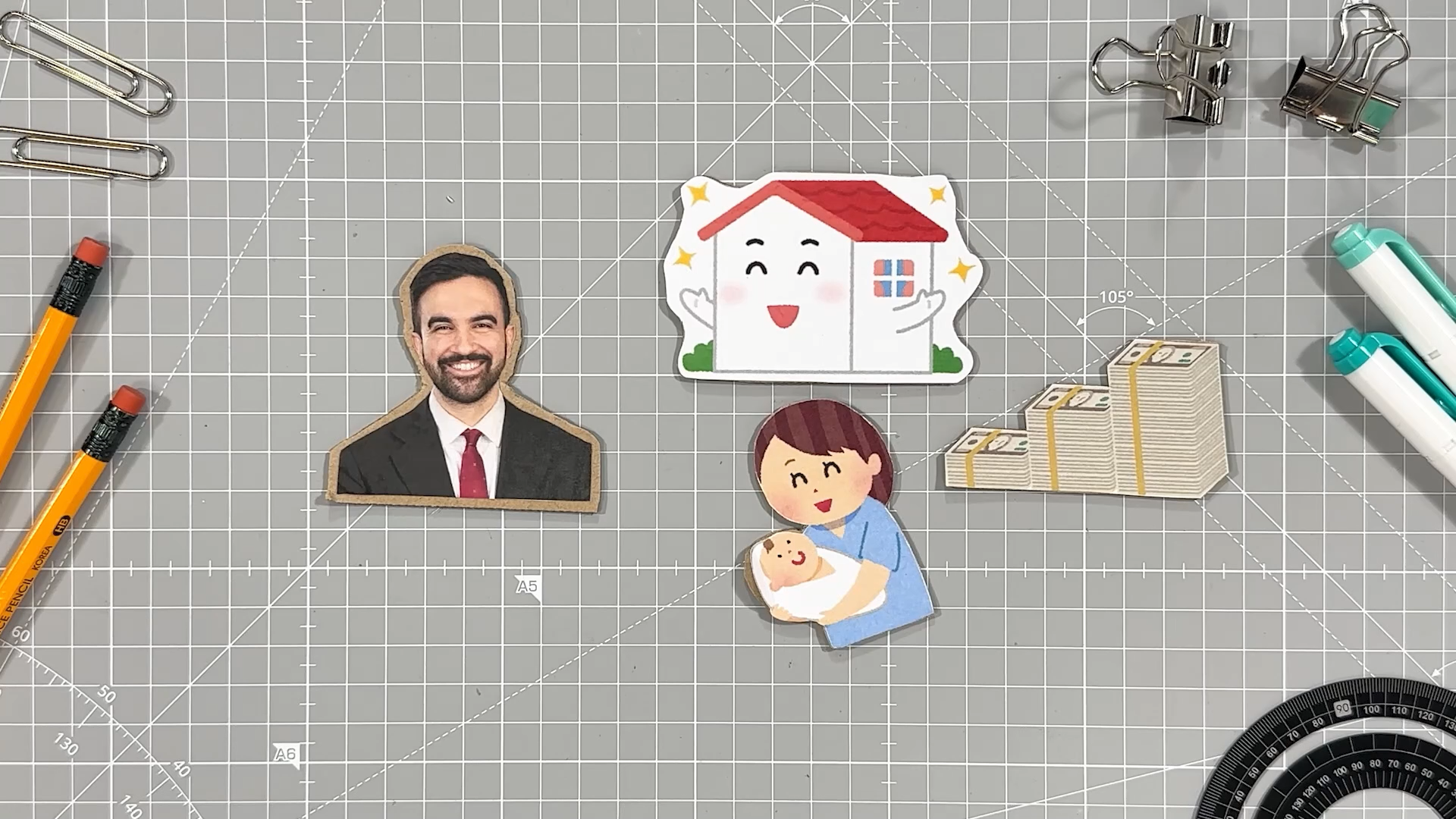
Examining Mamdani's primary campaign pledges reveals clear parallels with Germany's The Left. He promised rent freezes, an expansion of affordable housing stock, along with raising the minimum wage and establishing universal childcare.
Mamdani's agenda resonated with New York voters, carrying him to victory. He secured a decisive landslide, surpassing 1 million votes for the first time since Mayor John Lindsay in 1969—a milestone after 56 years. Looking at the map provides more detail.
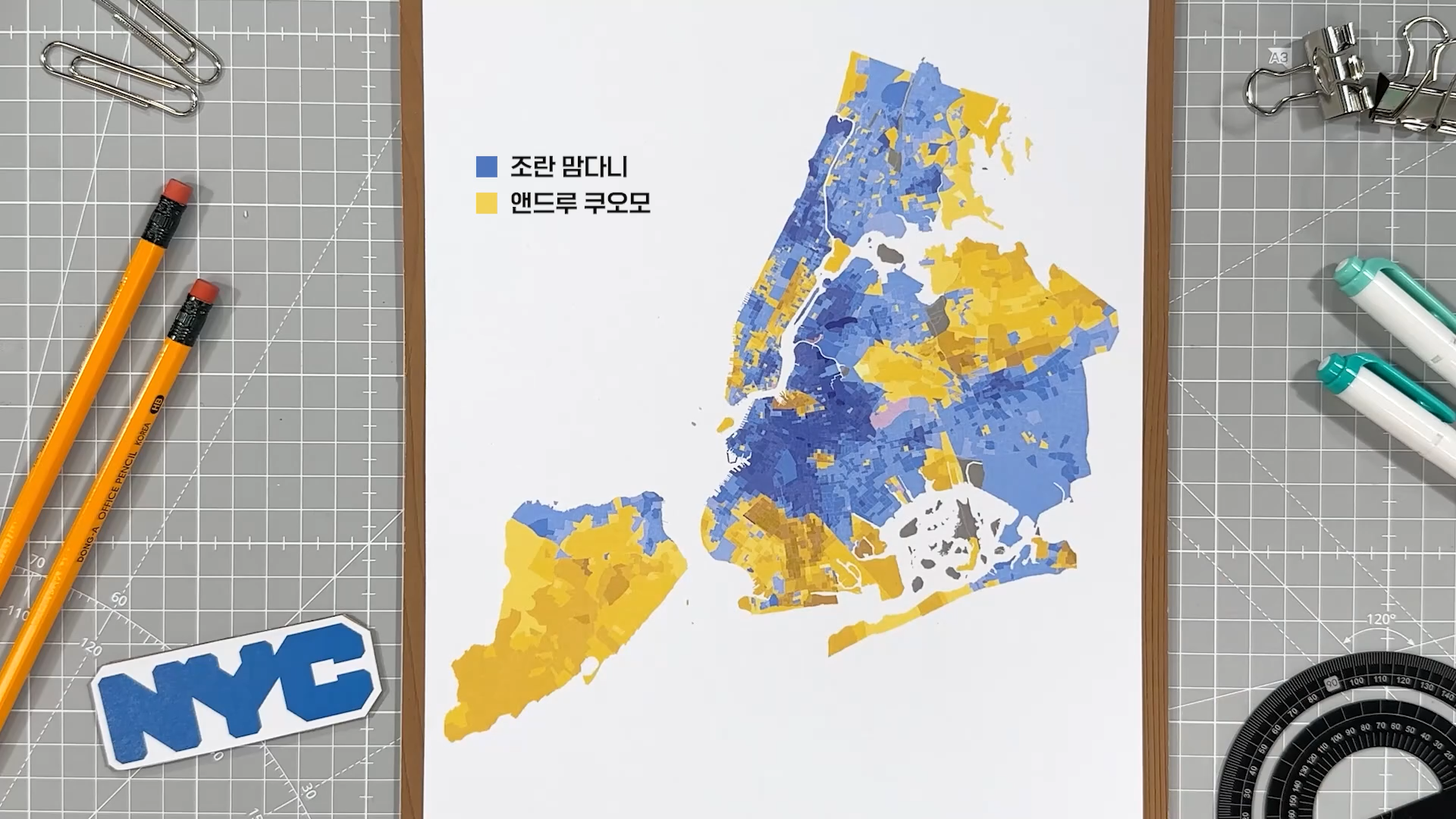
Across the river from Manhattan, northern Brooklyn and western Queens are shaded deep blue. These neighborhoods are populated by young college-educated professionals and renters, where Mamdani captured a vast share of votes.
Did this socialist current stop with last year's election? It carried over into this past August's Democratic primary for the U.S. Senate in Michigan. Abdul El-Sayed, backed by the Democratic Socialists of America (DSA), staged an upset by unseating a four-term incumbent. In House primaries, two DSA-aligned candidates also emerged victorious. Even in Michigan, a quintessential swing state shifting between Democrats and Republicans, the DSA's appeal and leverage have proven formidable.
Such electoral shifts stem from mounting disillusionment with capitalism among younger demographics. A recent survey conducted by CBS News and YouGov revealed that a mere 9% of respondents under 30 hold a "very positive" view of capitalism.
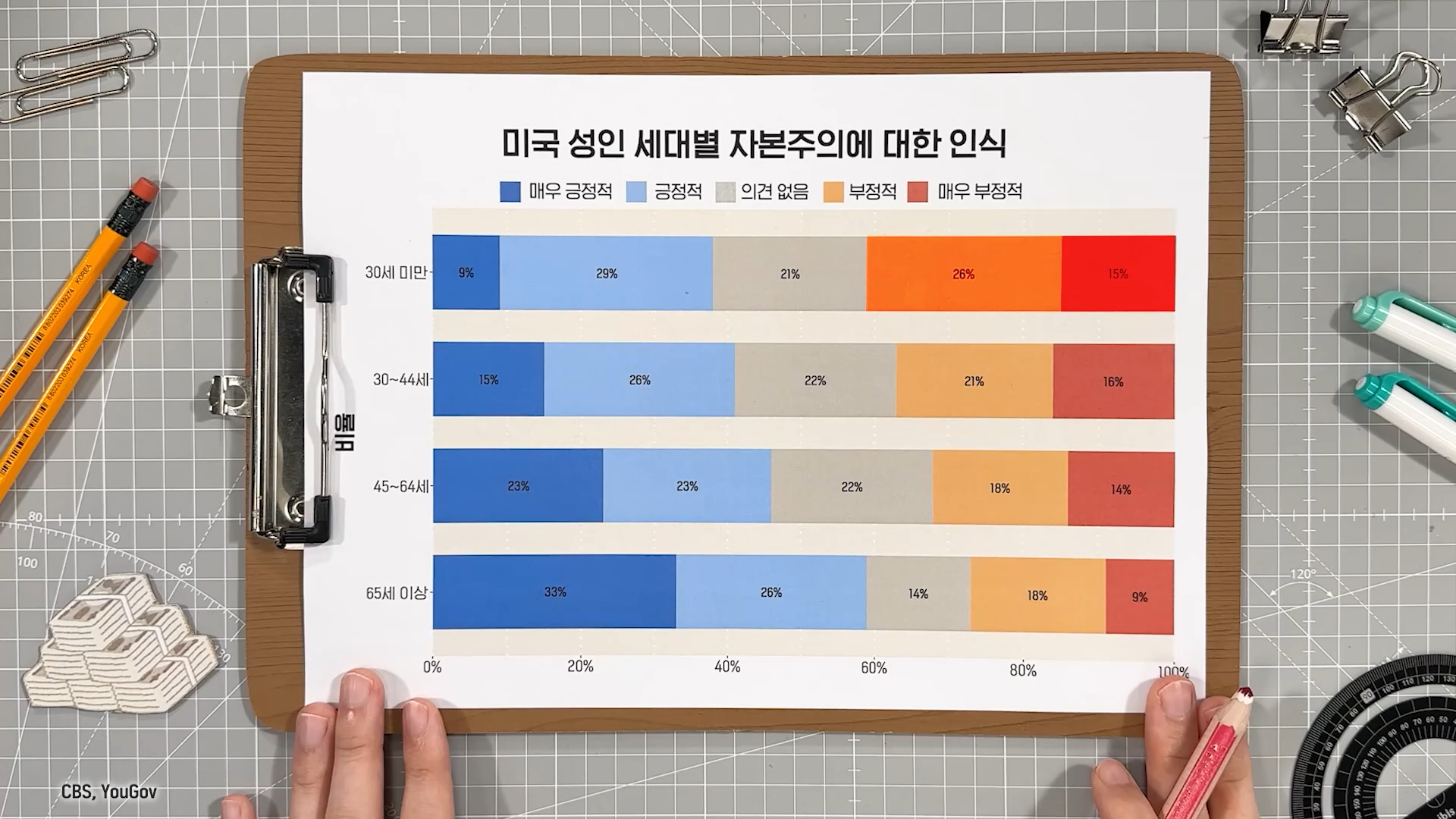
Among baby boomers aged 65 and over, 33% reported feeling very positive toward capitalism. For those aged 45 to 64, the figure stood at 23%. In the next younger tier, it was 15%, dropping down to only 9% for those under 30. In contrast, 41% of youth expressed a "very negative" or "somewhat negative" view—a sharp gap compared to just 27% among respondents aged 65 and older.
Meanwhile, positive sentiment toward socialism has climbed steadily.
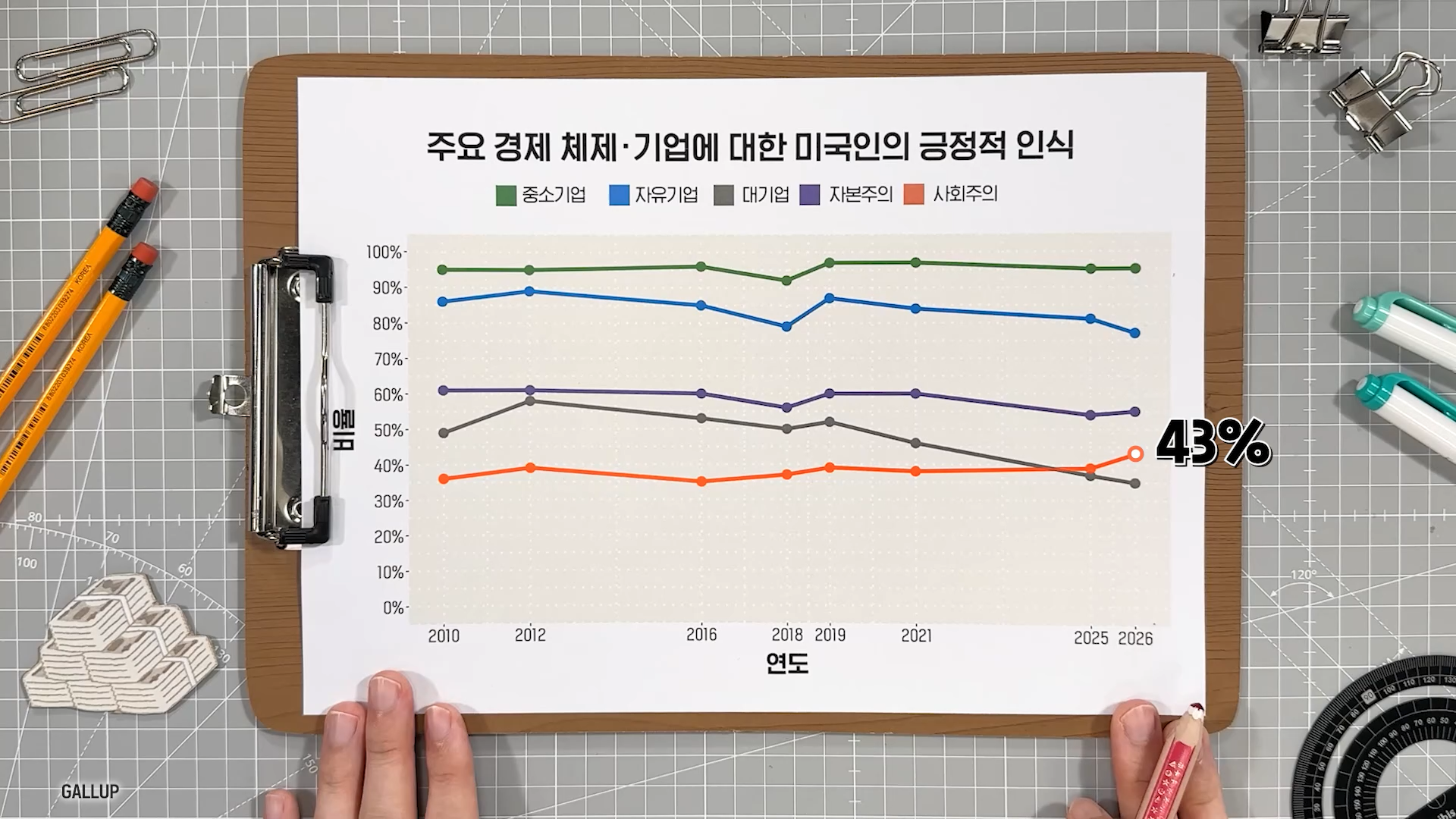
In an August survey by Gallup, favorable views of socialism reached 43%. While not an overwhelming absolute majority, this marks the first time since Gallup started tracking the metric in 2010 that the figure crossed 40%. Once again, younger demographics rated socialism more favorably than capitalism.
American youth increasingly believe that capitalism is no longer functioning properly in today's society. One of the single biggest drivers behind that perception is housing.
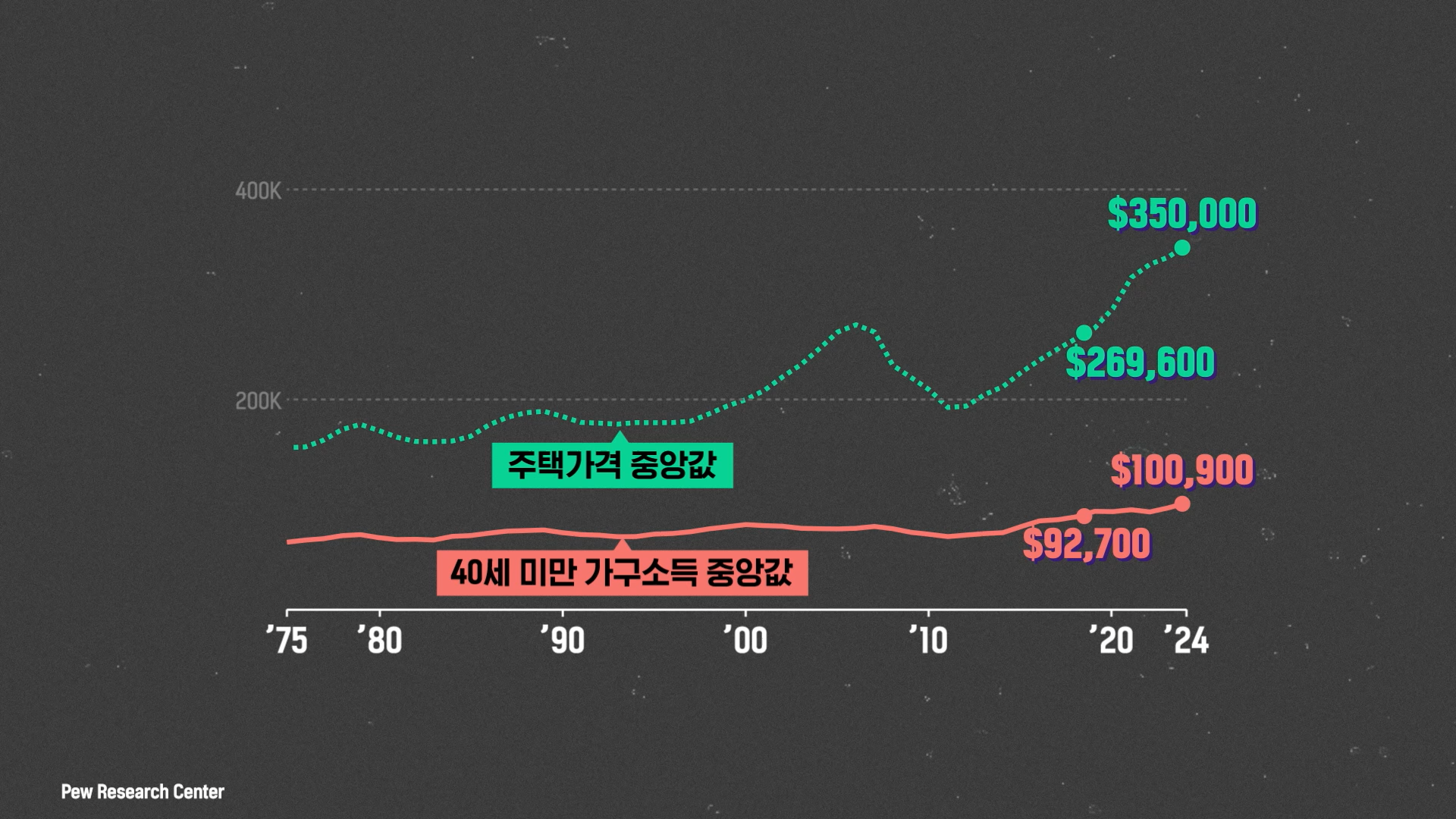
From 2019 to 2024, median home prices rose 29.8%, climbing from $269,600 to $350,000. During the same span, what happened to household income for those under 40? It went from $92,700 to $100,900, rising just 8.8%. With the pace of housing inflation vastly outstripping income growth, younger generations have been placed under relentless strain. That distress manifested directly in New York's mayoral race and Berlin's voting booths.
Does this mean young people burdened by housing costs are uniformly turning progressive or socialist?
Youth Becoming Progressive? The Reality Is 'Political Polarization'
Let us return to the situation in Germany.
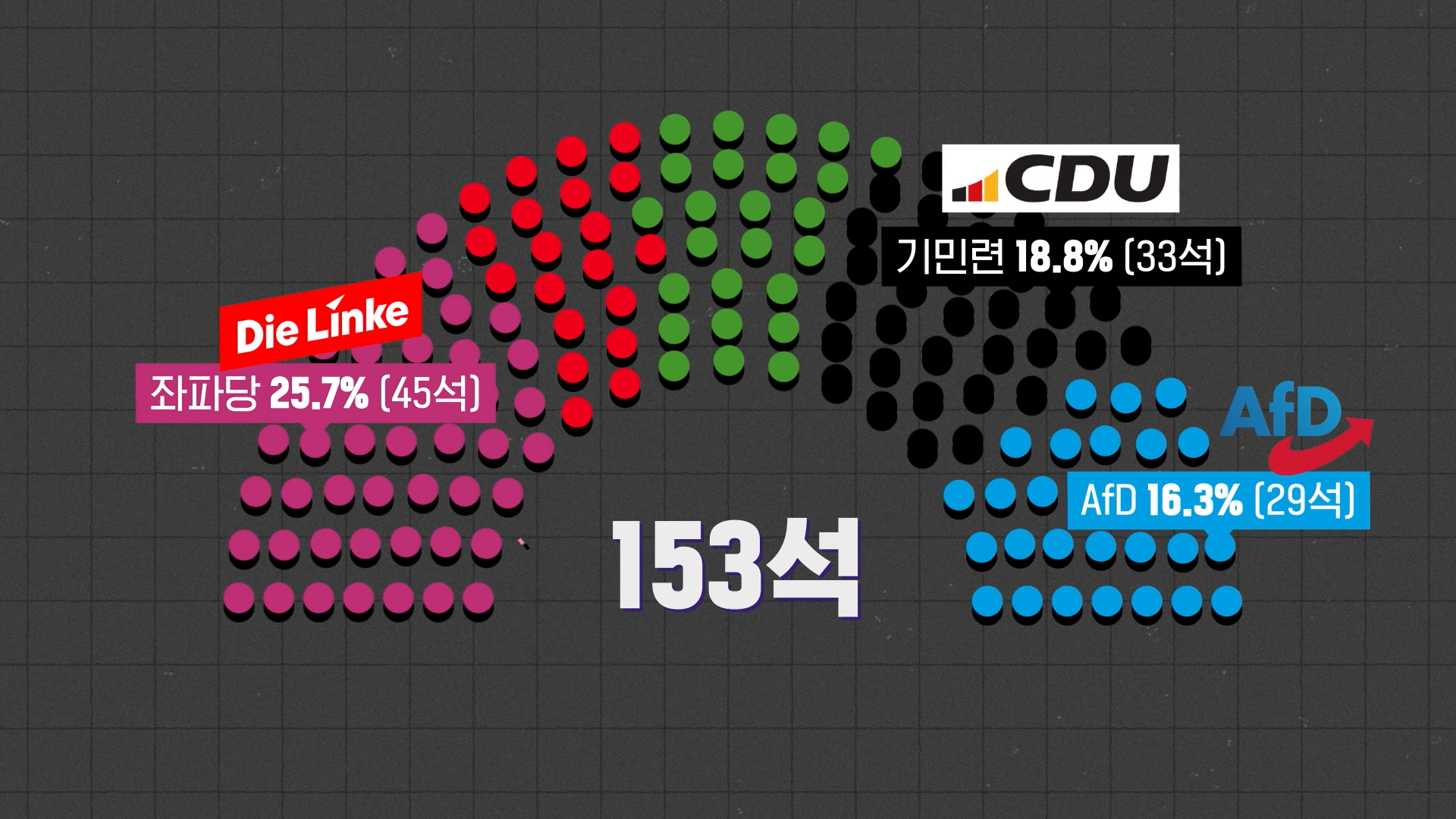
While The Left took first place in Berlin, the far-right AfD came in third.
As a side note, the reason The Left is not labeled "far-left" while AfD is labeled "far-right" comes down to how German authorities officially categorize them. Germany's Federal Office for the Protection of the Constitution (BfV) does not designate The Left as a whole as an extremist far-left organization. It assesses certain hardline communist factions within the party as having far-left leanings and keeps them under partial surveillance. A case in point: Elif Eralp, a leading mayoral candidate from The Left, drew controversy when it emerged she was active in a far-left organization until last year. For the AfD, however, the BfV classifies the party in its entirety as a "right-wing extremist organization."
Around the same time as the Berlin vote, this same AfD achieved crushing victories in state elections across eastern Germany.
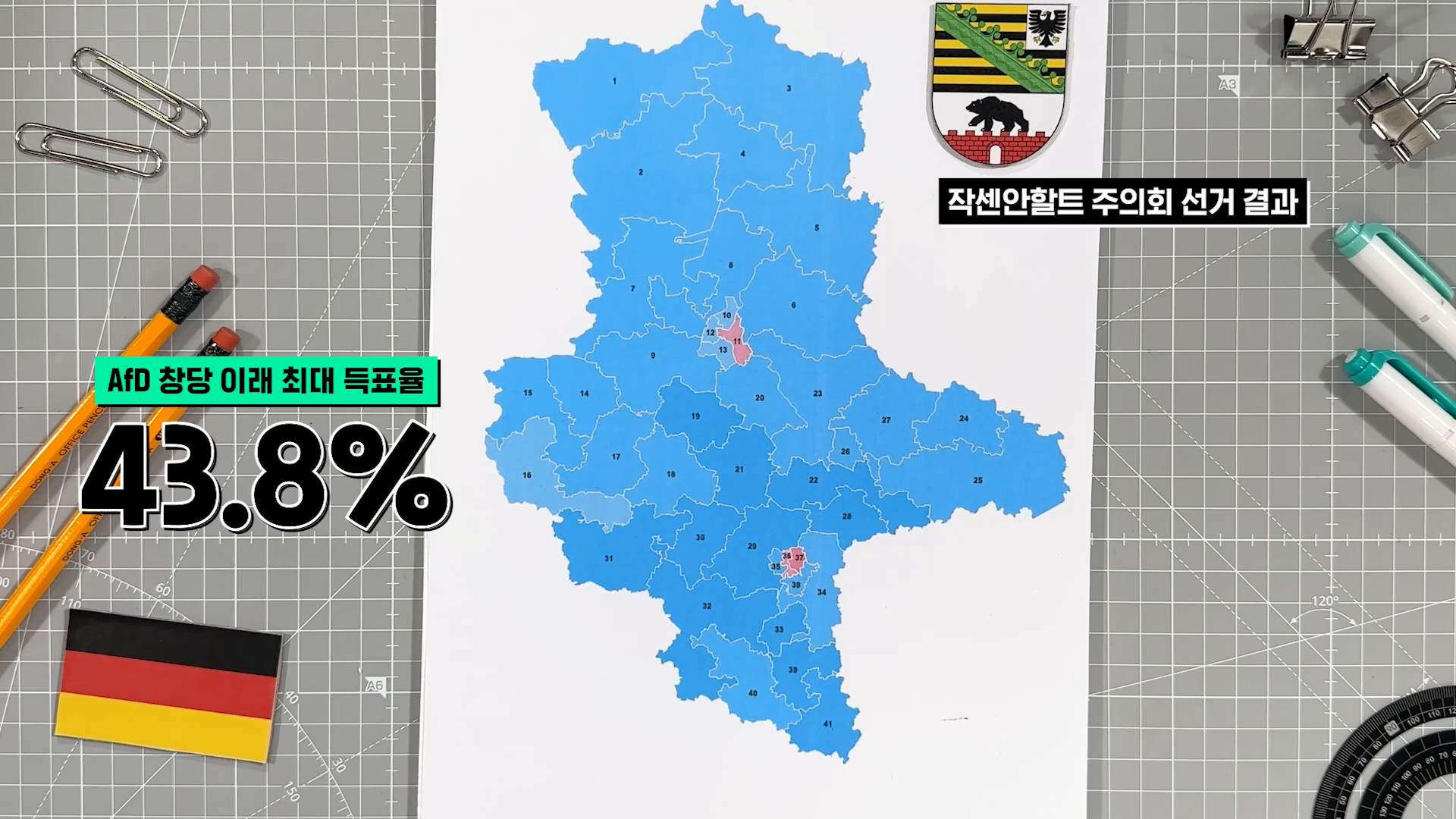
In the Saxony-Anhalt state election, nearly every district turned light blue. The AfD achieved 43.8% of the vote—the highest since its founding. Although it fell short of an outright majority, the AfD has a viable shot at governing through a coalition. Should the AfD take power, it would mark the creation of Germany's first far-right state government since World War II.
This phenomenon was not isolated to that state.
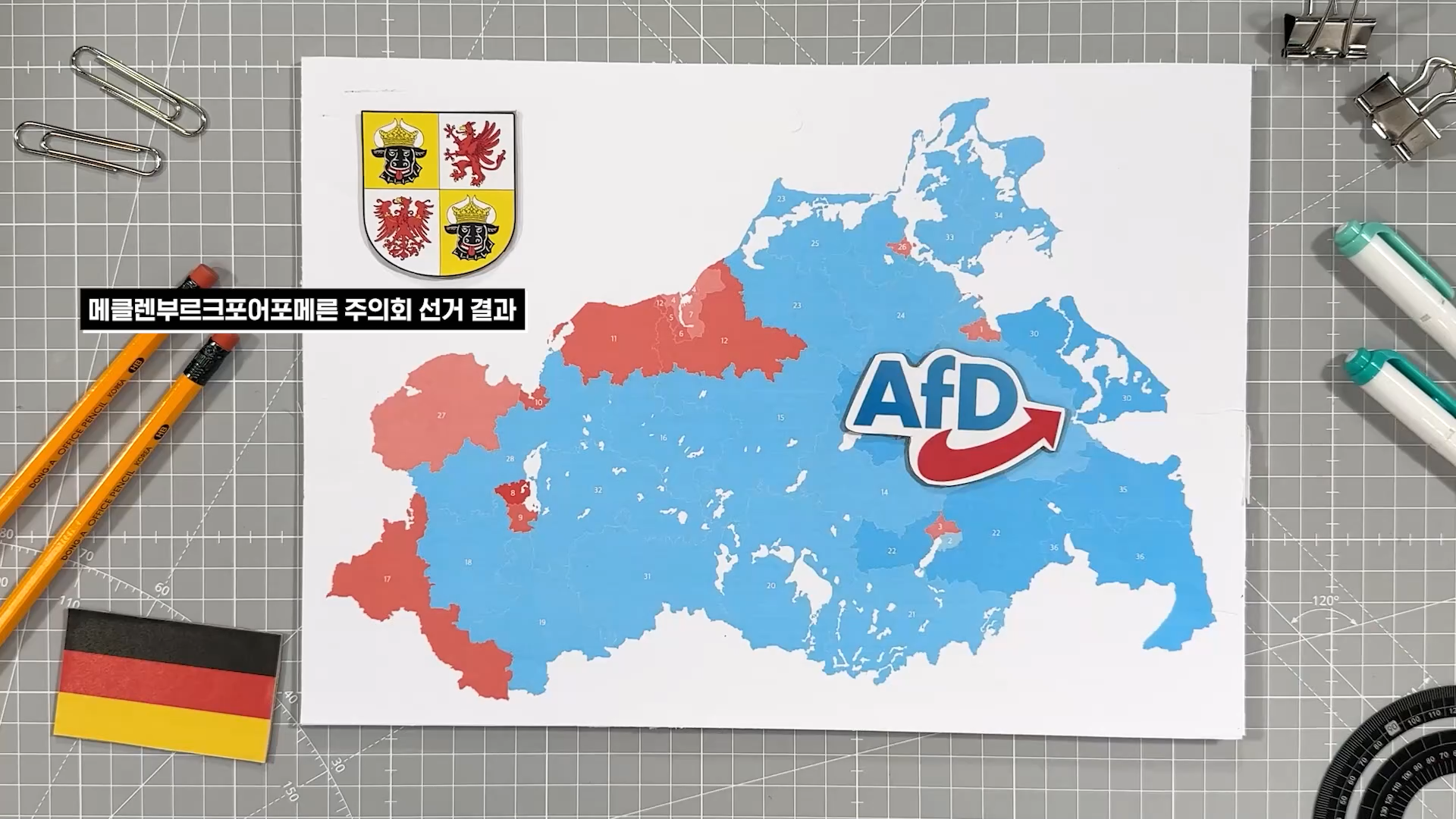
In the Mecklenburg-Western Pomerania state election held on the same day as Berlin's, the AfD also scored a sweeping victory. While 43% of voters aged 16 to 24 in Berlin chose The Left, about 35% in this state backed the AfD. Rather than young voters simply flocking to the progressive camp, they are fracturing toward opposite extremes.
German youth researcher Simon Schnetzer analyzes that these results arise because German young people feel neglected by traditional center-right and center-left parties. In Berlin, the extreme that listened to young voices was The Left; in eastern Germany, it was the AfD.
In the two-party system of the United States, voters are not fracturing into disparate third parties as in Germany. Instead, the same trend is unfolding inside the two major parties.
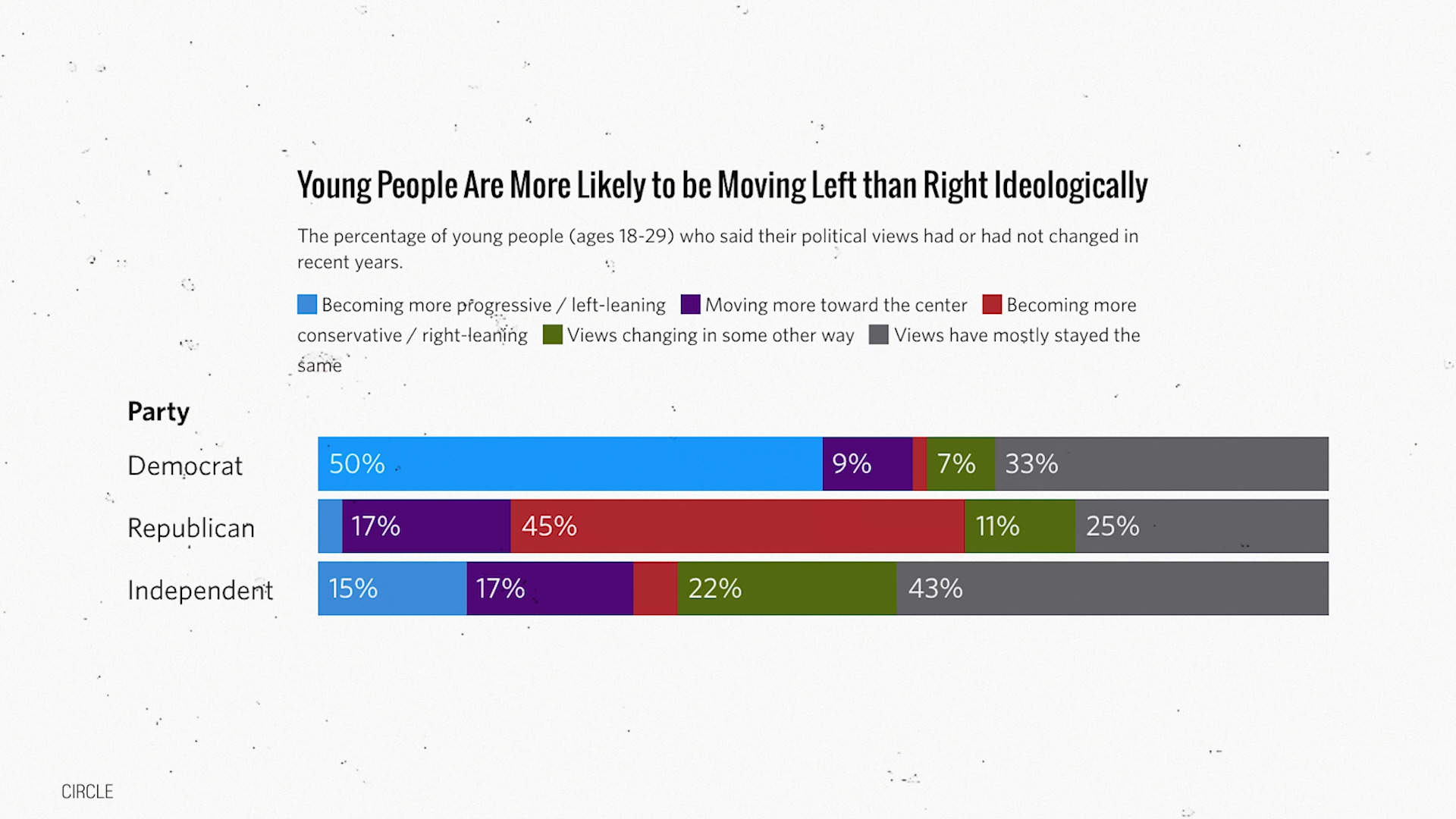
Among youth identifying as Republicans, 45% became more conservative, while 49% of young Democrats became more progressive.
Meanwhile, youth without steadfast party loyalties have swayed from one election to the next. In the 2020 presidential race, younger demographics backed Biden by an overwhelming margin, yet in 2024, they did not throw comparable weight behind Harris. Those aged 25 to 29 actually favored Trump. Come 2025 in New York City, however, 75% of young voters backed Mamdani.
Having turned away from the establishment, American youth may simply be focusing in each election on whoever articulates their discontent most forcefully. In the 2024 presidential election, that spokesperson was Trump; in New York, it was Mamdani.
Another striking phenomenon is gender polarization. Across numerous nations, young men and women are increasingly gravitating toward sharply divergent political camps.
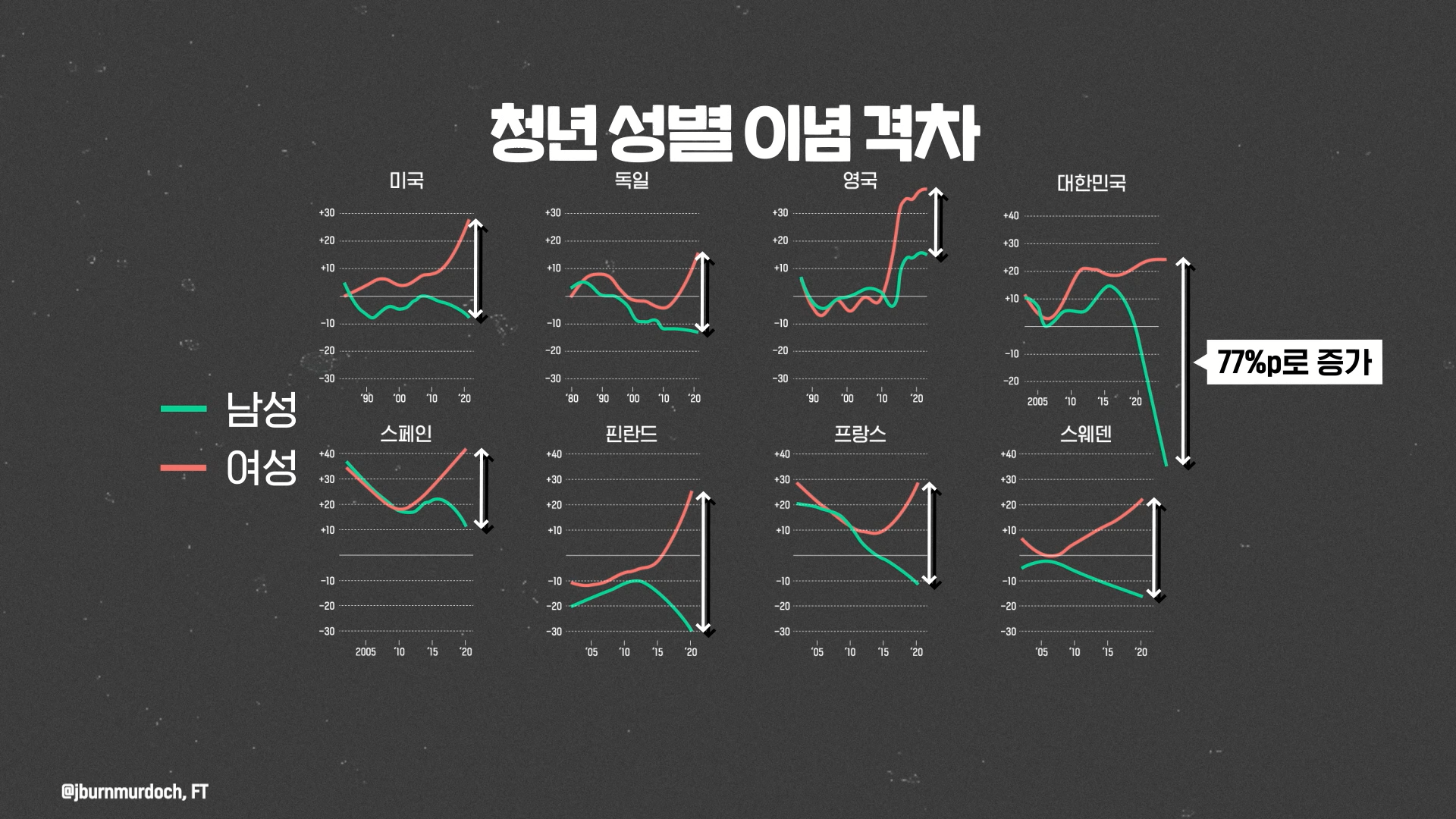
As of January 2024, the ideological gender gap among youth in the United States and Germany was recorded at around 30 percentage points, with men leaning conservative and women progressive. This pattern is observable not only in the U.S. and Germany, but across the United Kingdom, Spain, Finland, France, Sweden, and beyond.
Gender polarization is by far the most extreme in South Korea. The ideological divide among youth, which stood at 50 percentage points in 2024 data, widened to 77 percentage points in last year's figures. The South Korean phenomenon of young men and young women moving in opposite ideological directions can be viewed as the most extreme global instance of youth gender polarization.
Youth in Berlin chose The Left, while youth in eastern Germany picked the AfD. Young people in New York chose Mamdani, while in the 2024 U.S. presidential race, youth showed stronger support for Trump. Although the trajectories diverge, the underlying commonality remains: they turned their backs on the political establishment. South Korea's staggering 77-percentage-point youth gender gap can be understood in the very same light. Wherever the ballots fall, this tide will persist unless mainstream politics confronts this anger head-on. That concludes today's edition of Oh-Graph. Thank you very much for reading to the end.
References
- IBB Wohnungsmarktbericht 2025 | Investitionsbank Berlin
- Berlin bezahlbar machen | Die Linke Berlin
- CBS News Poll – August 12–14, 2026 | CBS News·YouGov
- Socialism's Positive Rating Tops 40% for First Time | Gallup
- Buying a home has gotten harder for young adults in most U.S. metro areas | Pew Research Center
- Two-Thirds of Youth Have Shifted their Political Views in Recent Years | Tufts University CIRCLE
- Wahl zum 20. Abgeordnetenhaus von Berlin am 20. September 2026 | Berlin State Returning Officer·Statistical Office of Berlin-Brandenburg
- Abgeordnetenhauswahl Berlin 2026 | Forschungsgruppe Wahlen
- Landtagswahl 2026 | State Parliament of Mecklenburg-Western Pomerania
- Election Results Summary 2025 | NYC Board of Elections
- NYC Election Atlas | CUNY Graduate Center·Center for Urban Research
※ Please note: This article was translated by AI and may contain errors.
Copyright Ⓒ SBS. All rights reserved. Unauthorized reproduction, redistribution, and use for AI training are prohibited.