SBS NEWS
Did US Cut Off Intelligence Sharing? Ukraine Says It Failed to Receive Early Airstrike Warnings for Two Days Straight
Published : Oct 14, 2026 12:42 PM

▲ A residential building in Kyiv destroyed by an airstrike on Oct. 13
Concerns are growing that the Donald Trump administration may have cut off intelligence sharing as Ukraine claimed for the second consecutive day that it did not receive early warnings from the West ahead of Russian missile attacks on Kyiv.
According to The New York Times (NYT), Russia launched a missile attack on Kyiv on the night of Oct. 12 local time.
Air raid sirens sounded only after the missiles were launched, leaving residents with no time to evacuate.
During a second ballistic missile attack on the night of Oct. 13, the sirens also sounded late.
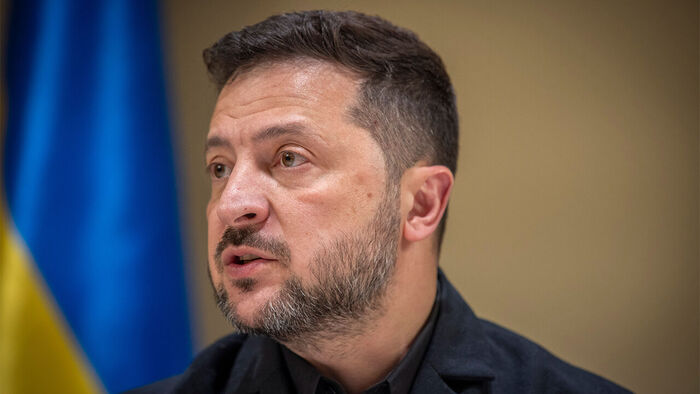
Ukrainian President Volodymyr Zelenskyy wrote on social media, "Russia launched a missile attack on Kyiv, but once again there was no warning from our partners."
He protested, saying, "Russia is destroying our energy infrastructure, yet Ukraine is not even receiving early warnings about ballistic missile launches. It is totally unjustifiable."
Because Ukraine lacks large-scale satellite reconnaissance capabilities, it relies on intelligence from the United States and the North Atlantic Treaty Organization (NATO) to detect signs of attacks, such as activities at Russian air bases, naval vessel movements, and the deployment of ballistic missile launchers.
Yurii Ihnat, spokesman for the Ukrainian Air Force, said regarding the Oct. 12 attack that Western intelligence "sometimes" fails to arrive, adding, "This is not the first time."
The United States maintains its stance that intelligence sharing continues.
Asked on Oct. 13 whether he might cut off the provision of intelligence if Ukraine does not stop its attacks on Russian oil refineries, President Trump replied, "We are helping them and we are sharing intelligence."
The Ukrainian foreign minister also stated on the same day that intelligence sharing continues, explaining that the failure to detect the Oct. 12 attack was due to Russia's use of a special type of weapon.
Some military experts also pointed out that Russia has been using weapons such as S-400 missiles, which are difficult for Western satellites to track.
This suggests that the US may not have failed to share intelligence, but rather failed to detect the launches prior to impact.
However, some point out that it is unusual for the West to fail to detect attacks two consecutive times.
Concerns over a suspension of US intelligence sharing arose after President Trump agreed with Russian President Vladimir Putin to purchase millions of tons of Russian diesel.
This agreement is a measure aimed at lowering diesel prices ahead of the US midterm elections.
Reportedly, the US explained this agreement to the Ukrainian side during a meeting in Miami last week and pressured them that military intelligence would not be shared unless attacks on Russian oil facilities ceased.
The Trump administration has previously used intelligence sharing as a tool to pressure Ukraine.
Following a clash between the two leaders at a White House meeting in early 2025, the US temporarily suspended intelligence sharing with Ukraine for several days.
Regarding the Russian airstrike on Kyiv on the night of Oct. 12, President Zelenskyy stated that the target was the No. 4 Combined Heat and Power Plant (CHP-4).
Russia has intensively targeted Ukraine's power generation facilities as the winter season approaches.
Kyiv Mayor Vitali Klitschko said that at least two people were killed and about 20 others were injured in the attack.
President Trump announced on Oct. 11 that Ukraine and Russia had agreed to a ceasefire in the energy sector that would take effect immediately, but it has not been effectively observed.
(Photo: AP, Yonhap News)
※ Please note: This article was translated by AI and may contain errors.
Copyright Ⓒ SBS. All rights reserved. Unauthorized reproduction, redistribution, and use for AI training are prohibited.