SBS NEWS
Drastic Measure to Recall Ambassador over Public Clash on Repatriation of North Korean POWs: What Are Diplomatic Gains?
Published : Oct 8, 2026 10:13 PM

After demanding an official explanation and apology from Ukraine without receiving a satisfactory response, Seoul has escalated the level of its diplomatic countermeasures.
The Ministry of Foreign Affairs posted a press release on its website at around 5 p.m. today (October 8), stating, "The government has decided to recall the Ambassador of the Republic of Korea to Ukraine back to the home country."
The ministry added, "The government hopes that various pending issues between the two countries will be resolved amicably and will continue consultations with the Ukrainian side to this end."
While deciding to recall Ambassador Park Ki-chang, the government left room to resolve the matter through diplomatic consultations.
Recalling Own Ambassador Is a High-Level Protest Measure: Past Cases with Japan and New Zealand
It is a much firmer response than summoning the counterpart country's ambassador or issuing an official statement of protest.
In the past, the South Korean government has also recalled its ambassadors when serious diplomatic friction erupted.
In 1998, Seoul temporarily recalled Ambassador to Japan Kim Tae-zhee in response to Japan's unilateral termination of the bilateral fisheries agreement. In 2001, Ambassador to Japan Choi Sang-yong was recalled to protest Japan's distortion of history textbooks.
In July 2008, when Japan included territorial claims to Dokdo in its teaching guidelines commentary for middle school social studies textbooks, then-Ambassador to Japan Kwon Chul-hyun was recalled.
In 1995, South Korea also recalled Ambassador to New Zealand Lee Dong-ik amid friction over a refugee status application filed by an embassy employee who had forged South Korean diplomatic documents.
Triggered by Zelenskyy's Disclosure of POW Repatriation: President Lee Directly Demands Apology
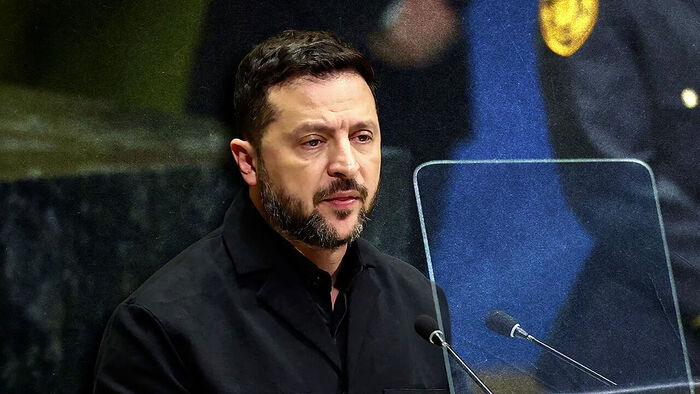
The South Korean government pushed back, saying that Ukraine made the repatriation public without sufficient prior explanation or specific consultations, despite an agreement between both nations to keep the matter confidential.
Seoul explained that Ukraine was initially the party that requested non-disclosure, and South Korea agreed in consideration of the personal safety of the North Korean POWs and their families remaining in North Korea.
On September 24, President Lee Jae-myung expressed regret on his social media account, writing, "It is very disappointing."
The dispute deepened when the Ukrainian presidential office denied the existence of any agreement to keep the repatriation confidential.
The presidential office of South Korea rebutted Ukraine's statement as "a release of false facts," and on September 28, First Vice Foreign Minister Park Yoon-joo summoned Ukraine's Chargé d'Affaires to South Korea, Andrii Beshkin, to lodge a protest.
On October 2, President Lee strongly criticized Ukraine on social media, saying that by denying the non-disclosure agreement, Ukraine "turned the head of state of a counterpart country into a liar."
He emphasized that if Ukraine continued to refuse to acknowledge the facts and publicly apologize, Seoul would take additional measures, stressing that the issue concerns the dignity of the South Korean people and the nation.
Apology Message Falls Short of Expectations: Ukraine Cites Different Interpretation of Agreement
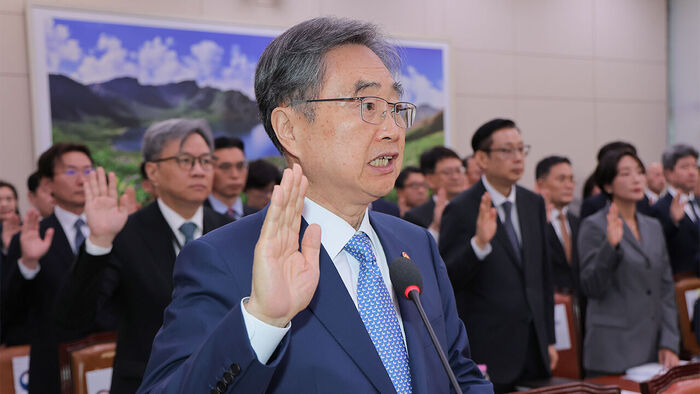
Foreign Minister Cho Hyun stated during a parliamentary audit by the National Assembly's Foreign Affairs and Unification Committee on October 6 that he had been continuously exchanging messages with his Ukrainian counterpart, saying, "I also received a message containing words of apology."
However, Minister Cho noted, "Because there is still a gap with the level we envision, we intend to take resolute measures."
At the time, he mentioned that recalling the ambassador to Ukraine was under consideration, and the decision to recall was finalized just two days later.
However, Ukraine holds a different position from South Korea regarding the confidentiality agreement and the meaning of the apology.
Heorhii Tykhyi, spokesperson for the Ukrainian Ministry of Foreign Affairs, claimed on October 7, local time, that the public exchange of criticism between the two countries stemmed from differing interpretations of the confidentiality agreement.
He reaffirmed Ukraine's position that merely making public the fact that the prisoners had been sent to South Korea—without disclosing specific transport routes or procedures—did not violate the agreement.
Regarding the apology message mentioned by Minister Cho, the Ukrainian spokesperson explained that it was an expression of regret over the situation in which both countries engaged in public criticism.
In other words, while South Korea interpreted the message as an admission of a breach and an apology, Ukraine emphasized that it was merely an expression of regret.
Government Official: Measure to Restore Trust, Timing of Return May Depend on Talks
When asked whether recalling the ambassador was an excessive response, the official replied, "It was deemed a necessary measure for an amicable resolution of the issue and for restoring mutual trust."
However, the specific timing of the actual return has not yet been decided.
Regarding Ambassador Park's return schedule, the official stated, "He will return as soon as possible, but we will make a judgment taking into account overall circumstances, including the progress of upcoming consultations."
In particular, the official did not rule out the possibility that the recall decision could change in principle if Ukraine offers an apology or explanation that meets the level demanded by the South Korean government.
The official explained that even if Ukraine were to abruptly release a new position, South Korea would not accept it immediately but would need a process to comprehensively review whether it matches the required level.
This suggests that while recalling the ambassador serves as a strong diplomatic protest against Ukraine, it is also being used as a lever of pressure to induce a change in Kyiv's stance.
The official also noted that Ambassador Park's return could provide an occasion for necessary consultations on other bilateral issues, including the North Korean POW repatriation matter.
Tensions over Shipment of Petroleum Products to Russia: Seoul Maintains Aid Policy Unchanged
When an official from the Ukrainian presidential office claimed that South Korea had helped ease Russia's fuel shortages, the South Korean presidential office pushed back yesterday (October 7), stating, "This is not true and is inappropriate."
Today, the South Korean government reaffirmed its commitment to export controls against Russia through a joint reference document released by the Ministry of Foreign Affairs, the Ministry of Trade, Industry and Energy, and the Korea Customs Service.
Seoul maintains that the fact that petroleum products were loaded at South Korean ports should be distinguished from whether domestic export control laws were violated.
In effect, the dispute surrounding the North Korean POW repatriation appears to be expanding into clashes over other diplomatic issues.
However, the government clarified that the decision to recall the ambassador does not signal a change in its existing policy of supporting Ukraine.
When asked by SBS about whether this move could affect humanitarian aid or post-war reconstruction cooperation for Ukraine, a government official responded, "Our basic stance on supporting Ukraine remains unchanged."
Asked if further diplomatic measures are being reviewed, the official said mentioning additional steps at this stage would be getting ahead of the situation, adding that the government will endeavor to resolve various pending issues amicably through consultations with Ukraine.
Even as it implemented the high-level diplomatic measure of recalling the ambassador, the government made clear its intention to preserve existing aid and cooperative relations.
Diplomatic Rift Despite POW Repatriation Success: Task Remains to Restore Trust and Maintain Cooperation
If the prisoners chose to go to South Korea of their own free will, as Seoul explains, it represents a case where repatriation was carried out while respecting their wishes and human rights, which could serve as an important precedent in similar future situations.
The problem is that the cooperative relationship built between the two nations throughout the repatriation process could instead be damaged by this conflict.
Should additional North Korean prisoners of war emerge in the future, the two countries share numerous areas requiring cooperation, ranging from consultations on repatriation to intelligence sharing regarding North Korea-Russia military cooperation and Ukraine's post-war reconstruction.
This is why concerns are being raised that a prolonged diplomatic dispute could become a burden on such cooperation.
Clarifying compliance with bilateral agreements and demanding accountable explanations are important.
Yet managing the situation so as not to undermine hard-won diplomatic achievements and long-term cooperative partnerships is also the task of diplomacy.
Ultimately, the success of this firm response will be judged not only by how strong an apology South Korea extracts from Ukraine, but also by how well damaged trust is restored and practical national interests are safeguarded.
※ Please note: This article was translated by AI and may contain errors.
Copyright Ⓒ SBS. All rights reserved. Unauthorized reproduction, redistribution, and use for AI training are prohibited.