SBS NEWS
Iran's Chief Negotiator Warns of Regional Infrastructure Attacks If Security Not Guaranteed
Published : Sep 29, 2026 6:16 PM

▲ Iranian-made missiles are displayed at an exhibition related to the 1980–88 Iran-Iraq War held in the Iranian capital of Tehran on September 28.
Key Iranian officials have unleashed strong warnings and counterarguments targeting U.S. President Donald Trump, who rejected a "seven-day plan" peace proposal aimed at reopening the Strait of Hormuz.
Mohammad Bagher Ghalibaf, speaker of the Iranian parliament and the country's chief negotiator for ending the war, warned during a pre-speech at an open session of parliament on September 29 local time, "If there is a region where we cannot sell our oil, no one will be able to sell oil. Furthermore, if our security is not guaranteed, no infrastructure will be safe."
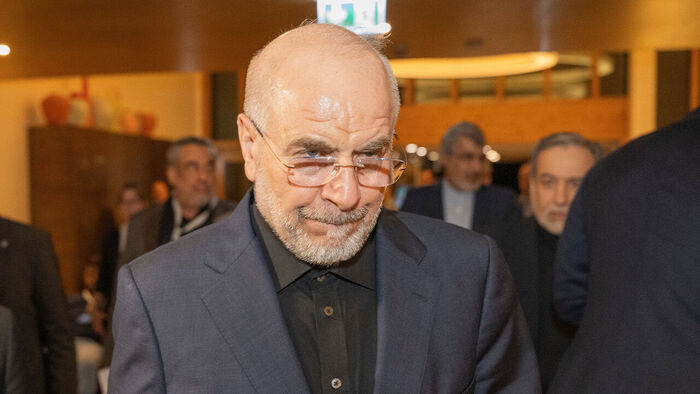
▲ Mohammad Bagher Ghalibaf, head of Iran's war termination negotiation delegation
Targeting the U.S. leadership, Ghalibaf also emphasized, "We will respond swiftly and painfully to any threats and adventurism against Iran, leaving them to deeply regret it."
Characterizing President Trump's recent remarks as "reckless behavior," Ghalibaf went as far as using the blunt expression, "Let's see this through to the very end."
Previously, President Trump stated on September 26 that he had rejected the peace proposal put forward by Iran, saying, "Iran is losing so badly that they want to make a deal to open the strait immediately. I like deals too, but I cannot accept that proposal."
U.S. media outlets, including the Wall Street Journal, reported that U.S. officials believe President Trump remains skeptical of the Iranian peace proposal and is keeping open the possibility of resuming bombings against Iran following the U.S. midterm elections in November.
Seemingly mindful of this situation, Ghalibaf referred to Iranian President Masoud Pezeshkian's recent speech at the UN General Assembly, emphasizing, "Iran does not want war, but it will not back down an inch in defending its national security and rights."
Ghalibaf expressed confidence, stating, "U.S. pressures such as maritime blockades or the cutoff of aviation and trade routes will ultimately fail just like in the past, through thorough economic management and military responses."
The Islamic Revolutionary Guard Corps (IRGC), a prominent hardline faction in Iran, also strongly criticized President Trump during a press conference held that day titled "An Open Letter from the IRGC to the American People."
IRGC spokesman Hossein Mohebi pointed out the situation where the U.S. spends astronomical defense budgets and operates military bases worldwide despite the absence of serious security threats, and claimed that allegations of Iran developing nuclear weapons are blatant lies.
"If the sole purpose was simple propaganda, we would have posted a few tweets or aimed for superficial effects through one-off media activities," Mohebi emphasized. "However, we decided to communicate with the American people in a sincere, logical, and realistic manner."
He added, "If anyone still has doubts after this press conference, we are ready to invite them here and show them everything Iran has to offer, including the Strait of Hormuz."
At the same time, he condemned President Trump, who has asserted the possibility of Iran developing nuclear weapons, as a "complete and utter liar."
Mohebi also urged, "The American people must know the truth. The U.S. has completely failed in its military operations against Iran. Therefore, the U.S. must withdraw from the Middle East."
(Photo: AP, Yonhap News)
※ Please note: This article was translated by AI and may contain errors.
Copyright Ⓒ SBS. All rights reserved. Unauthorized reproduction, redistribution, and use for AI training are prohibited.