SBS NEWS
Fate of Iran's '7-Day Plan' Unclear Amid Backchannel Mediation and Stalemate on Nuclear Issue
Published : Sep 29, 2026 1:20 PM

▲ Iranian Foreign Minister Abbas Araghchi
While U.S. President Donald Trump has initially rejected Iran's proposed '7-day plan' regarding the reopening of the Strait of Hormuz, the two sides continue backchannel contacts through mediators, showing that the spark for a diplomatic solution has not been extinguished.
However, with deep-seated mutual distrust surrounding the Iranian nuclear issue remaining a red line, dialogue efforts that Iran sought to actively drive through the UN General Assembly are expected to face headwinds for the time being.
◇ Qatari Mediator Meets Both Sides in New York to Discuss Revised Iranian Proposal
Citing reports from Reuters, AP, and Iran's state-run IRNA news agency on September 28 (local time), the United States and Iran are continuing indirect talks under Qatari mediation.
Reuters earlier reported, citing sources, that Qatari mediators were expected to meet separately with Iranian Foreign Minister Abbas Araghchi and the U.S. negotiating team on September 28 and 29.
Minister Araghchi visited New York last week to attend the UN General Assembly and remains there.
Qatar's backchannel mediation is expected to focus on a revised version of Iran's previously proposed '7-day plan' to reopen the Strait of Hormuz, according to Reuters.
Speaking to reporters at the White House on September 28, U.S. President Donald Trump confirmed that U.S. officials had spoken separately with the mediators.
However, he did not elaborate on the specifics of the talks.
Minister Araghchi also told reporters in New York on September 28 that he "met again with the Qatari mediators on Monday (September 28) to hold discussions," confirming contact with the mediator for indirect negotiations with the United States.
Araghchi noted, "The Qatari side brought ideas which we discussed. They will present them back to the United States, and the U.S. final response will be conveyed to us," adding, "We hope this work will be concluded by tomorrow (September 29)."
The 'ideas from the Qatari side' mentioned by Minister Araghchi are interpreted as referring to a revised version of Iran's earlier 7-day plan.
Previously, Iran proposed several demands to the U.S., including: lifting the naval blockade against Iran; releasing frozen assets; granting exemptions from oil sanctions; and halting hostile activities on all fronts, including Lebanon.
Iran's position is that if the U.S. fulfills these conditions, it can reopen the Strait of Hormuz within seven days.
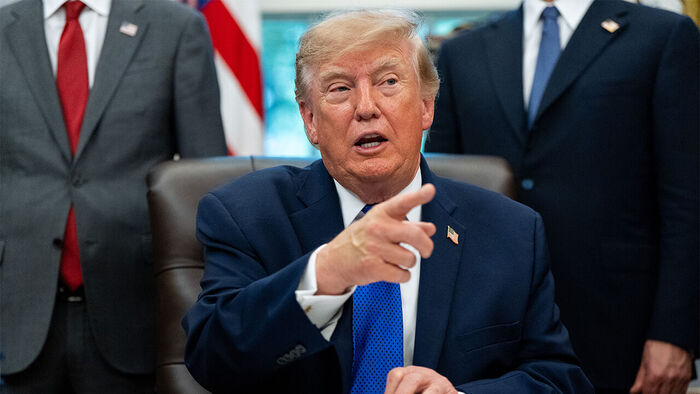
▲ U.S. President Donald Trump
However, President Trump's announcement on September 26 that he was rejecting Iran's 7-day plan raised concerns that military tensions might escalate once again.
In an interview with U.S. media outlet Axios on September 27, President Trump said, "They (Iran) want to make a deal," and indicated that he expects further meetings with Iran this week, signaling that the window for U.S.-Iran negotiations has not closed.
Minister Araghchi also told NBC News on September 27 regarding Iran's proposed 7-day plan, "I heard that President Trump intends to reject it, but we are still waiting for an official response through the mediator," showing that he has not abandoned hope for negotiations.
◇ Mediation Team Urges Nuclear Concessions from Iran; Iran Maintains Firm Stance of "No Flexibility"
Although the window for negotiations remains open, observers note it remains uncertain whether the two sides can narrow their differences due to a wide gap over the nuclear issue, which is the core background behind the outbreak of the U.S.-Iran war.
The Associated Press reported, citing two regional officials, that mediators are coordinating a draft agreement that includes reopening the Strait of Hormuz, lifting the U.S. naval blockade, and subsequently lifting sanctions on Iran.
AP reported that one regional official said the U.S. is demanding concessions from Iran on the nuclear issue, such as allowing nuclear program inspectors to enter Iran.
Nevertheless, the atmosphere suggests securing concessions from Iran on the nuclear issue will not be easy.
Speaking to reporters on this day, Minister Araghchi strongly denied speculations that Iran would show flexibility on the nuclear issue, calling them "completely untrue."
He added, "There is no flexibility whatsoever at this stage, and such a matter has not even been discussed," emphasizing, "Right now, it is only about the Strait of Hormuz."
While this does not completely rule out the possibility of concessions on the nuclear issue, it is interpreted as a signal that Iran intends to firmly maintain its existing stance on nuclear-related matters.
The Wall Street Journal (WSJ) also reported earlier that following President Trump's expression of rejection toward the 7-day plan, mediators urged Iran to make nuclear-related concessions out of fear of a renewed all-out war, but Iran has given little sign to mediators that it is ready to discuss its nuclear program.
The implication is that the Iranian leadership believes it can withstand a long-term U.S. blockade or renewed bombing campaigns and wants the U.S. to make concessions first before negotiations proceed.
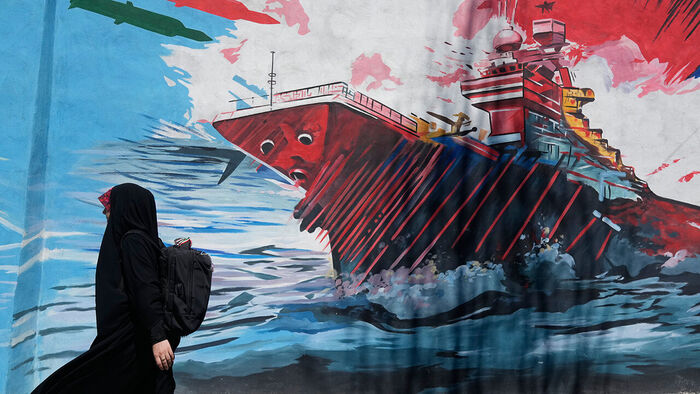
▲ Anti-U.S. propaganda mural in downtown Tehran, Iran
Conversely, President Trump has attempted to revert the framework of this war back to his original goal of preventing Iran from acquiring nuclear weapons.
In his UN General Assembly speech on September 22, he repeatedly emphasized the principle of a denuclearized Iran, declaring that he would never tolerate Iran possessing nuclear weapons.
The Associated Press assessed that "for months, both sides have been locked in a game of waiting to see who wears out first."
Axios reported on September 28 that President Trump is willing to ease sanctions or unfreeze assets if Iran takes concrete steps regarding its nuclear program.
However, President Trump posted on Truth Social to deny the report, calling it "fake news."
Facing plummeting approval ratings ahead of the midterm elections in November, President Trump previously faced fierce domestic backlash when he signed a memorandum of understanding (MOU) to end the war with Iran last June, which included lifting sanctions and unfreezing assets, with critics branding it "tantamount to surrender."
(Photo: AP, Yonhap News)
※ Please note: This article was translated by AI and may contain errors.
Copyright Ⓒ SBS. All rights reserved. Unauthorized reproduction, redistribution, and use for AI training are prohibited.