SBS NEWS
Search, Verification, Prevention: How State Duties Shifted to Bereaved Families
Published : Sep 28, 2026 10:13 AM
News Story Ep. 580: Those for Whom Holidays Hurt More — Disasters, Tragedies, and Their Aftermath

Replay Broadcast (Aired on TV Sept. 26, 2026)
☞ [News Story Ep. 580] Those for Whom Holidays Hurt More — Disasters, Tragedies, and Their Aftermath (Video Reporting & Editing: Kim Tae-hoon)
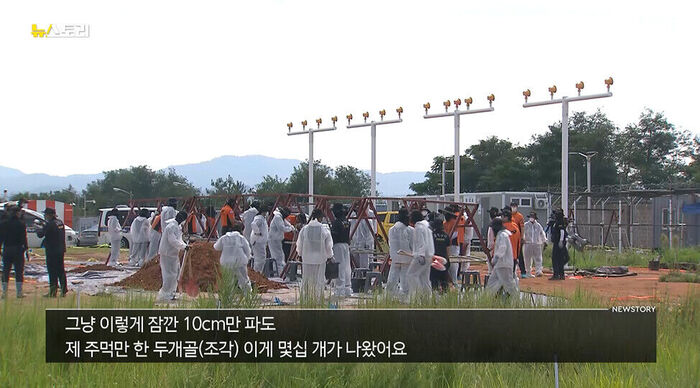
This past April, searches resumed at the site of the Dec. 29 Jeju Air passenger plane crash at Muan Airport. It came a little over a year after the disaster occurred. The resumption was prompted by discoveries of items requiring additional identification, both at the crash site—which the government had already closed off after completing searches—and among the stored wreckage of the aircraft. In January of last year, the Ministry of Land, Infrastructure and Transport announced that wreckage recovery was 99% complete. However, as bereaved families directly examined the crash site and re-investigated the stored wreckage, additional remains and personal belongings were discovered. Following numerous demands by the bereaved families, a massive renewed search began on April 13. Subsequent government inspections pointed out issues in the initial recovery and wreckage management processes. Ultimately, the families who had fought for a renewed search returned to the site. Those who had lost their families found themselves taking on the responsibility of verifying whether the search the state declared finished had actually been sufficient.
Kim Sung-Cheol, whom we met at the Muan Airport re-search site, was well-versed in the search procedures. He lost his wife and daughter in the tragedy as they were returning home from a trip. Meeting with reporters, he explained in detail which zones had been verified so far, which areas remained, how priority search areas were distinguished from others, and what methods were being applied in each zone. He was fully aware of the progress by sector and search methods, as well as the remaining blind spots. Before the disaster, he was an ordinary office worker who had neither reason nor occasion to acquire such knowledge. Joining the leadership of the bereaved families' committee was also not something he had originally planned. With a shortage of people to negotiate with the government, he put his name on the delegation, and though he intended to return to work, he eventually resigned from his job. He went on to handle discussions with the government and memorial projects, and once the renewed search began, he even monitored progress at the site.
Other bereaved families were also staying in temporary shelters set up at the airport or taking turns keeping watch over the site. In fact, at Muan Airport, the families did not stop at simply representing the rights of their lost loved ones who were the subjects of the search. They also took on the role of checking whether the search operations undertaken by the state were being properly executed. They examined whether the scope and methods of the search were appropriate and checked which areas remained uninspected. They also scrutinized whether the government's explanations regarding when the search could be concluded matched the actual conditions on the ground.
Kim Yu-jin, representative of the bereaved families' committee who lost both parents and a younger brother in the crash, explained that conversations with families of victims from the Sampoong Department Store collapse and the Daegu subway fire influenced their process of demanding a re-investigation of the aircraft wreckage from the government. Drawing on their own experiences, those who had previously suffered tragedies explained what problems arose when a disaster scene was cleared earlier than expected. Based on what they went through, they shared what needed to be preserved, what needed to be rechecked before clearing the site, and what further questions needed to be asked when the government claimed that recovery efforts were complete. Representative Kim noted that after hearing those stories, the committee kept in mind the possibility that items requiring further verification might still remain in the wreckage at Muan Airport. Indeed, subsequent government investigations confirmed that there had been flaws in the initial recovery and wreckage management at Muan Airport. In essence, victims of previous disasters passed down lessons to victims of a new tragedy on what to scrutinize in the state's response.
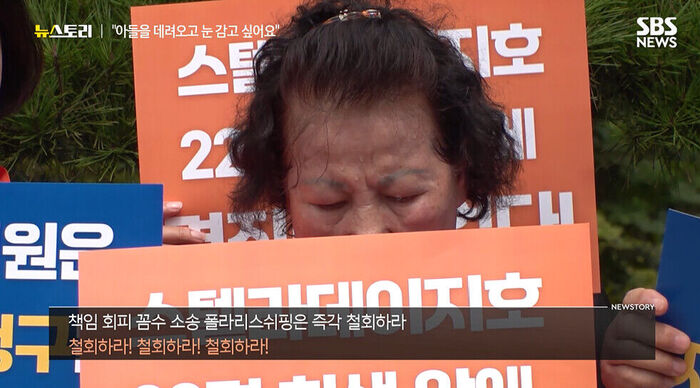
 For nearly a decade since the disaster, families of the missing crew members of the Stella Daisy have been following the search and investigation procedures together. During the government's first deep-sea search in 2019, the hull and the voyage data recorder were found, and what appeared to be human remains were identified, but these were not recovered. While demanding a second deep-sea search, the families have also been monitoring the maritime accident determination issued by the Korean Maritime Safety Tribunal regarding the cause of the disaster, as well as the lawsuit filed by the shipping company seeking to overturn that ruling. What began as a plea to find their loved ones evolved over time into the families having to verify for themselves how searches are designed and how far determinations regarding the cause of the accident have progressed.
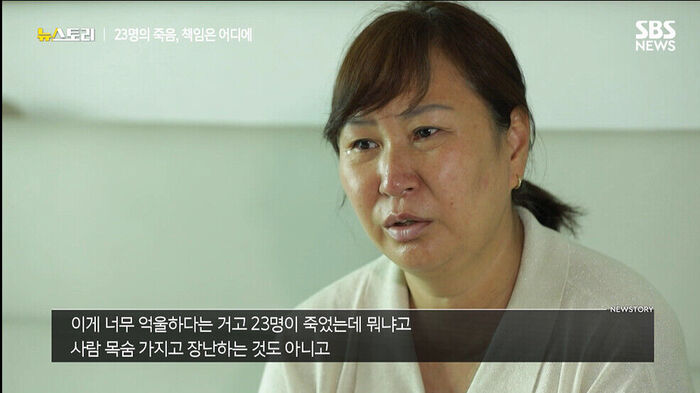
For the bereaved families of the Aricell disaster, the primary focus was to confirm the cause of the accident and the scope of responsibility. As investigations and trials continued following the incident, the families continuously tracked what safety measures the company should have implemented, what liabilities the court recognized, and what stage the case had reached. For Lee Soon-hee, who lost her eldest daughter, industrial safety regulations and the Serious Accidents Punishment Act were areas she never needed to know before the disaster. Yet, to discover why her daughter died, she had to directly understand the working environment, the company's safety obligations, and the rulings handed down by the court. While determining responsibility was the role of state authorities, keeping track of how far those judgments had advanced and what was acknowledged became the daily life of the bereaved families.
It is not entirely accurate to describe everything the families have done or are doing across these three disasters as "work the state failed to do." At Muan Airport, the government did conduct a renewed search; for the Stella Daisy, the government carried out an initial deep-sea search and the Maritime Safety Tribunal delivered a ruling on the cause of the sinking. In the Aricell case as well, investigations, indictments, and trials are proceeding through state institutions. Nor can one claim that the state's responsibility was transferred to victims simply because they actively participate in searches, investigations, and trials. In most instances, victims' participation is closer to a right that must be guaranteed rather than excluded. The problem arises when conditions are created where it becomes difficult to ensure public procedures are operating properly unless the bereaved families intervene. Demanding the resumption of an abandoned search, explaining the necessity of a new search, identifying issues missed by investigative bodies, and independently researching what went wrong in past disasters extend far beyond merely submitting opinions.
 The state bears the responsibility to ensure that searches, investigations, the provision of information, record preservation, and recurrence prevention function properly. When any of these functions fail to operate as they should, victims shift from people awaiting results to people applying pressure to make the process work. If procedures only move when victims continuously question whether a search was adequate, whether an investigation overlooked anything, or how far legal accountability has progressed, their participation transcends exercising rights and turns into filling institutional gaps. This is precisely where the paradox arises in disaster response: the very people who should be receiving support become the inspectors of the response system itself.
The fragmentation of disaster response across multiple agencies further expands the role placed upon victims. On-site searches are handled by related agencies such as the police, fire authorities, and the military, while investigations into the cause of an accident are conducted by separate investigative bodies. Criminal liability is decided by prosecutors and courts, while victim support is assigned to separate ministries and local governments. Measures to prevent recurrence also fall under different agencies depending on the type of accident. From an institutional viewpoint, this is a structure in which each agency executes its designated duties. For families, however, these all stem from a single event: the death of a loved one. Moments inevitably arise when victims must figure out on their own which agency holds what information, what procedure is currently underway, and where they must make their next request.
The families of the Stella Daisy have moved between the Ministry of Foreign Affairs, the Ministry of Oceans and Fisheries, the National Assembly, and the courts to demand searches and truth-seeking. Bereaved families of the Muan Airport crash simultaneously monitored proceedings across multiple institutions, including search agencies such as the police, fire service, and military, as well as the Aviation and Railway Accident Investigation Board and the Ministry of Land, Infrastructure and Transport. The Aricell families are likewise dealing with different agencies for industrial safety issues, criminal trials, memorial efforts, and prevention measures. While the division of responsibilities among agencies is necessary for public administration, there is no reason to burden victims with navigating those jurisdictional boundaries. If victims must study institutional structures just to find out what stage their case is in, the burden of information provision and coordination has effectively been shifted to them.
According to a domestic study, as South Korea experienced various social disasters, the scope of direct government responsibility expanded while response entities diversified to include central ministries, dedicated bodies, and external specialist organizations.¹ Yet, such changes alone make it difficult to conclude that the government has pursued fundamental reforms in disaster management or fully discharged proactive responsibilities. As the entities involved in disaster response have diversified, establishing cooperative frameworks among agencies and clarifying lines of responsibility are expected to become even more critical. The analysis in this study aligns with the issue that the mere fact that multiple agencies perform their respective tasks does not mean the public response to a disaster operates seamlessly. Viewed through the experiences of the three tragedies, the reality in which victims must independently understand and connect the roles and progress of each agency illustrates how the burden of a fragmented response system falls directly on the victims.
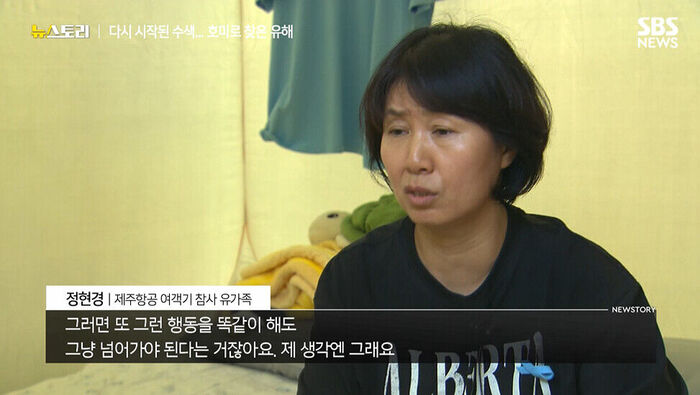
 Viewing victims merely as 'recipients of support' in disaster response also fails to reflect the actual role being undertaken by bereaved families. Providing psychological counseling, medical care, livelihood support, and legal assistance in the wake of a disaster to help victims rebuild their lives is a vital duty of the state. However, supporting victims and ensuring that public functions like searching, investigating, and establishing accountability operate properly are separate matters. Offering recovery assistance does not resolve the oversights in the initial search and recovery exposed in the Muan Airport disaster. Nor can such victim support substitute for a second deep-sea search for the Stella Daisy, or replace the trials of those responsible and preventive measures in the Aricell disaster. Victim support and the core duties of search, investigation, and accountability cannot replace one another.
Victims do not exist to complete disaster response efforts. Searching for traces of family members, verifying the cause of an accident, observing how liability is adjudicated, and demanding systemic reform to prevent similar accidents may all be important to victims. However, forcing victims to shoulder the responsibility of making that process work is an entirely different issue. The state must remain capable of conducting searches, investigations, documentation, and recurrence prevention even as victims focus on living their own lives. The next stage of disaster response can truly begin only when the burden of monitoring and coordinating public procedures—which shifted to the bereaved families after these tragedies—is returned to the responsibility of the state. (To be continued in Part 2)
 ¹ Han Seung-joo, "Changes in Government Response and Responsibility After Social Disasters," 2018. Following social disasters, the scope of direct government responsibility has expanded and responding entities have diversified; with the pluralization of disaster governance, establishing cooperation systems and addressing accountability among agencies are expected to become increasingly important.
※ Please note: This article was translated by AI and may contain errors.
Copyright Ⓒ SBS. All rights reserved. Unauthorized reproduction, redistribution, and use for AI training are prohibited.