SBS NEWS
Drug Smugglers Round Up One by One Using Clues Left in Airplanes and Incheon Airport Bathrooms
Published : Sep 22, 2026 10:31 AM
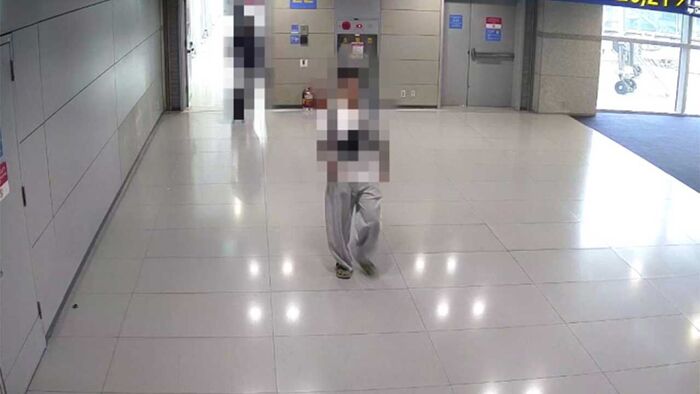
▲ Suspect in ketamine abandoned on aircraft
Customs authorities have successively arrested drug offenders through tracking investigations based on drugs left behind in airplane seats and restrooms at Incheon International Airport.
According to Incheon Airport Customs on September 22, white powder was found under an airplane seat on a flight arriving at Terminal 1 of Incheon Airport from Cambodia at 7:38 AM on May 16 of last year.
Appraisal results confirmed the substance to be ketamine, well known as a club drug, but because all passengers had already disembarked when it was found, it was difficult to identify a suspect.
However, the Incheon Airport Customs investigation team analyzed closed-circuit television (CCTV) footage around the aircraft seats and arrival time slots to identify a man in his 30s, A, as a suspect.
Subsequently, after obtaining a search and seizure warrant from the court, they conducted a search and seizure of the suspect's residence and digital forensics on his mobile phone to secure evidence proving the crime.
In particular, during the process of analyzing A's communication data, they captured circumstances indicating that a woman in his 30s, B, was complicit in the crime and launched an additional investigation.
The investigation team carried out an emergency arrest of B after discovering ketamine hidden inside her underwear as she was entering the country through Incheon Airport at 7:04 AM on August 7 of last year.
In addition, for two men in their 30s who entered the country together with B, they checked whether they had administered drugs, and after positive reactions came back, transferred their cases to the competent police station.
As a result of the investigation, it was found that A and B not only smuggled in cocaine, marijuana, and ketamine, but also distributed them using the so-called "throw-drop" method.
With a single bag of ketamine found inside the cabin as a starting point, the true reality of the drug case came to light, with buried marijuana being uncovered from apartment playgrounds and flowerbeds.
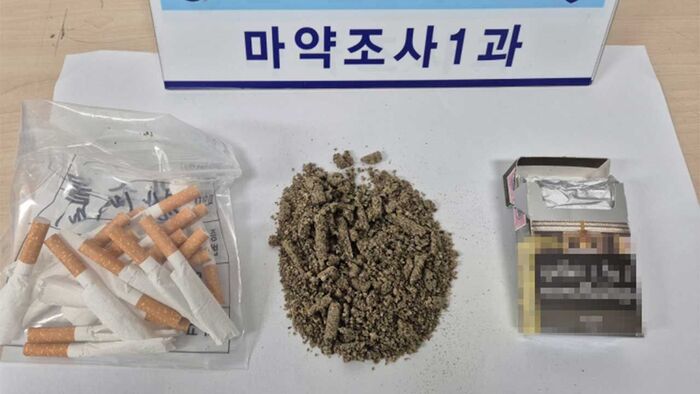
Another case began on December 16 of last year when three packs of marijuana manufactured in the form of cigarettes were found in a disabled restroom in the arrival hall of Incheon Airport in the morning.
At the time, there were no CCTVs inside the restroom, making it difficult to find direct evidence, and as appraisal results from the National Forensic Service yielded no fingerprints, the team experienced difficulties in identifying a suspect.
As a result of analyzing the movement paths of visitors using CCTV footage filmed around the restroom entrance for two months, the investigation team identified a man in his 30s, C, who showed unusual behavior, as a person of interest.
Next, they searched C's vehicle and found and seized cigarette-style marijuana in the exact same form as the one discovered in the airport restroom.
Through mobile phone forensics, the investigation team additionally booked two men in their 30s who had smuggled in marijuana and chocolates containing psilocybin (a hallucinogenic component) along with C.
Nam Chang-hoon, Director of the Investigation Bureau at Incheon Airport Customs, stated, "Drug offenders are increasingly bringing in narcotics through covert and intelligent methods to evade crackdowns," adding, "We will completely block narcotics from being smuggled and distributed domestically through airtight crackdowns."
(Photo: Provided by Incheon Airport Customs, Yonhap News)
※ Please note: This article was translated by AI and may contain errors.
Copyright Ⓒ SBS. All rights reserved. Unauthorized reproduction, redistribution, and use for AI training are prohibited.