SBS NEWS
Presidential Chief of Staff Offers Resignation... Overhaul of Vetting System Inevitable
Published : Sep 21, 2026 4:36 PM
"Accountability for Personnel Failures"... Chief of Staff Kang Hoon-sik Abruptly Offers Resignation
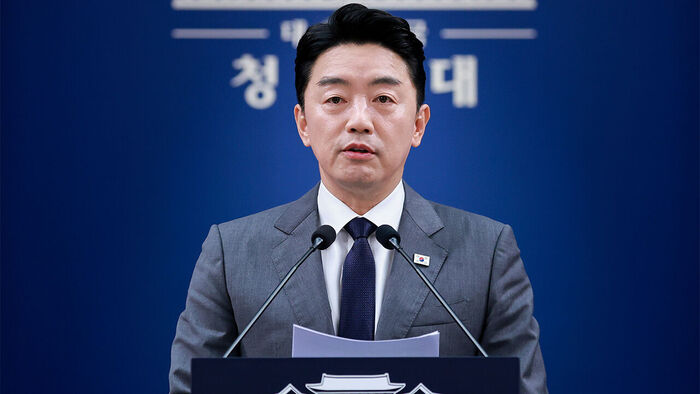 Kang's resignation offer comes about 15 months after his appointment in June of last year. Former Senior Presidential Secretary for Policy Kim Yong-beom, who was appointed at the same time, resigned on September 1, just two days after the cabinet reshuffle was announced. Kim's departure was to take responsibility for disarray in real estate policies and turmoil in the financial markets. If Kang's resignation is accepted, two of the three chief-level posts directly assisting the president will become vacant.
Allegations of Sexual Harassment and Mistreatment of Aides... Fall-Out from Petition
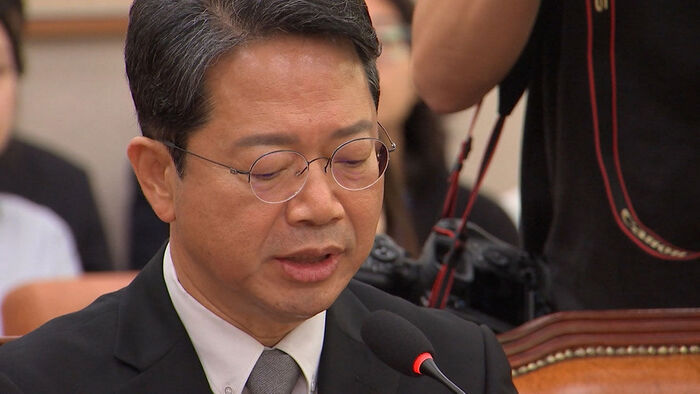 However, a new controversy surfaced on the day of his withdrawal. Reports emerged that former aides who had worked with Kim drafted a petition requesting the withdrawal of his nomination and delivered it to the Senior Presidential Secretary for Political Affairs on September 17, a day before President Lee's press conference. The petition reportedly contained claims that at a drinking gathering attended by Kim in 2024, an attendee complained of being sexually harassed and aides stepped in to handle the matter, alongside allegations of additional drunk driving incidents and verbal abuse and profanity directed toward aides. A former aide who authored the petition said in a media interview, "We submitted the petition for the sake of the presidential office and the Democratic Party as a whole amid an atmosphere where the appointment seemed likely to be pushed through. Any single one of those allegations would have completely disqualified him." In response, Kim Seung-won's office pushed back, calling the claims "untrue, exaggerated, or erroneous." Presidential Senior Spokesperson Kang Yu-jung remarked during a radio interview this morning, "We provided our answer through the exercise of appointment authority, and we have no responsibility or obligation to respond to gossip."
Regardless of the veracity of each claim in the petition, questions remain about the personnel vetting system itself, including when the presidential office obtained the information and how it was factored into the personnel decision. As previously reported, President Lee's deliberate emphasis on "controversies that arose during the public vetting process" during the press conference sparked speculation that he was considering matters beyond the parliamentary confirmation hearings, potentially referring to the petition. This also leads to questions over whether the presidential office conducted thorough preliminary background checks into the nominee's past conduct and reputation.
Fifth Failed Nomination... Issues That Could Have Been Identified in Advance
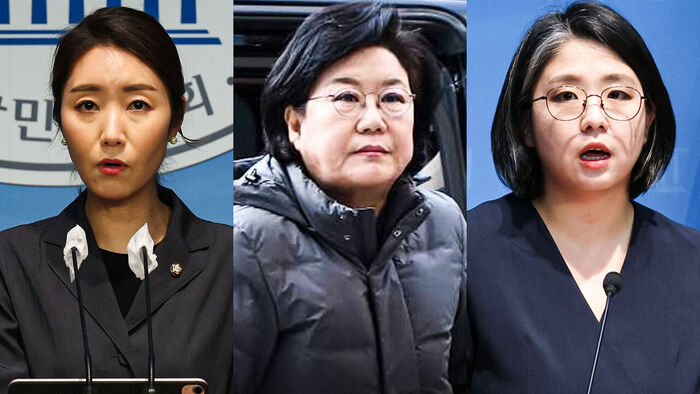 The first was Kang Sun-woo, nominee for Minister of Gender Equality and Family, in July 2025. Kang resigned on July 23 following allegations of mistreating aides and controversies surrounding her explanations. While corroborated by media reports, the frequent turnover of staff in her parliamentary office and her reputation among former aides were matters that could have been identified through reference checks. Following this first failed ministerial nomination of an active lawmaker, the presidential office pledged to reform the personnel vetting system, establishing a framework where the personnel affairs office recommends candidates under the responsibility of the chief of staff as chair of the personnel committee, the civil affairs office conducts vetting, and the political affairs office provides political assessments.
Nevertheless, another problem occurred this January during the vetting of Lee Hye-hoon, nominee for the inaugural Minister of Planning and Budget. Allegations of fraudulent housing subscription applications emerged regarding a luxury apartment in Banpo, leading President Lee to withdraw her nomination on January 25. Issues concerning dependents and housing subscription score points were details that should have been verified during document vetting.
Yong Hye-in, nominee for Minister of Gender Equality and Family, sparked controversy over privileges immediately after her nomination on August 30 by declaring her intent to concurrently serve as a proportional representative lawmaker while holding the ministerial post. Subsequent allegations surrounding her spouse's party post and salary, as well as party operational practices, prompted widespread criticism within the Democratic Party, leading to her resignation on September 13. Whether a nominee intends to retain their parliamentary seat after appointment as minister is something that could easily have been asked before making the nomination.
Did the Democratic Party Respond Appropriately to Deteriorating Public Sentiment?
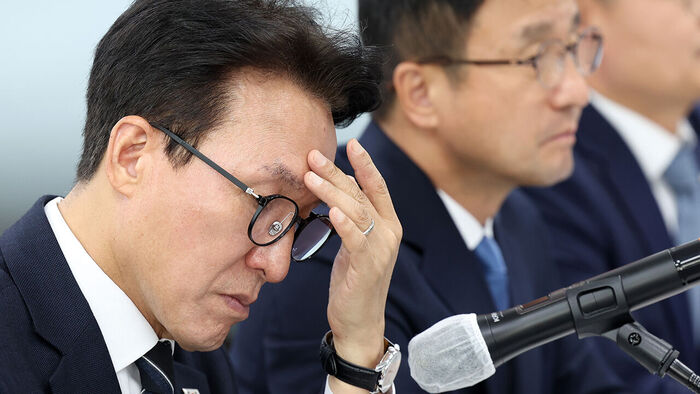 The Democratic Party pursued a bifurcated approach as public sentiment soured on both nominees Yong Hye-in and Kim Seung-won. Appearing on the party's YouTube channel in early September, party leader Kim Min-seok addressed the controversy over Yong's concurrent roles, stating, "Because this is a matter of judgment regarding facts that have already come to light, it is different from typical cases. We need to reflect while respecting the public's judgment and voice in and of themselves." Around that time, voices within the Democratic Party surged demanding Yong's voluntary resignation or the withdrawal of her nomination.
Conversely, the party vigorously defended Kim Seung-won by citing prosecutorial reform goals and questioning how independent lawmaker Han Dong-hoon, who spearheaded the criticism, obtained his materials. Leader Kim Min-seok stated during a Supreme Council meeting on September 11, "The more we observe, the more we believe this is a well-judged appointment. We will defend him." Comments disconnected from public opinion proliferated from ruling party figures, such as the Legislation and Judiciary Committee chair claiming that "in a ministerial confirmation hearing, the nominee is the witness" while conducting a hearing without witnesses or reference persons, and the committee's ranking ruling party member stating that Kim had undergone a prosecutorial screening "a hundred, a thousand times harsher than a parliamentary hearing." Setting aside various opinion polls showing opposition outweighing support by roughly two to one, the Democratic Party unilaterally adopted the confirmation report finding Kim qualified on September 17.
The ruling party leadership felt strongly that they could not afford to lose Kim Seung-won, treating demands to vet the nominee as a political offensive that required firm resistance. As a result, the objectives and symbolism intended from the cabinet reshuffle vanished entirely, leaving an even heavier political burden on the ruling party, the government, and the presidential office alike.
The Solution Is Clear... Appointments Must Align with Public Sentiment and Livelihoods
It goes without saying that public sentiment shifts only when words are matched by action. Because personnel matters have become entangled, untangling them begins with people. The first step will depend on who is chosen for the two vacant ministerial posts, the heads of power agencies currently undergoing vetting or candidate searches (the Serious Crime Investigation Agency, the Prosecution Office, and the National Police Agency), and key presidential aides including the chief of staff. How their parliamentary confirmation hearings unfold will also bear watching. Perhaps it is time to move past hearings where the absence of witnesses has become the new normal and where shouting and personal attacks among lawmakers run rampant.
※ Please note: This article was translated by AI and may contain errors.
Copyright Ⓒ SBS. All rights reserved. Unauthorized reproduction, redistribution, and use for AI training are prohibited.