SBS NEWS
Russia May Attack NATO Allies Within Months: European Intelligence Officials
Published : Sep 21, 2026 11:28 AM
European Intelligence Authorities

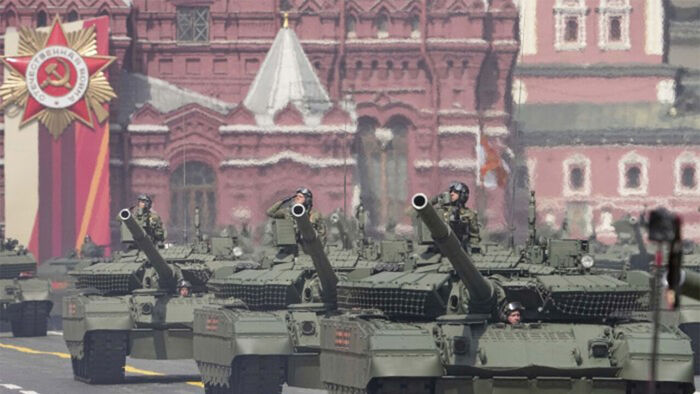
▲ Russian President Vladimir Putin inspects defense equipment.
Multiple European intelligence officials have raised the possibility that imminent Russian provocations could take place to test the solidarity and response of the North Atlantic Treaty Organization (NATO), the British daily The Guardian reported on September 20, local time.
The Guardian reported this based on individual interviews conducted last week with three heads of European intelligence agencies.
Michal Koudelka, head of the Security Information Service (BIS) of the Czech Republic, mentioned during an interview in Prague that Russia could step up drone activity or plan small-scale incursions against neighboring NATO member states.
He emphasized that such scenarios, which could include limited forms of incursions, false-flag provocations, and massive public opinion campaigns, "could happen within months."
Previously, the U.S. Wall Street Journal (WSJ) reported that U.S. intelligence officials had also assessed that Russia could engage in limited military action against NATO member states between this fall and 2029.
Describing Russia's current tactics as "de-escalation through escalation," Koudelka explained, "Russia believes that if it escalates tensions sufficiently, it can force European nations to halt their support for Ukraine."
Normunds Mezvietis, head of Latvia's State Security Service (VDD), stated in a separate interview that while "no signs of an imminent attack are visible," he acknowledged that there are indications Russia is preparing for more decisive actions in Europe.
However, Mezvietis noted, "It remains unknown whether Russia has a direct and concrete plan, or if it is merely part of a broader attempt to spread fear and uncertainty throughout Western society."
Lieutenant General Tomas Nilsson, head of Swedish military intelligence, said in an interview on the sidelines of a conference in Riga, Latvia, "I see no signs whatsoever that Moscow is seriously considering entering into genuine negotiations [to end the war in Ukraine]."
Mentioning the attempted explosive drone attack last month at Leipzig/Halle Airport in Germany, Nilsson said, "An armed drone flew into a busy airport in the heart of Europe. If an attack occurs that leads to casualties or the loss of critical infrastructure, I think that would be a game-changer."
The Guardian noted that all three intelligence chiefs agreed on the high likelihood that Russia will step up sabotage operations targeting NATO member states.
Mezvietis specifically pointed out that Russia's sabotage targets have recently shifted from random acts intended to create panic toward specific targets linked to support for Ukraine.
"We are seeing signs that Russia is targeting railway infrastructure and infrastructure related to support for Ukraine, and recently, the defense industry as well," he diagnosed, adding, "Since these attacks also yield psychological effects, it is a win-win for Russia."
Nilsson stated that Russia's goals for sabotage include curbing support for Ukraine and dividing NATO, adding, "What Russia wants is for NATO to stop at emergency consultations under Article 4 of the treaty without taking action."
Article 4 of the NATO treaty stipulates that an ally whose territorial integrity, political independence, or security is threatened may request emergency consultations.
Going a step further, Article 5 of the NATO treaty enshrines the principle of collective defense, stating that an armed attack against one member state shall be considered an attack against them all and obligating assistance, including the use of armed force.
Based on intelligence assessments, European leaders have also issued a series of warnings regarding the possibility of armed provocations by Russia against NATO members.
Polish Prime Minister Donald Tusk warned in the Polish parliament on September 17 of the possibility of Russian missile strikes against countries supporting Ukraine, noting, "This is to test whether NATO's Article 5 is merely rhetorical or actually operational."
French President Emmanuel Macron also stated after a meeting with presidential candidates and party leaders on September 18 that Europe is facing hybrid threats from Russia, adding that he has ordered a national plan to protect critical infrastructure from drone and cyber attacks.
(Photo: AP, Yonhap News)
※ Please note: This article was translated by AI and may contain errors.
Copyright Ⓒ SBS. All rights reserved. Unauthorized reproduction, redistribution, and use for AI training are prohibited.