SBS NEWS
Supreme Court: Former Coal Industry Act Compensation Clause Must Be Interpreted Considering Pneumoconiosis Characteristics
Published : Sep 21, 2026 9:48 AM

▲ A past protest by the Miner Pneumoconiosis Rights Solidarity
The Supreme Court has ruled that the enforcement decree clause of the former Coal Industry Act, which determines eligibility for disaster compensation, must be interpreted in consideration of the specific characteristics of pneumoconiosis.
The ruling indicates that given the disease's characteristics—being difficult to cure and exhibiting complications at a later stage—disaster compensation should be paid even if the application was filed late, provided it is clear that the pneumoconiosis was contracted due to workplace employment.
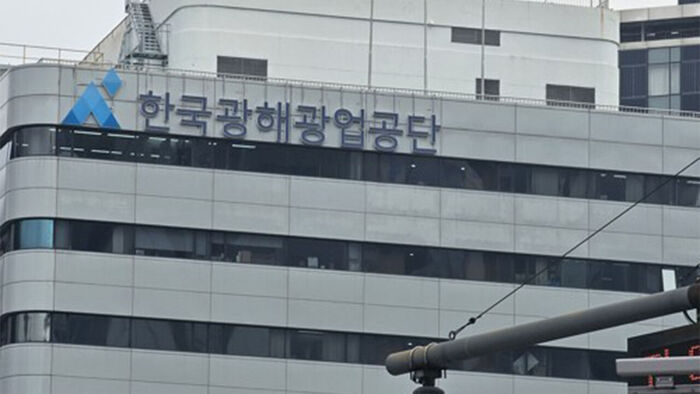
The Supreme Court's First Division (Presiding Justice Seo Kyung-hwan) reversed the lower court ruling, which had ruled in favor of the defendant in a disaster compensation lawsuit filed by the bereaved family of a person identified as A against the Mine Reclamation Corporation (miRECO), and remanded the case to the Seoul High Court.
A worked at coal mine B from 1992 to 1995, and subsequently at coal mine C from 1996 to 2009.
In October 1994, while working at coal mine B, A was diagnosed with type 1 pneumoconiosis, and in October 2003, while working at coal mine C, A was classified under Grade 13 for disability.
A's pneumoconiosis worsened even after coal mine C was closed in July 2009.
A was classified under Grade 11 disability in June 2013 and Grade 7 disability in September 2015, before passing away in June 2017.
A's bereaved family filed the lawsuit, arguing that the corporation had an obligation to pay disaster compensation under the former Coal Industry Act and its enforcement decree.
The core issue of the case was whether A, who was not receiving or had not applied for medical care benefits under the Industrial Accident Compensation Insurance Act, qualified for disaster compensation.
The former enforcement decree of the Coal Industry Act at the time stipulated that disaster compensation would be paid to individuals whose disability grade was finalized as of the date of the mine closure, or to those who had received or applied for medical care benefits if their disability grade had not been finalized.
Because A's symptoms had not stabilized as of the mine closure date, A fell under the category of someone whose disability grade had not been finalized.
The first instance court ruled against the plaintiffs, stating that there was no evidence to prove that A had applied for or received medical care benefits as of July 2009, the date of the mine closure.
The second instance court also dismissed the appeal by A's bereaved family, upholding the previous ruling.
However, the Supreme Court determined that considering the characteristics of pneumoconiosis, the legislative intent behind disaster compensation, and the necessity of constitutionally compliant legal interpretation, individuals diagnosed with pneumoconiosis prior to the mine closure date should be regarded as eligible for disaster compensation.
The court pointed out that pneumoconiosis patients mainly receive medical care benefits for the purpose of treating complications.
Consequently, it noted that this results in patients being excluded from disaster compensation if complications do not manifest until before the mine closure date but appear afterward.
An interpretation like that of the lower court fails to account for the characteristics of pneumoconiosis, which cannot be cured with modern medicine and continues to worsen even after leaving the workplace.
The court pointed out, "Whether complications manifest by the time of the mine closure date to make one eligible for medical care benefits, or whether they gradually worsen and manifest only after the mine closure date, is merely a matter of chance depending on the unpredictable progression speed of pneumoconiosis."
(Photo: Yonhap News)
※ Please note: This article was translated by AI and may contain errors.
Copyright Ⓒ SBS. All rights reserved. Unauthorized reproduction, redistribution, and use for AI training are prohibited.