SBS NEWS
Key to Shaky 320 Billion Won Contract Is 'Certification'... Can It Be Obtained?
Published : Sep 19, 2026 9:02 AM
The Shaky Super-Large Helicopter Project (Part 3)

Yet the person sitting in the cockpit of that helicopter was not a pilot from the Korea Forest Service's Forest Aviation Headquarters, but an American. South Korean pilots could not fly it, and South Korean mechanics were not even permitted to service it.
The reason is helicopter certification.
In the previous two parts, we examined why the Forest Aviation Headquarters modified the contract from a newly built helicopter to a remanufactured military aircraft, and what was scrutinized and overlooked during that process. This installment examines solely the core issue that could derail this roughly 320 billion won super-large helicopter project: "certification."
(Part 1) A 38 Billion Won Wildfire Helicopter: Was It a Used US Military Aircraft?
(Part 2) Did They Just Take the Contractor's Word? Was the Contract Modification Justified?
We looked into what certification entails and whether the helicopter the Korea Forest Service agreed to purchase can clear that hurdle.
Helicopter Certification: Three Gates to Pass
The first is the Type Certificate (TC). This is a procedure that approves not an individual aircraft, but its "type"—the design itself. Airworthiness authorities review engineering drawings, structural calculations, and test results to officially confirm that "aircraft built according to this design are safe." Article 20 of South Korea's Aviation Safety Act stipulates this.
The word "type" might sound unfamiliar, but thinking of automobiles makes it easier. Even within the same vehicle model, gasoline and hybrid versions have different designs. Grouping vehicles with identical designs together constitutes a "type." If the design is sound, certification is granted. For aircraft, airworthiness authorities directly inspect blueprints and test data before granting approval. On top of that, even after the design is approved, each individual aircraft must receive separate certification before it is allowed to fly.
The second is Type Certificate Validation (TCV). When importing an aircraft manufactured abroad into South Korea, South Korea's Ministry of Land, Infrastructure and Transport (MOLIT) re-verifies and recognizes the type certificate issued by that foreign government. Article 21, Paragraph 1 of the Aviation Safety Act specifies the eligible applicant for TCV as "a person who has obtained a type certificate from a foreign government." This means an aircraft must already have received a type certificate abroad to be eligible for MOLIT validation.
Consequently, the US Federal Aviation Administration (FAA) must first issue a type certificate for the model, and based on that certificate, validation from South Korea's MOLIT must be obtained. Without the first step, the second step cannot even begin.
The third is the Airworthiness Certificate. Rather than evaluating design, this certifies an individual aircraft, confirming that "this specific aircraft is currently in a condition to fly safely." Article 23 of the Aviation Safety Act divides airworthiness certificates into two categories: a Standard Airworthiness Certificate for general operations, and a Special Airworthiness Certificate granted exceptionally with specific operational purposes and conditions attached.
Aircraft deployed for specialized missions such as aerial firefighting can qualify for a Special Airworthiness Certificate.
In other words, because obtaining a Standard Airworthiness Certificate requires the aircraft's design to be approved, a Type Certificate or Type Certificate Validation must essentially come first. Conversely, a Special Airworthiness Certificate is a separate pathway that does not presuppose civil type design approval. Even if the first two gates remain shut, it serves as a side door that can be opened under conditional terms.
Keeping this structure in mind when reviewing the contract terms makes it glaringly obvious what the Forest Aviation Headquarters demanded—and what it did not.
Did the Forest Aviation Headquarters Leave a Side Door Open?
"To demonstrate flight safety, the helicopter must have completed standard or special airworthiness certification by the Republic of Korea Ministry of Land, Infrastructure and Transport by the time of delivery, and the issued Type Certificate and Type Certificate Data Sheet, or Type Certificate Validation and Type Certificate Validation Data Sheet, along with Supplemental Type Certificates, must be submitted."
Two distinct requirements are contained within a single sentence: the former concerns airworthiness certification, while the latter requires the submission of a Type Certificate or Type Certificate Validation alongside Supplemental Type Certificates.
However, the explanation the Korea Forest Service submitted to the National Assembly placed weight entirely on the first part. In response to an inquiry regarding the expected timing of M234SP type certification, the Korea Forest Service stated, "The Request for Proposals specified that a Standard Airworthiness Certificate or Special Airworthiness Certificate from MOLIT must be obtained by delivery so that the aircraft can be registered and operated domestically," adding, "Therefore, obtaining a type certificate itself was not stipulated as an essential contractual prerequisite, and delivering the aircraft with the airworthiness certificate required for domestic operation is the manufacturer's obligation."
It further added, "Whether the M234SP obtains a type certificate and the projected timeline for doing so are not managed as separate contract fulfillment deliverables."
While the contract placed airworthiness certification and the submission of type certificates side by side, the latter effectively vanished from the Korea Forest Service's explanation.
Why it was drafted that way is revealed in remarks by the head of the Forest Aviation Headquarters. When reporters asked about the type certification clause in the Request for Proposals, the head responded:
"We do not demand standard type certificates or standard airworthiness certificates. (…) The requirement is simply that upon final delivery, whether through special airworthiness or standard airworthiness, it be registered and certified with MOLIT so that our pilots and mechanics can operate it. Why did we do that? Because if we required only standard certification, the only eligible option at the time was the S-64."
The intention was to leave a side door open to broaden competition, because narrowing the criteria would have left the Erickson S-64 as the only helicopter available for procurement.
To summarize: the Korea Forest Service shifted the obligation to secure certification entirely onto the contractor, stated it did not matter whether that certification was standard or special, and excluded the timing of type certification from its managed oversight items. That was how the contract was designed.
Type Certification: Not Even Certified in the US
It also noted, "These two are not aircraft with differing performance, but aircraft of identical configuration and performance bearing different names depending on the certifying authority."
In other words, the true identity of the aircraft sitting in the Korea Forest Service hangar and the ones scheduled to arrive in the future is the CH-47D used by the US Army. Military aircraft do not possess civil type certificates.
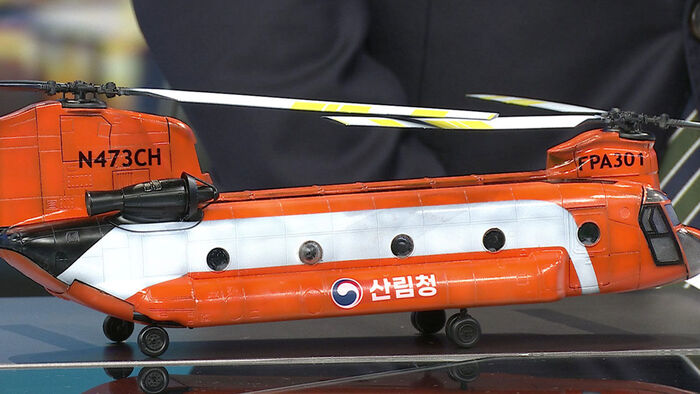
Currently, what aircraft of this family hold in the United States is a Restricted Type Certificate (RTC), which limits their use strictly to special purposes such as aerial firefighting. According to National Assembly inquiry documents, tail number N473CH, currently brought in as a substitute for Unit 1, is also operated under a Restricted Type Certificate (R00051SE).
The head of the Forest Aviation Headquarters is well aware of this circumstance, stating: "Around 20 Chinooks are currently operated worldwide. The only place holding a civil TC certification is Columbia, and aside from that, all of them are RTCs. Every company operating Chinooks in the US does so under an RTC."
Yet Article 21 of South Korea's Aviation Safety Act defines the eligible applicant for Type Certificate Validation as "a person who has obtained a type certificate from a foreign government." It is not clear from the statutory text alone whether an aircraft holding a Restricted Type Certificate fulfills this requirement. This means that to stand before the second gate, the first gate must open first.
Who holds the key to that first gate is another issue. The entity holding the original design of the CH-47—the root of its type certification—is Boeing. When reporters asked, "Doesn't Boeing have little reason to surrender its own asset, the TC?", the head responded:
"I've heard that plenty of times. (…) Honestly, I think that is an issue between Boeing and Columbia. Regardless of how they contracted it, as long as they deliver it to us certified, that fulfills the requirement."
"No Application for Helicopter Development": The 'Certification' Reality Confirmed by the FAA
SBS filed a Freedom of Information Act (FOIA) request with the US Federal Aviation Administration regarding certification data submitted by Boeing in connection with the CH-47D. The FAA's reply, signed on August 4, 2026, stated that no records existed, citing the following single sentence as the reason:
"Boeing has not applied to the FAA for a Type Certificate or Supplemental Type Certificate for the CH-47D helicopter."
Around the same period, the Korea Forest Service told the National Assembly that it was (…) "scheduled to complete certification without setbacks." That statement was made in June 2026.
Where did that process actually stand, then? The answer lies in the certification planning documents Columbia presented to the Forest Aviation Headquarters in August 2025.
Columbia originally sought to certify the 234SP by amending the type certificate of the civil Model 234. It submitted that plan to the FAA in January 2025, and in March 2025, held an in-person review with the FAA in Seattle.
In June 2025, however, the FAA requested additional technical data to support the new design, and in July 2025, both sides agreed to change the certification pathway altogether. A new plan had to be drafted and resubmitted, and the approach shifted from modifying an existing type certificate to seeking an entirely new type certificate. The statutory basis cited was Title 14 of the Code of Federal Regulations Section 21.27, which governs issuing type certificates for surplus military aircraft.
The document stated that this new pathway would be led by Boeing, using original manufacturer data for the CH-47D. However, the schedule carried a caveat: "A finalized timeline can only be established once consultations between Boeing and Honeywell are concluded." At that point, not even a final timetable for certification had been established.
The process the Korea Forest Service claimed was "scheduled to be completed without setbacks" had in fact been sent back to square one in the summer of last year. And Boeing, which was supposed to lead this new pathway, had no record of applying for certification for that aircraft as of August of this year, according to FAA records.
Is Forest Aviation Headquarters Aiming for a 'Special Airworthiness Certificate' Too?
Precedent does exist. Among the 29 Kamov Ka-32 helicopters the Korea Forest Service introduced from Russia under a loan-repayment program, 26 are operated under Special Airworthiness Certificates. An official from the Forest Aviation Headquarters remarked, "26 of our Kamov helicopters also have no RTC or anything. We simply operate them under special airworthiness. A somewhat similar precedent does exist."
However, those Kamovs were newly built in Russia. The head of the aviation maintenance division at the Korea Forest Service explicitly explained this at a National Assembly forum last month. In contrast, the aircraft to be delivered this time are remanufactured units modified from surplus military aircraft operated by the US Army for nearly 40 years. Even under the same special airworthiness umbrella, the scrutiny required from authorities is entirely different.
What is the stance of the certifying authorities? At the same forum, the Director General for Aviation Safety Policy at MOLIT acknowledged the urgency of wildfire disaster response, but emphasized:
"The increase in disasters due to climate change is critically important. That is why we intend to provide active support (…) However, simply because the objective is valid, we cannot bypass procedures starting with the airworthiness regime, which is the foundational core of aviation safety."
Addressing certification that crosses the boundary between military and civil aircraft, the official stated, "It must be managed with thorough rigor," adding, "This is not a matter that can be resolved through mere procedural or administrative streamlining."
Herein lies the fatal vulnerability in the Korea Forest Service's logic. Even if obtaining certification is the contractor's obligation, once the standard pathway is blocked, the only remaining route is a Special Airworthiness Certificate. Yet a Special Airworthiness Certificate is not something a vendor can simply attain through its own efforts; it is a door that opens only if South Korea's MOLIT decides to grant it.
The head of the Forest Aviation Headquarters also concedes that reality.
"I don't know what kind of data the FAA will provide to our ministry (…) but unless MOLIT gives the green light, we cannot introduce them. That is clear." Merely writing "deliver with certification" in the contract does not guarantee that the door will open. Yet the Korea Forest Service never consulted the ministry holding the key.
Certification Requires Traceable Design Data
"Ultimately, the fundamental principle underlying certification is that all original design data must be traceably managed."
He expressed greater concern about potential accidents than standard operations. "In the event of a malfunction, accident, or serious incident, if an aircraft previously operated by a military is modified somewhere and certified for use, who bears responsibility?" With parts retaining the original manufacturer's design mixed alongside modifications made by domestic and foreign contractors, he questioned whether a framework exists to compel the original manufacturer to provide technical data.
Applying this question to the Korea Forest Service project reveals significant complications. In some instances, physical access to the aircraft itself was blocked. During an on-site manufacturing inspection in August 2025, access was restricted without prior authorization because the airframe was a military CH-47D subject to the US International Traffic in Arms Regulations (ITAR). The Korea Forest Service acknowledged, "We requested the manufacturer to lift ITAR access restrictions, but due to approval delays, the restrictions were not resolved." Under those conditions, it stated that the completion rate was determined by "comprehensively reviewing paint progress and flight test results."
The gap between the principle that design data must be traceable for certification and the reality of a procuring agency standing before an airframe without being allowed to inspect its interior represents precisely where this procurement project stands today.
What Forest Aviation Headquarters Failed to Manage
First, timeline verification. When asked whether it had verified if completing US type certification, domestic type certificate validation, and certifications for engines and major components by the end of 2025 was practically feasible, the Korea Forest Service replied, "The Forest Aviation Headquarters did not conduct a separate verification process to determine whether all domestic and overseas certification procedures could be completed by the end of 2025."
Second, type certificate oversight. As noted earlier, it stated, "Whether the M234SP obtains a type certificate and the projected timeline for doing so are not managed as separate contract fulfillment deliverables."
Third, disclosure during preliminary legal reviews. Asked whether it shared the fact that the 234SP had not obtained a type certificate during consultations with the Board of Audit and Inspection and the Ministry of Economy and Finance prior to the contract modification, the Korea Forest Service answered, "The primary focus of prior consultations was not the acquisition of a type certificate itself, but the feasibility of contract modification under national contract laws."
Fourth, component-level certification. When asked about system integration certification plans for the Automatic Flight Control System (AFCS), it stated, "Under the contract terms, the contract was signed requiring all certifications necessary for helicopter operation to be obtained prior to delivery; therefore, separate system integration certification plans for individual components are not requested."
Fifth, structural fatigue life. When requested to supply structural life analyses, target lifespan determinations, and airframe reinforcement records, it replied, "Technical data regarding design and certification are held and managed by the helicopter manufacturer (…) and are not subject to separate submission or review from the manufacturer under the contract."
Viewed individually, each of these five points is rationalized by a single argument: "That is the contractor's responsibility." A remark from the head of the Forest Aviation Headquarters maintenance division encapsulates that logic: "Delivering with final certification is the manufacturer's obligation. It is a contractual obligation."
The problem is that for this logic to hold, it requires the prerequisite that the contractor is actually capable of obtaining the certification. Whether that prerequisite holds true was something the procuring agency was obligated to verify. The Korea Forest Service excluded the type certificate from the contract terms, demanded only an airworthiness certificate, and then never investigated whether that airworthiness certificate could actually be issued.
So, Is Certification Possible?
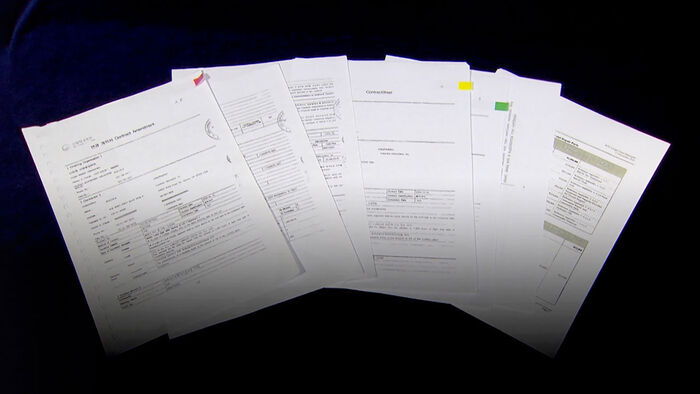
The remaining timetable stands as follows: the delivery deadline for Unit 2 is November 30 of this year; Unit 1 is set for June 29, 2027; Unit 3 for December 24, 2027; and Units 4 through 7, contracted additionally in January of this year, are scheduled for February 10, 2029.
The nearest deadline is now just two and a half months away. Within that window, a US type certificate must be issued, and MOLIT's Type Certificate Validation or Special Airworthiness Certificate procedures must be completed for the contract to be fulfilled.
The Korea Forest Service's basis for optimism regarding this schedule rested entirely on the vendor's claims. In July of last year, during a review committee meeting attended by outside experts, a committee member inquired about certification prospects. A Korea Forest Service official responded, "We are continuously communicating with the manufacturer regarding certification plans, and under the plan, US FAA certification is expected in November (2025), followed by domestic TCV in December." That November and December have already passed, and no certification has materialized.
The head of the Forest Aviation Headquarters still leaned on the contract stipulations:
"It wasn't that we didn't know certification would be difficult. However, under our contract, it is stipulated that upon final delivery, all certifications required for domestic operation must be obtained before delivery to us. That is the contractual condition."
"We never imagined certification wouldn't be possible. Because delivering it with certification was the condition of the contract."
Officials also cited their own bottom line. The official position of the Korea Forest Service is that if certification is not obtained, "necessary measures, including contract termination and forfeiture of performance bonds, will be taken in accordance with national contract statutes and contract conditions." A senior official at the Forest Aviation Headquarters told reporters, "We cannot simply wait indefinitely for certification. Shouldn't we be considering alternatives?"
The facts verified by reporters summarize as follows: the contracted model has not obtained a type certificate in the United States; the original manufacturer at the foundation of the aircraft has no record of applying for certification for that model; and the statutory language governing domestic type certificate validation applies to aircraft that have secured type certification abroad. While the remaining avenue of a Special Airworthiness Certificate is theoretically available under the regulatory system, there is no domestic precedent for repurposing military aircraft for civilian aerial firefighting, and the certification authority insists that "a valid purpose does not justify bypassing procedures."
The Korea Forest Service wrote certification into the contract as the vendor's obligation. Writing it into a document and verifying whether it can actually be accomplished are two entirely different matters. In this 320 billion won procurement, what has been confirmed thus far is that the Korea Forest Service did the former, but neglected the latter.
In the next installment, we will examine the contract for Units 4 through 7, signed as a bulk deal this year, and address the issue of performance guarantees.
※ Please note: This article was translated by AI and may contain errors.
Copyright Ⓒ SBS. All rights reserved. Unauthorized reproduction, redistribution, and use for AI training are prohibited.