SBS NEWS
"What Have Humans Been Doing for 90 Years?"... What the 'AI That Solved a Math Mystery' Leaves Unsaid
Published : Sep 17, 2026 10:17 AM
There is a problem that mathematicians have been unable to solve for more than 90 years. It is the Navier-Stokes problem, a world-renowned mathematical puzzle. On September 8, OpenAI announced that artificial intelligence had found a solution to this problem in just 88 hours. At first glance, this looks like a complete defeat of human mathematicians by AI. But three days later, on September 11, world-leading mathematicians issued a collective warning.
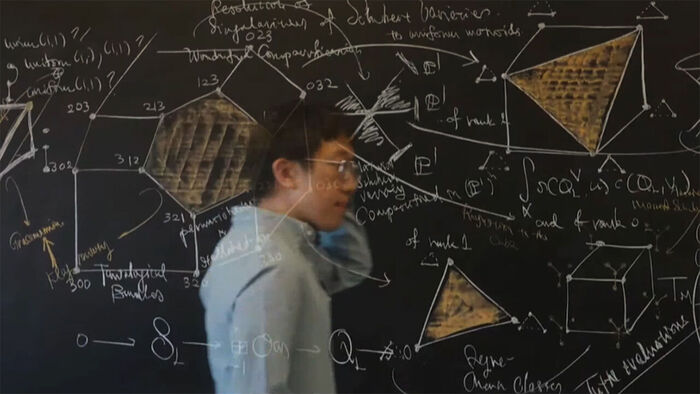 [June Huh / Professor of Mathematics at Princeton University: There was concern that this could become entrenched as a kind of pursuit that loses its original purpose, proceeding in some sense like a game...]
Why did mathematicians start worrying when AI solved a longstanding challenge? And did AI truly solve a 90-year-old puzzle in just 88 hours?
When you stir water in a cup, a vortex forms. But if this vortex is concentrated into an increasingly smaller space, could the water inside keep accelerating so that its velocity grows infinitely? Put simply, the Navier-Stokes equations apply the school-taught principle of "force equals mass times acceleration" to the flow of water and air. They are widely used to calculate real-world fluids, such as airflow around an airplane or weather forecasts. Yet a longstanding mystery remained: does a fluid that starts smoothly continue to flow smoothly over time? Or could its motion at some point concentrate in a tiny spot, causing the velocity to surge to infinity? In mathematics, such a situation is called a "singularity." In 2000, the Clay Mathematics Institute, a nonprofit mathematical research institute in the United States, named this problem one of the seven "Millennium Prize Problems," offering a $1 million prize for its solution.
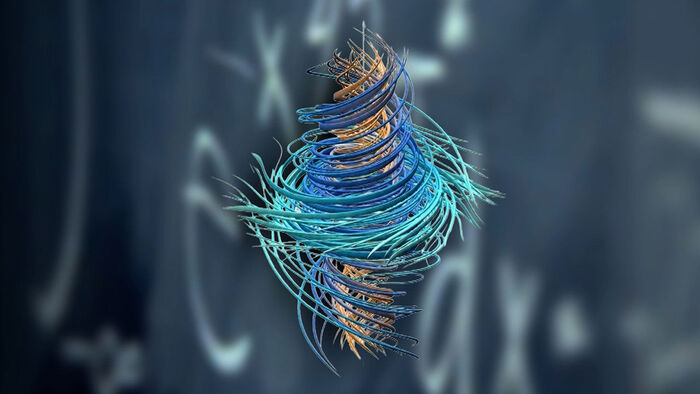 The paper released by OpenAI on September 8 spans 166 pages. The core of it is as follows: an external force is applied to a fluid that was initially at rest. That force is not an unrealistic force that spikes to infinity suddenly, but one that changes smoothly across time and space. Even so, the fluid's movement concentrates into an increasingly narrow area, ultimately creating a situation where the velocity at that point becomes infinite. What makes this surprising is that fluids like water have viscosity. When the flow changes abruptly, viscosity transfers the motion of faster regions to the surroundings, reducing speed differences and smoothing out the flow. Yet despite such action, the velocity in one spot could still surge infinitely. Of course, this does not mean actual water moves at infinite speed. Real water cannot do that. Instead, it means that if the equations calculate an infinite velocity at a certain moment, from that point on, these equations alone cannot properly describe real fluid behavior. Proving whether such a situation is mathematically possible was the crux of this problem. The Clay Mathematics Institute allowed the problem to be considered solved either by proving that "fluids remain smooth at all times" or, conversely, by finding an example where a singularity forms even when the fluid starts smoothly and the external force is also applied smoothly. OpenAI claims to have proven the latter.
So what did the AI actually do during those 88 hours? An important point is that this was not a single AI pondering the problem for three days. Starting September 1, OpenAI had numerous AI agents test different methods simultaneously. Some AI agents tried to prove that the fluid remains smooth indefinitely, while others looked for cases where singularities occur. When clues emerged from a related, slightly simpler problem, resources were pulled in from elsewhere to focus on Navier-Stokes. In the end, approximately 10,000 AI agents tested various methods at the same time, and OpenAI stated that they reached a proof on September 5, after about 88 hours. Thus, the 88 hours was not the contemplation time of a single genius AI, but closer to the compressed runtime of a massive research laboratory where thousands of researchers work simultaneously.
Here lies the first twist. Up to this point, it might seem as if AI suddenly produced the right answer in a field where no one had found a path for 90 years. In reality, that is not the case.
The paper released by OpenAI on September 8 spans 166 pages. The core of it is as follows: an external force is applied to a fluid that was initially at rest. That force is not an unrealistic force that spikes to infinity suddenly, but one that changes smoothly across time and space. Even so, the fluid's movement concentrates into an increasingly narrow area, ultimately creating a situation where the velocity at that point becomes infinite. What makes this surprising is that fluids like water have viscosity. When the flow changes abruptly, viscosity transfers the motion of faster regions to the surroundings, reducing speed differences and smoothing out the flow. Yet despite such action, the velocity in one spot could still surge infinitely. Of course, this does not mean actual water moves at infinite speed. Real water cannot do that. Instead, it means that if the equations calculate an infinite velocity at a certain moment, from that point on, these equations alone cannot properly describe real fluid behavior. Proving whether such a situation is mathematically possible was the crux of this problem. The Clay Mathematics Institute allowed the problem to be considered solved either by proving that "fluids remain smooth at all times" or, conversely, by finding an example where a singularity forms even when the fluid starts smoothly and the external force is also applied smoothly. OpenAI claims to have proven the latter.
So what did the AI actually do during those 88 hours? An important point is that this was not a single AI pondering the problem for three days. Starting September 1, OpenAI had numerous AI agents test different methods simultaneously. Some AI agents tried to prove that the fluid remains smooth indefinitely, while others looked for cases where singularities occur. When clues emerged from a related, slightly simpler problem, resources were pulled in from elsewhere to focus on Navier-Stokes. In the end, approximately 10,000 AI agents tested various methods at the same time, and OpenAI stated that they reached a proof on September 5, after about 88 hours. Thus, the 88 hours was not the contemplation time of a single genius AI, but closer to the compressed runtime of a massive research laboratory where thousands of researchers work simultaneously.
Here lies the first twist. Up to this point, it might seem as if AI suddenly produced the right answer in a field where no one had found a path for 90 years. In reality, that is not the case.
[Kang Moon-jin / KAIST Professor: You cannot say that AI just solved it in 88 hours without any background knowledge. Many mathematicians had actually made tremendous progress, and recently they were practically almost there.]
Mathematicians such as Córdoba and Martínez-Zoroa had already spent years developing methods to create singularities in fluids using external forces. However, those forces were not as smooth as this specific challenge required. Other mathematicians were also using AI to narrow that final gap. If OpenAI indeed bridged that gap, it is certainly a tremendous achievement. But viewing it as "AI solving a 90-year problem in 88 hours from scratch" is not accurate. At its starting point lay research built up by human mathematicians over a long period.
So is the Navier-Stokes problem now settled? Not yet. Along with the 166-page paper, OpenAI released verification materials converting the proof into a computer-checkable format. However, what a computer checks is whether the logic of the entered content holds up. It must also be verified whether the original mathematical content was accurately translated into a computer-readable form, and the 166-page paper itself must be independently reviewed by other mathematicians. Therefore, as of now, saying "OpenAI has presented a solution" is the most accurate statement.
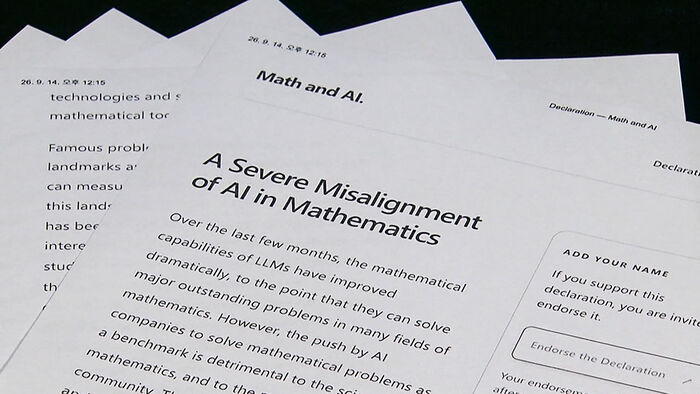 A more interesting twist comes next. On September 11, three days after OpenAI's announcement, 25 winners of the Fields Medal—often called the Nobel Prize of mathematics—including Professor June Huh and Terence Tao, issued a joint statement. The title itself was striking: "Severe Alignment Problems of AI in Mathematics." What they took issue with was not that AI is bad at math. Rather, because it has started doing it so well, new problems have emerged. The core of their joint declaration is that solving problems is a means to understand mathematics, not the ultimate goal in itself. What does this mean? We asked Professor June Huh of Princeton University, who won the Fields Medal in 2022 and participated in the joint statement.
[June Huh / Professor of Mathematics at Princeton University: When we work hard on math workbooks as students... if the goal while pondering difficult problems was simply to solve all the problems in the workbook, you could just look at the answer key and fill them all in.]
With an answer key, all the blanks can be filled with correct answers. But can that be called understanding mathematics?
[June Huh / Professor of Mathematics at Princeton University: Finding the answer is not the whole of research. In fact, you could say it is just a very small part. Especially with what we call unsolved problems in mathematics, one of their greatest functions—and the most important one—is showing us what parts we currently do not understand.]
An unsolved problem is important not merely for that final line of the answer. By wrestling with why it cannot be solved, mathematicians discover gaps in existing mathematics, create new methods and concepts, and from that process, the next questions arise. The concern of these mathematicians is that if AI uses massive resources to jump to the right answer too quickly, humans may get the answer without fully digesting why it emerged, what new insights were gained, and what questions should be asked next.
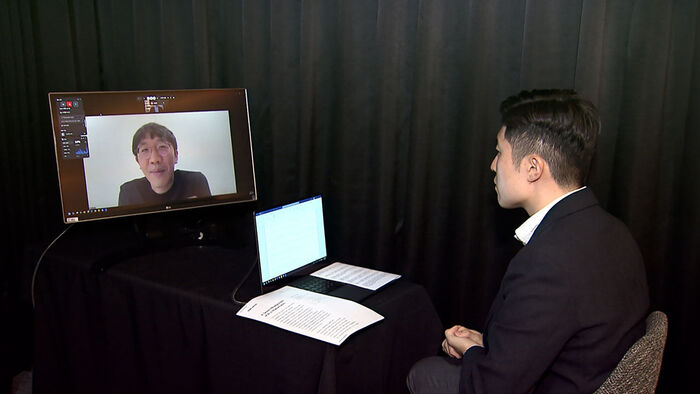 What Professor Huh worried about in particular was the next generation.
[June Huh / Professor of Mathematics at Princeton University: It makes one fall into skepticism, asking, 'Is it meaningful for me to start this research now and hope for results five, six, seven, or ten years down the road?']
There is also the issue of research opportunities. Mathematics has long been a discipline open to anyone with paper, a pencil, and good ideas. But if only institutions with the most powerful AI and massive computing resources can solve problems at the cutting edge, the starting line for research could shift as well. Still, this does not mean Professor Huh opposes AI. He noted that he uses AI in his research every day and said that now is actually the most exciting time to live as a mathematician.
The issue is not the speed of AI, but what humans might miss while trying to keep up with that speed. Regarding why it released these results on September 8, OpenAI stated that it was important to demonstrate how rapidly AI is advancing and what can be expected from future models. If that is the case, this event may signify a much larger shift than simply providing an answer to a single math problem. In an era where AI reads vast amounts of knowledge, tests thousands of possibilities simultaneously, and produces new proofs in a matter of days, what role remains for humans?
[June Huh / Professor of Mathematics at Princeton University: Constantly harboring questions, sustaining intellectual curiosity, and being called upon to create new horizons—for now, I believe that is the most important role of a human and of a mathematician.]
An era has begun where AI delivers answers in just 88 hours to problems left unsolved for over 90 years. Perhaps the more important ability for humans now is not producing the correct answer the fastest, but understanding that answer and finding the next question that no one has asked yet.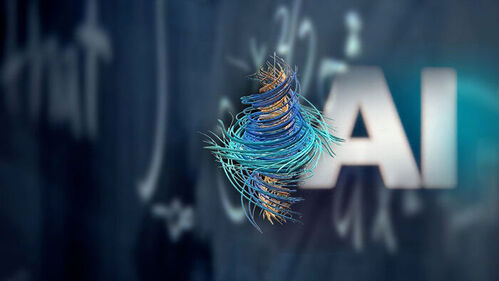 Video
Video
[June Huh / Professor of Mathematics at Princeton University: There was concern that this could become entrenched as a kind of pursuit that loses its original purpose, proceeding in some sense like a game...]Why did mathematicians start worrying when AI solved a longstanding challenge? And did AI truly solve a 90-year-old puzzle in just 88 hours?
What Kind of Problem Was It?
What Did OpenAI Find?
The paper released by OpenAI on September 8 spans 166 pages. The core of it is as follows: an external force is applied to a fluid that was initially at rest. That force is not an unrealistic force that spikes to infinity suddenly, but one that changes smoothly across time and space. Even so, the fluid's movement concentrates into an increasingly narrow area, ultimately creating a situation where the velocity at that point becomes infinite. What makes this surprising is that fluids like water have viscosity. When the flow changes abruptly, viscosity transfers the motion of faster regions to the surroundings, reducing speed differences and smoothing out the flow. Yet despite such action, the velocity in one spot could still surge infinitely. Of course, this does not mean actual water moves at infinite speed. Real water cannot do that. Instead, it means that if the equations calculate an infinite velocity at a certain moment, from that point on, these equations alone cannot properly describe real fluid behavior. Proving whether such a situation is mathematically possible was the crux of this problem. The Clay Mathematics Institute allowed the problem to be considered solved either by proving that "fluids remain smooth at all times" or, conversely, by finding an example where a singularity forms even when the fluid starts smoothly and the external force is also applied smoothly. OpenAI claims to have proven the latter.
The True Picture of the 88 Hours
The First Twist: Really 90 Years in 88 Hours?
[Kang Moon-jin / KAIST Professor: You cannot say that AI just solved it in 88 hours without any background knowledge. Many mathematicians had actually made tremendous progress, and recently they were practically almost there.]
Mathematicians such as Córdoba and Martínez-Zoroa had already spent years developing methods to create singularities in fluids using external forces. However, those forces were not as smooth as this specific challenge required. Other mathematicians were also using AI to narrow that final gap. If OpenAI indeed bridged that gap, it is certainly a tremendous achievement. But viewing it as "AI solving a 90-year problem in 88 hours from scratch" is not accurate. At its starting point lay research built up by human mathematicians over a long period.
Is the Problem Really Solved?
The Second Twist: Why Were Mathematicians Worried?
A more interesting twist comes next. On September 11, three days after OpenAI's announcement, 25 winners of the Fields Medal—often called the Nobel Prize of mathematics—including Professor June Huh and Terence Tao, issued a joint statement. The title itself was striking: "Severe Alignment Problems of AI in Mathematics." What they took issue with was not that AI is bad at math. Rather, because it has started doing it so well, new problems have emerged. The core of their joint declaration is that solving problems is a means to understand mathematics, not the ultimate goal in itself. What does this mean? We asked Professor June Huh of Princeton University, who won the Fields Medal in 2022 and participated in the joint statement.[June Huh / Professor of Mathematics at Princeton University: When we work hard on math workbooks as students... if the goal while pondering difficult problems was simply to solve all the problems in the workbook, you could just look at the answer key and fill them all in.]
With an answer key, all the blanks can be filled with correct answers. But can that be called understanding mathematics?
[June Huh / Professor of Mathematics at Princeton University: Finding the answer is not the whole of research. In fact, you could say it is just a very small part. Especially with what we call unsolved problems in mathematics, one of their greatest functions—and the most important one—is showing us what parts we currently do not understand.]
An unsolved problem is important not merely for that final line of the answer. By wrestling with why it cannot be solved, mathematicians discover gaps in existing mathematics, create new methods and concepts, and from that process, the next questions arise. The concern of these mathematicians is that if AI uses massive resources to jump to the right answer too quickly, humans may get the answer without fully digesting why it emerged, what new insights were gained, and what questions should be asked next.
The Questions Remaining for Human Mathematicians
What Professor Huh worried about in particular was the next generation.[June Huh / Professor of Mathematics at Princeton University: It makes one fall into skepticism, asking, 'Is it meaningful for me to start this research now and hope for results five, six, seven, or ten years down the road?']
There is also the issue of research opportunities. Mathematics has long been a discipline open to anyone with paper, a pencil, and good ideas. But if only institutions with the most powerful AI and massive computing resources can solve problems at the cutting edge, the starting line for research could shift as well. Still, this does not mean Professor Huh opposes AI. He noted that he uses AI in his research every day and said that now is actually the most exciting time to live as a mathematician.
The issue is not the speed of AI, but what humans might miss while trying to keep up with that speed. Regarding why it released these results on September 8, OpenAI stated that it was important to demonstrate how rapidly AI is advancing and what can be expected from future models. If that is the case, this event may signify a much larger shift than simply providing an answer to a single math problem. In an era where AI reads vast amounts of knowledge, tests thousands of possibilities simultaneously, and produces new proofs in a matter of days, what role remains for humans?
[June Huh / Professor of Mathematics at Princeton University: Constantly harboring questions, sustaining intellectual curiosity, and being called upon to create new horizons—for now, I believe that is the most important role of a human and of a mathematician.]
An era has begun where AI delivers answers in just 88 hours to problems left unsolved for over 90 years. Perhaps the more important ability for humans now is not producing the correct answer the fastest, but understanding that answer and finding the next question that no one has asked yet.
 Video
Video※ Please note: This article was translated by AI and may contain errors.
Copyright Ⓒ SBS. All rights reserved. Unauthorized reproduction, redistribution, and use for AI training are prohibited.