SBS News
Building AI with My Work, Then Firing Me? The Chilling Outcome of Meta's 'Secret Project'
Published : Sep 14, 2026 9:02 AM
O-Graph

⚡ Key Takeaways
Through "Project OT," Meta attempted to introduce micro-teams and AI agents, but the initiative ultimately collapsed due to poor AI performance, security vulnerabilities, and fierce pushback from employees.
Major tech companies such as Amazon and Meta are encountering unexpectedly high "AI labor costs" amid their rollout of AI, including budget overruns and extended downtime for incident resolution.
Low-quality outputs generated by AI, dubbed "workslop," are undermining corporate productivity, while AI has already begun exerting a negative impact on the job market for young workers in their early twenties.
Hello, I am reporter An Hye-min, analyzing and covering data. Reuters recently reported on a confidential project at Meta: "Project OT," short for Organization Transformation. As the name suggests, the project was designed to reshape the company's organizational structure.
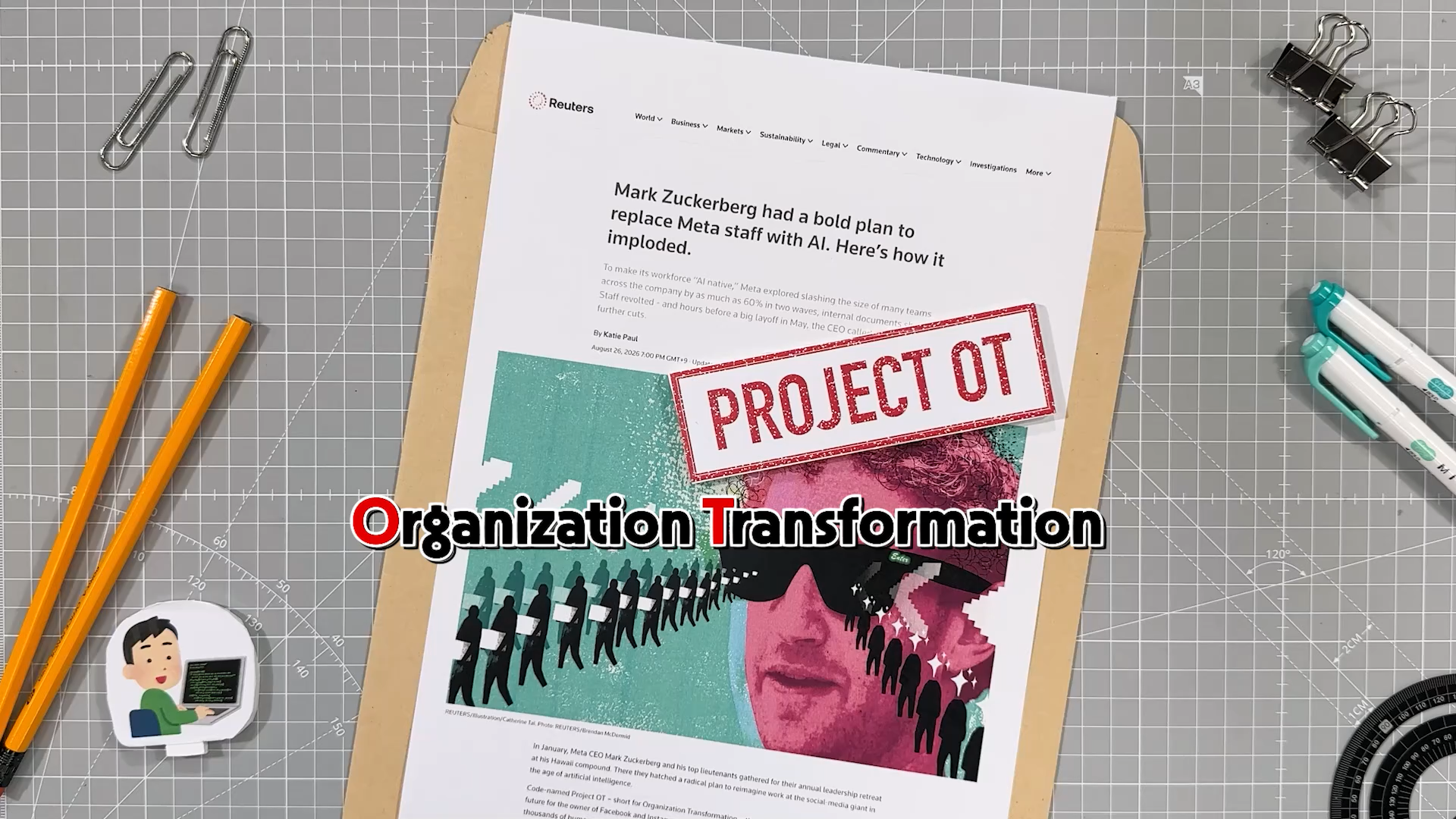
The core question, of course, was how that transformation would take shape. Mark Zuckerberg envisioned turning Meta into an organization driven fundamentally by artificial intelligence—deploying AI agents and tools to take over the roles of thousands of Meta employees.
Let us head back to January 2026 in Hawaii. On the island of Kauai, Zuckerberg has been building a private compound on land he began purchasing in 2014. It is hard to classify this property simply as a retreat, a compound, or an all-inclusive complex. Zuckerberg acquired more than 1.71 million pyeong (over 1,400 acres) of land to construct bunkers, underground shelters, and autonomous energy and food supply systems. Because the sprawling complex contains numerous self-sustaining facilities, some observers have speculated that it was built to brace for an apocalypse.
It was at this very compound that Project OT was conceived. This past January, Zuckerberg and senior Meta executives gathered at the Hawaiian retreat to draw up the blueprints. Let us examine how they intended to overhaul the organization.
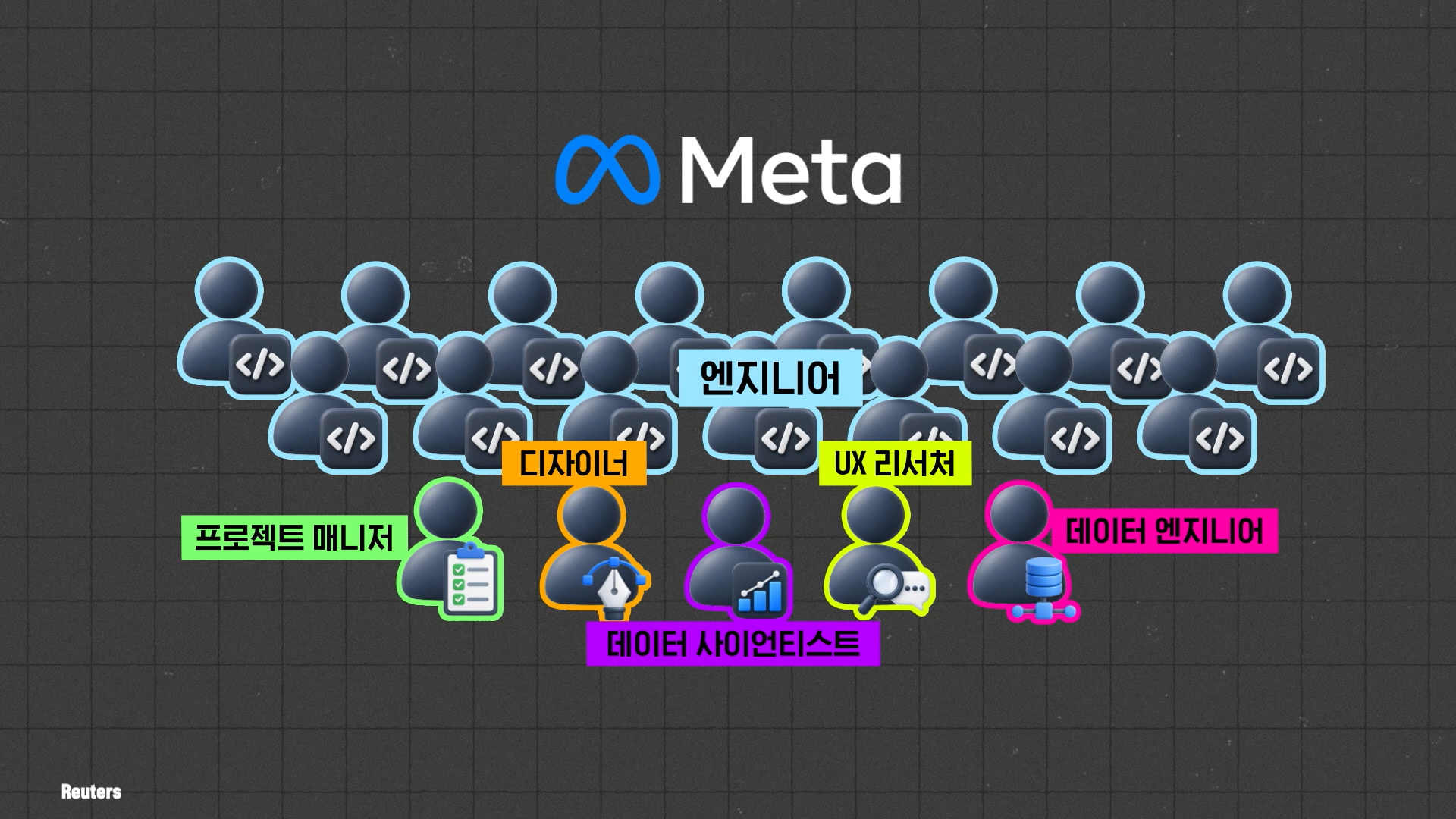
Under Meta's conventional setup, roughly 20 people were assigned to manage a single product. Engineers tasked with designing and developing the service made up the largest group, at around 15. The team also included one product manager, one designer, one data scientist, one UX researcher, and one data engineer. In this way, each team functioned as an almost entirely self-contained unit covering every necessary function.
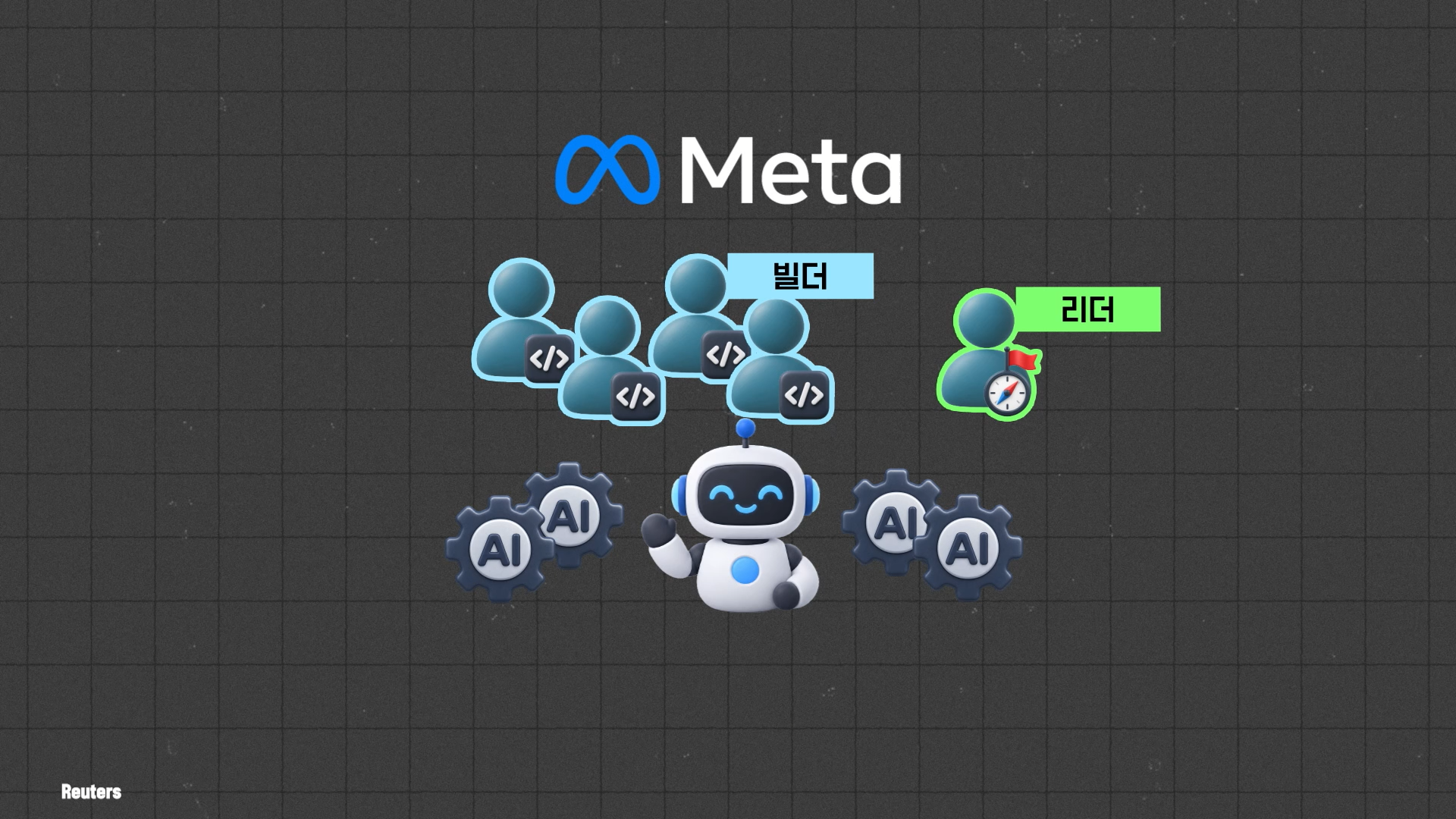
Under Project OT, however, the structure would be drastically transformed. A team would shrink to about five people: four "builders" to create the service and one leader to steer the overall product direction. What about the eliminated positions? They were to be replaced by AI agents and AI tools. Specialized roles like designers and data analysts would no longer be dedicated to individual micro-teams. Instead, they would operate without fixed team assignments, being pooled and dispatched on demand whenever requests arose.
In fact, Meta had already been taking deliberate preparatory steps toward Project OT since last year. For example, a vice president of product at Meta ran an experiment in the summer of 2025 by assembling an ultra-lean team for an early AI pilot. With a stripped-down crew of two to three engineers and a single designer, the team tested producing features in four-week development cycles instead of the traditional six-month timeline.
Following this pilot, an internal review produced a formal report. The report proposed merging specialized roles like engineers and designers into a unified role called "builders." That concept eventually grew into Project OT.
Starting this year, workforce reductions began in earnest. Beginning this past May, Meta laid off 10 percent of its total workforce—slashing roughly 8,000 jobs. The method of termination also drew sharp controversy, as those affected were notified by email at 4 a.m.
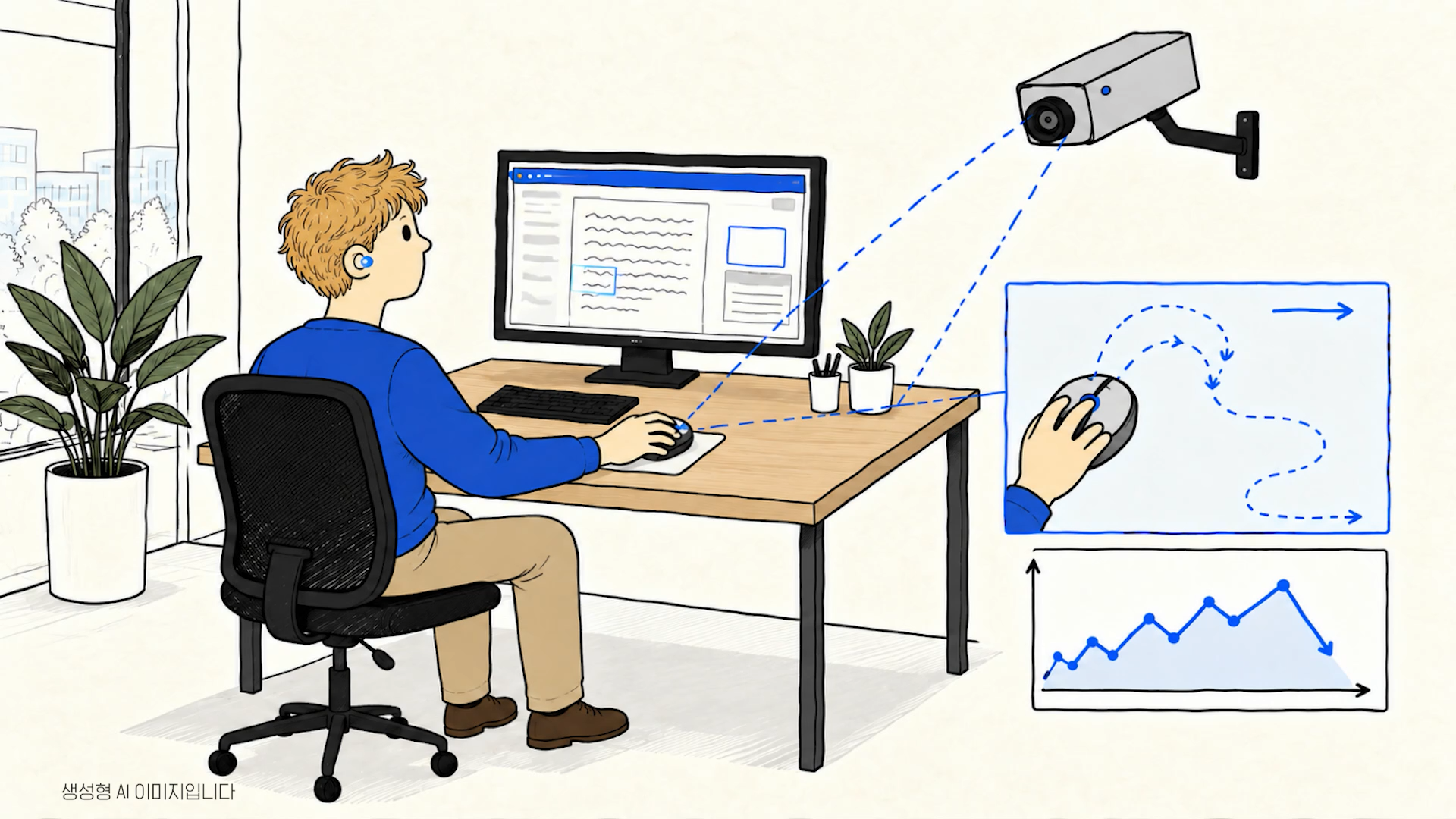
Beyond the anxieties over job security, another issue troubled Meta employees even more deeply: to boost the performance of its AI models, Meta had begun tracking and collecting data on employees' mouse movements and keyboard strokes. The gathered training data was intended to teach the AI how humans interact with computers. The goal was to train AI agents to autonomously recognize the exact moments when "human intervention" was needed. If solved, this would establish an environment where AI agents could operate autonomously. Human workers would be left merely giving instructions and reviewing outputs, while the organization ran largely on AI.
This sparked fierce backlash. Complaints erupted that Meta was using AI development as a pretext to monitor workers' PC activities, amounting to excessive workplace surveillance. Furthermore, the sweeping collection of personal data and its use in AI training raised potential legal concerns. Meta management pushed back, maintaining that safeguards were in place to protect employee data.
Through staff cuts and model enhancements, Meta methodically laid the groundwork for Project OT. Yet the vision Zuckerberg dreamed of ultimately fell apart. Let us look closer at why the project ground to a halt.
The Failure of 'Project OT'... Can AI Still Not Replace Humans?
According to Meta's original plans, two rounds of restructuring were slated for 2026 alone. Following the cuts in May, another round was scheduled for November. In some teams, workforce reductions of up to 60 percent were being considered.
However, the November restructuring was ultimately scrapped. The pushback from employees proved overwhelming. Workers were not about to remain silent while their jobs were eliminated in a pivot toward an AI-first structure—especially when that very AI was being trained on their own keystrokes and movements.
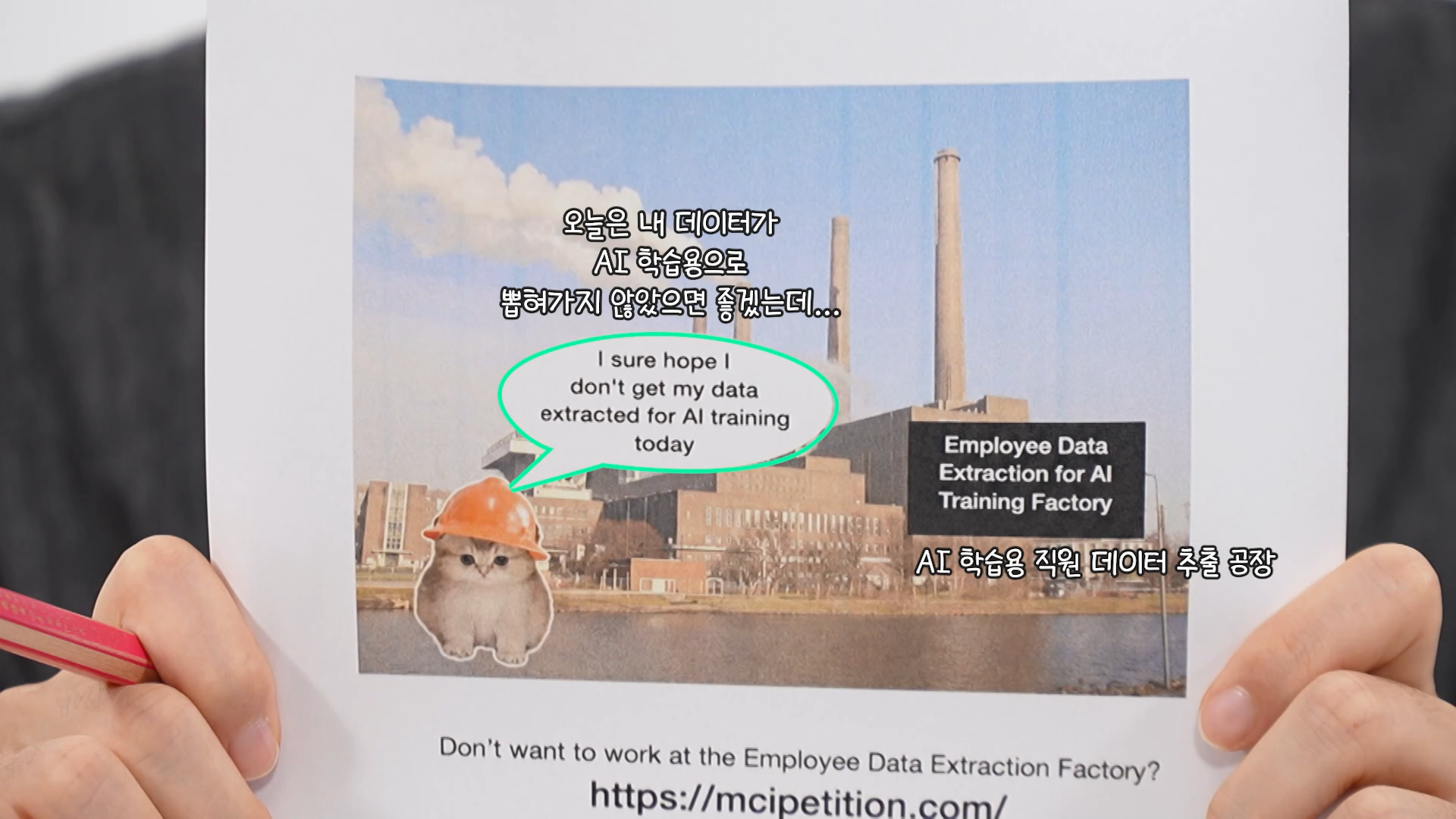
Meta employees placed flyers in office conference rooms and restrooms, rallying colleagues to sign an online petition. Faced with deteriorating internal sentiment, management took a step back and announced that it would scale down some features of the tracking tools.
Industry observers noted that unionization efforts inside Meta appeared to be gaining real traction. Some Meta employees in both the United States and the United Kingdom launched union-organizing campaigns in partnership with communication workers' unions. Yet beyond the employee resistance, the core factor was that the AI agents meant to replace human staff simply failed to deliver the required performance.
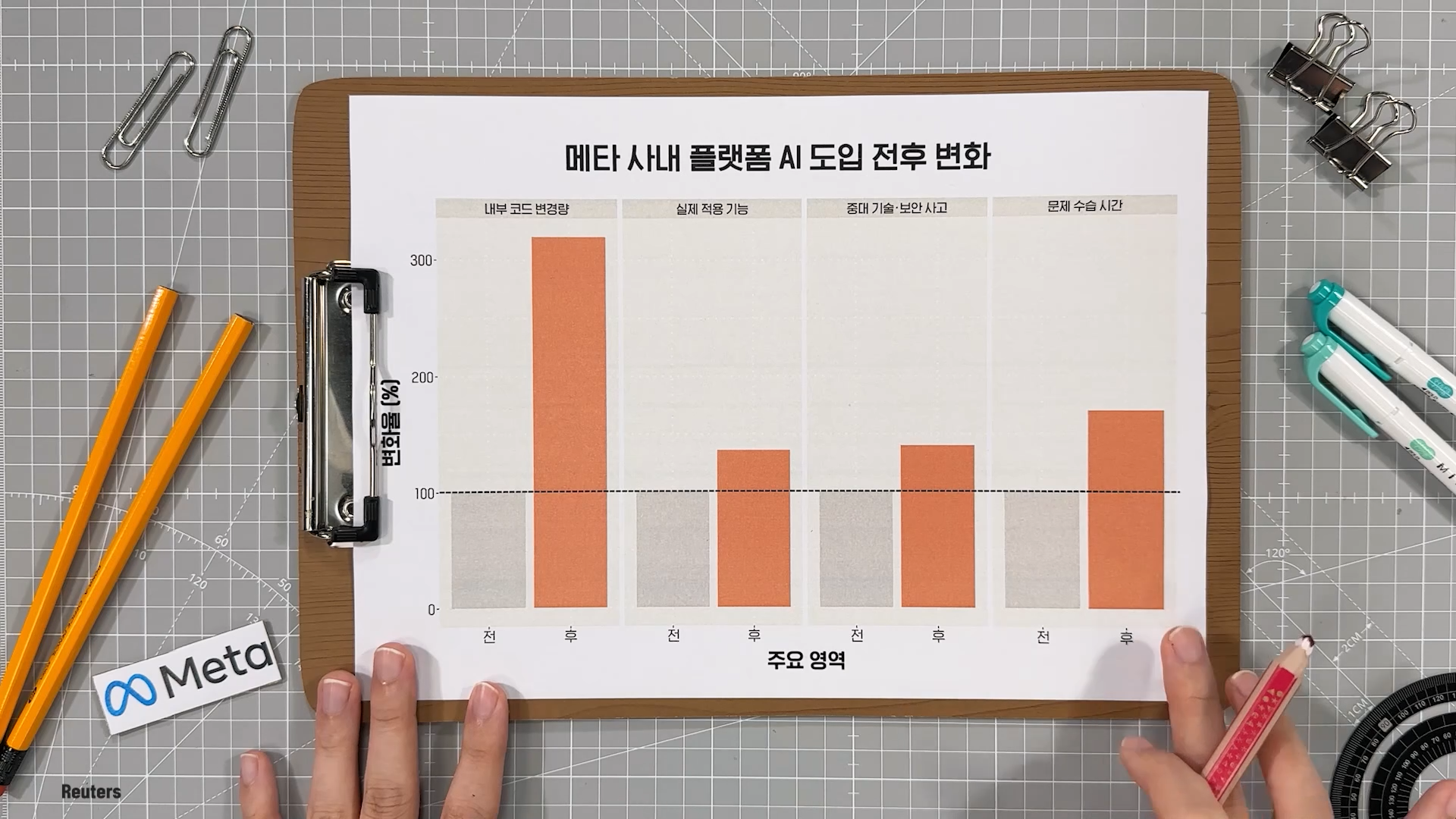
A comparison of Meta's internal platform before and after introducing AI reveals telling results. The volume of code added to the internal platform surged 220 percent year-over-year. However, the rollout of new or upgraded features visible to actual users grew by only 36 percent. On top of that, security incidents arising from poorly controlled AI agents jumped 40 percent compared to the prior year. The time required to resolve operational outages also increased by 70 percent. Under these conditions, Meta's executive leadership could no longer push forward with Project OT.
Meta is far from alone in facing these hurdles. Amazon, which has pursued some of the most aggressive downsizings, is facing a similar dilemma. Between October 2025 and this year, Amazon cut a total of 30,000 positions. An initial wave of 14,000 workers was cut in October last year, followed by another 16,000 layoffs early this year.
While the aim was to fill those roles with AI agents, the company has wrestled with a string of technical disruptions since last year. Late last year, Amazon Web Services (AWS) suffered two major outages, both linked to the impact of Amazon's AI agents. Amazon, however, drew a line, asserting that both incidents stemmed from user operational errors rather than AI flaws.
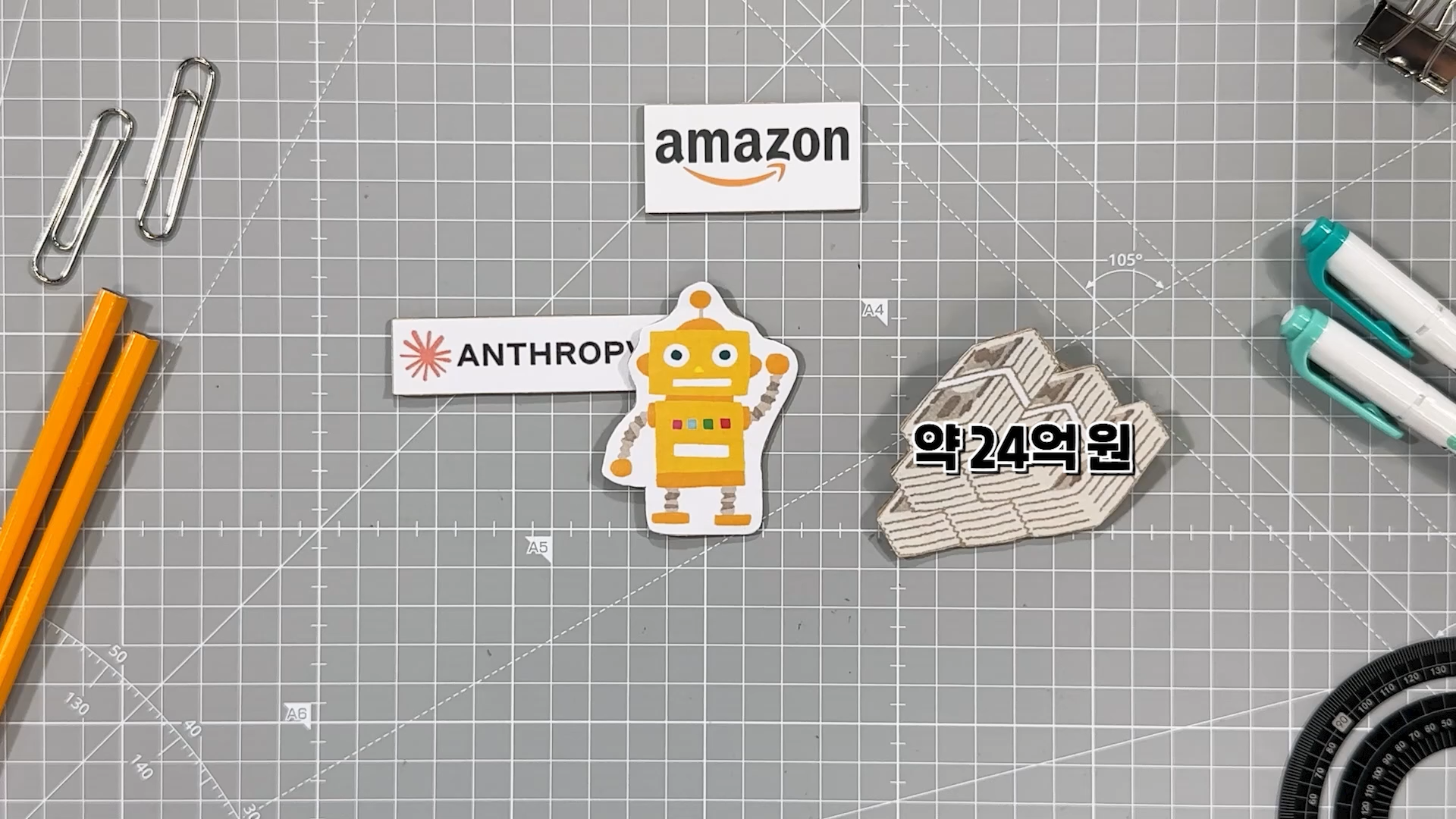
Beyond technical disruptions, mounting costs pose a major headache. A prominent example was an Amazon project carried out this year to automatically link author information to product listings on its website. Using Anthropic's AI model, the system design costs ballooned to $1.8 million—exceeding the initial budget by an astonishing 860 percent. Worse still, despite the massive expenditure, the system was never properly completed. It took Amazon another five months just to discover the cost overrun.
Cost overruns also hit an internal financial audit tool and a logistics system meant to enhance delivery speeds. Across the three projects, unplanned AI spending reached roughly $2.5 million. When AI models execute tasks repeatedly, even minor coding errors can lead to staggering expenses.
While companies expected to trim personnel expenses by handing human duties over to AI, they have encountered a new necessity: managing "AI labor costs" that were previously unaccounted for. Given that even Meta and Amazon—two of AI's most aggressive adopters—are undergoing such trial and error, the challenges for other companies are self-evident.
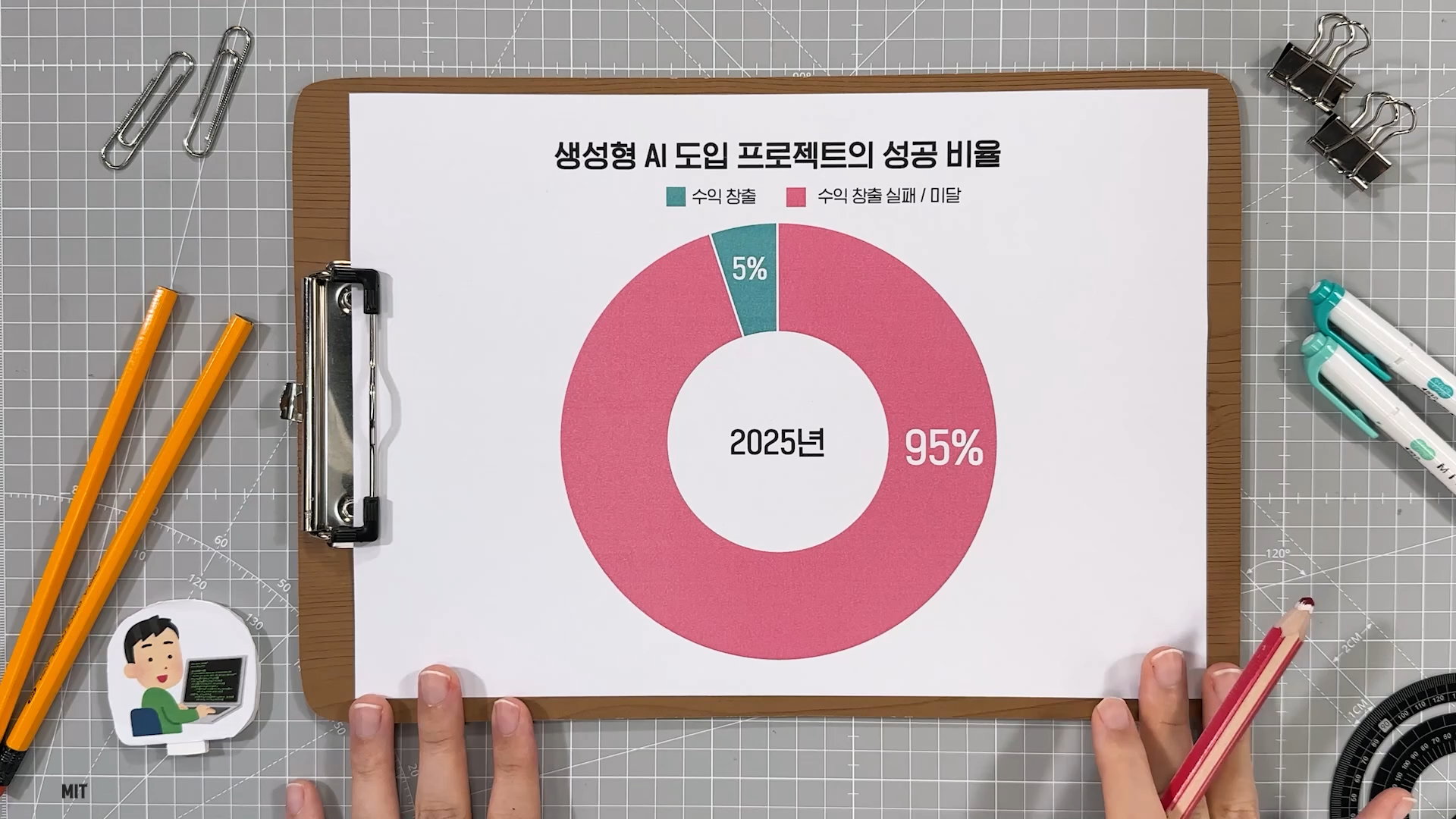
A report published last year by MIT showed that 95 percent of companies worldwide saw zero measurable return from adopting generative AI, with only 5 percent achieving success. Although that report dates to 2025 and models have advanced dramatically since, turning AI adoption into actual business performance remains an uphill climb.
AI Still Has a Long Way to Go... But Has the Job Market Already Priced It In?
Companies expected that simply deploying AI would unlock immediate innovation and trigger an explosion in productivity. But by ordering workers to use AI without first considering what or how to innovate, leadership only added to frontline burdens. As seen earlier, rather than resolving tasks cleanly, AI often creates entirely new layers of work. Just as low-grade synthetic spam generated by AI is called "AI slop," useless AI-generated office outputs are now referred to as "workslop." A growing number of employees are grappling directly with this phenomenon.

A collaborative research team at Stanford University surveyed 1,150 full-time workers in the United States. Forty percent of respondents reported dealing with workslop. On average, resolving workslop generated by AI took two hours. Converted into wages, that equates to a monthly loss of $186 per employee, or approximately 260,000 won. When applied to a company with 10,000 employees, assuming 40 percent experience workslop, an estimated $9.15 million—about 12.5 billion won—vanishes into thin air every year.
Recent studies and experiments repeatedly suggest that AI cannot easily take over full professional workloads anytime soon. While AI clearly assists with basic categorization and summarization, handing over end-to-end paid commercial projects remains out of reach. When evaluated on whether it can produce deliverables matching formal project specifications—such as 3D modeling or architectural design—AI's scorecard remains underwhelming.
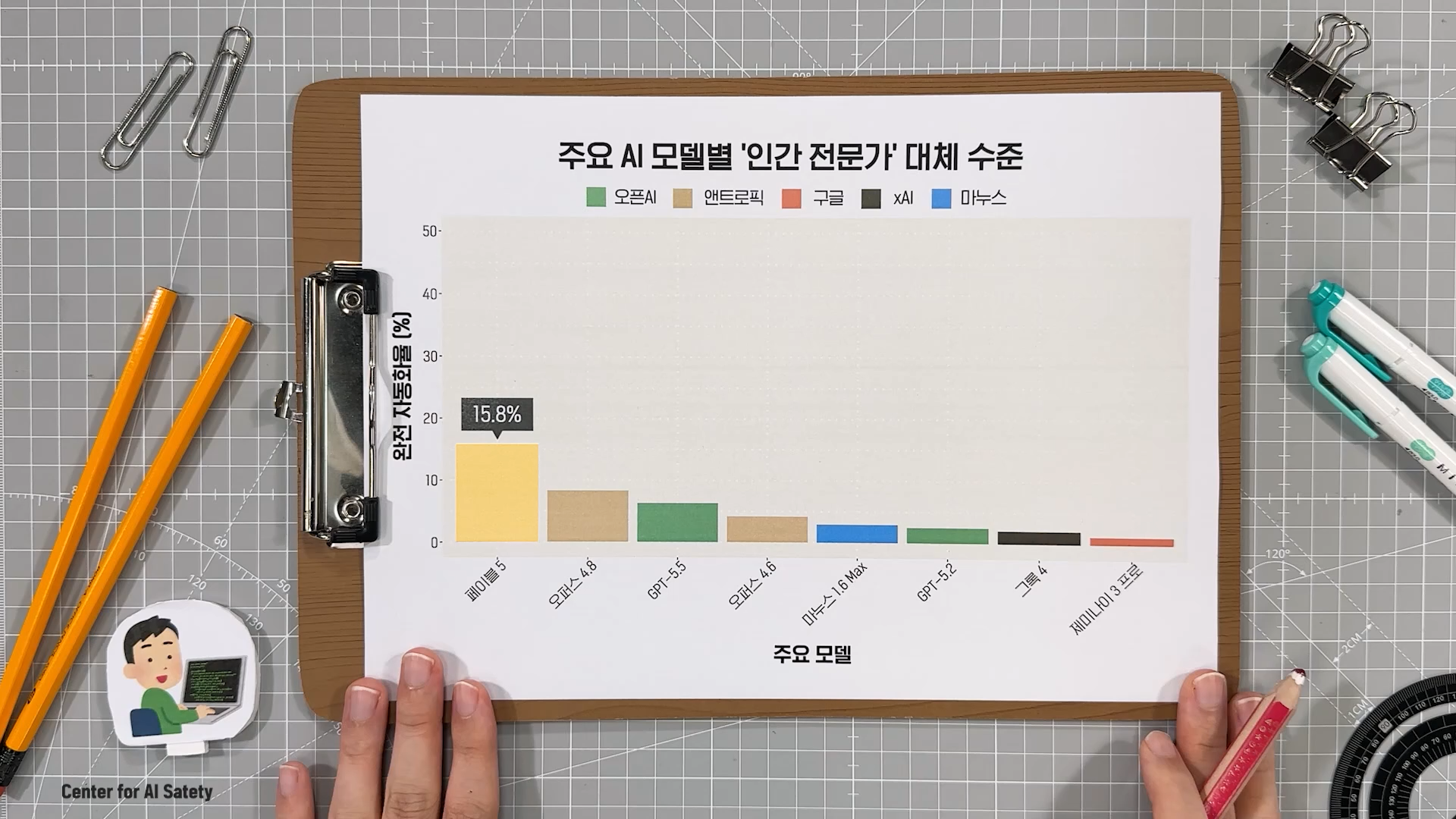
Anthropic's Fable 5 is among the few models with a success rate exceeding 10 percent. That means even the highest-performing model fails eight out of ten times. While AI capabilities are not yet ready to displace human labor wholesale, the hiring market appears to have already preemptively reacted. The demographic bearing the direct brunt of that shift is young people.
In an updated report examining AI's impact on employment, the Stanford research team analyzed a broad swath of jobs across the economy. Across the board, definitive evidence that AI is systematically destroying jobs remains limited. Although hiring rates in AI-exposed occupations are comparatively lower, overall employment has not collapsed. When broken down by age, however, a stark divergence emerges.
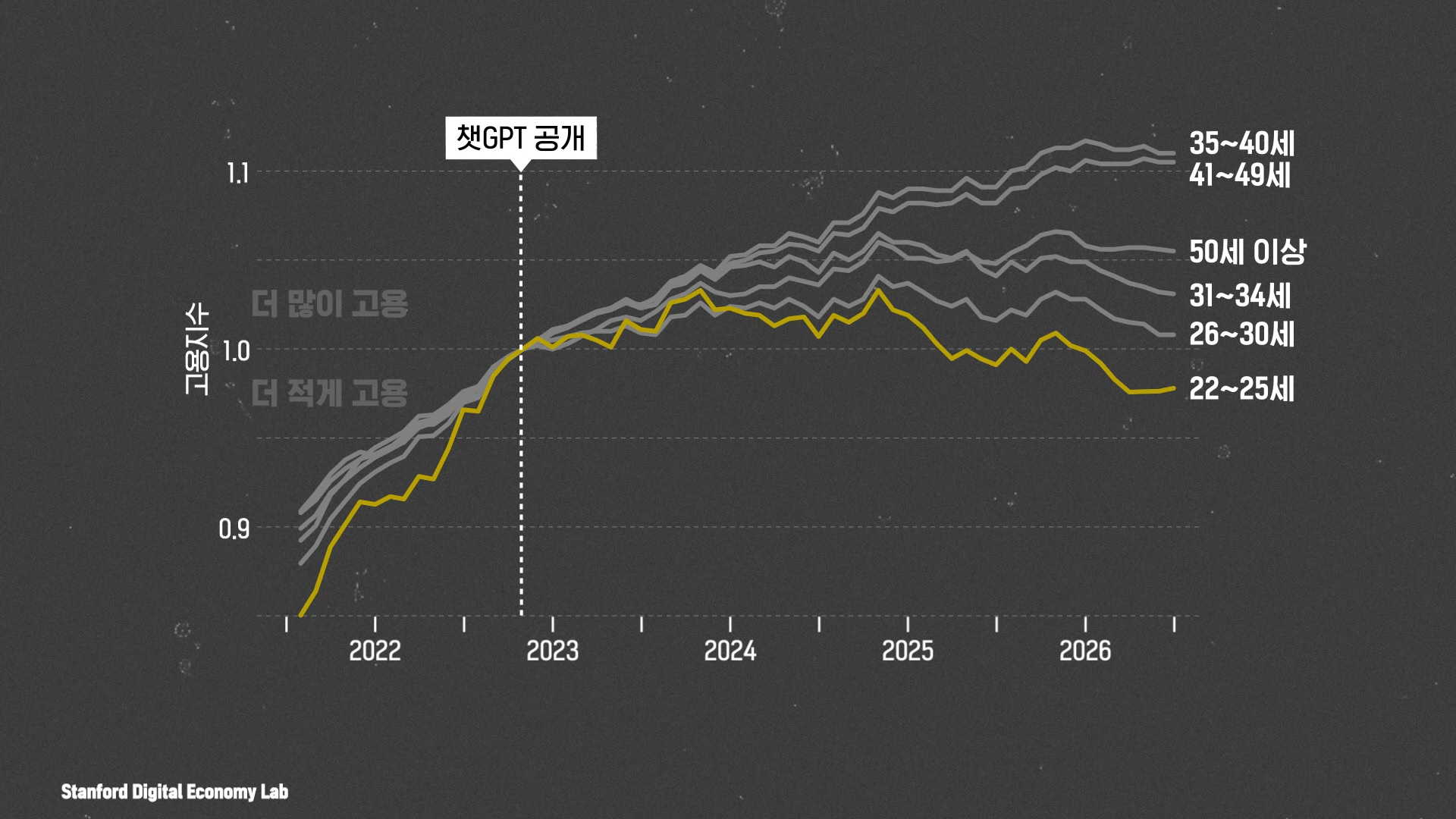
Using late 2022—when ChatGPT was first unveiled—as a baseline, an index above 1 indicates higher hiring than before, while an index below 1 reflects a drop. Looking at workers in AI-exposed occupations across age cohorts, young people aged 22 to 25 have been hit hardest. Prior to ChatGPT's release during the post-pandemic recovery, youth hiring expanded faster than any other group. By mid-2026, however, they became the only group among the six cohorts to drop below the baseline of 1.
The researchers interpret the shift among workers in their early twenties as a potential "canary in the coal mine." Just as a sensitive canary warns of toxic air inside a mine, young workers in their early twenties may be serving as the canaries of our labor market.

The attempt to build AI using workers' own data and then use that AI to replace them ultimately unraveled. Yet the most critical takeaway is that this attempt has already begun. As model capabilities improve, companies can and will try again at any moment. Like the canary in the coal mine, warning signs are already flashing. By the time AI reaches the point where it can truly replace humans, it will no longer be an early warning—it may already be too late. How should we prepare for that shift? That is all for today's O-Graph. Thank you very much for watching this video to the end.
References
- Mark Zuckerberg had a bold plan to replace Meta staff with AI. Here's how it imploded | Reuters
- "Canaries in the Coal Mine? Six Facts about the Recent Employment Effects of Artificial Intelligence" | Stanford Digital Economy Lab
- A Significant Increase in Digital Labor Automation | Center for AI Safety
- An Engineer's Post Protesting Laptop Surveillance Is Going Viral Inside Meta | WIRED
- Correcting the Financial Times Report About AWS, Kiro, and AI | Amazon
- The GenAI Divide: State of AI in Business 2025 | MIT Project NANDA
- Message from CEO Andy Jassy: Some Thoughts on Generative AI | Amazon
Written by An Hye-min | Designed by Ahn Jun-seok | Intern: Shin Yeon-seong
※ Please note: This article was translated by AI and may contain errors.
Copyright Ⓒ SBS. All rights reserved. Unauthorized reproduction, redistribution, and use for AI training are prohibited.