SBS News
Future of Media Conference Held: 'Era of Terrestrial Broadcasting Centered on Radio Waves Has Ended; Must Expand Globally'
Published : Sep 9, 2026 3:51 PM

▲ Bang Mun-sin, President and CEO of SBS, speaks as a presenter at the 2026 Future of Media Conference.
Experts have suggested that the era of terrestrial broadcasters centered on television and radio waves has come to an end, and that broadcasters must now pursue global expansion through platforms such as Netflix and YouTube.
Speaking as a keynote presenter at the "2026 Future of Media Conference" held this morning (September 9) at the Science and Technology Convention Center in Gangnam-gu, Seoul, SBS President Bang Mun-sin stated, "If terrestrial broadcasters remain tied to the framework of being just 'terrestrial,' survival will be impossible," adding, "We must secure global competitiveness through regulatory innovation and other measures."
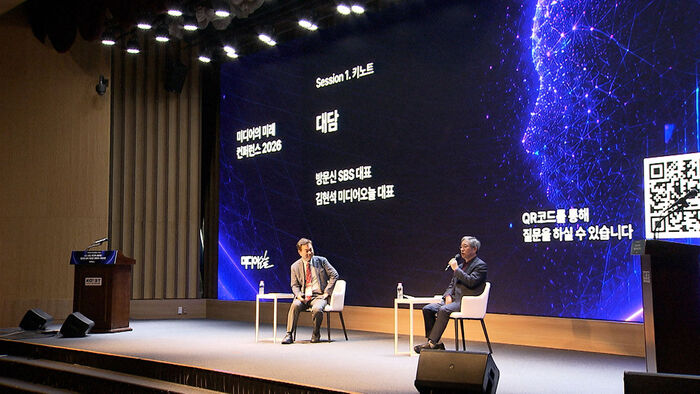 President Bang diagnosed, "Hardly anyone watches terrestrial broadcasting via radio waves anymore," and warned, "If terrestrial broadcasters fail to expand beyond South Korea into the global market, they could go under."
He went on to emphasize, "Global media companies now dominate the domestic broadcasting industry," adding, "Discussions must proceed based on the premise that the dominant player in the market has changed."
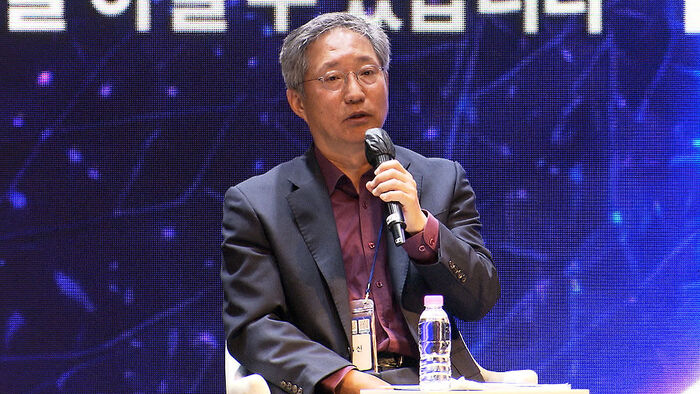
President Bang particularly noted, "SBS's competitors are no longer MBC or KBS. Global media companies are our competitors," adding that the decision to forge a strategic partnership with Netflix in 2024 was also made with global expansion in mind.
Furthermore, President Bang pointed out, "Market dominators are unregulated, while broadcasters are still shackled by analog-era regulations." He continued, "Netflix and others can freely use product placements (PPL), enabling shows like Culinary Class Wars, but terrestrial broadcasters face sanctions for producing such content. With a new era upon us, these asymmetrical regulations must be corrected."
Earlier, Prime Minister Han Sung-sook stated in a video congratulatory address, "The government will actively back the media industry so that it secures the competitiveness required in the artificial intelligence era." She added, "We are expanding infrastructure and support systems to ensure there are no shortcomings in utilizing artificial intelligence across the entire process of content planning, production, and distribution."
Prime Minister Han also pledged, "While overhauling relevant systems to ensure that creators' rights are fully protected, we will build a foundation for sustainable growth by rationalizing broadcasting regulations."
※ Please note: This article was translated by AI and may contain errors.
Copyright Ⓒ SBS. All rights reserved. Unauthorized reproduction, redistribution, and use for AI training are prohibited.