SBS News
With $40,000 Per Capita Income in Sight, Why Are Everyday Finances Still Tough?
Published : Sep 8, 2026 5:41 PM

Is Per Capita Income Finally Reaching $40,000?
The recent trajectory of the South Korean economy is also solid. The Bank of Korea announced that GDP growth in the second quarter of this year stood at 0.6%. After rebounding sharply from -0.1% in the fourth quarter of last year to 1.8% in the first quarter of this year, it maintained a sound pace in the second quarter. The central bank explained that operating profits in manufacturing, led by semiconductors, are driving earnings improvements across other sectors, including chemical products, transport equipment manufacturing, and the wholesale and retail segments of the service industry. Second-quarter nominal GDP grew by 9.2% from the previous quarter and surged 26.4% year-on-year. This marks the highest growth in 47 years since the 27.7% recorded in the third quarter of 1979. In the second quarter, nominal GNI increased by 8.8%, and real GNI rose by 3.1%. Analysts suggest that as long as the exchange rate remains stable without unexpected shocks, the likelihood of South Korea opening the era of $40,000 per capita income this year is very high.
Reaching a per capita GNI of $40,000 carries significant weight. It means entering the so-called "50-40 club"—nations with a population of 50 million or more and a per capita income exceeding $40,000. It signifies an advanced economic powerhouse that combines a massive domestic market with competitiveness in both cutting-edge manufacturing and service industries. Currently, there are only five such nations worldwide: the United States, Germany, the United Kingdom, France, and Italy. If South Korea enters this year, it will become the sixth member of the "50-40 club."

Why Don't Everyday Citizens Feel It?

A Rosy Future? More Like Gray
First, there is the innovation-driven sustainable growth model, represented by the United States. Built upon Big Tech and a vibrant capital market ecosystem, it has steadily driven up per capita productivity. With national income surging continuously, it jumped straight into the $70,000 to $80,000 range.
Next are stagnant nations reliant on manufacturing and skilled craftsmanship, most notably Germany and Japan. Within their manufacturing-centric economic structures, they suffered from population aging, the energy transition, and delays in digital transformation. Germany became trapped in a $40,000 to $50,000 box, while Japan retreated to the $30,000 range due to severe yen depreciation and deflation.
Then there is the fragile model centered on domestic demand and services. Italy has plateaued around $40,000 over the long term due to its North-South economic divide, rigid labor market, and declining productivity. Countries like the United Kingdom and France have also seen their global competitiveness weaken, suffering from growth stagnation while relying on domestic consumption and tourism. Their economies falter and repeatedly encounter crises during global shocks such as COVID-19.
South Korea, too, could fall back into the $30,000 range at any moment if global monetary tightening or geopolitical risks trigger renewed weakness in the won.
Can We Avoid the 'German-Japanese Trap'?
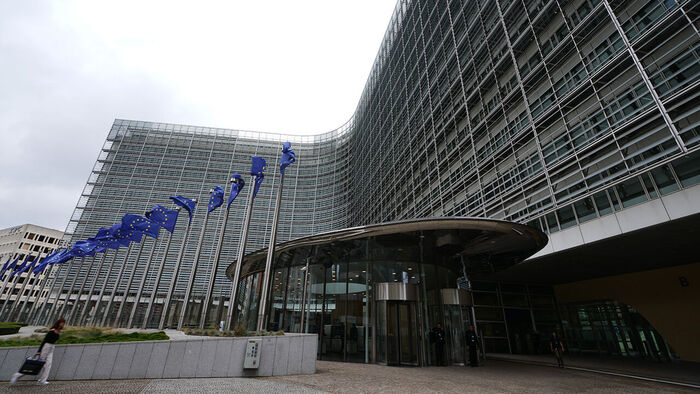
Let us first look at the struggles of Germany, long the engine of the European economy as a manufacturing powerhouse. The energy shock resulting from the suspension of cheap Russian gas supplies hit the hardest. Relying on inexpensive Russian gas exposed severe vulnerabilities to shifts in the geopolitical landscape brought on by the Russia-Ukraine war. Complacency with its past success formula in mechanical manufacturing centered on internal combustion engine vehicles is another critical problem. As transitions to software-defined vehicles such as electric and autonomous cars lagged, Germany began losing its once-dominant global market position. A shrinking startup ecosystem caused by rigid bureaucracy and labor regulations has also been cited.
Japan's predicament is even more severe after its "Lost 30 Years." A conservative business mindset focused merely on doing what it had always done better led to the loss of its leadership in IT platforms and software. Misguided responses to population aging resulted in surging fiscal spending and diminished domestic market vitality. Above all, analyses point to a conservative financial system that refuses to tolerate failure as a major drag on Japanese industry.
Energy supply instability, bureaucracy and sluggish regulatory reform, population aging, and an outdated financial system—South Korea is already confronting most of these issues. On top of that, South Korea faces technological catch-up from China and market encroachment in reverse. The harsh demographic reality of a fertility rate hovering around 0.7 has added further pressure. Escalating social conflicts and an underdeveloped political climate that fuels rather than resolves them also serve as hazardous reefs threatening the economy.
Ultimately, to move beyond $40,000 to greater heights, South Korea requires a fundamental overhaul of its systems and institutions, rather than conventional "cost-cutting process innovation." Manufacturing must overcome pressure from China through creative solutions integrated with AI. Long-term planning and institutional restructuring to handle surging energy demand are also urgent. Above all, a complete overhaul of the education and labor systems to prepare for low birth rates and an aging society is indispensable—and it must be achieved through a grand social compromise. Thus, entering the $40,000 era must not be viewed as reaching a final destination, but rather as a brand new beginning.
※ Please note: This article was translated by AI and may contain errors.
Copyright Ⓒ SBS. All rights reserved. Unauthorized reproduction, redistribution, and use for AI training are prohibited.