SBS News
Secretly Hidden After 25 Years... What's Going On with Foreign Exchange Reserve Rankings?
Published : Sep 3, 2026 10:53 AM

Controversy is expected to arise as this marks the first time in about 25 years since 2001—when nationwide attention focused on international comparisons of foreign exchange reserves during the overcoming of the foreign exchange crisis—that the relevant item has effectively been moved to private status.
According to the BOK today (the 3rd), the International Department arbitrarily deleted the data on foreign exchange reserve rankings by country, which had been provided every month, in the press release for "Foreign Exchange Reserves at the End of August" issued today.
This is the first time in 25 years and 6 months, since the end of February 2001, that the BOK has failed to present South Korea's global ranking as a separate item in its monthly data.
At that time in 2001, the BOK first included the names and sizes of countries ranked 1st to 10th in foreign exchange reserves worldwide, and has since disclosed South Korea's ranking along with the size of foreign exchange reserves of major countries as of the end of the previous month at the end of distributed materials until last month.
In abruptly excluding this item this time, the BOK did not even notify the public of the change or its background through the body of the data, a separate explanatory document, or a briefing.
Foreign exchange reserves have been recognized as a representative indicator showing the external payment capacity of our economy since the foreign exchange crisis, and the BOK has long satisfied the public's right to know by regularly providing comparison data with major countries.
Going forward, inconvenience has arisen as citizens must now individually search for and compare basic data provided by the International Monetary Fund (IMF) or statistics from central banks of various countries to figure out foreign exchange reserve rankings.
This is why criticism is emerging that the BOK has failed in the "communication with the public" emphasized by BOK Governor Shin Hyun-song.
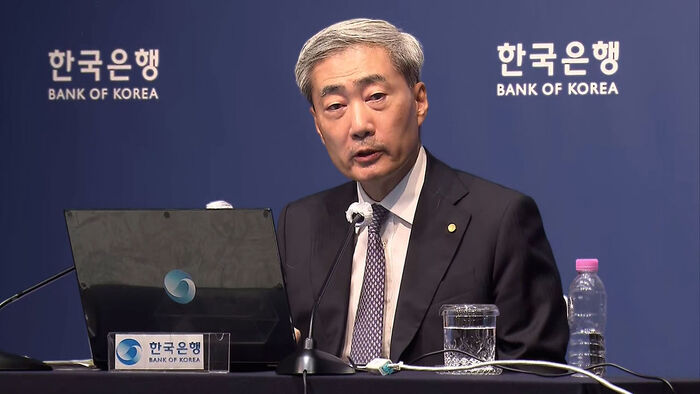
It is known that the BOK internally re-examined the practical benefits of disclosure as the fluctuation range of foreign exchange reserve rankings recently expanded.
For example, South Korea's ranking maintained 9th place globally until the end of last year, but dropped to 10th in January and 12th in February of this year.
At the end of May, it slipped to 13th before jumping back up 3 spots to 10th at the end of June.
As the won-dollar exchange rate soared to its highest level since the financial crisis, deploying large-scale foreign exchange reserves to stabilize the foreign exchange market was pointed out as a factor for the temporary drop in rankings.
However, it is reported to be the BOK's judgment that even though there are no particular changes in external soundness, fluctuations in rankings due to exchange rate changes or gold prices could give rise to unnecessary interpretations.
A BOK official said, "We changed the data format considering that it is difficult to attach great significance to foreign exchange reserve rankings, which are unrelated to external soundness."
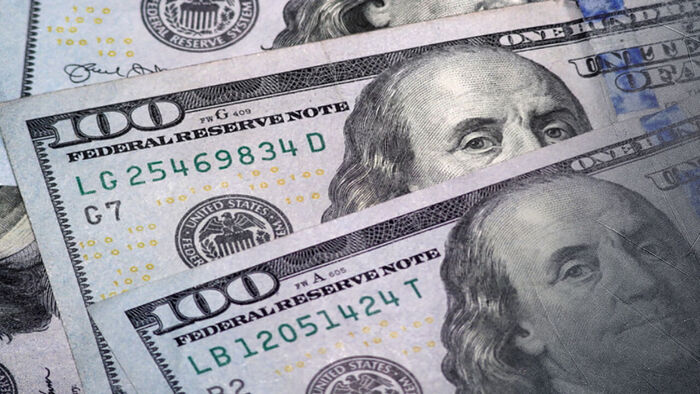
Coincidentally, the BOK's stealthy modification of the data format coincides with a time when foreign exchange reserves surged.
It seems possible that the bank took into account the fact that making related data private during a phase when international rankings are falling could further amplify controversy.
In fact, foreign exchange reserves at the end of August stood at $442.8 billion, a sharp increase of $14.33 billion from the end of July ($427.95 billion).
This is the largest increase on record, with the previous record high being $14.29 billion in May 2009.
Foreign exchange reserves have increased for three consecutive months starting June.
However, this is still about $40 billion smaller than the record high of $469.21 billion set in October 2021.
A BOK official explained, "Foreign currency deposits by financial institutions increased significantly, coupled with an increase in operational profits and the US dollar conversion value of foreign currency assets in other currencies."
The official added, "It appears that a major contributing factor was banks depositing surplus foreign currency funds in large amounts with the BOK as the central bank began paying interest on excess reserves starting early this year."
(Photo: Yonhap News)
※ Please note: This article was translated by AI and may contain errors.
Copyright Ⓒ SBS. All rights reserved. Unauthorized reproduction, redistribution, and use for AI training are prohibited.