SBS News
Appointment Can Be Refused, but Power of Recommendation Cannot Be Infringed
Published : Aug 29, 2026 3:03 PM

① Can the president's refusal of an appointment be considered a violation of the Constitution?
② Can the absence of a "prior agreement" between the president and the chief justice be viewed as a procedural flaw in the recommendation process?
③ Can the president restrict the scope of recommendation so that the chief justice must re-recommend a justice from among the candidates previously nominated by the Supreme Court Justice Candidate Recommendation Committee? Or can the National Assembly amend relevant laws for such a purpose?
By reviewing these three issues one by one, this article analyzes the significance of this refusal to appoint a Supreme Court justice.
■ Can the President Refuse to Appoint a Supreme Court Justice?
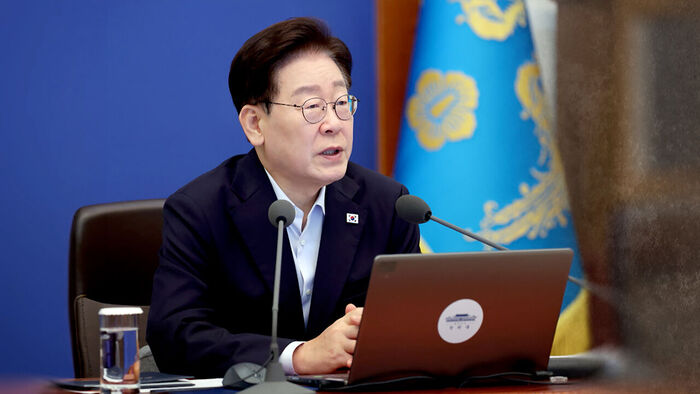
There are legal theories asserting that the president cannot refuse an appointment, as well as those arguing that the president can. Personally, however, the theory holding that the president can refuse an appointment (the theory of substantive appointment power) appears more logical.
Let us look into the nature of the president's authority to appoint Supreme Court justices. The appointment procedure is set out in Article 104, Paragraph 2 of the Constitution.
Article 104 ② The Justices of the Supreme Court shall be appointed by the President upon the recommendation of the Chief Justice with the consent of the National Assembly.
The Constitution separately defines the chief justice's "power of recommendation," the National Assembly's "power of consent," and the president's "power of appointment." The question is whether the president's "power of appointment" includes the authority to refuse an appointment.
Legal doctrines on this issue are divided into the formal appointment power theory and the substantive appointment power theory. Proponents of the formal appointment power theory believe the president's appointment authority does not encompass the power to refuse. This implies the president has a constitutional duty to appoint the individual recommended by the chief justice and consented to by the National Assembly. Conversely, proponents of the substantive appointment power theory argue that the power of appointment includes the authority to refuse. Under this view, the president can substantially decide whether or not to make the appointment. If the interpretation holding that appointment power is merely formal is correct, President Lee Jae-myung's refusal constitutes a "constitutional violation," as the opposition party claims. If the substantive appointment power interpretation is correct, the act of refusing cannot be defined as unconstitutional, regardless of the validity of the reasons presented by the presidential office.
Those who support the formal appointment power interpretation argue that the presidential power to appoint Supreme Court justices holds the same status as the authority to appoint Constitutional Court justices. There is an established Constitutional Court precedent confirming that the president's appointment power regarding Constitutional Court justices is formal. In February 2025, when reviewing a case in which then-Acting President Choi Sang-mok withheld the appointment of then-Constitutional Court Justice nominee Ma Eun-hyuk, the Constitutional Court ruled that the president's appointment power over candidates elected by the National Assembly is "formal." The court stated that the president is obligated to appoint the person elected by parliament. Proponents of the formal appointment power theory similarly interpret that the president has a duty to appoint the person recommended by the chief justice.
However, proponents of the substantive appointment power theory argue that the authority to appoint Constitutional Court justices and Supreme Court justices is fundamentally different. They focus on the differences in terminology used in the Constitution. For Constitutional Court justices, the Constitution specifies that the president appoints those "elected" by the National Assembly or "designated" by the chief justice (Article 111, Paragraph 3 of the Constitution). For Supreme Court justices, however, it specifies that the president appoints those "recommended" by the chief justice, subject to the consent of the National Assembly. Their stance is that since the chief justice's "designation" of a Constitutional Court justice and "recommendation" of a Supreme Court justice carry different legal meanings, no mandatory duty to appoint arises from the recommendation of a Supreme Court justice.
They argue that the chief justice's power to "recommend" a Supreme Court justice should rather be compared to the prime minister's power to "recommend" members of the State Council (Article 87, Paragraph 1 of the Constitution). It is widely accepted that the president may refuse to appoint a State Council member recommended by the prime minister. This means the president holds substantive appointment power. Proponents argue that the exact same interpretation should apply to the chief justice's "recommendation" of a Supreme Court justice.
Another piece of evidence supporting the substantive appointment power theory is the history of constitutional amendments. The constitutions of the Second and Third Republics explicitly included clauses dictating that the president must make the appointment when a recommendation is made by the authorized party (see constitutional citations below). After a controversy erupted under the Rhee Syng-man administration when the president refused to appoint a recommended chief justice, the Second Republic's Constitution introduced such a clause to make it clear that the presidential appointment power was merely formal.
However, the Yushin Constitution amended in 1972 deleted the provision defining the presidential appointment power as formal. The clause requiring the president to unconditionally appoint the recommended individual disappeared (see citations below). While constitutional provisions on Supreme Court appointment procedures underwent minor revisions through the Fifth Republic Constitution to the current Constitution, the clause defining the appointment power as formal was never revived.
Proponents of the substantive appointment power theory argue that this history of constitutional revision reflects the intent of the constitution-making authority. Deleting the clause that defined presidential appointment power as formal indicates that the authority was no longer to be interpreted as purely formal. Therefore, their position is that the relevant provisions down to the current Constitution must be interpreted as granting the president substantive appointment authority.
▶ Article 78 of the Second Republic Constitution: The Chief Justice and Justices of the Supreme Court shall be elected by an electoral college composed of qualified judges, and shall be confirmed by the President. (Amended June 15, 1960)
▶ Article 99, Paragraph 2 of the Third Republic Constitution: The Justices of the Supreme Court shall be appointed by the President upon the recommendation of the Chief Justice with the consent of the Judges Recommendation Council. In such case, when there is a recommendation, the President shall appoint them. (Amended December 26, 1962)
▶ Article 103 of the Yushin Constitution:
① The Chief Justice of the Supreme Court shall be appointed by the President with the consent of the National Assembly.
② Judges other than the Chief Justice shall be appointed by the President upon the recommendation of the Chief Justice. (Amended December 27, 1972)
▶ Article 104, Paragraph 2 of the Current Constitution: The Justices of the Supreme Court shall be appointed by the President upon the recommendation of the Chief Justice with the consent of the National Assembly. (Amended October 29, 1987)
Personally, it appears more reasonable to interpret the presidential appointment power as a substantive authority that includes the power to refuse appointment. Considering that the president's appointment of Constitutional Court justices applies to candidates who are "elected" or "designated," whereas appointments of Supreme Court justices apply to candidates who are "recommended"; that the president is widely recognized as having the power to refuse the prime minister's "recommendation" of State Council members; and that past constitutional clauses defining appointment power as formal were deliberately deleted after the 1972 revision, it is logical to interpret that the president holds substantive authority to refuse Supreme Court justice appointments. In this light, the president's refusal to appoint cannot be defined as a constitutional violation.
Furthermore, it is worth pointing out that the Supreme Court has also expressed support for this interpretation. National Court Administration Minister Roh Kyoung-phil stated at a meeting of the National Assembly's Legislation and Judiciary Committee on August 19 that the president holds the authority to refuse an appointment. (Minister Roh, a sitting Supreme Court justice, is known as an expert in constitutional and administrative law.) In light of this, speculation by some that Chief Justice Cho Hee-dae might file an adjudication on competence dispute against President Lee Jae-myung's refusal appears unlikely to materialize.
○ Lawmaker Park Gyun-taek: Then, in the end, is it the recommender who actually makes the appointment?
● National Court Administration Minister Roh Kyoung-phil: That is not the case.
○ Lawmaker Park Gyun-taek: Then why is an appointing authority needed?
● National Court Administration Minister Roh Kyoung-phil: In any case, I believe the appointing authority can refuse an appointment.
(Omitted)
○ Lawmaker Park Gyun-taek: No, I mean, what is the reason for giving appointment power to the president?
● National Court Administration Minister Roh Kyoung-phil: It is to determine whether to appoint or not.
○ Lawmaker Park Gyun-taek: Is that how it works?
● National Court Administration Minister Roh Kyoung-phil: Yes.
- From the records of the National Assembly Legislation and Judiciary Committee meeting on August 19, 2026 -
■ Can a Recommendation Lacking "Prior Agreement" Be Considered Procedurally Flawed?
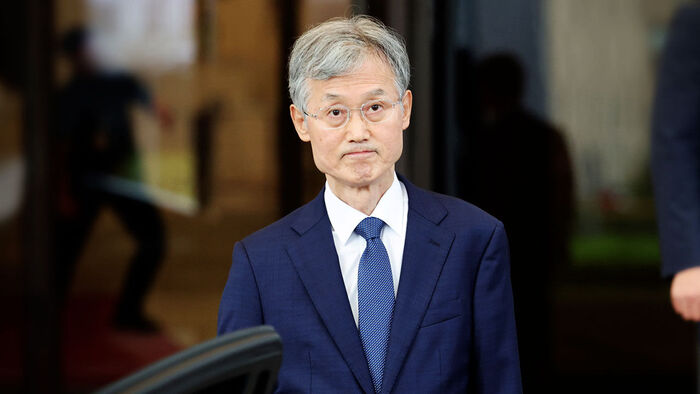
Regardless of the president's authority to refuse a Supreme Court justice appointment, the grounds for refusal stated by Senior Presidential Spokesperson Kang Yu-jung when announcing the "request for a new recommendation" are flawed. The presidential office cited the lack of "procedural completeness" resulting from the failure of the president and the chief justice to reach a "prior agreement" as the primary reason for the refusal. However, a "prior agreement" cannot serve as a procedural requirement for the exercise of the chief justice's recommendation power; thus, the lack of prior agreement cannot be viewed as a procedural defect.
The Constitution defines the chief justice's power of recommendation and the president's power of appointment as independent authorities. Just as the president's appointment power is not a formal power subordinate to the chief justice's recommendation power, the chief justice's recommendation power is likewise not subordinate to the president's appointment power. (In fact, constitutions prior to 1972 defined presidential appointment power as subordinate to recommendation power.) Therefore, just as the president may refuse an appointment without being bound by the chief justice's recommendation, the chief justice may also recommend candidates without being subordinate to presidential appointment authority.
To be sure, "consultation" between the president and the chief justice is necessary as a constitutional convention. However, such necessity does not establish a "prior agreement" between the president and the chief justice as a procedural requirement. Nowhere in the Constitution or the law is prior agreement with the president defined as a procedural condition for exercising recommendation power. Furthermore, if the chief justice could only exercise recommendation power when reaching a "prior agreement" with the president who holds appointment power, the president would likewise only be able to request parliamentary consent when reaching a "prior agreement" with the National Assembly. Naturally, the president can request parliamentary consent without any prior agreement. Therefore, the presidential office's claim that there is a lack of "procedural completeness" due to the absence of "prior agreement" is invalid.
(The presidential office appears to have cited the lack of "procedural completeness" due to the absence of a "prior agreement" with the Constitutional Court's precedent on the withholding of Constitutional Court justice appointments in mind. In February 2025, the Constitutional Court determined that then-Acting President Choi Sang-mok's withholding of appointment was unconstitutional, defining the presidential appointment power over Constitutional Court justices as "formal." Nevertheless, the Constitutional Court stated: "If there is a defect in violation of laws such as the Constitution or the National Assembly Act based on parliamentary democracy during the election process (of a Constitutional Court justice nominee), the president may withhold appointment and request a re-election." This established that if there is a "defect in violation of the law" in the pre-appointment stage, the president may suspend the appointment and request parliament to restart the procedure. In light of this ruling, even under the stance that appointment power does not include the authority to refuse (formal appointment power theory), an argument can be made that the president may withhold appointment and request a re-recommendation if there is a "defect in violation of the law" in the chief justice's recommendation process. Even if such logic holds, however, the absence of a "prior agreement" cannot be viewed as a lack of "procedural completeness" or a "defect in violation of the law," as pointed out above. A prior agreement is not a procedural requirement for exercising recommendation power.)
■ Can the President or the National Assembly Limit the Scope of the Chief Justice's Recommendation Power?
The presidential office also requested the chief justice to proceed with the re-recommendation process while "respecting the recommendations of the Supreme Court Justice Candidate Recommendation Committee." This is being interpreted as a demand that the chief justice refrain from forming a new recommendation committee and instead recommend one of the remaining three candidates—excluding Senior Judge Son Bong-ki, whose appointment was already refused—out of the four candidates originally put forward by the recommendation committee.
The Democratic Party's move to revise legislation concerning the candidate recommendation committee aligns with this direction. Democratic Party Leader Kim Min-seok instructed on August 24 to review amendments to the Court Organization Act, saying, "We must consider revising the legal loophole that requires forming a recommendation committee every time a Supreme Court justice is recommended, in order to block underhanded tactics." This intends to change the law so that even if the president refuses an appointment, the chief justice cannot form a new committee and must recommend another candidate from the existing committee's list.
The problem is that if the presidential office's demand or the Democratic Party's legislative move is combined with the president's exercise of refusal power, it could infringe upon the chief justice's power of recommendation. If the chief justice cannot receive new recommendations after a presidential refusal, the chief justice has no choice but to pick one of the three remaining candidates recommended by the existing committee. If the president subsequently refuses two more of the remaining three candidates, the chief justice will ultimately be forced to recommend the final candidate favored by the president. Consequently, the chief justice's power of recommendation would be reduced to merely "the authority to recommend the candidate most favored by the president among those shortlisted by the recommendation committee." This can be assessed as effectively neutralizing the chief justice's constitutional recommendation power.
Therefore, the presidential office's demand for a re-recommendation strictly from within the existing pool carries a strong likelihood of being interpreted as an infringement upon the chief justice's recommendation power guaranteed by the Constitution. The same applies to the legislative push to block the reconstitution of the recommendation committee. In particular, if the law is revised to legally "bind" the chief justice to the candidate committee's recommendations, it could lead to an adjudication on competence dispute at the Constitutional Court.
(In fact, the chief justice is not legally bound by the recommendation results of the Supreme Court Justice Candidate Recommendation Committee. Article 41 of the current Court Organization Act only stipulates that the chief justice shall "respect" the recommendations of the committee. Compared with the legal interpretation of other laws using the term "respect" regarding personnel matters, it cannot be interpreted that the chief justice is legally "bound" by the committee's results. Thus, the chief justice may recommend an individual outside the committee's recommended shortlist. However, from the perspective of the presidential office—which regards the lack of "prior agreement" as a procedural defect—it is highly likely to define recommending an individual not shortlisted by the committee as an even more serious procedural flaw.)
■ Finding a Solution Within the Framework of the Constitution
The three issues surrounding the president's refusal to appoint a Supreme Court justice can be summarized as follows:
① Can the president's refusal of an appointment be considered a violation of the Constitution?
- While doctrines conflict, interpreting that the Constitution permits the refusal of appointment itself appears more logical.
② Can the absence of a "prior agreement" between the president and the chief justice be viewed as a procedural flaw in the recommendation process?
- Because a "prior agreement" is not a procedural requirement for exercising recommendation power, the lack of prior agreement cannot be viewed as a procedural defect.
③ Can the president restrict the scope of recommendation so that the chief justice must re-recommend from among the candidates previously nominated by the committee? Or can the National Assembly amend relevant laws for this purpose?
- Restricting the scope of the chief justice's recommendation power by the president or the National Assembly is highly likely to be interpreted as infringing upon the chief justice's constitutional authority.
In conclusion, the president's appointment power and the chief justice's recommendation power can be seen as mutually independent authorities. It is reasonable to interpret that the president may refuse an appointment without being bound by the chief justice's recommendation, and that the chief justice may exercise recommendation power without being bound by the president's appointment power.
Of course, if the president and the chief justice continuously fail to reach common ground, recommendations and refusals may be repeated. However, just like the relationship between the president and the National Assembly, this is a matter that constitutional organs exercising independent powers must resolve through dialogue within the constitutional framework. Even if the prime minister post remains vacant for an extended period because the National Assembly repeatedly rejects presidential requests for appointment consent, the president cannot mobilize emergency presidential powers to compel parliament to grant consent.
The Constitution does not provide explicit guidelines for resolving every kind of deadlock. Even so, attempting to resolve issues by having one branch neutralize the exercise of power by another is unconstitutional. A prime example was former President Yoon Suk Yeol's act of rebellion in attempting to neutralize the National Assembly. The Constitution envisions resolving issues through consultation and compromise. It is hoped that the president and the chief justice will find a reasonable solution within the bounds of the Constitution.
※ Please note: This article was translated by AI and may contain errors.
Copyright Ⓒ SBS. All rights reserved. Unauthorized reproduction, redistribution, and use for AI training are prohibited.