SBS News
Three Dead in Claimed "Autonomous AI Attack": The Chilling Computer Inside Russian Drone
Published : Aug 28, 2026 3:23 PM
Reporting from Paris. Today, let us talk about drones. Claims have emerged that Russia used a lethal AI-powered drone. It is reported that the drone executed its final attack autonomously without human intervention. Hearing this news for the first time was honestly chilling. It felt as though Pandora's box—which should never have been opened—had just been unlocked.
On August 6, Russia launched a drone strike on Zaporizhzhia in southeastern Ukraine. It struck a large propane storage facility at a gas station, causing a massive explosion that tragically killed three civilians. Because Russia sometimes launches hundreds of drones a day, it was initially thought to be just another conventional drone. However, an analysis of the recovered wreckage revealed that it was significantly different from previous drones.
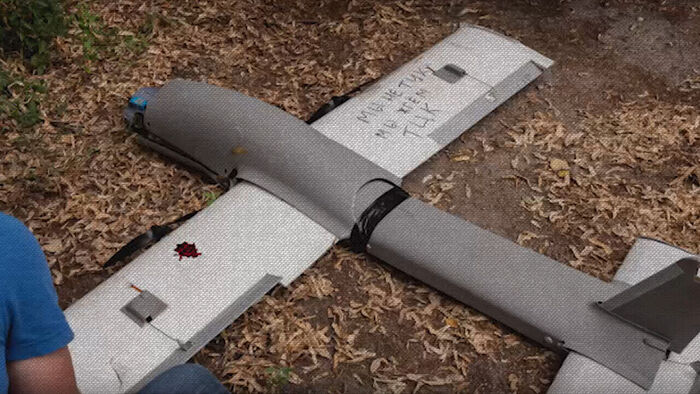
Looking into what made it different, this Russian drone notably lacked a communication antenna. Drones typically require antennas to receive instructions and commands from human operators. Yet, this drone had none at all. It was not simply missing or broken off; it appears to have been manufactured without a communication antenna from the very beginning.

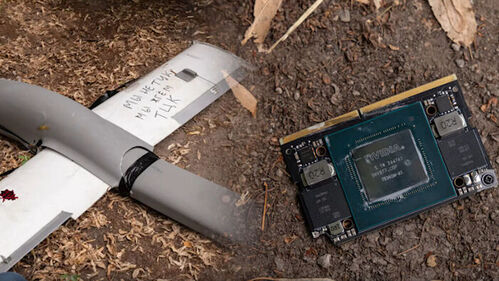
Instead, an Nvidia microcomputer was discovered inside. It was a Jetson Orin. Looking into what a Jetson Orin is, it is a compact computer built on a board slightly smaller than a palm, equipped with an Nvidia GPU to operate independently without connecting to cloud servers. Nvidia stated that it has never sold these to Russia, maintaining that it likely reached the country through resale or third-party distribution.
However, because Russia did not encrypt the computer, investigators were able to inspect its contents. Inside, they reportedly found satellite and regional imagery of Ukraine alongside embedded code. That code contained not only Ukrainian topographic data, but also pre-trained dataset models programmed to track and strike specific objects. In other words, if Ukraine's account is accurate, Russia deployed a drone that flew autonomously to pre-programmed coordinates without human control, allowing AI to autonomously select and strike targets from its pre-trained categories. Since energy storage facilities were among the targets it was trained to identify, the drone scanned the area from the sky, selected one, and struck it on its own. The era of AI attacking autonomously has truly arrived.
Until now, AI has certainly been used in drone operations. However, its role was limited to assisting in target detection and mission execution; it did not independently designate targets and conduct strikes in actual combat. In particular, there had been no documented case of human casualties resulting from a lethal AI attack like this. Until now, humans always made the final target selection and issued the ultimate strike command. But now, an era where machines judge and attack humans without human intervention has arrived before we even realized it.
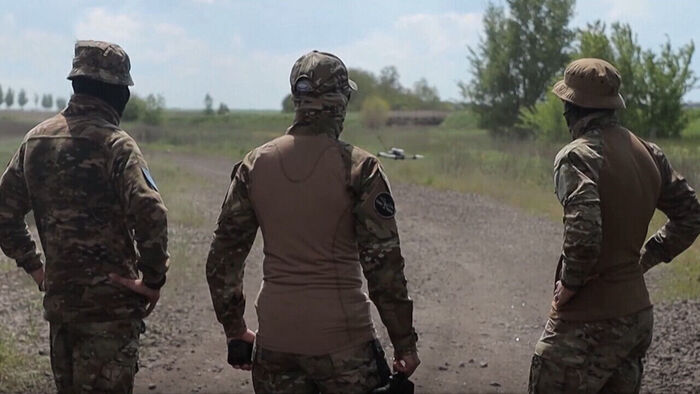
Ukraine is by no means lagging behind Russia in drone capabilities. Having fought the war for four years, it is no exaggeration to say that Ukraine has overcome its absolute disadvantage in military strength through drones. At the Ukrainian Independence Day parade held last week, various drones—including unmanned ground vehicles, unmanned aerial vehicles, and unmanned surface vessels—were showcased instead of conventional troops and weapons. In 2024, Ukraine even established the world's first dedicated military branch for drones. If Ukraine chooses to, it too could readily develop lethal autonomous AI drones that operate without human intervention.
If direct drone-on-drone engagements break out between Ukraine and Russia, the war could transition far more rapidly from the current stage of remote-controlled drone combat past autonomous engagement systems, moving straight into battles fought between AI-controlled autonomous drones. The scenario seen only in futuristic movies—where robots fight in place of humans or even kill humans—could soon become a reality.
Recognizing the need to halt this trend, discussions on regulations have long been underway within the UN and the international community. Under the Convention on Certain Conventional Weapons (CCW), discussions regarding the regulation of lethal AI have taken place. The CCW is a treaty intended to restrict the use of conventional weapons that cause indiscriminate civilian harm. Although lethal AI systems are not conventional weapons, efforts were made to restrict their use under this treaty because the risk of significant civilian harm is exceptionally high. However, several countries refused to agree, with Russia in particular voicing strong opposition. International discussions aimed at banning lethal AI weapons targeting humans have continued since, but have repeatedly run into Russian opposition.

In 2024, a similar agenda was brought before the UN General Assembly. The proposal aimed to create a forum to discuss restrictions on killer robots; while 161 nations voted in favor, Russia opposed it once again. North Korea also cast a dissenting vote. Alongside North Korea's opposition, several countries abstained, with major military powers including the United States, China, India, and Israel all abstaining. South Korea also maintained a reserved stance. Facing North Korea directly and needing to gradually transition DMZ border security duties from personnel to robotic systems, South Korea could not simply agree to oppose the development of autonomous lethal weapons.
The UN Secretary-General has long strongly advocated for the regulation of autonomous lethal weapon development. He has warned that the window of opportunity to prepare preventive measures is rapidly closing. This concern is well-founded, as human fatalities from lethal AI drones have already occurred in Ukraine. In November, a CCW meeting is scheduled to convene again in Geneva, Switzerland, to discuss how to regulate autonomous lethal weapons and whether to draft a treaty. However, because the body operates under a consensus system, reaching a binding agreement while Russia openly objects remains difficult. Moreover, even if a hard-won agreement were reached, another challenge lies in the fact that existing drones can easily be converted into autonomous lethal weapons through a simple software update.
In the end, this shift toward warfare fought between AI robots replacing humans appears difficult to avoid, much like the inability to prevent the advent of nuclear weapons. However, fierce debates are expected to erupt whenever victims of lethal AI weapons emerge over whether the final decision to pull the trigger should be entrusted to machines.
 Video
Video
AI Begins to Attack Autonomously
Looking into what made it different, this Russian drone notably lacked a communication antenna. Drones typically require antennas to receive instructions and commands from human operators. Yet, this drone had none at all. It was not simply missing or broken off; it appears to have been manufactured without a communication antenna from the very beginning.
Instead, an Nvidia microcomputer was discovered inside. It was a Jetson Orin. Looking into what a Jetson Orin is, it is a compact computer built on a board slightly smaller than a palm, equipped with an Nvidia GPU to operate independently without connecting to cloud servers. Nvidia stated that it has never sold these to Russia, maintaining that it likely reached the country through resale or third-party distribution.
However, because Russia did not encrypt the computer, investigators were able to inspect its contents. Inside, they reportedly found satellite and regional imagery of Ukraine alongside embedded code. That code contained not only Ukrainian topographic data, but also pre-trained dataset models programmed to track and strike specific objects. In other words, if Ukraine's account is accurate, Russia deployed a drone that flew autonomously to pre-programmed coordinates without human control, allowing AI to autonomously select and strike targets from its pre-trained categories. Since energy storage facilities were among the targets it was trained to identify, the drone scanned the area from the sky, selected one, and struck it on its own. The era of AI attacking autonomously has truly arrived.
Until now, AI has certainly been used in drone operations. However, its role was limited to assisting in target detection and mission execution; it did not independently designate targets and conduct strikes in actual combat. In particular, there had been no documented case of human casualties resulting from a lethal AI attack like this. Until now, humans always made the final target selection and issued the ultimate strike command. But now, an era where machines judge and attack humans without human intervention has arrived before we even realized it.
Ukraine's Drone Capabilities Are No Less Formidable
Ukraine is by no means lagging behind Russia in drone capabilities. Having fought the war for four years, it is no exaggeration to say that Ukraine has overcome its absolute disadvantage in military strength through drones. At the Ukrainian Independence Day parade held last week, various drones—including unmanned ground vehicles, unmanned aerial vehicles, and unmanned surface vessels—were showcased instead of conventional troops and weapons. In 2024, Ukraine even established the world's first dedicated military branch for drones. If Ukraine chooses to, it too could readily develop lethal autonomous AI drones that operate without human intervention.
If direct drone-on-drone engagements break out between Ukraine and Russia, the war could transition far more rapidly from the current stage of remote-controlled drone combat past autonomous engagement systems, moving straight into battles fought between AI-controlled autonomous drones. The scenario seen only in futuristic movies—where robots fight in place of humans or even kill humans—could soon become a reality.
Is the DMZ No Longer Safe Either?
In 2024, a similar agenda was brought before the UN General Assembly. The proposal aimed to create a forum to discuss restrictions on killer robots; while 161 nations voted in favor, Russia opposed it once again. North Korea also cast a dissenting vote. Alongside North Korea's opposition, several countries abstained, with major military powers including the United States, China, India, and Israel all abstaining. South Korea also maintained a reserved stance. Facing North Korea directly and needing to gradually transition DMZ border security duties from personnel to robotic systems, South Korea could not simply agree to oppose the development of autonomous lethal weapons.
The UN Secretary-General has long strongly advocated for the regulation of autonomous lethal weapon development. He has warned that the window of opportunity to prepare preventive measures is rapidly closing. This concern is well-founded, as human fatalities from lethal AI drones have already occurred in Ukraine. In November, a CCW meeting is scheduled to convene again in Geneva, Switzerland, to discuss how to regulate autonomous lethal weapons and whether to draft a treaty. However, because the body operates under a consensus system, reaching a binding agreement while Russia openly objects remains difficult. Moreover, even if a hard-won agreement were reached, another challenge lies in the fact that existing drones can easily be converted into autonomous lethal weapons through a simple software update.
In the end, this shift toward warfare fought between AI robots replacing humans appears difficult to avoid, much like the inability to prevent the advent of nuclear weapons. However, fierce debates are expected to erupt whenever victims of lethal AI weapons emerge over whether the final decision to pull the trigger should be entrusted to machines.
 Video
Video※ Please note: This article was translated by AI and may contain errors.
Copyright Ⓒ SBS. All rights reserved. Unauthorized reproduction, redistribution, and use for AI training are prohibited.