SBS News
Over 45,000 DNA Samples Accumulated for Missing Persons, But Adult Cases Remain a Blind Spot
Published : Aug 26, 2026 8:52 AM

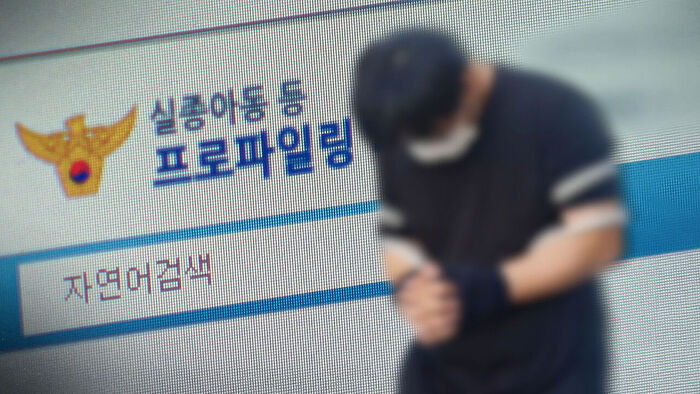
▲ DNA Sample Collection for Genetic Testing
More than 45,000 DNA samples have been accumulated since a genetic testing system was introduced in 2004 to help find long-term missing persons.
However, it has been revealed that general adult missing persons are excluded from systematic DNA collection and cross-matching programs.
Following the recent case of Jang Mi-ran in Jeju, experts point out that legal grounds must be supplemented to cross-reference genetic information between families and unidentified bodies in preparation for prolonged adult missing person cases.
According to an analysis of the "2025 Annual Report on Missing Children and Others" obtained and reviewed by the Korean National Police Agency and the Ministry of Health and Welfare on the 25th, a total of 45,493 DNA samples were collected from the introduction of the genetic testing system in 2004 until last year.
The genetic testing system builds a database (DB) of genetic information from unaccompanied children living in shelter facilities, individuals with disabilities, and dementia patients, as well as their searching families, to cross-match them and locate long-term missing persons.
Among these, samples from individuals searching for their families accounted for 39,590 cases, while samples from guardians searching for missing persons accounted for 5,903 cases.
Categorizing the samples from the missing individuals themselves, those with intellectual, autistic, or mental disabilities were the highest at 22,234 cases, followed by 16,867 children, and 489 dementia patients.
Cumulative DNA matches totaled 1,056 cases.
By category, there were 742 cases involving children, 297 cases involving individuals with disabilities, and 17 cases involving dementia patients and guardians.
Newly collected samples last year stood at 1,658 cases, a decrease of 562 cases (25.3%) from 2,220 cases in 2024.
DNA matches also decreased by 61 cases (51.7%), dropping from 118 cases in 2024 to 57 cases last year.
When the police collect DNA samples from subjects and their families and send them to specialized institutions for missing children and dementia patients, the National Forensic Service analyzes and manages the genetic information and cross-references it with the existing database.
However, under the Act on the Protection and Support of Missing Children and Others, this program targets children under 18, individuals with intellectual, autistic, or mental disabilities, and dementia patients.
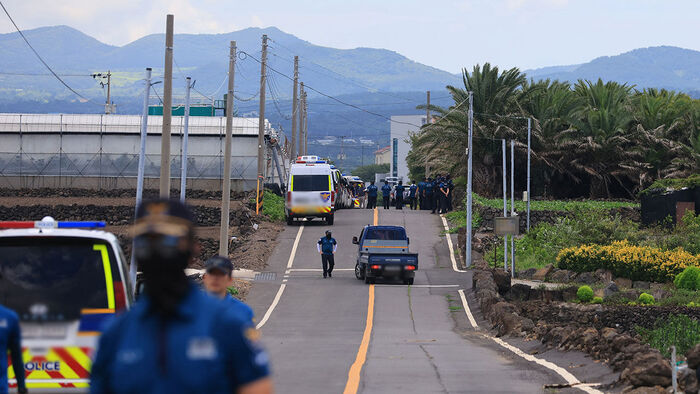
General adult missing persons, such as those in recent consecutive incidents in Jeju, are not included.
The police agency's internal rule, the "Rules on Handling Cases of Missing Children and Runaways," specifies DNA testing as one of the tracking methods to locate runaways, who correspond to general adult missing persons.
On the other hand, the detailed clauses of the same rule governing DNA sample collection and consent procedures apply only to children, individuals with disabilities, dementia patients, and their searching families under the Missing Children Act.
Specific requirements and procedures for collecting samples from general adult missing persons or their families, as well as whose genetic information they are cross-matched and managed with, are not clearly stipulated.
For most general adult missing persons, whereabouts can be tracked through mobile phone location data, closed-circuit television (CCTV), and credit card usage history, so the necessity to conduct DNA testing from the early stages of disappearance is not very high.
However, if a disappearance becomes prolonged or a body is discovered whose identity is difficult to verify, the need may arise to cross-check genetic information between the missing person's family and unidentified deceased bodies.
Jang Mi-ran (37), who went missing in Jeju last May, was found dead 104 days after the initial report, and a man in his 60s handled by the same police officer was also found dead 51 days after being reported missing.
Given that general adult missing person cases can also become prolonged and result in deaths or discoveries of unverified identities if initial search timing is missed, voices are growing that procedures for DNA testing and matching for long-term missing adults should be clearly stipulated in the law.
Lee Yoon-ho, professor emeritus of police administration at Dongguk University, said, "There is a clear difference between failing to take action due to a lack of legal grounds and failing to take action after judging individual cases despite having grounds. A system needs to be established so that DNA samples from families and others can be secured and managed even in cases of long-term missing adults."
Currently, four bills related to the so-called "Missing Adults Act" containing such provisions have been proposed in the National Assembly, but all remain pending.
There are also counterarguments that since adults may voluntarily cut ties with their families or relocate, it is difficult to manage them in the exact same manner as children, individuals with disabilities, and dementia patients.
Pointed out is that because genetic information is sensitive personal data, even if the system is expanded, the targets should be limited to long-term disappearances, and clear regulations must be established regarding those authorized to consent to sample collection, scope of use, storage periods, and disposal procedures.
Devices protecting the missing person's will and privacy also need to be established together to prevent missing person reports from being abused for tracking debtors or locating victims of domestic violence.
A police official noted, "While discussions on institutional improvement could take place sparked by the Jeju incident, adults have diverse circumstances, making it difficult to track every report as if it were a criminal case."
The official added, "It is realistically difficult to handle tens of thousands of reports annually with the same level of searching, and tracking locations without clear legal grounds could infringe upon the freedom of residence and transfer as well as privacy, so targets and requirements must be set in detail."
(Photo: Yonhap News)
※ Please note: This article was translated by AI and may contain errors.
Copyright Ⓒ SBS. All rights reserved. Unauthorized reproduction, redistribution, and use for AI training are prohibited.