SBS News
Kuwabara Shisei Documented Modern Korean History for 60 Years
Published : Aug 26, 2026 1:35 AM
 Video
Video
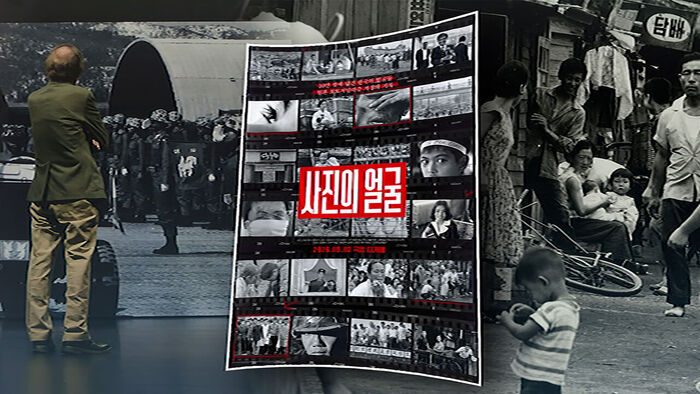
He is a Japanese documentary photographer who has captured the face of modern Korean history. Kuwabara Shisei has visited Korea with his photomentary, The Face of Photography, which encapsulates his life and photography.
Tonight's Nightline Invitation features documentary photographer Kuwabara Shisei.
Q. How long has it been since your last visit to Korea?

[Kuwabara Shisei / Documentary Photographer: This is my first visit to Korea in a year, since last September. I came to Korea last year because my film was invited to the DMZ International Documentary Film Festival.]
Q. You visited Korea with the work "The Face of Photography"?
[Kuwabara Shisei / Documentary Photographer: The film is being released in Korea and Japan with just a few days difference. I came to Korea because it is premiering here first. My heart is beating fast to see how Korean audiences will receive it.]
Q. The photomentary "The Face of Photography"… What kind of work is it?
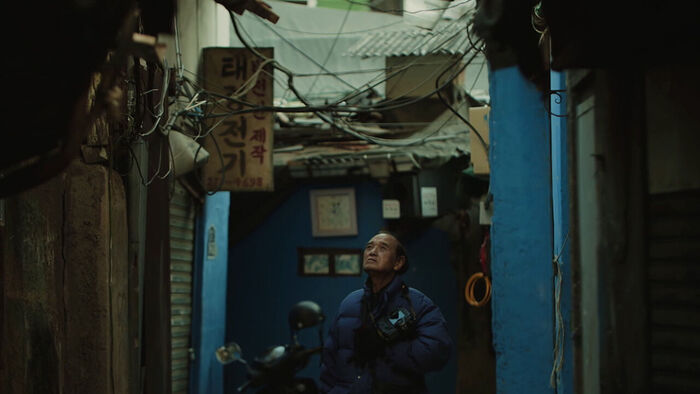
[Kuwabara Shisei / Documentary Photographer: Director Ko Hee-young gathered photographs on the major themes of my work—Korea, Minamata, Russia, and the Vietnam War—to construct this film, and I appear intermittently as well. I think it is a magnificent film of history and documentation.]
Q. Your photographs were reborn as a film… How did that feel?
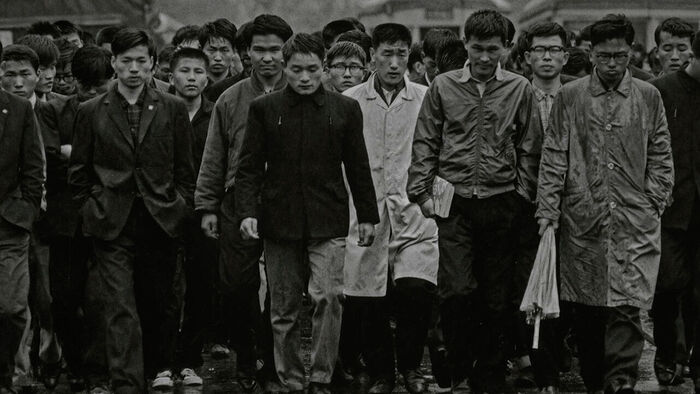
[Kuwabara Shisei / Documentary Photographer: Instead of using AI, which is currently mainstream worldwide, the director and staff wonderfully composed the film using techniques like zooming in and panning. I was truly amazed and felt more glad than anything.]
Q. You have recorded modern Korean history for some 60 years… What prompted you to start?
[Kuwabara Shisei / Documentary Photographer: I watched the outbreak of the Korean War when I was a middle school student. So I thought that when I became a professional photographer, I wanted to make Korea my second coverage assignment rather than the first. Therefore, I first covered Minamata, and after publishing on Minamata, I came to Korea in 1964.]
Q. Seoul in 1964 and Seoul in 2026… What is the biggest change?
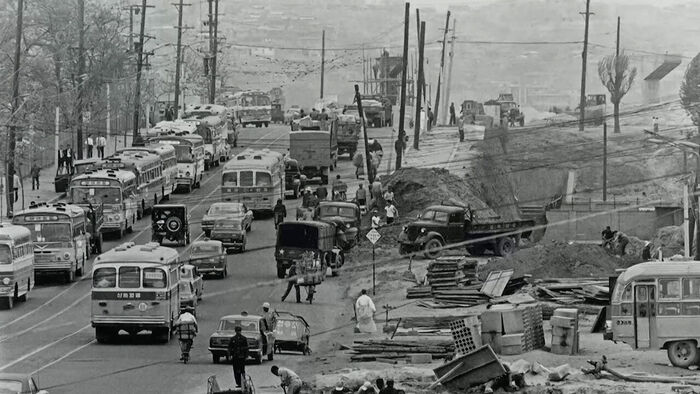
[Kuwabara Shisei / Documentary Photographer: I remember when I traveled from Gimpo Airport into downtown Seoul in 1964, it wasn't an asphalt road but an unpaved road with dust flying about. Half a century has passed since then, and I think Korea has transformed into a completely different, prosperous country through rapid growth.]
Q. You have traveled back and forth to Korea over 100 times… What was the driving force that kept you from stopping the shutter?
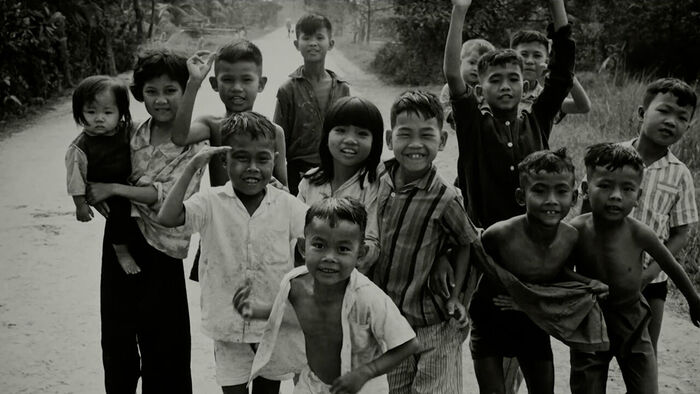
[Kuwabara Shisei / Documentary Photographer: Eleven years after the armistice of the Korean War, themes such as the South Korea-Japan talks and the dispatch of troops to the Vietnam War in the 1960s, modernization and rapid growth in the 1970s, and democratization in the 1980s were immensely attractive to a journalist. Because Korea was full of such themes, I worked with great enthusiasm.]
Q. What message do you want to convey to Korean and Japanese audiences through "The Face of Photography"?
[Kuwabara Shisei / Documentary Photographer: First, for Korean audiences, older generations certainly know well, but I am looking forward to seeing how the younger generation, who are unfamiliar with history, will react to this work. And for Japanese audiences, I hope it serves as material that allows them to understand, to some extent, the turbulent half-century that took place in a neighboring country.]
※ Please note: This article was translated by AI and may contain errors.
Copyright Ⓒ SBS. All rights reserved. Unauthorized reproduction, redistribution, and use for AI training are prohibited.