SBS News
China vs. Taiwan: Purging 'Dissenters,' Military Buildup, and 'History War' — Are Cross-Strait Tensions Nearing a Tipping Point?
Published : Aug 24, 2026 4:16 PM
DeepBack
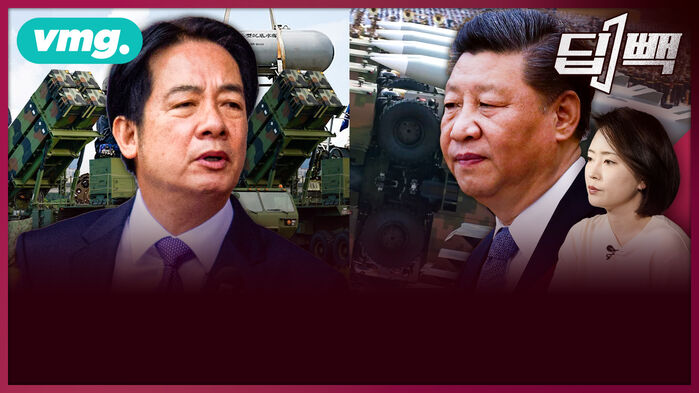
After Japanese Prime Minister's Remarks... How Far Has China-Japan Conflict Spread?
Sanae Takaichi | Prime Minister of Japan (August 7)
If warships are used and the use of force is involved, no matter how you look at it, I believe this could become a situation threatening survival.
If warships are used and the use of force is involved, no matter how you look at it, I believe this could become a situation threatening survival.
China-Japan relations are deteriorating rapidly over Japanese Prime Minister Sanae Takaichi's remarks on August 7 hinting at intervention in a "Taiwan contingency."
China strongly criticized Prime Minister Takaichi's remarks and has been rolling out a series of retaliatory measures since August 14, including advisories against travel and study in Japan, postponing movie releases, and resuming the suspension of Japanese seafood imports.
Mao Ning | Chinese Foreign Ministry Spokesperson
(Prime Minister Takaichi's remarks) have provoked strong indignation among the Chinese people. Under the current circumstances, even if Japanese seafood were imported into China, there would be no market to sell it.
(Prime Minister Takaichi's remarks) have provoked strong indignation among the Chinese people. Under the current circumstances, even if Japanese seafood were imported into China, there would be no market to sell it.
Taiwanese President's Response Sparks Strong Backlash from China
Amid rising tensions between China and Japan, Taiwanese President Lai Ching-te raised his voice against Beijing, saying, "China must exercise restraint and demonstrate the demeanor of a major power," and "It should not become a troublemaker that undermines regional peace and stability."
In response, Chinese authorities reacted fiercely, stating that he "will be nailed to history's pillar of shame."
In the midst of this situation, President Lai ostentatiously posted a photo on his Facebook page on August 20 showing himself eating sushi made with Japanese seafood.
Looking at recent trends, analysts observe that Taiwan under President Lai and China under President Xi Jinping are "tightening their mutual checks and balances far more meticulously than before." Why is this happening?
Looking first at President Lai's political stance, he is classified as a hardliner even within the pro-independence Democratic Progressive Party (DPP), surpassing former President Tsai Ing-wen. In the last presidential election, he garnered public support by emphasizing the "defense of Taiwan's democracy," which led to strong pushback from China.
Indeed, since President Lai took office in May of last year, ominous movements have been observed in both military and non-military spheres between China and Taiwan.
As we covered in our previous episode, we will now look in detail at how China and Taiwan have each been ramping up their containment measures against one another recently.
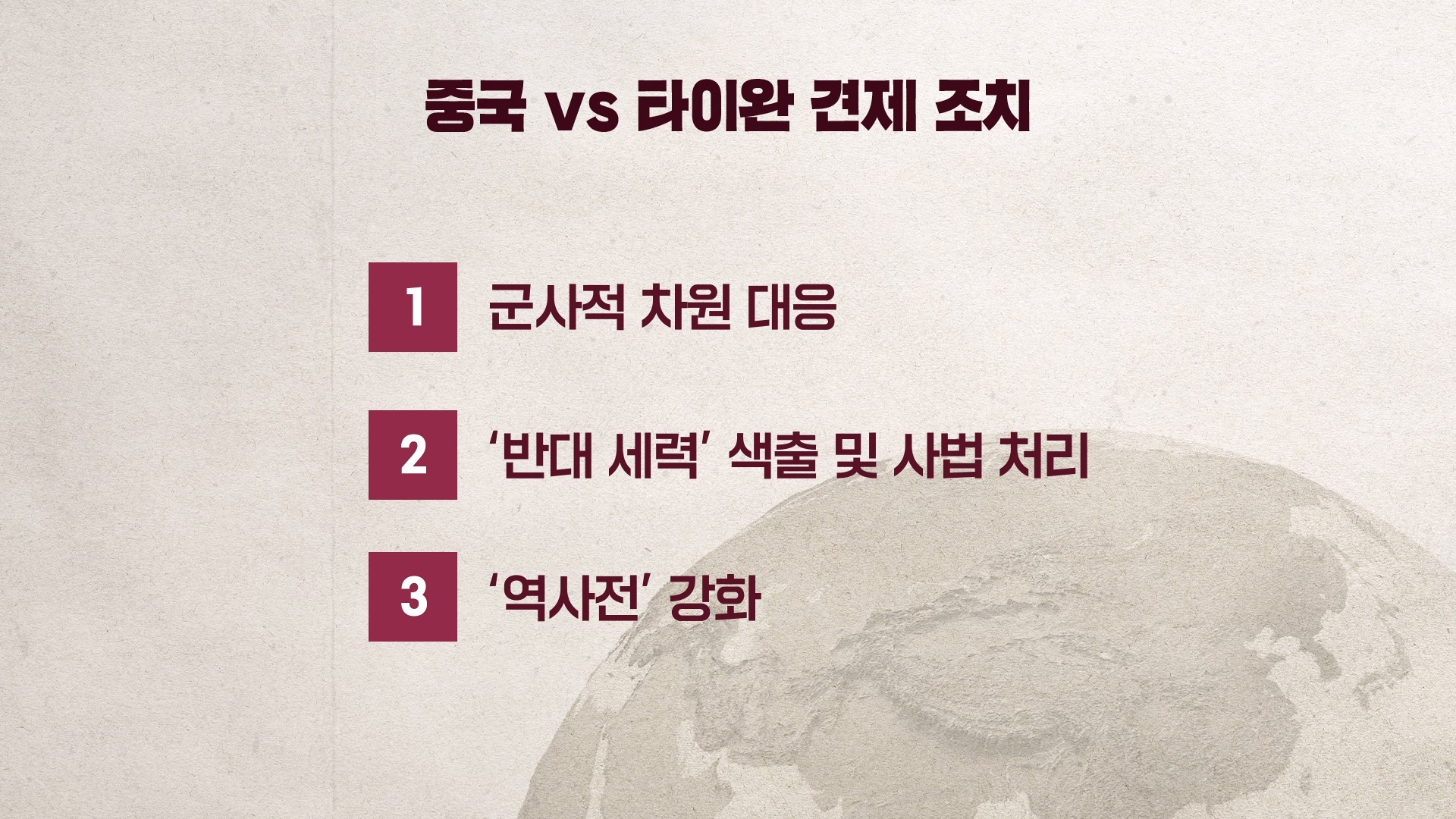
We have categorized the recent actions by Chinese and Taiwanese authorities into three major prongs: first, military responses; second, ferreting out and prosecuting "dissenting forces"; and third, intensifying the "history war."
China's Containment ① Military Response: Defense Budget, Military Drills, Scenarios
First, let us look at China. We will begin with China's defense budget. While it is intended far more as a counterweight against the United States than aimed solely at Taiwan:
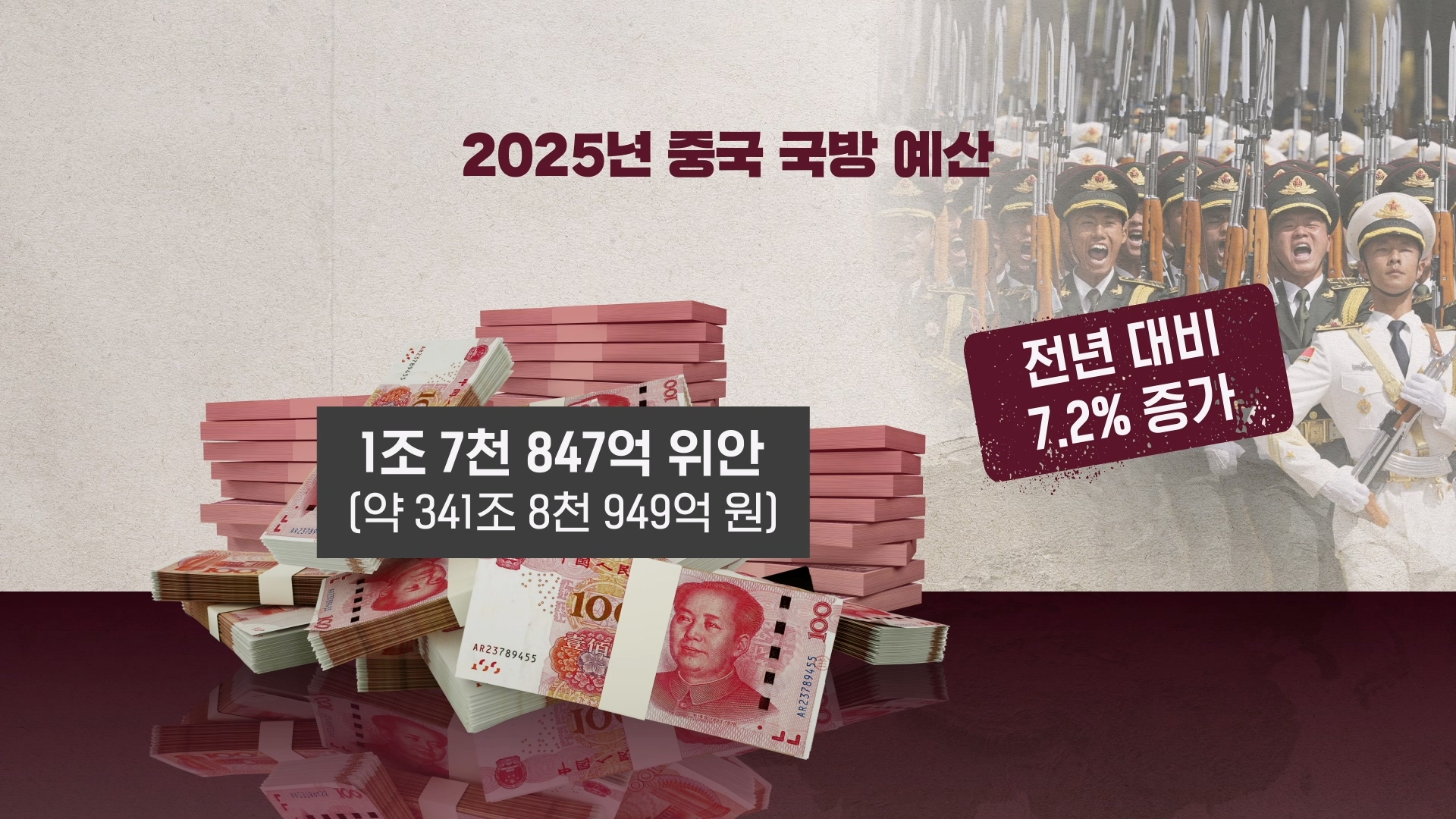
This year's defense budget was set at 1.7847 trillion yuan (approximately 341.8949 trillion won), up 7.2% from the previous year. Next year's defense budget has not yet been made public.
Also in September of last year, China held a Victory Day military parade where it unveiled its nuclear triad spanning land, sea, and air to the world for the first time. At this parade, a host of new weapons were displayed, including the YJ-21 hypersonic missile capable of striking U.S. aircraft carriers at long range. According to experts, conventional weapons that pose direct threats to Taiwan, such as the J-20 stealth fighter and uncrewed escort aircraft, also made appearances.
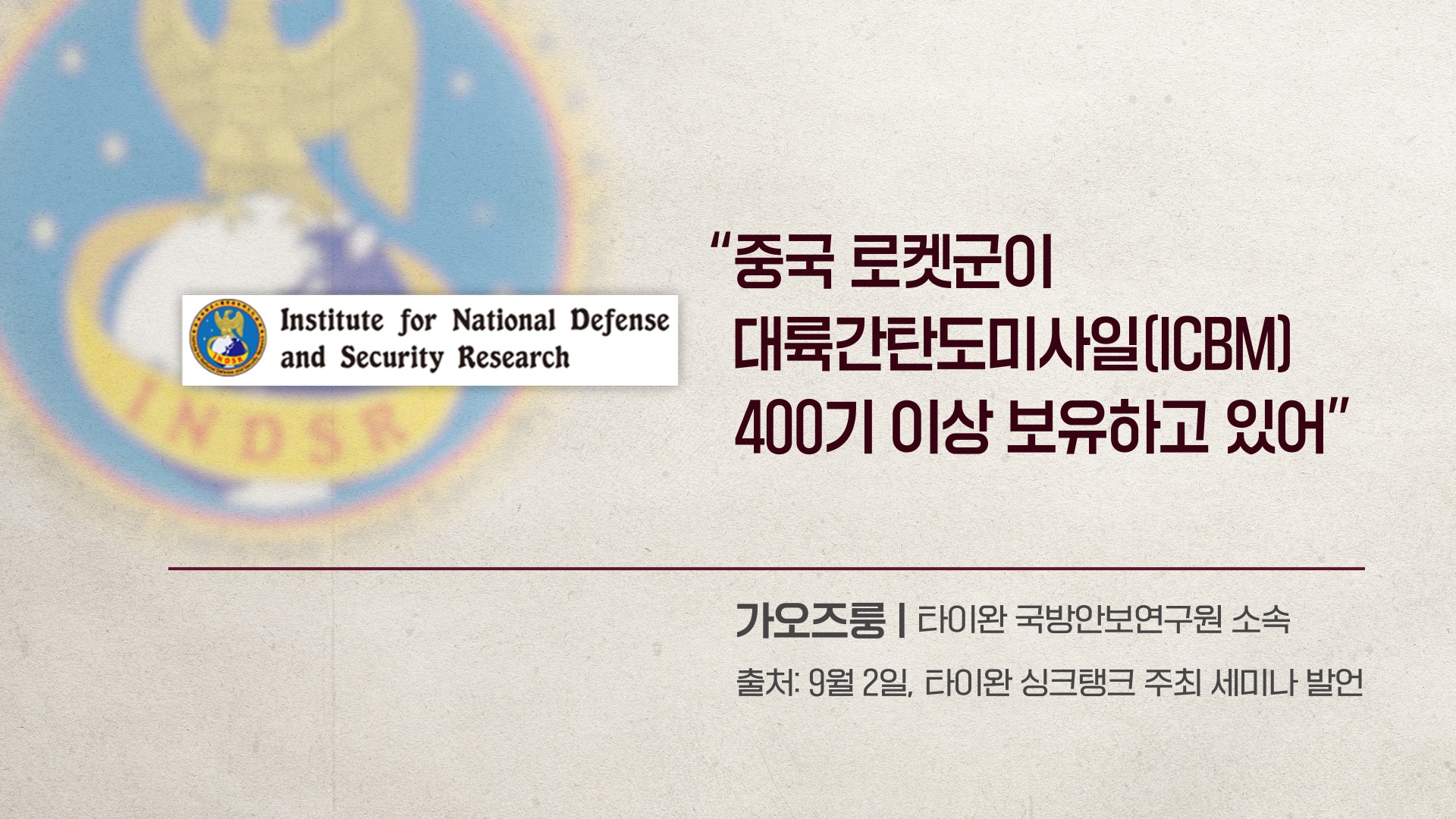
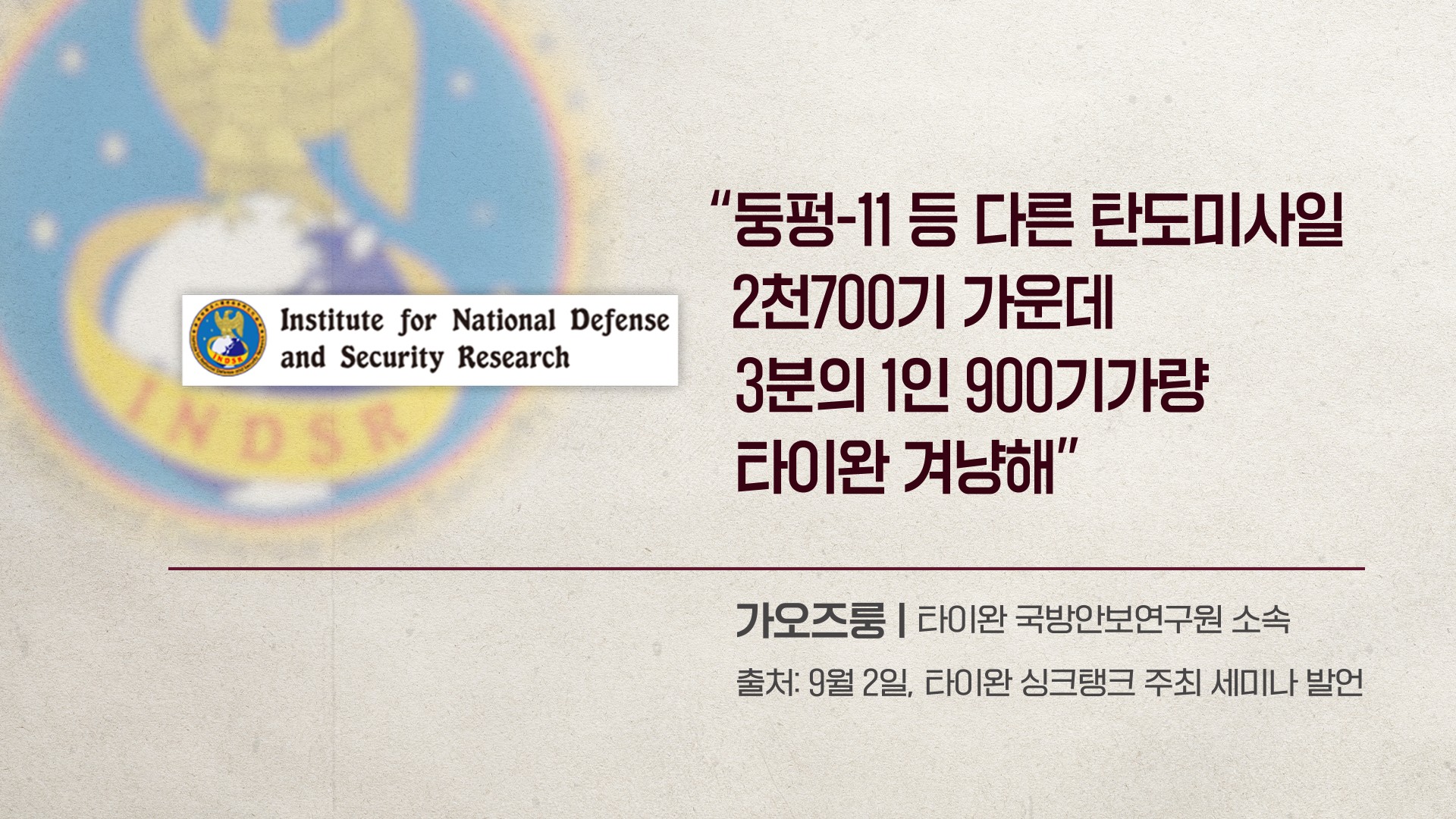
Kao Tzu-lung, a researcher at the Institute for National Defense and Security Research, warned that China's Rocket Force possesses more than 400 ICBMs (intercontinental ballistic missiles), and that roughly one-third—about 900—of its 2,700 other ballistic missiles, such as the DF-11, are targeted at Taiwan.
Moreover, following the commissioning of China's third aircraft carrier, the Fujian, earlier this month, the vessel conducted its first live-fire drill on August 19.
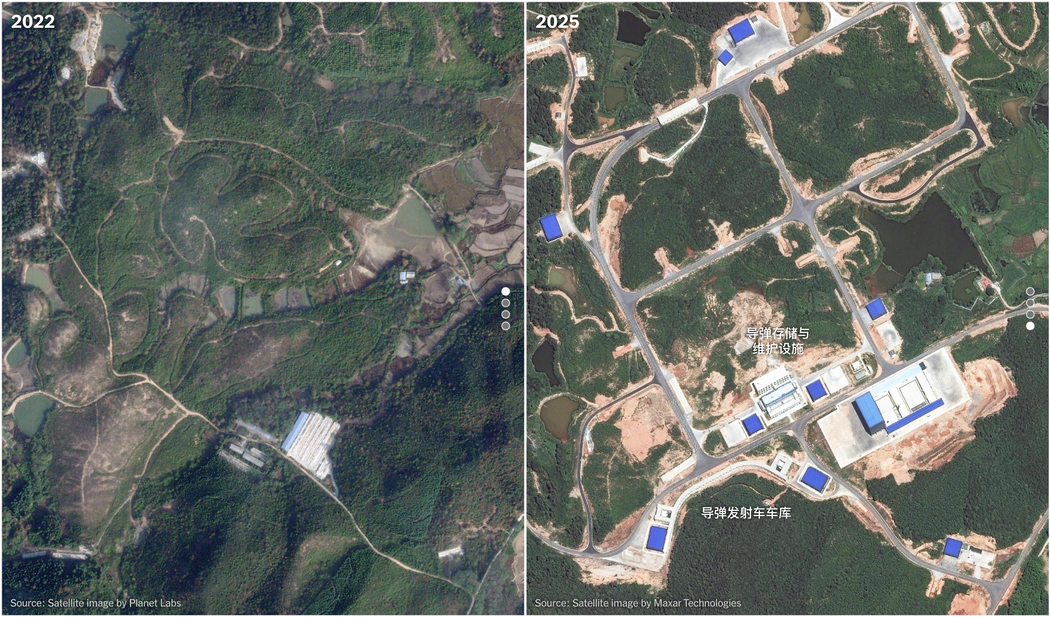
The photo shown here is a satellite image reported by The New York Times last September, showing China significantly expanding missile bases along its eastern coastal regions aimed at Taiwan and adjacent waters. Based on satellite imagery and expert analysis, the footprint of one missile brigade base inside China has doubled in size in recent years.
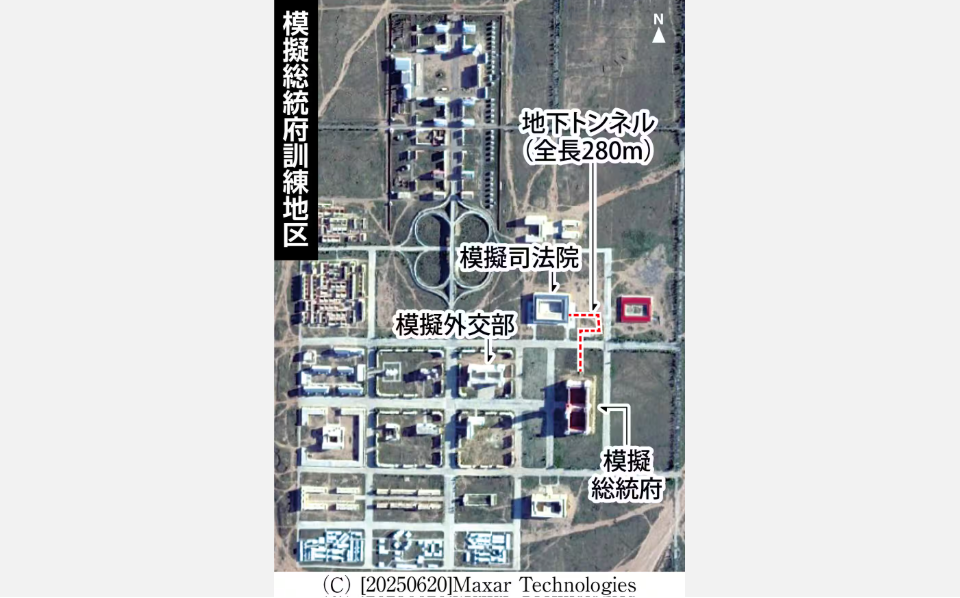
The photo shown now is the result of satellite imagery obtained and analyzed by the Japan Institute for National Fundamentals on the Chinese military's largest training ground. The location is the Zhurihe Combined Tactics Training Base in the Inner Mongolia Autonomous Region.
Looking closely, there are training mock-ups presumed to replicate key Taiwanese intelligence agencies and government institutions, including Taiwan's Presidential Office Building, the Judicial Yuan (equivalent to the Supreme Court), and the Ministry of Foreign Affairs. Expansion of these facilities is visible, and recent training scenes of Chinese forces have also been captured.
Regarding these military moves by China, a recent research report by the Stimson Center concluded that rather than a full-scale invasion, the following scenarios are more realistic:
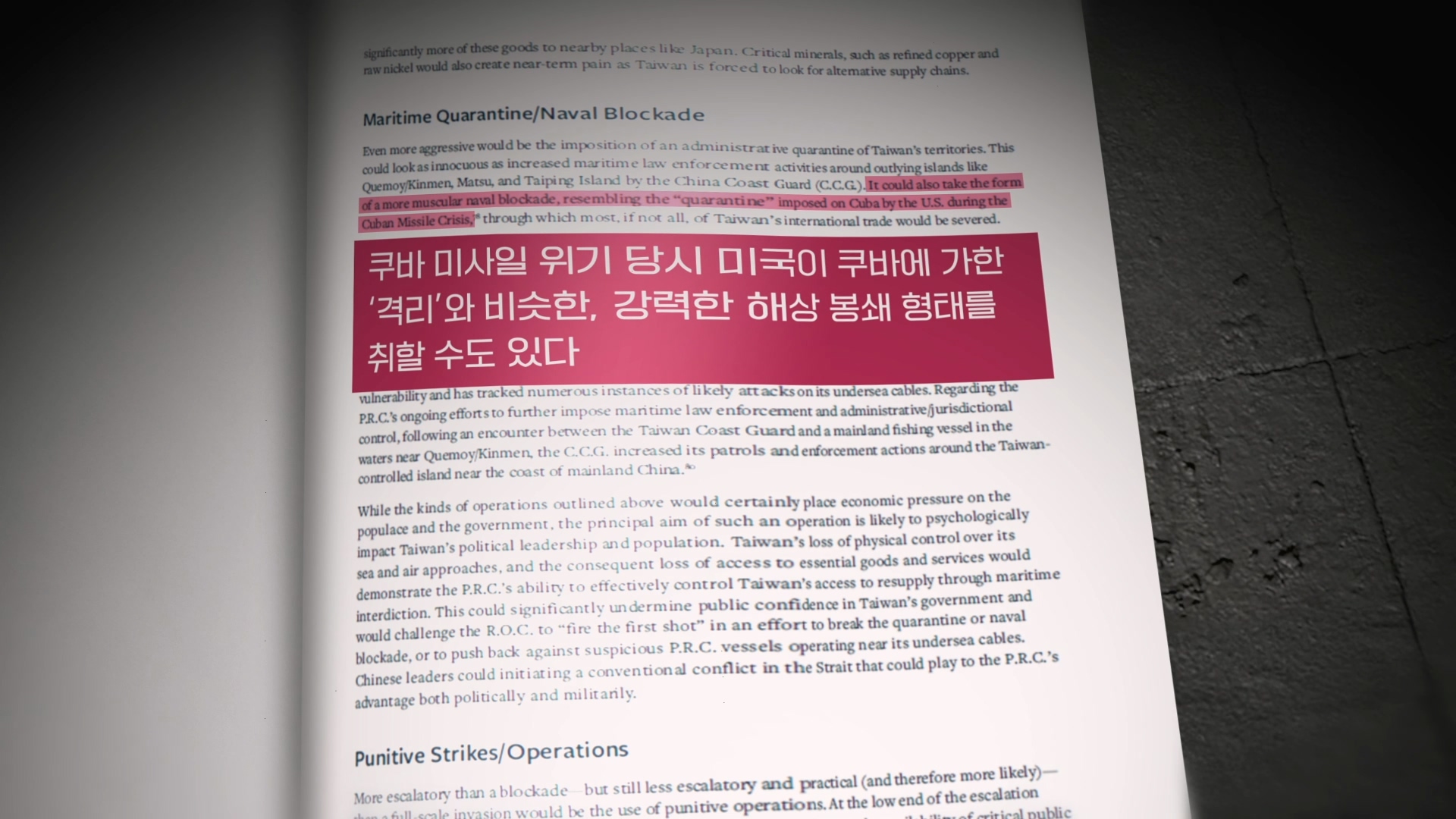
The report suggested that Beijing could impose a severe maritime blockade similar to the "quarantine" the U.S. imposed on Cuba during the Cuban Missile Crisis.
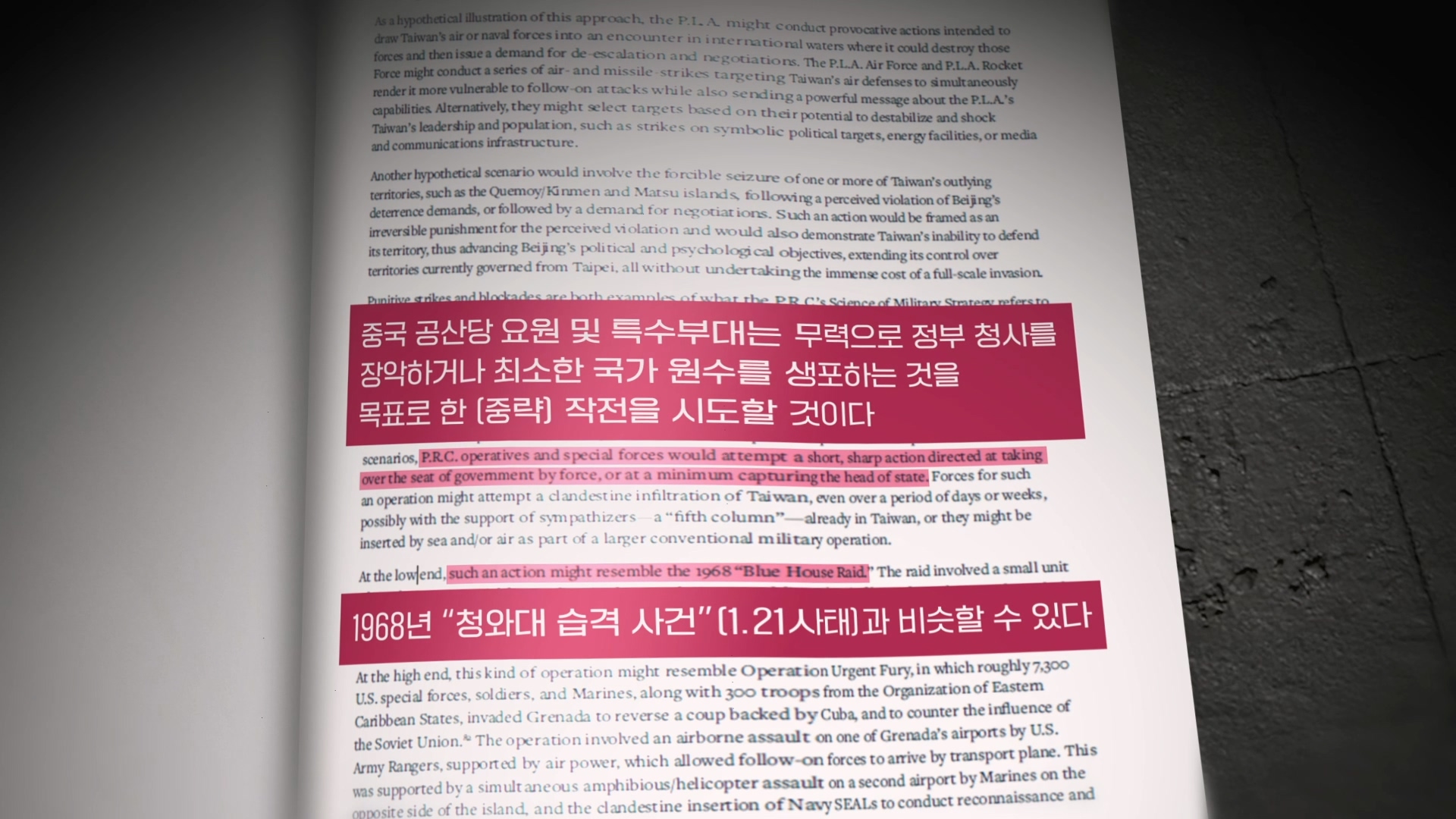
It also noted that China might attempt to seize government hubs by force or capture key figures using special operations forces, specifically mentioning that Beijing could review a format similar to North Korea's January 21, 1968 raid on the Blue House.
China's Containment ② Purging and Prosecuting 'Dissenters': Investigating Lawmakers, Putting Influencers on Wanted Lists
Next, let us look at the second prong. China is also stepping up efforts to track down and prosecute "dissenting forces" associated with Taiwan.
Chinese public security authorities announced last October that they had launched a criminal investigation targeting a legislator (equivalent to a member of parliament) belonging to Taiwan's ruling DPP, claiming the individual advocated Taiwan independence and formed related organizations.
The figure is Puma Shen, a DPP legislator and professor at National Taipei University known as an expert in information and cognitive warfare. In 2021, he established Kuma Academy, a private civil defense training organization in Taiwan, and conducted educational programs.
Instructors at this academy teach students how to identify Chinese soldiers, how to evacuate orderly in emergencies, and how to treat injuries on the battlefield.
Chinese authorities took issue with Kuma Academy, asserting that it had nurtured pro-independence forces with the support of the DPP. While China has previously issued warnings to individuals advocating Taiwan independence, this marks the first time it has formally initiated a criminal investigation.
In June of last year, China issued criminal punishment guidelines allowing up to the death penalty for "diehard Taiwan independence separatists" who attempt or incite secession. Observers evaluate that Beijing has now entered the practical implementation phase by directly applying these guidelines.
In addition, China recently placed Taiwanese influencers on wanted lists with substantial bounties for advocating Taiwan independence. Authorities published photos, real names, and even Taiwanese national identification numbers of influencers such as Wen Tzu-yu and Chen Po-yuan while issuing public arrest warrants.
China's Containment ③ Intensifying 'History War': Designating Taiwan Retrocession Day
Next is the intensifying "history war." China is also escalating what it calls the "history war." Last month, Beijing officially designated October 25 as Taiwan Retrocession Day for the first time and held commemorative events.
This date marks the day in 1945 when Taiwan, which had been under Japanese colonial rule since 1895, was returned to the government of the Republic of China following Japan's defeat in World War II. China has stepped forward to designate this day as a national memorial day to commemorate it at the state level.
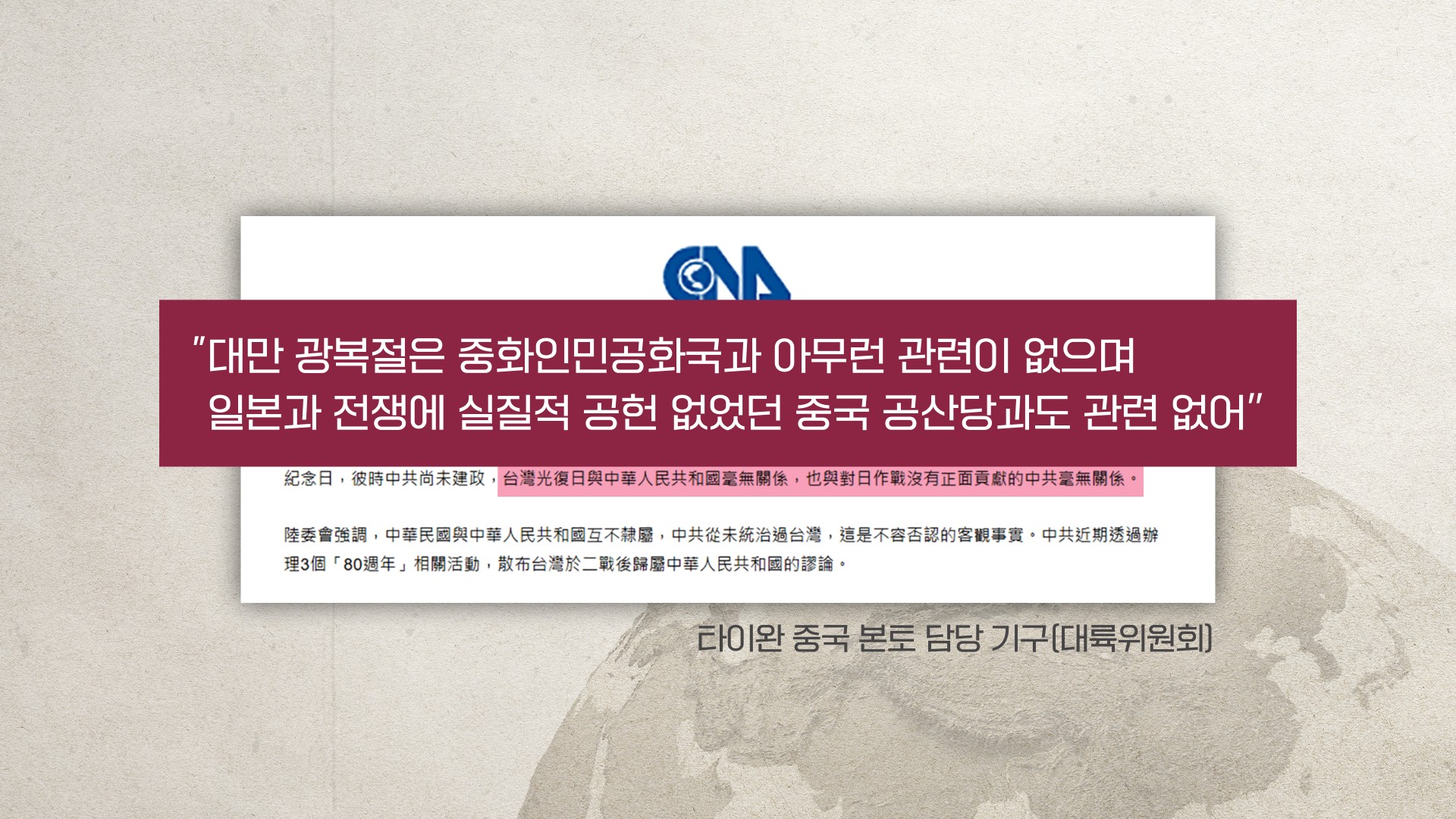
Taiwan criticized the move, stating that Taiwan's Retrocession Day has nothing to do with the People's Republic of China and is unrelated to the Chinese Communist Party, which made no substantial contribution to the war against Japan.
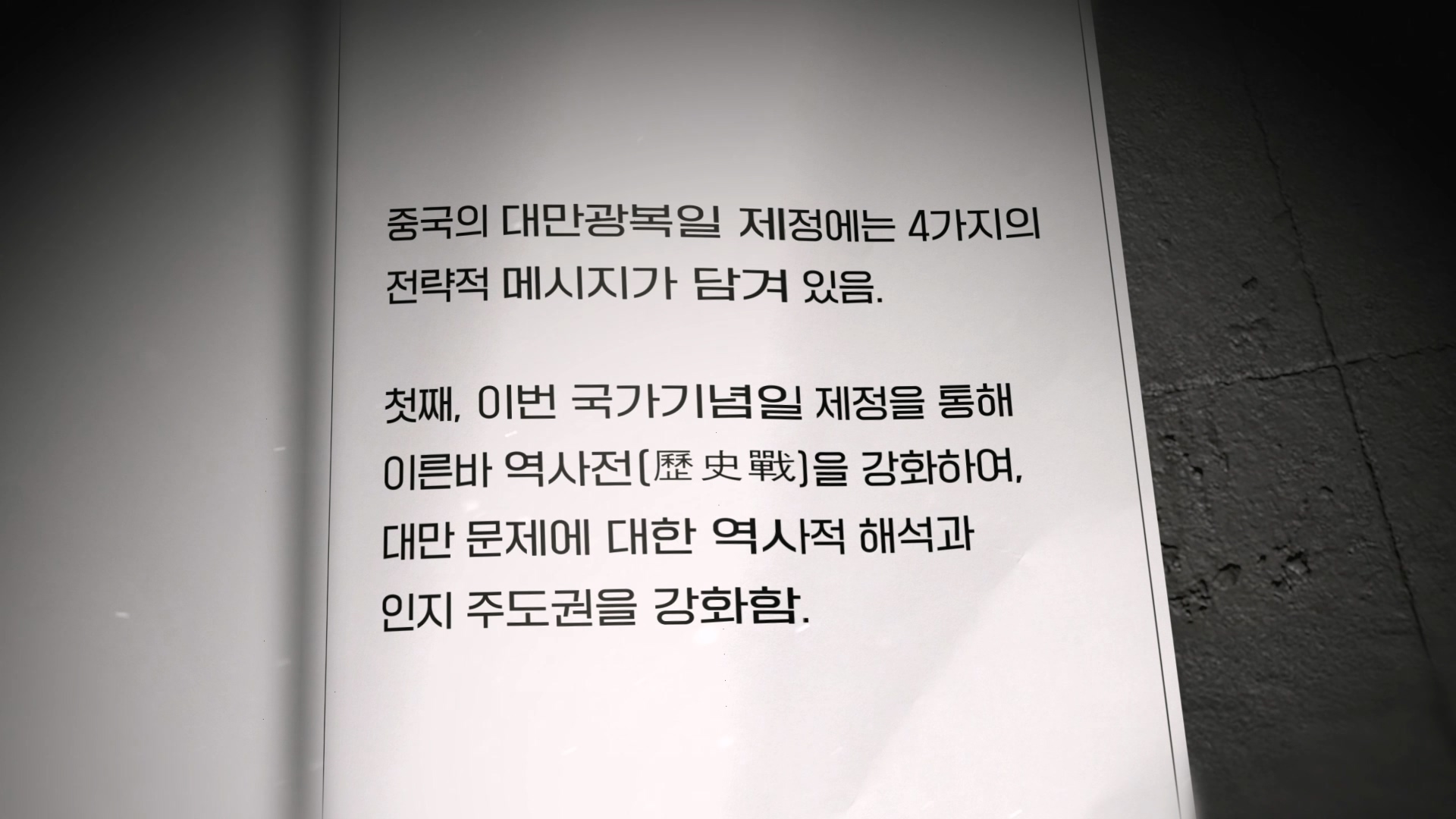
According to an analysis by the Institute for National Security Strategy, China's designation of Taiwan Retrocession Day carries a strategic message aimed at strengthening its cognitive dominance and historical interpretation over the Taiwan issue by stepping up the history war.
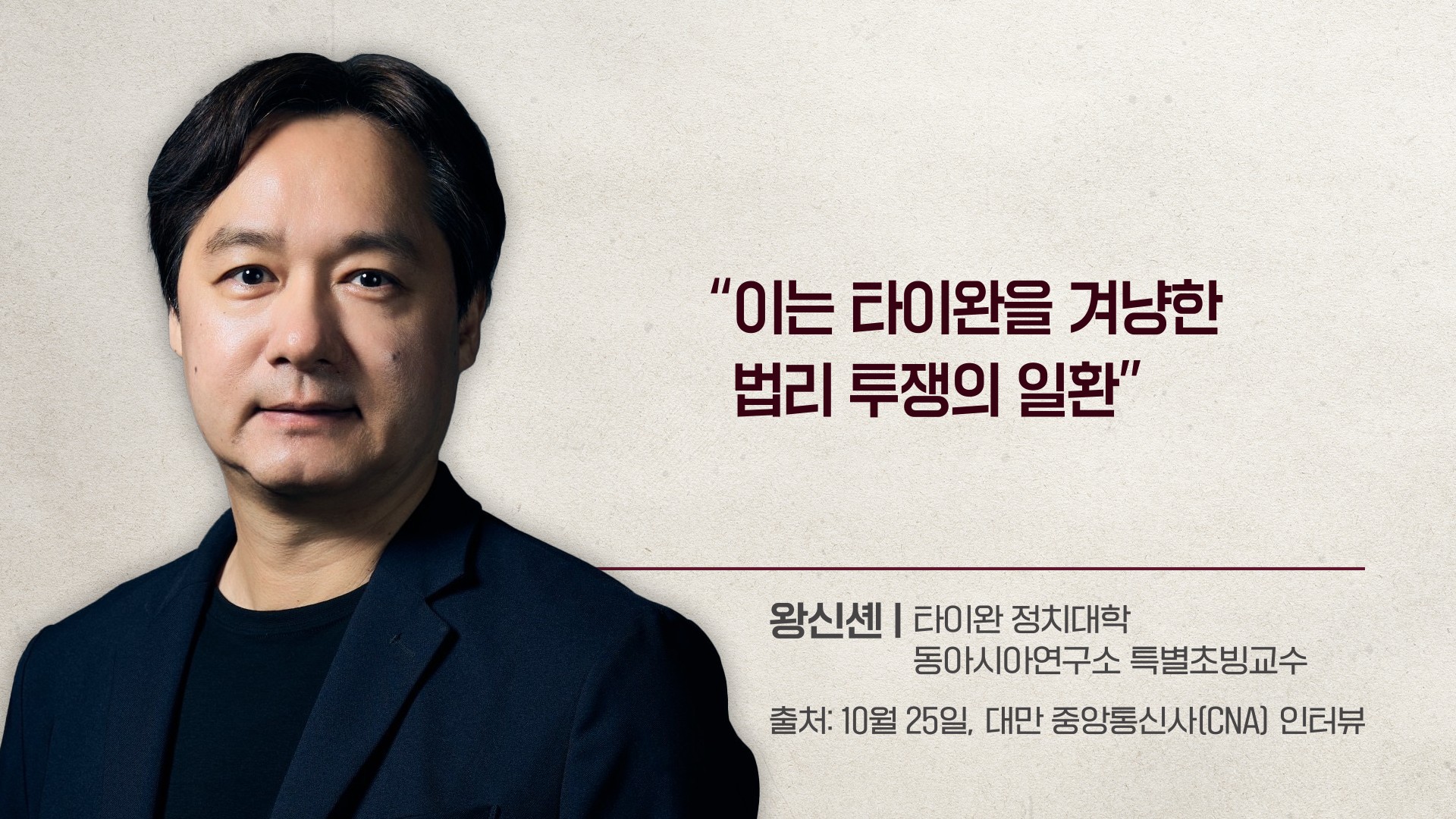
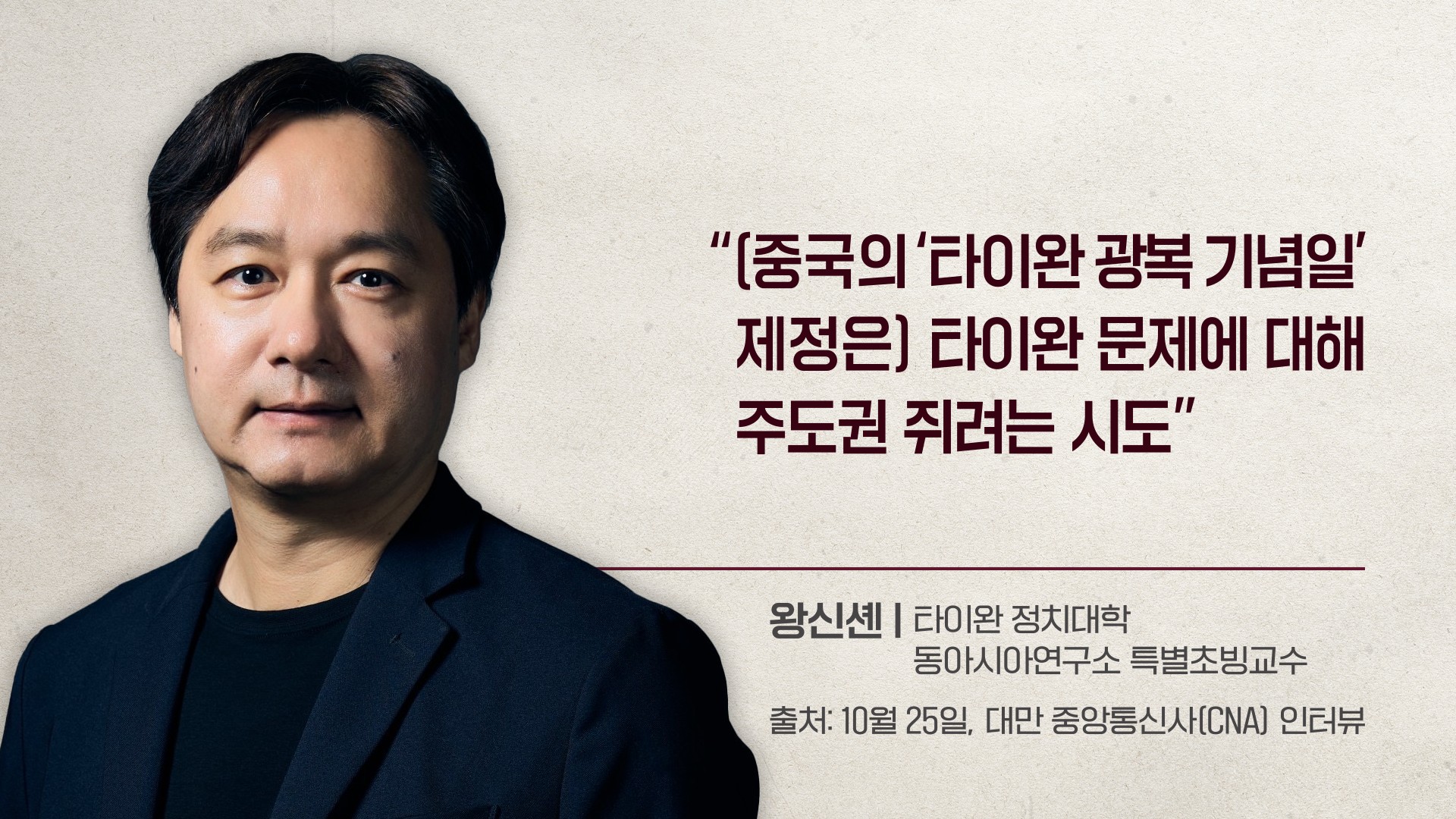
Professor Wang Hsin-hsien of the Graduate Institute of East Asian Studies at National Chengchi University in Taiwan also explained that this is part of a legal warfare campaign aimed at Taiwan to seize the initiative on the Taiwan issue.
As China's measures to pressure Taiwan grow increasingly hardline, let us hear the perspectives of experts we interviewed regarding the background.
Ji Eun-ju | Research Professor, Asiatic Research Institute, Korea University
As U.S.-China relations increasingly head toward confrontation (omitted) and sanctions intensify (omitted), hardline measures have strengthened in some respects (omitted). (omitted) Threats against Taiwan will continue through invasion threats, (omitted) cognitive warfare, and gray-zone strategies...
As U.S.-China relations increasingly head toward confrontation (omitted) and sanctions intensify (omitted), hardline measures have strengthened in some respects (omitted). (omitted) Threats against Taiwan will continue through invasion threats, (omitted) cognitive warfare, and gray-zone strategies...
Taiwan's Containment ① Military Response: Defense Budget, Weapons, Military Drills, Manuals
Next, let us look at Taiwan's situation. This year's defense budget for Taiwan was 647 billion New Taiwan dollars (approximately 29.7813 trillion won). For next year, Taiwan proposed a defense budget increase of 22.9% compared to this year.
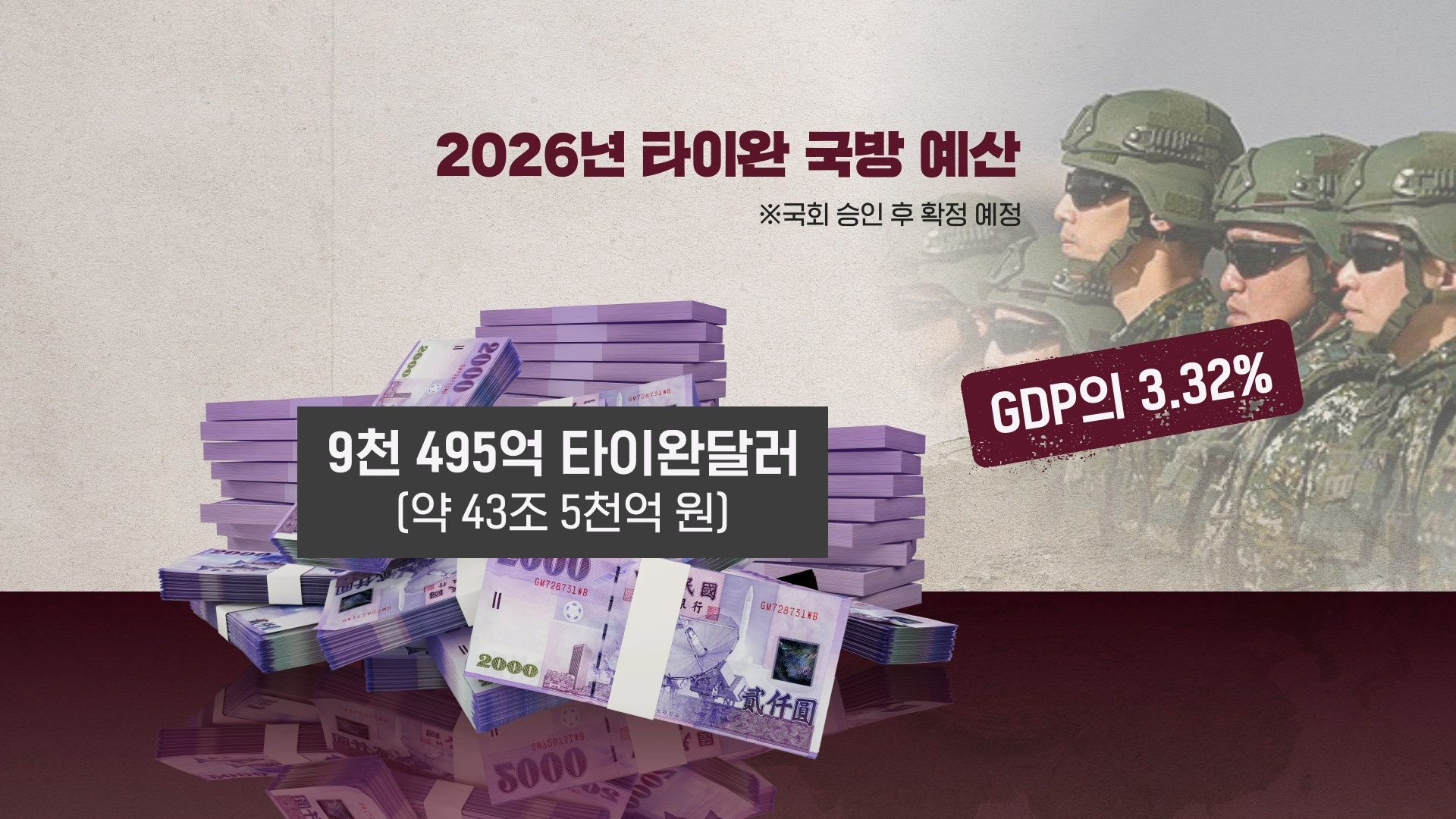
Looking at next year's central government budget proposal, although it still requires final legislative approval, a defense budget of 949.5 billion New Taiwan dollars (approximately 43.5 trillion won) has been allocated. This corresponds to 3.32% of Taiwan's gross domestic product (GDP). Analysts note that this marks the first time since 2009 that defense spending as a share of GDP has surpassed 3%.
For those wondering about South Korea's defense budget, South Korea's defense budget for next year is 66.2947 trillion won, representing 2.42% of GDP.
Taiwan's military is also actively working to replace equipment in primary combat units. President Lai Ching-te announced plans to build a comprehensive Taiwanese air defense system similar to Israel's Iron Dome, known as the Taiwanese shield or "T-Dome."
Locally, some Taiwanese military experts analyze that it would be difficult to defend against multiple rocket launcher attacks from China or surprise assaults utilizing small and medium-sized drones.
On August 13, the U.S. government approved a fighter jet parts sale agreement to Taiwan worth 330 million dollars (approximately 480 billion won). This marks the first time the U.S. government has approved a arms sale to Taiwan since President Trump returned to office.
Regarding drones, Taiwan decided to invest heavily in the drone industry by committing 44.2 billion New Taiwan dollars (approximately 2 trillion won) over six years from this year through 2030. While this investment is pursued partly for technological development, many defense experts view the industry itself as part of military readiness targeting China.
According to the "National Defense Report 2025" published last month, Taiwanese authorities established four-tier response guidelines for shooting down drones. Taiwanese authorities explained that this is intended to strengthen readiness against the increasingly frequent appearance of mainland Chinese drones flying over or near Taiwan.
Taiwan is also ramping up military exercises. In our previous episode, we discussed the Han Kuang exercise, Taiwan's annual joint military drill conducted under the assumption of a Chinese military invasion.
Previously, this exercise was conducted primarily at coastal military bases following scenarios to repel Chinese infiltration from the sea. However, this year's drill was held right before citizens' eyes, such as in downtown city centers and residential alleyways, and advanced weapons were deployed across various parts of Taiwan.
Apart from the existing Han Kuang exercise, Taiwan's Ministry of National Defense established new annual joint drills across five sectors, including electronic warfare, to be conducted every year by Taiwanese forces.
On August 17, Taiwan's Ministry of National Defense also announced measures to begin distributing civil defense manuals to every household across the country starting this week.
The booklet you are seeing now is the manual in question. As you can see, it includes survival guidelines for a Chinese invasion, alongside natural disasters and emergency situations.
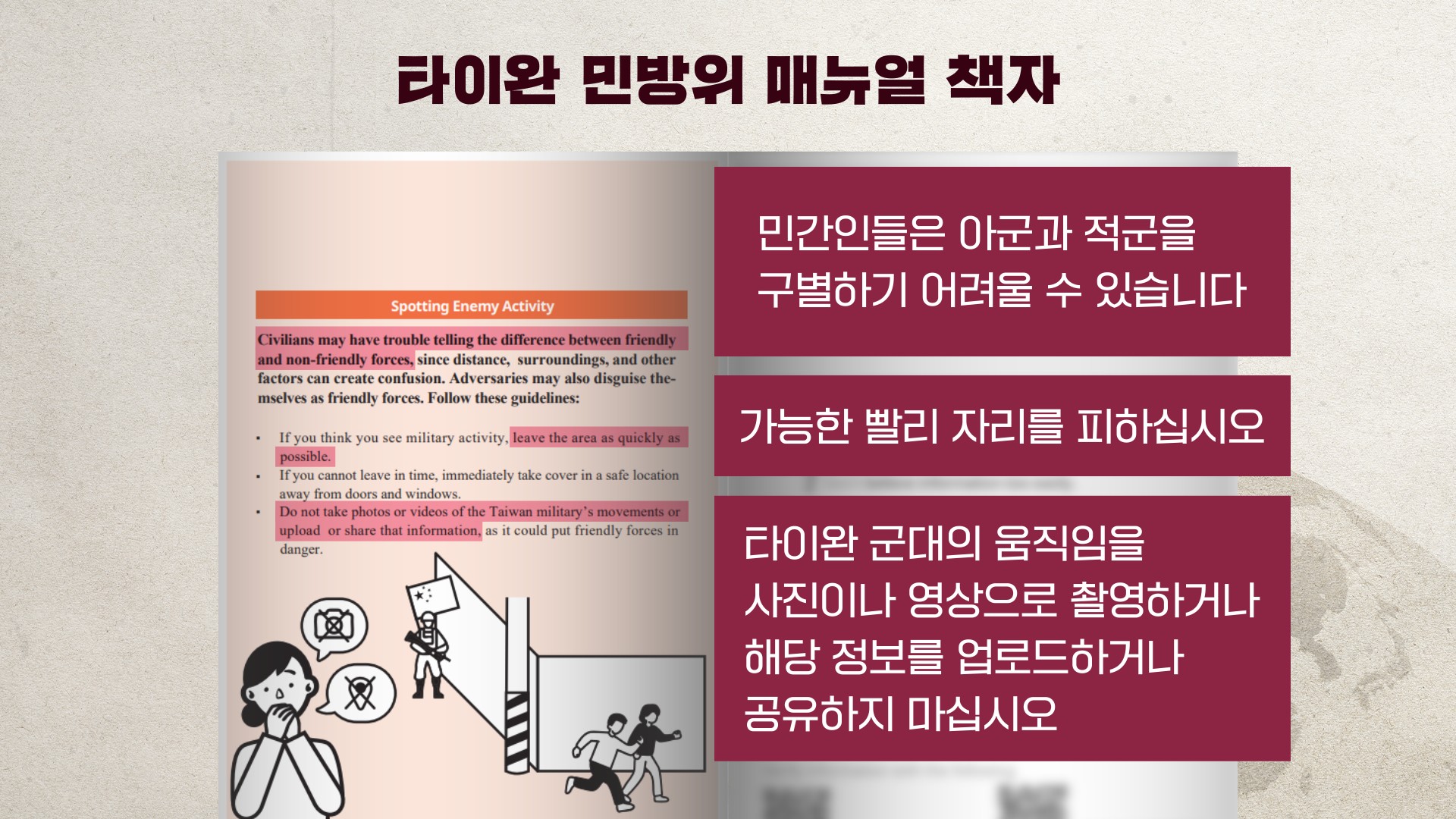
It includes instructions advising citizens that upon spotting enemy forces, they should vacate the area as quickly as possible because it is difficult for civilians to distinguish allies from foes, and warnings not to photograph, film, or share the movements of Taiwanese soldiers.
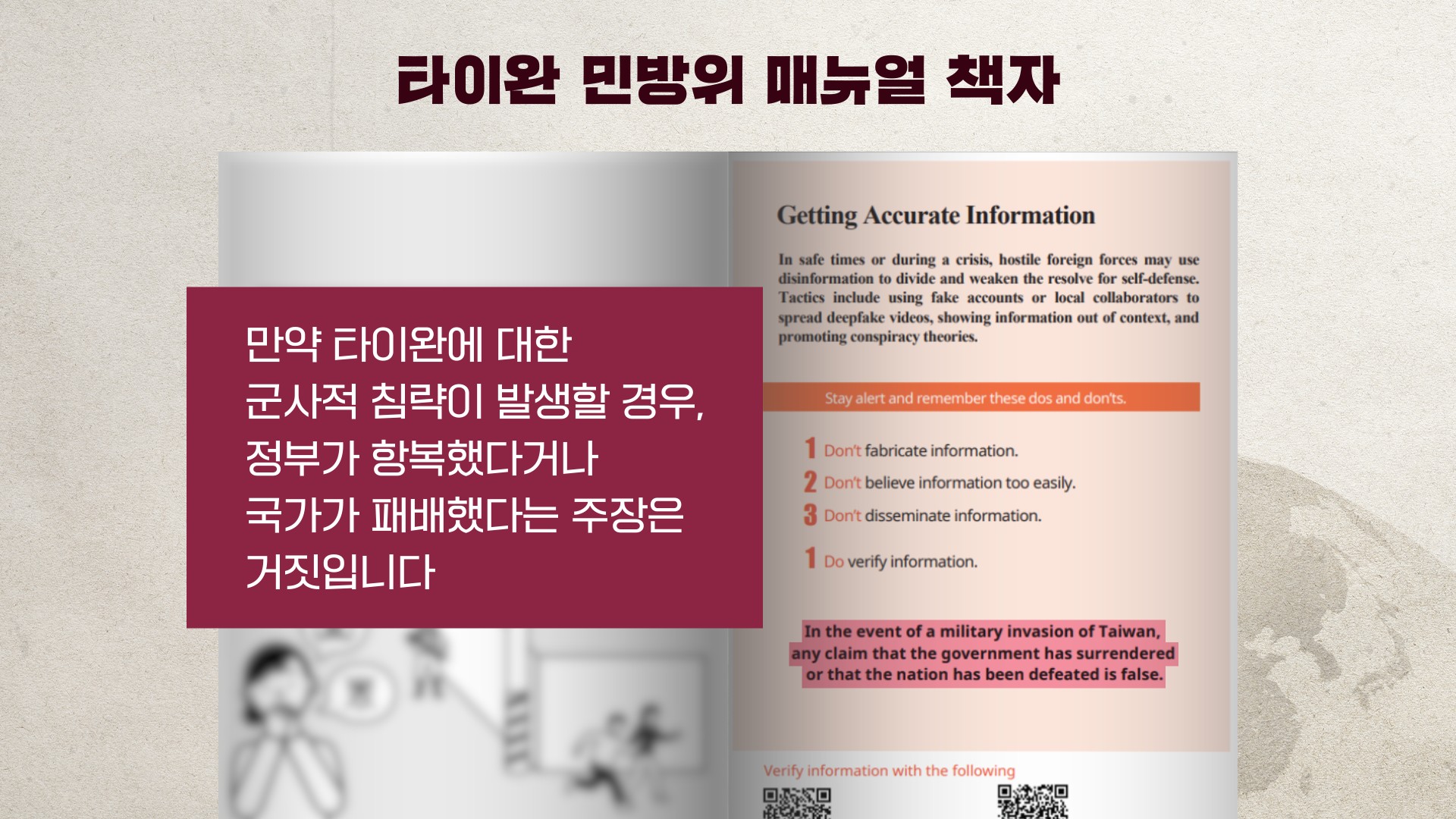
Warnings that claims of the Taiwanese government surrendering or being defeated in the event of a military invasion against Taiwan are false are also written in prominent lettering.
Taiwan's Containment ② Purging and Prosecuting 'Dissenters': Ferreting Out Spies
Second, Taiwanese authorities are also focusing on ferreting out Chinese spies.
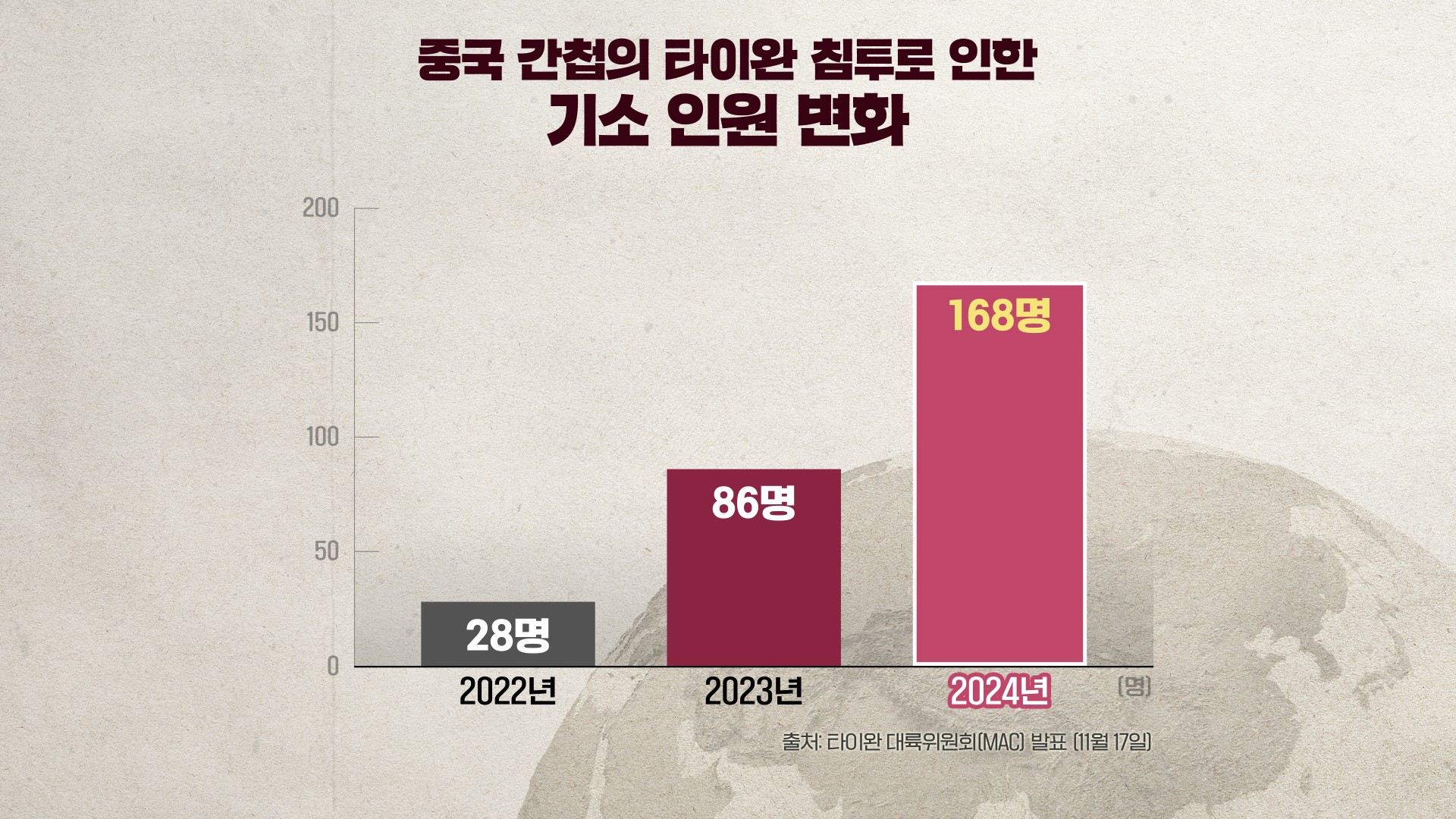
According to an announcement on August 17 by Taiwan's Mainland Affairs Council (MAC), the agency handling mainland affairs, the number of individuals indicted for Chinese espionage infiltration in Taiwan has surged as shown here, reaching 168 people in the past year alone.
The Mainland Affairs Council explained that China infiltrates Taiwan using six primary methods: leaking military secrets, organizational and societal division, leaking science and technology secrets, election interference, and gray-zone tactics.
In fact, political figures in Taiwan have recently been indicted on espionage charges.
In September of last year, a former aide to President Lai Ching-te surnamed Wu was convicted of spying for China alongside three DPP members and officials, including a former aide to a DPP New Taipei City councilor surnamed Huang. Wu was charged with leaking information regarding overseas trip itineraries during Lai's tenure as vice president.
Espionage activities involving current and former military officials also appear frequent. In January of this year, a 10-year prison sentence was demanded for a retired Taiwanese military general on charges of leaking confidential information to China.
Taiwanese prosecutors pointed out that six individuals, including a former army deputy commander, attempted to overthrow the Taiwanese government and seize power by staging a coup inside Taiwan in the event of a Chinese invasion.
In June, another retired officer was sentenced to 10 years in prison for espionage. He reportedly founded a political party (Fukang Alliance Party) aimed at recruiting mid-to-high ranking Taiwanese military personnel and secretly organized support units to assist Chinese forces in the event of an invasion.
Taiwan's Containment ③ Intensifying 'History War': Restoring Battle of Guningtou Public Holiday
Next is intensifying the "history war." As mentioned earlier, China recently officially designated October 25 as Taiwan Retrocession Day. In Taiwan, starting this year, the day was designated with a different historical significance as the "Taiwan Retrocession and Battle of Kinmen Guningtou Victory Memorial Day" to commemorate victory in the Battle of Guningtou, reinstating it as a statutory public holiday for the first time in 24 years.
The Battle of Guningtou refers to the engagement in October 1949 where Taiwanese forces fought and defeated the People's Liberation Army after they staged a surprise landing along the coast of Guningtou on Kinmen Island, an event regarded as a major turning point that prevented the communist takeover of Taiwan. By reviving this day as a holiday after 24 years and endowing it with distinct historical significance, observers evaluate that Taiwan is engaging in a war of nerves against China, which designated the date as Taiwan Retrocession Day.
Let us listen to an expert's opinion on why Taiwanese authorities have adopted a firmer stance against China.
Ji Eun-ju | Research Professor, Asiatic Research Institute, Korea University
What hardened (the DPP's party platform) further (omitted) was the Hong Kong situation. (omitted) After the Hong Kong situation, many Taiwanese people began to worry about Taiwan's future, and because this had a significant impact on the DPP's election victory, (omitted) I believe it translated into a firmer policy toward China.
What hardened (the DPP's party platform) further (omitted) was the Hong Kong situation. (omitted) After the Hong Kong situation, many Taiwanese people began to worry about Taiwan's future, and because this had a significant impact on the DPP's election victory, (omitted) I believe it translated into a firmer policy toward China.
Divergent Reactions across Taiwan's Political Spectrum to Japanese Prime Minister's Remarks
Having seen how China and Taiwan are stepping up containment measures against each other, let us examine the reactions across Taiwan's political circle.
Currently, Taiwan has a divided government where the opposition holds the majority. The Taiwanese legislature has 113 total seats, with the ruling DPP holding 51 seats, while the opposition Kuomintang (KMT) and Taiwan People's Party (TPP) hold 52 and 8 seats, respectively.
Depending on their stance toward China, opinions differ widely on how to approach cross-strait relations. For example, regarding Prime Minister Takaichi's recent remarks on a "Taiwan contingency," one can see conflicting voices emerging from the political realm.
First, the DPP's stance is similar to President Lai Ching-te's remarks mentioned earlier.
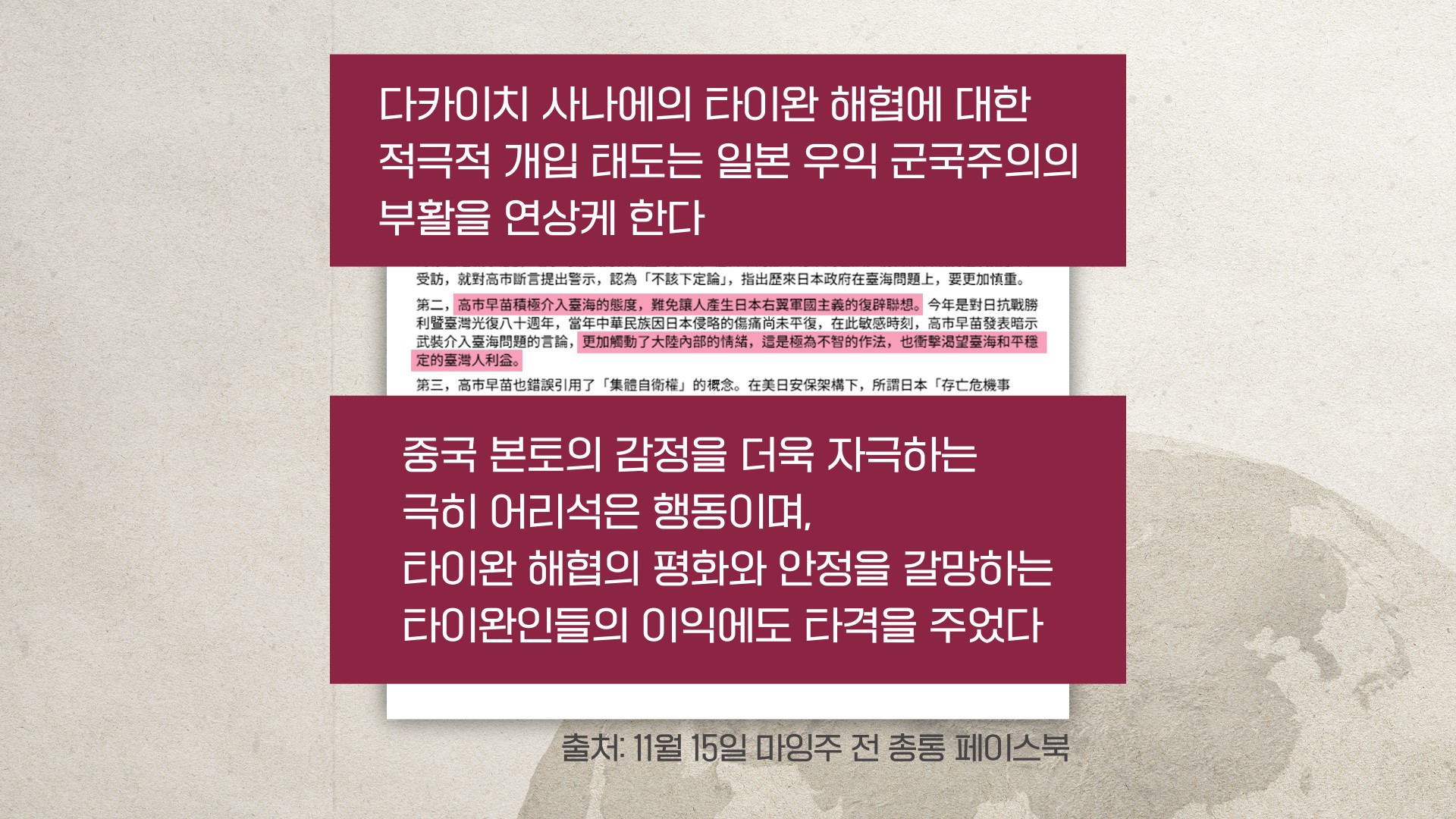
Former President Ma Ying-jeou of the main opposition KMT, who is considered pro-China, remarked that "Sanae Takaichi's attitude is reminiscent of the revival of Japanese right-wing militarism," adding that "It is an extremely foolish action that further provokes sentiments in mainland China and harms the interests of Taiwanese people who long for peace and stability across the Taiwan Strait."
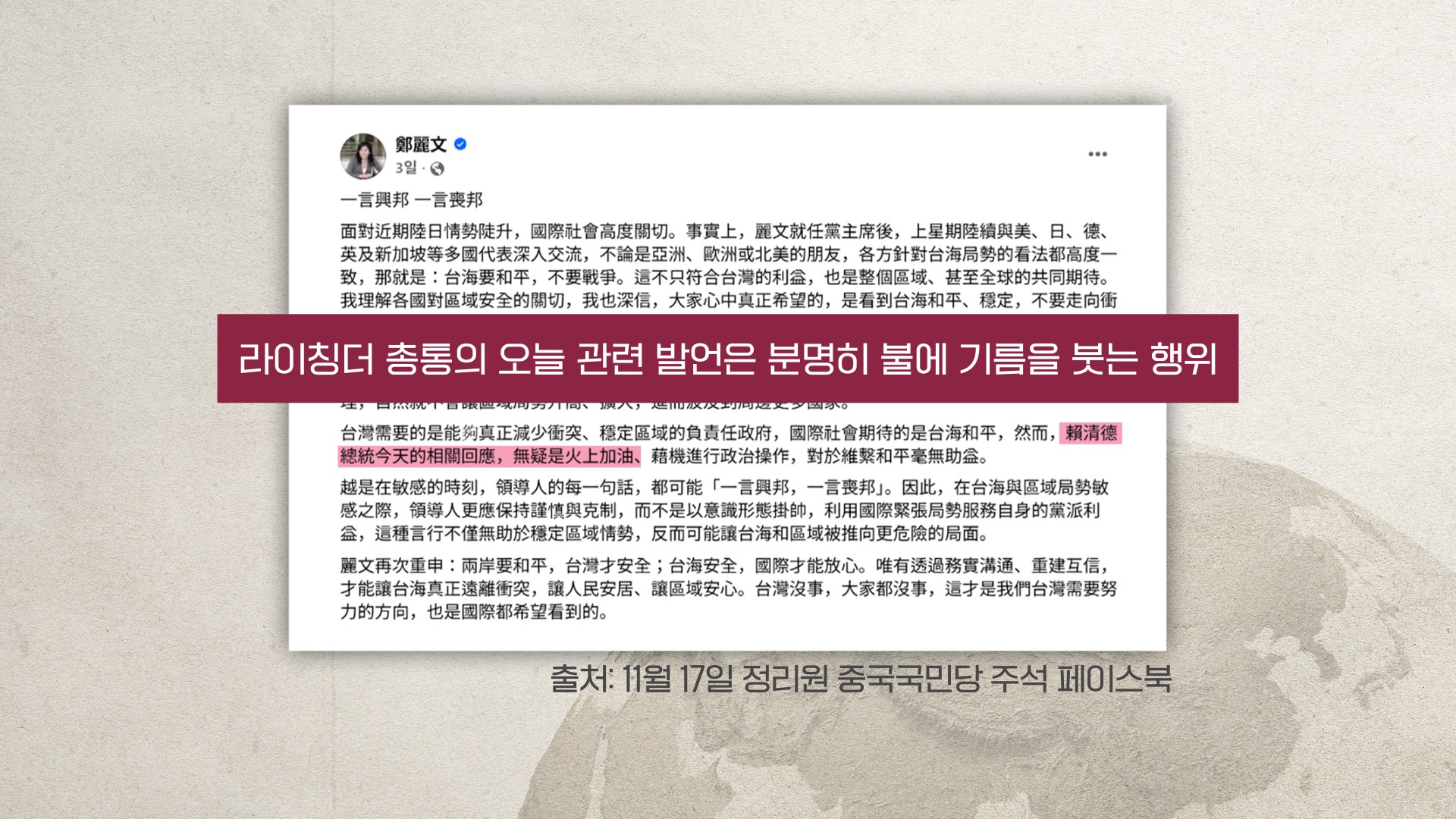
KMT Chairwoman Cheng Li-wun from the same main opposition party criticized President Lai's remarks, saying they were "clearly pouring fuel on the fire," while also arguing that Prime Minister Takaichi's remarks were inappropriate.
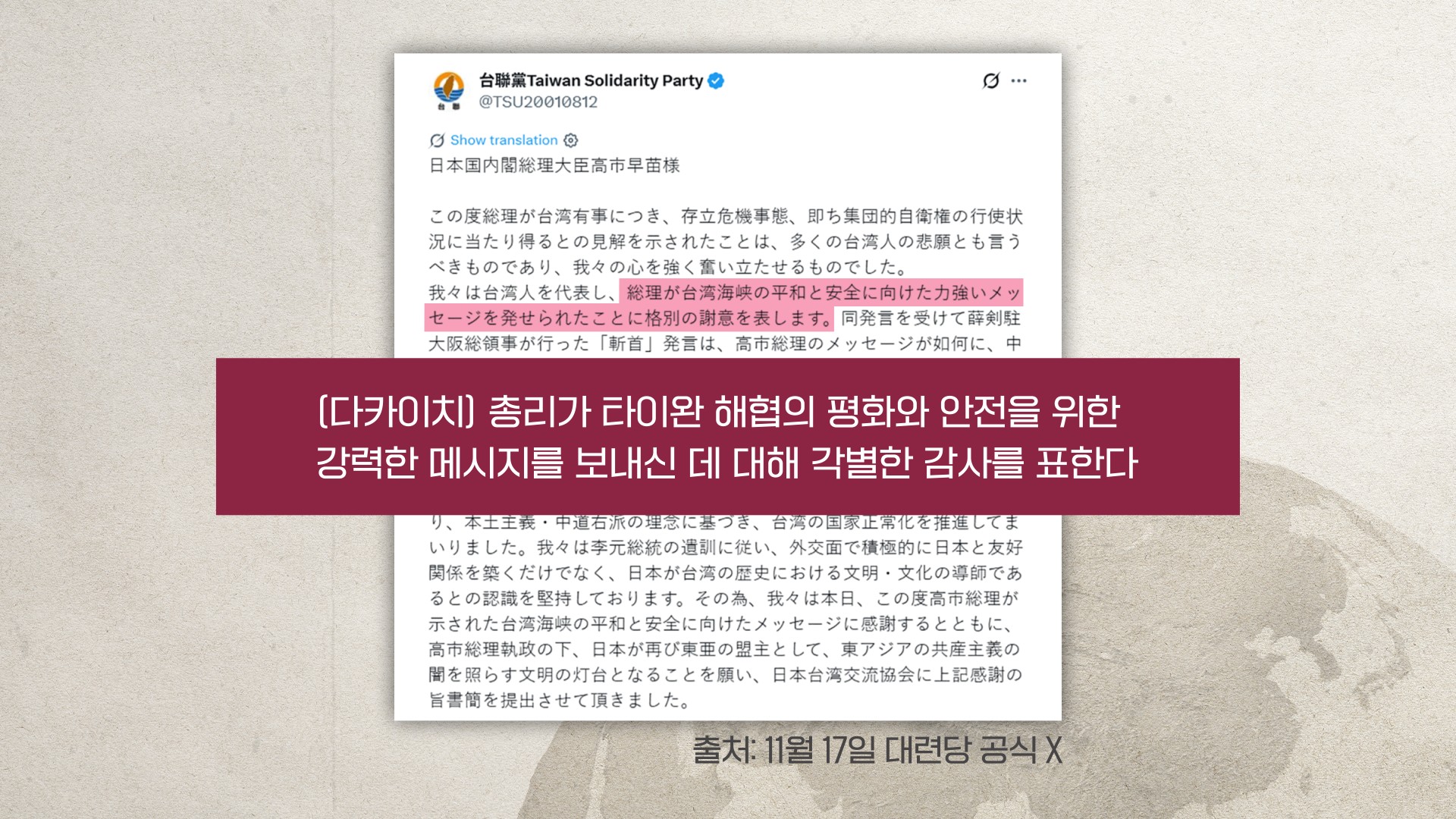
In contrast, the pro-independence Taiwan Solidarity Union (TSU) posted a letter written in Japanese to Prime Minister Takaichi on X, expressing support and stating, "We express our special gratitude to Prime Minister Takaichi for sending a strong message."

The TPP showed a relatively cautious response, stating that diverse opinions are being presented in Japan as well, and taking the position that Taiwanese authorities must navigate the issue prudently.
Independence vs. Status Quo vs. Unification?... Examining the Trends in Taiwanese Public Opinion
So what does public opinion among Taiwanese people look like?
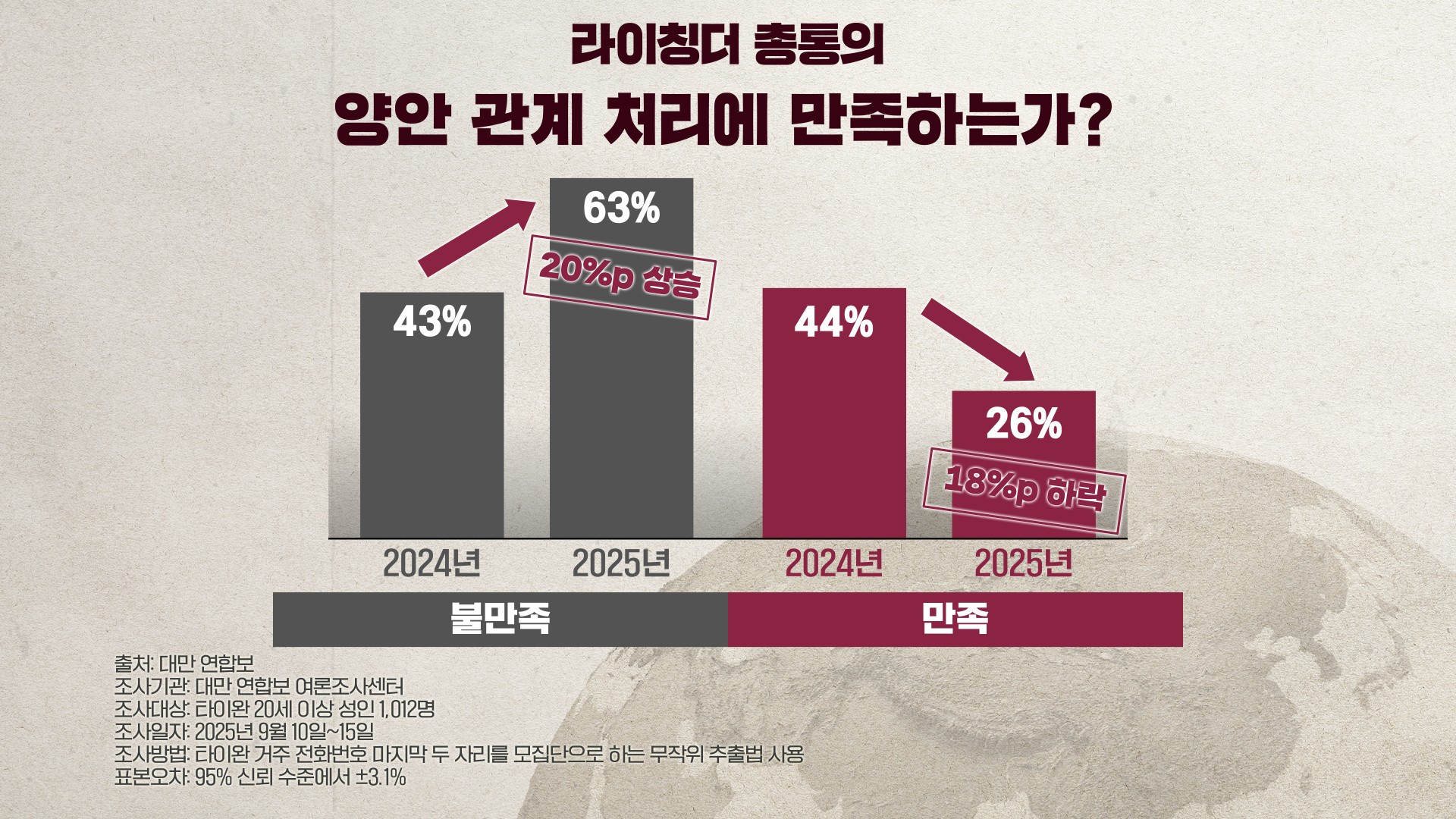
(The rest of the story is available on SBS Premium)

※ Please note: This article was translated by AI and may contain errors.
Copyright Ⓒ SBS. All rights reserved. Unauthorized reproduction, redistribution, and use for AI training are prohibited.