SBS News
Trump's Autumn Overtures: Will Kim Jong Un Move Past 'Hanoi'?
Published : Aug 24, 2026 2:17 PM

As is widely known, President Trump and Chairman Kim have met three times so far. The June 2018 meeting in Singapore and the February 2019 meeting in Hanoi were "formal summits," whereas the June 2019 meeting at Panmunjom was a surprise event-style encounter. If a summit is realized under Trump's push, it is expected to follow one of these two paths.
Looking back at precedents for a formal summit, even during Trump's first term when a top-down approach was adopted, the two leaders did not immediately enter final negotiations. Even if leaders lead negotiations, high-level and working-level contacts are inevitable because fine-tuning a minimum agenda is essential. At the time of the Singapore summit, there was a tug-of-war lasting about three months after Trump accepted the summit proposal. Mike Pompeo, then the nominee for Secretary of State, made his first visit to North Korea in late March over Easter weekend in his capacity as CIA Director, and after taking office, visited Pyongyang again to hold talks with Kim Yong-chol, Director of the United Front Department. Following a near-cancellation crisis, working-level contacts began in earnest in late May, and Kim Yong-chol met Pompeo in New York. In effect, exploratory high-level contacts lasted about two months, followed by intensive working-level negotiations for about two weeks. The Hanoi summit similarly followed Kim Jong Un's personal letter proposal in August 2018, leading to talks between Pompeo and Foreign Minister Ri Yong-ho in late September. After five months of high-level coordination, intensive working-level talks took place for about a month, starting with contacts in Stockholm, Sweden, in late January the following year.
Looking at precedents, substantive movements should be detected 3 to 5 months in advance at the high-level tier and at least 2 weeks to a month in advance at the working level for a formal summit. If the goal is a meeting on the sidelines of the APEC summit in November, just under three months remain. If behind-the-scenes communication, such as exchanges of personal letters between the two leaders, has accumulated, time may have been gained; otherwise, movements must soon surface. Even then, the vacuum in negotiation channels on both sides must be resolved. In the U.S., there is currently no designated figure to manage the process like Stephen Biegun, the Special Representative for North Korea during Trump's first term, and the State Department's organizational structure has been downsized. Secretary of State Marco Rubio also concurrently serves as the White House National Security Advisor. While some suggest a role for Allison Hooker, Under Secretary of State for Political Affairs who was involved during the first term, concerns remain that it will be difficult to completely fill the personnel gap. In North Korea, it is unclear whether Foreign Minister Choe Son-hui will step forward, and structurally, the limitation remains unchanged that full authority is not delegated regardless of how senior an official enters the arena.
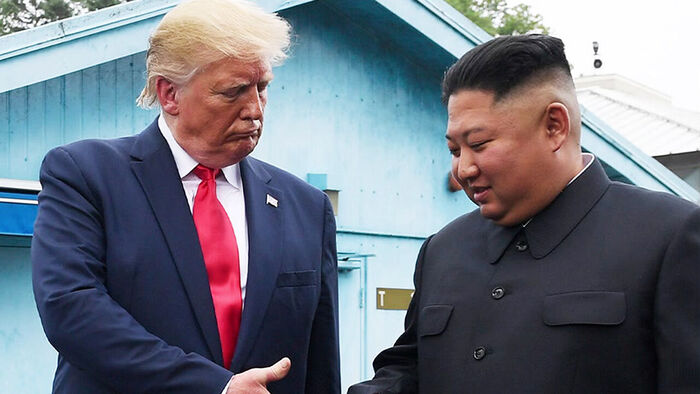
The second scenario is the "Panmunjom approach" of June 30, 2019. Just before visiting South Korea, Trump proposed a surprise DMZ meeting via social media, and after then-First Vice Foreign Minister Choe Son-hui issued a positive statement within five hours, the meeting was dramatically arranged in just over 30 hours. Although there was prior rapport built through exchanging letters marking the first anniversary of the summit, it was an unconventional event where working-level staff were overwhelmed merely preparing protocol, leaving no time to coordinate an agenda. While the two leaders agreed to form working-level teams within two to three weeks to begin negotiations, the actual talks took place four months later and ended in virtual breakdown. In the end, the Panmunjom meeting can be evaluated as having remained merely an event.
Even if Washington and Pyongyang sit down together, the situation is extremely complex if both sides genuinely intend to negotiate. North Korea rejects denuclearization itself and demands de facto nuclear power status, while leaving the scope of "withdrawing hostile policies" ambiguously defined. If it bundles demands for halting South Korea–U.S. drills along with sanctions relief or withdrawal into a single basket, finding common ground in the short term will be difficult. Concerns are also significant that the negotiating framework itself could shift from denuclearization to nuclear arms control; if it moves in that direction, coordinating what to discuss and where to begin will in itself become a massive hurdle to overcome. In short, for a summit with even a minimal agenda to occur, contacts must materialize soon; otherwise, the remaining option appears to be an event-style meeting. If the purpose is merely to reaffirm personal rapport and sustain dialogue momentum, time remains relatively sufficient. In that case, substantive U.S.–North Korea negotiations would truly begin only after the meeting takes place.
However, one key point to examine is that in either scenario, the ultimate deciding factor for realizing a meeting is Chairman Kim Jong Un's decision. The general assessment is that North Korea's external incentives to engage in dialogue are not what they used to be. Through closer ties with China and Russia, Pyongyang has largely escaped diplomatic isolation, and the effectiveness of sanctions against North Korea has weakened. This means North Korea feels less urgency to come to the negotiating table compared to 2018–2019. Whereas North Korea previously focused heavily on bilateral relations with the U.S., it has now expanded its horizon across the globe.
In addition, internal psychological factors in North Korea—namely the "trauma of the Hanoi no-deal"—are cited as an obstacle North Korea itself must overcome. The breakdown of the Hanoi summit dealt a significant blow to the supreme leader's leadership after traveling more than 60 hours by train. North Korea had to spend several years dealing with the fallout. Paradoxically, the realization of an event-style meeting four months after the February 2019 Hanoi collapse can be seen as an opportunity needed to restore the damaged prestige of the supreme leader. North Korea subsequently chose a phased retreat even after the Panmunjom encounter. It presented a "year-end deadline" to Trump but ultimately did not receive the desired answer, eventually declaring a "head-on breakthrough" campaign in 2020 and shifting its external course virtually toward isolation and self-reliance. To rein in domestic residents who had become receptive to the outside world during the dialogue phase, it tightened domestic control by enacting three consecutive laws, including the Law on Rejecting Reactionary Ideology and Culture (along with the Youth Education Guarantee Act and the Pyongyang Cultural Language Protection Act). It incurred considerable social costs in doing so. Coincidentally, as COVID-19 overlapped with this period leading to ultra-strict border closures, it is analyzed that this provided the North Korean regime with a natural opportunity to seek an exit strategy.
That the memory of Hanoi continues to linger can also be inferred from North Korea's reaction to Trump's overtures in October last year. Although Trump expressed his desire to meet on the occasion of a visit to South Korea, North Korea refrained from an official response and instead dispatched its top diplomat, Foreign Minister Choe Son-hui, on trips to Russia and Belarus. In fact, setting aside domestic considerations and weighing only external calculations, North Korea appeared to have nothing to lose. The very realization of another leader-to-leader meeting would offer the symbolic benefit of tacit recognition as a "de facto nuclear state" from the U.S. President. At the time, President Trump went so far as to call North Korea "a sort of nuclear power," yet North Korea ultimately did not respond. This is interpreted as North Korea feeling burdened by reigniting memories of the "Hanoi no-deal" among its populace through another dramatic summit event, choosing an "indirect rejection" due to lingering psychological resistance regarding Hanoi.
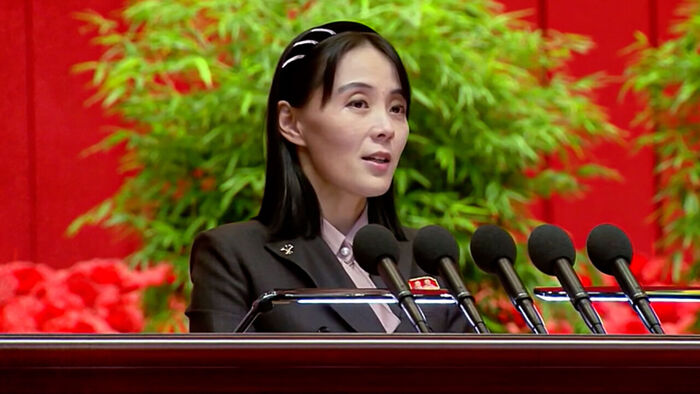
In contrast to the lack of an official response last year, a notable difference is that Kim Yo-jong, Director of the General Affairs Department of the Workers' Party of Korea, came forward two days in a row following Trump's recent remarks. In her statement on August 19, Kim indirectly pushed back against rumors of communication between the leaders while leaving room regarding the personal friendship between Kim Jong Un and Trump. On August 20, she sharpened her tone toward the South Korean government, employing a strategy of engaging Washington while bypassing Seoul. Whether this reflects an intention to head straight for a summit or an effort to temporarily manage Trump's overtures remains unclear. Just before the 2019 Panmunjom meeting took place, Foreign Minister Choe Son-hui remarked that they had not received an official proposal from Trump, effectively signaling for him to propose again. Kim Yo-jong's statements have not explicitly reached that level.
Even if a meeting is arranged despite various variables, North Korea's calculations will likely diverge depending on the format of the encounter. If it proceeds as a formal summit, it must be premised on definite reciprocal concessions from the U.S. ensuring that Pyongyang does not "return empty-handed." Conversely, if it proceeds as an event-style gathering, given the lessons learned from Hanoi, North Korea will likely manage domestic propaganda levels to cushion against any potential shock. The space for South Korea's role going forward may also vary depending on the scenario. If it is a formal negotiation with a structured agenda, there would at least be minimal room to maneuver during working-level coordination stages; however, if the leaders head directly into a sudden event-style meeting—especially one excluding the DMZ as a location—there is a high probability that South Korea will have little room to participate. Put objectively, many steps remain to be navigated regarding the format of the talks and North Korea's response level. While not ruling out the possibility of a U.S.–North Korea summit or encounter, it appears necessary to monitor developments calmly and refine our response strategies for each scenario.
※ Please note: This article was translated by AI and may contain errors.
Copyright Ⓒ SBS. All rights reserved. Unauthorized reproduction, redistribution, and use for AI training are prohibited.