SBS News
Kim Yoon-duk and Oh Se-hoon to Meet Again This Week to Discuss Yongsan Park Housing Supply
Published : Aug 23, 2026 9:19 AM

▲ Minister of Land, Infrastructure and Transport Kim Yoon-duk and Seoul Mayor Oh Se-hoon
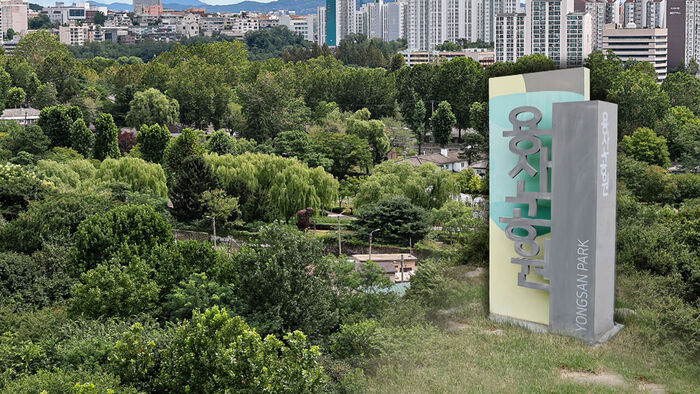
Minister of Land, Infrastructure and Transport Kim Yoon-duk and Seoul Mayor Oh Se-hoon will meet again this week to continue discussions on housing supply utilizing Yongsan Park.
With clear differences remaining between the two sides regarding the plan to build housing on the main Yongsan Park site, attention is focused on whether they will approach a compromise by prioritizing the development of scattered sites around the park proposed by the Seoul Metropolitan Government.
According to the government and other sources today (August 23), Minister Kim and Mayor Oh are scheduled to hold another meeting during the week, following their talks last week, to discuss housing supply issues within Seoul, including Yongsan Park.
During their previous meeting on August 20, the two sides only confirmed their clear differences in stance regarding the core contentious issue of supplying housing on the main Yongsan Park site.
In a post-meeting press briefing that day, Minister Kim stated, "The issues are the deliberation and discussion process for supplying a portion of Yongsan Park as housing for young adults, newlywed couples, and multi-child households, as well as the attitude and thoughts on changing the law," adding, "Our views on this were clearly different. Mayor Oh is opposed in principle, while I am in favor."
The government has been focusing on countering Seoul's "green preservation" frame by emphasizing its direction to build rental housing for young adults and newlyweds in a limited manner only on certain sites where park and green functions have been degraded, rather than the entire Yongsan Park.
In response, Mayor Oh stated in a social media post on August 21 that the area in question is not a degraded site but a "planned park site," refuting that the government is misrepresenting the facts.
Mayor Oh also maintained his opposition during a meeting the previous day with Representative Kim Young-bae, head of the Democratic Party of Korea's Seoul Metropolitan City Party, stating, "I cannot yield even 1 cm of Yongsan Park," according to Representative Kim.
Attention is drawn to the possibility of developing discussions toward narrowing the differences over the main site by first materializing the plan to utilize scattered sites around the park, which the Seoul Metropolitan Government has put forward as a compromise.
The proposal suggested by Seoul and the opposition party is to utilize other sites around the park for housing supply, including Camp Kim, where housing supply is already being pursued, the Itaewon Armed Forces Financial Management Corps, the Ministry of Foreign Affairs parking lot, and the Bank of Korea dormitory in Huam-dong.
However, even if these sites are combined, their total area falls far short of the Children's Garden (approximately 300,000 square meters), which is currently being discussed as a candidate site within the main grounds, making it unlikely to secure the level of supply envisioned by the government.
Industry observers estimate that if housing were to be built on the Children's Garden site, arithmetically raising the floor area ratio to 500% could supply 10,000 households with exclusive private areas of 59 to 84 square meters, or up to 20,000 households through small-scale high-density development.
 An industry insider said, "When discussing Yongsan housing supply now, volumes are being mentioned in the scale of 10,000 households, but securing that number of units from the currently mentioned scattered sites would make it difficult to produce high-quality housing."
The industry believes that if rental housing is supplied around Yongsan Park, the quality should at least reach the level of the "universal public rental housing" announced by the government in the August 13 measures, rather than merely supporting low-income housing.
Universal public rental housing is a newly established type designed to allow households of various income levels to reside long-term in high-quality, affordable housing with excellent locations such as the 3rd-generation new towns' station areas or downtown Seoul.
Industry analysis indicates that if rental housing for young adults and newlyweds is supplied in high-preference downtown locations like Yongsan, it must at least meet this level—featuring structures preferred by younger demographics such as 3-Bay designs and upgraded finishing materials—to match expectations.
There is also a possibility of materializing ways to gather public opinion on Yongsan Park housing supply and reflect it in the final decision.
The ruling party is also considering pushing for a public opinion poll at the party level.
Minister Kim Yoon-duk also previously stated on August 20, "I actively agree with the grand principle that Yongsan Park must be preserved," adding, "Public deliberation methods could include holding debates or forming a public deliberation committee, and we will proceed through a deliberation process where target sites will naturally come to the table during that process."
Another point of interest is whether the increase in floor area ratios for private reconstruction and redevelopment, which the Seoul city government has continuously requested from the government, will be utilized as leverage in this discussion process.
The government pushed for higher floor area ratio incentives for public redevelopment projects as a follow-up legislative task to the September 7 supply measures announced last year, but did not include floor area ratios for private redevelopment projects in the targets.
※ Please note: This article was translated by AI and may contain errors.
Copyright Ⓒ SBS. All rights reserved. Unauthorized reproduction, redistribution, and use for AI training are prohibited.