SBS News
Behind U.S. Treasury Yield Volatility Lies Trump's Leadership Crisis

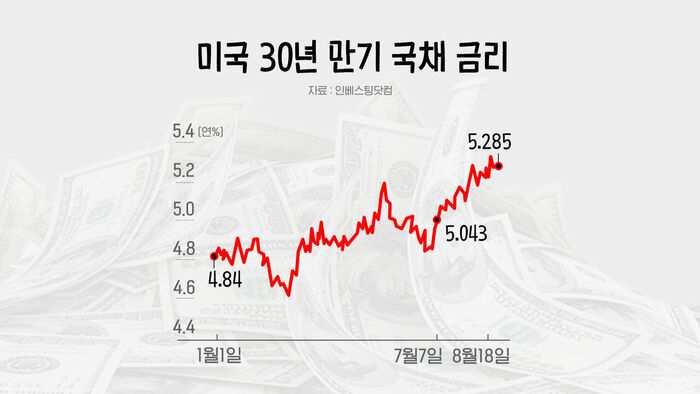
Amid this, total U.S. national debt finally exceeded $40 trillion based on figures released on August 19 (local time). Reaching a total of $40.047 trillion, it amounts to approximately 55.645 quadrillion won. To cover this, more government bonds must be issued, and to induce investors to purchase these bonds, higher yields must be offered. If yields rise further, the U.S. government's interest burden will also increase. However, the Federal Reserve under Chair Kevin Warsh is not signaling monetary easing such as rate cuts. It seems natural for questions to arise in the market regarding the value of U.S. Treasuries. U.S. political circumstances are weighing heavily on market order. As a result, the next 75 days leading up to the U.S. midterm elections are expected to be a long tunnel of uncertainty for the global economy.
Bessent's High-Stakes Gamble: Will the Market Find Relief?
The effective period of this measure lasts until the U.S. Treasury announces its next debt issuance plan on the day immediately following the midterm elections on November 4. Furthermore, analysts point out that with the buyback volume at around $128 billion—only about 2.4% of the total outstanding balance of 10-year to 30-year Treasuries—long-term effects are unlikely. They argue that stopgap measures are being introduced while fundamental factors driving up interest rates remain intact.
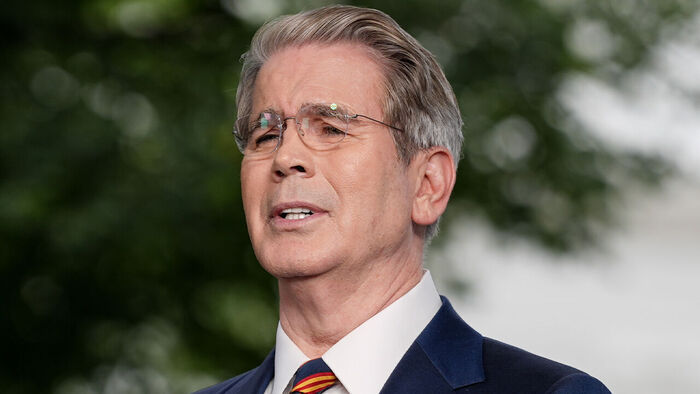
Instead, what the market is focusing on is Secretary Bessent's recent series of unexpected moves. One was his extraordinary intervention in the weakening Japanese yen on July 31. While framed as "support for an ally," the actual objective was to prevent the Japanese government from selling U.S. Treasuries to supply dollars into foreign exchange markets if the yen's weakness deepened. Another consists of attempts to shake the independence of the U.S. central bank. On August 3, Bessent publicly demanded via social media that the Fed revise its Foreign and International Monetary Authorities (FIMA) Repo Facility. The FIMA facility is a system through which the Fed lends U.S. dollars collateralized by U.S. Treasuries held by other central banks, and Bessent demanded that this limit be significantly expanded. He also publicly pressured the Fed to cut the benchmark interest rate, echoing President Trump's demands. In the market, concerns are emerging that Bessent, with his background as a hedge fund manager, is focusing on political calculations rather than his role as U.S. Treasury Secretary. There is mounting anxiety that unreasonable measures are being taken to suppress rising Treasury yields, risking unintended blowback. Observations that the Trump administration's situation has grown increasingly desperate are fueling this unease.
A Sudden U.S.-North Korea Dialogue? "The Bottom Has Been Exposed"
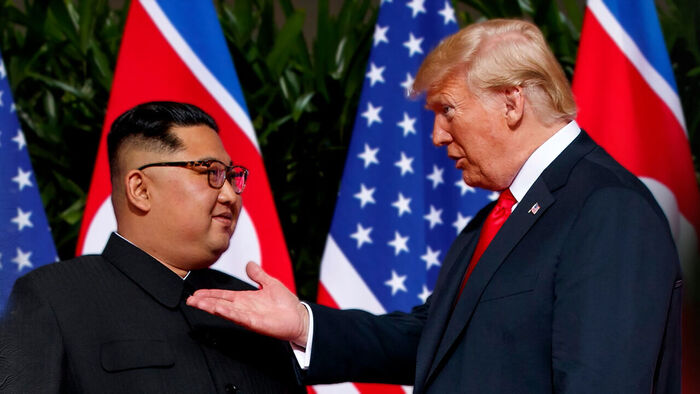
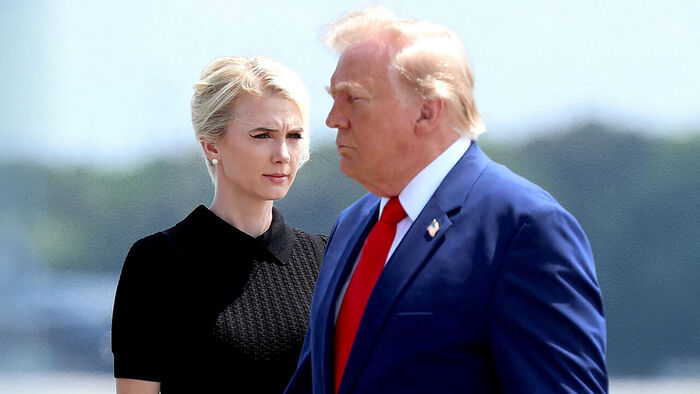
Rising living-related fuel prices in the U.S. are stoking a sense of crisis within the Trump administration ahead of the midterm elections. Local gas station prices, typically in the $2 to $3 per gallon range, are settling around the $4 mark, and diesel has exceeded $5, nearing an all-time high. As autumn turns toward winter, further increases driven by heating oil procurement are inevitable. Under these conditions, President Trump's declaration to pursue dialogue between the U.S. and North Korea has bewildered markets. In a situation where chaos in the Strait of Hormuz is practically left unaddressed, launching an economic isolation strategy against Iran via sanctions foreshadows prolonged turmoil in global oil prices. Ultimately, Trump's move to meet with Chairman Kim Jong Un can be seen as having three strategic purposes: ① achieving a superficial diplomatic breakthrough in Asia ahead of the midterm elections, ② diverting attention from the war against Iran that is effectively concluding in failure, and ③ sustaining deterrence in the Asia-Pacific region—weakened by the war of attrition in the Middle East—by easing tensions through U.S.-North Korea dialogue. However, regardless of the rationale, it is difficult to avoid criticism that this is irrational. The view is that as domestic governance heads down a path of failure marked by rising inflation and deteriorating fiscal health, it amounts to little more than an improvised political stunt. U.S. political commentators and media outlets have begun voicing concerns that "Trump's leadership has now hit rock bottom."
The Essence Is a 'Leadership Crisis': Markets Prepare for Uncertainty
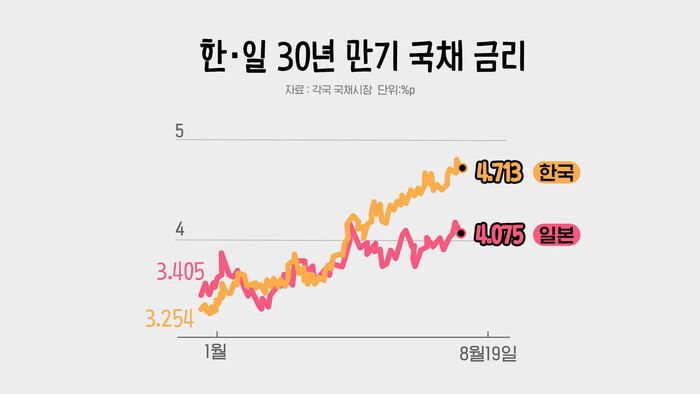 Coupled with Trump's leadership crisis, the outlook remains shrouded in fog. First and foremost, an end to the U.S.-Iran war and the normalization of the Strait of Hormuz are desperately needed. International oil prices must stabilize around $70 per barrel to slow global inflation. As the Trump administration, desperate for justification ahead of the midterm elections, leaves the Middle East with makeshift solutions and focuses on other events, uncertainty will only increase. Furthermore, the unusual measures being taken to prevent Treasury yields from rising are weighing on the market by revealing a reality devoid of proper solutions.
When Treasury yields rise, investors seeking interest returns feel an increased urge to sell equities and buy bonds. With the S&P 500 and Dow Jones Industrial Average repeatedly hitting new highs, peak sentiment may also come into play. Big Tech companies in urgent need of AI infrastructure investment could face tighter cash constraints as borrowing costs climb. Attention is focused on the atmosphere of the upcoming Jackson Hole meeting next week on the 20th and 21st, where the direction of global monetary policy will be discussed, as well as the message from Chair Kevin Warsh. With two and a half months remaining until the U.S. midterm elections, public opinion polls in the U.S. show the opposition Democratic Party in the lead. Market projections are also emerging that if Congress establishes a state of checks and balances, it could serve as a catalyst for stabilizing long-term interest rates.
※ Please note: This article was translated by AI and may contain errors.
Copyright Ⓒ SBS. All rights reserved. Unauthorized reproduction, redistribution, and use for AI training are prohibited.