SBS News
Selling Surplus Electricity for Profit: Will It Soon Be Possible in South Korea?
Published : Aug 20, 2026 3:09 PM
Earning $1,200 by Selling Electricity: What Is the Secret?
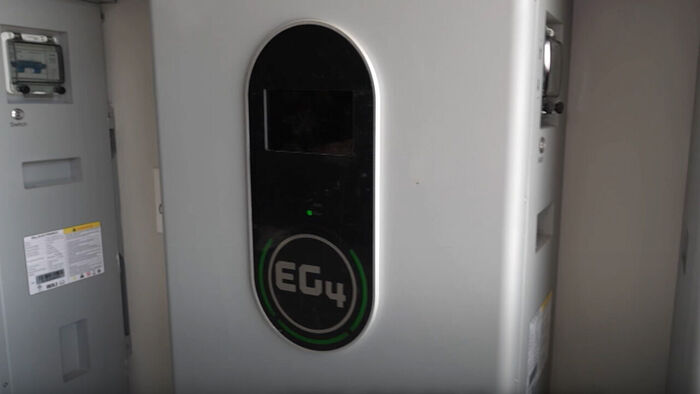
Doesn't this seem strange? South Korea is a global battery powerhouse. Yet why don't our homes have systems like this? To find the answer, I visited Texas. This is homeowner Craig Kincaid. A year and a half ago, he installed 50 solar panels on his roof and four battery Energy Storage Systems (ESS) in his storage shed to store electricity. The total cost was around 50 million won (approx. $37,000), and the results were clear. His electricity bills, which previously ran between $400 and $500 a month—over 600,000 won—now amount to just $20 to $30, or roughly 30,000 to 40,000 won. Here is why he invested such a significant sum.
Craig Kincaid / Homeowner with ESS
I wanted to secure emergency backup power for my wife and daughter at home—in case the air conditioning goes out in the summer or the heating is cut off during the winter.
Texas experiences everything from tornadoes and hurricanes to severe winter cold snaps. As a result, power outages are frequent. However, this home keeps the power running even when the entire neighborhood goes dark. This was demonstrated on the day of the World Cup final.
Craig Kincaid / Homeowner with ESS
On the day of the World Cup final, the entire neighborhood suffered a blackout. We had many guests over, but thanks to the battery, we were able to watch the match through to the end together.
This was possible because the electricity generated by the rooftop panels during the day had been stored in these batteries. And all of this is managed right inside a smartphone. In real time, the homeowner can see how much electricity the rooftop panels are generating, how charged the batteries are, and whether the house is currently buying or selling power.
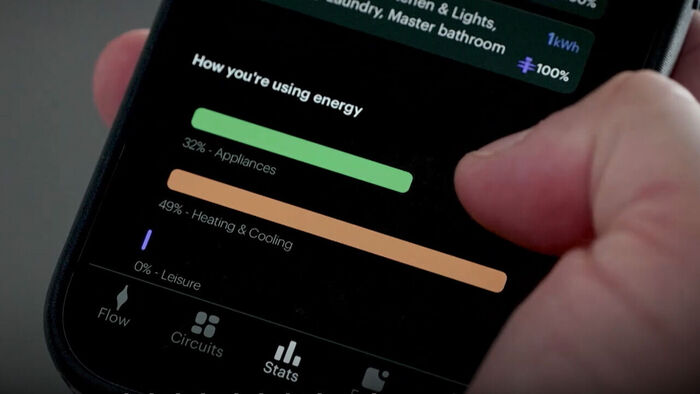
On sunny days, surplus electricity is sold back to the power company. Under Kincaid's rate plan, electricity sold is credited against the bill at the exact same rate as electricity purchased. That is how he earned the $1,200 mentioned earlier.
A 'Refrigerator' That Charges When Cheap and Discharges When Expensive
Brian Pascoe / CEO of Signature Solar
In the past, many states allowed you to sell back surplus electricity, but now more places are changing regulations so you can no longer sell it. That is why battery demand is soaring. Instead of selling it, you store it to use it yourself.
Solar electricity generates a surplus during the day, while usage peaks in the evening. If you cannot sell it, it gets wasted, so the idea is to store and use it. Whether you make money by selling when permitted or save money by storing when selling is not an option, you come out ahead either way. And this lucrative model is not limited to households. This is the Arizona desert.
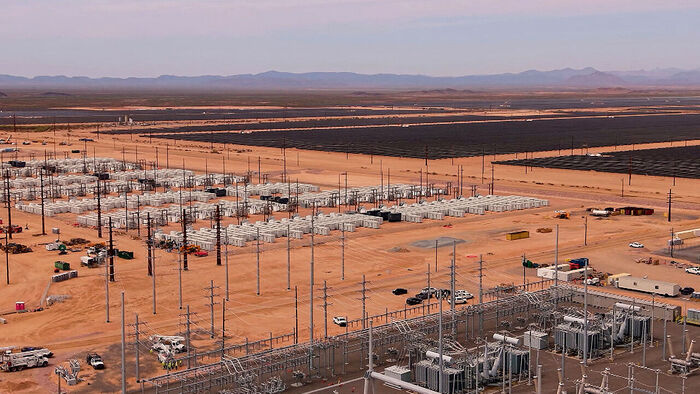
This is a massive power generation complex 22 times the size of Yeouido. Eight out of ten new power facilities built in the United States consist of such solar power and battery systems.
One of the largest hybrid power generation complexes in the United States is currently under construction. The batteries deployed here are also manufactured by a South Korean company at its U.S. facility. The way this complex operates is identical to that home in Texas: storing power during the day and discharging it when demand rises. Only the scale is different.
Electricity generated in the desert right now is stored in these batteries and then sold as far as California in the evening.
'Silicon Valley in the Desert': Electricity as Urban Competitiveness
Power plants are not the only places requiring batteries. Two hours away by car is Phoenix. In this city, rising as the 'Silicon Valley of the desert,' TSMC's semiconductor plant, a domestic firm's battery factory, and AI data centers are converging. Here is what the director overseeing business attraction for the City of Phoenix said.
Ryan Touhill / Community and Economic Development Director, City of Phoenix
To continue expanding our manufacturing base and hosting global companies producing future semiconductor chips, we definitely need the power capacity to support that.
So where do they get that electricity? In this region, the answer lies in the sky. The sun shines brightly for over 300 days a year.
Christine Mackay / President of Greater Phoenix Economic Council (GPEC)
Arizona's battery and energy industry is growing explosively. In Arizona, where the sun shines 340 days a year, we can store that energy and deploy it when needed. This growth is not a temporary boom; it will continue to expand.
Electricity has become a core element of urban competitiveness. Operating a single large data center consumes as much electricity as a medium-sized city. The questions you ask ChatGPT are also processed in places like these. While building a power plant takes 5 to 10 years, a data center can be erected in just 1 to 2 years. Consequently, power supply struggles to keep pace with demand. Batteries are stepping in to bridge that exact gap.
Tristan Doherty / Product Strategy Team Leader at LG Energy Solution Vertech
Data centers are the new heavy industry of modern times. They place tremendous demand on local power grids. ESS is the way to reliably connect this demand to the power grid.
As a result, the market has exploded. ESS batteries supplied globally in the first half of this year surged by 71% compared to the first half of last year.
Why Doesn't 'Battery Powerhouse' South Korea Have This?
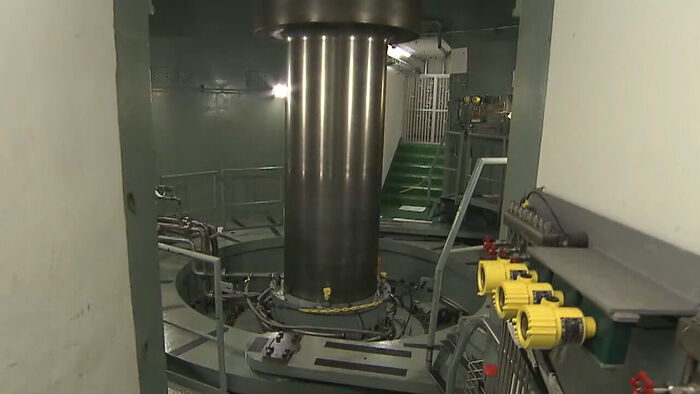
However, it is not structured so operators can freely store and sell power based on electricity prices. In other words, it is not that storage devices are lacking, but rather that a market offering fair compensation for services has yet to open. South Korea also wastes electricity. In spring and autumn, power generation exceeds electricity demand, leading to repeated mandatory curtailments or shutdowns of solar power plants. While people in the U.S. save money by storing surplus electricity, South Korea is unable to properly store and utilize surplus power even when it exists.
Why is this? An expert provided this explanation:
Lee Si-young / Professor of Electronic and Electrical Engineering at Hongik University
In South Korea, collective housing formats such as apartments are very common, whereas single-family homes are widespread in the United States, making North America more convenient for installing and operating such batteries. Furthermore, while residential electricity rates in Korea do fluctuate slightly, differences across time periods are not very large, which I believe also accounts for the disparity.
The key is the tariff structure. In South Korea, residential electricity rates remain virtually the same throughout the day. There is no distinction between 'cheap' and 'expensive' times to buy low and draw high. In other words, there is no incentive to store energy. To motivate action, providers must be able to earn returns commensurate with their work, but that market does not yet exist. However, the government has begun to move.
Lee Si-young / Professor of Electronic and Electrical Engineering at Hongik University
Compensation must also be provided for the capability to flexibly adjust output, but transaction systems and market mechanisms for flexibility resources remain very inadequate in South Korea. Although the power exchange utilizes these resources, a proper market service and compensation system has not been established. Consequently, when domestic ESS operators consider voluntarily investing in facilities, they inevitably conclude they will not receive adequate market compensation.
For now, the government has begun securing returns through long-term contracts to introduce batteries and has even started pilot testing power trading on Jeju Island. Now, let us look back at that screen from Texas: "You're getting paid for your solar!" South Korea is already manufacturing the batteries. All that remains is establishing a market that allows that sentence to appear on our own utility bills as well.
 Video
Video※ Please note: This article was translated by AI and may contain errors.
Copyright Ⓒ SBS. All rights reserved. Unauthorized reproduction, redistribution, and use for AI training are prohibited.