SBS News
Underwater Explosions Carried Out to Clear Waterways: Europe Shocked by "Emergency" Drought
Published : Aug 13, 2026 4:09 PM
Reporting from Paris. Today, I would like to talk about the drought. Europe is drying up rapidly. Here in Paris, it is hard to even remember when it last rained properly. Crops are burning up due to an immediate shortage of usable water. Furthermore, nuclear power plants have ground to a halt due to a lack of necessary cooling water. Consequently, European cities have gone so far as to turn off streetlights at night to save electricity. France is no exception, and last week I went out to see just how severe the situation is.
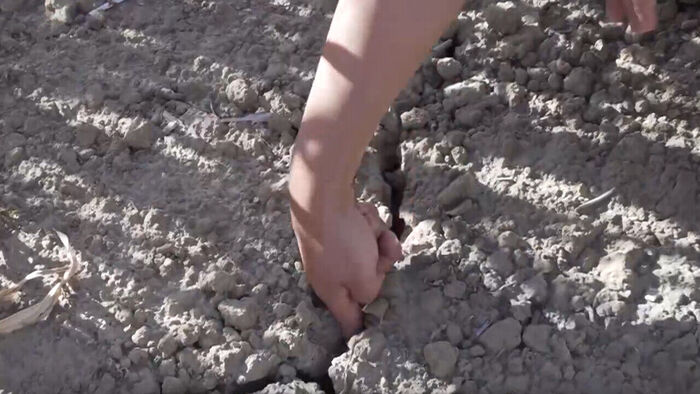
What you are looking at is a cornfield in central France. Here, corn cultivation is in full swing after the wheat harvest. However, the field is deeply cracked. Fissures are wide enough for two finger knuckles to easily slip in. Corn kernels could hardly form properly. The few ears that did grow were mostly dried up. France forecasts that this year's corn harvest will drop to an all-time low. I also met a cattle farmer. His situation was equally dire. The field you see now was originally a pasture for cattle. It used to be a grassland for grazing, but the grass has completely vanished due to the drought.
The farmer described it as being completely burnt up, saying there was no food left at all. As a result, he had no choice but to feed them fodder. However, the problem is that this is winter fodder. In winter, when it is cold and there is no grass, livestock are fed indoors, but that supply is being drawn down early. With that supply also running dangerously low, he said that if the drought persists, he will have no choice as a last resort but to use the straw stockpiled as bedding material for the cattle barn. What was meant to serve as beds and blankets for the cows will have to be fed to them.
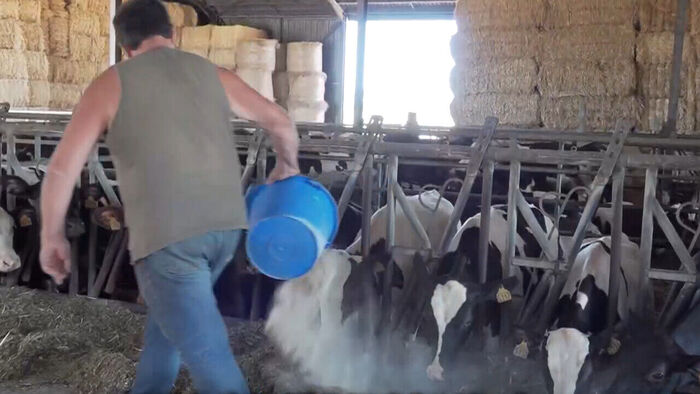
This farm is holding out on fodder because it was relatively well-prepared. However, across France, 70 to 80 percent of livestock farms are suffering from feed shortages. All of this stems from a lack of water.
So I visited the Loire River. The Loire is the longest river in France. Unlike other European rivers that are banked and used as canals, it is a natural river without dams. Consequently, the impact of the drought is felt immediately. Although water was still flowing, the volume of water was halved in just one month. As a result, riverbeds were exposed in many places, and cruise boats plying the river had come to a stop. I met a cruise boat operator. He told me that while water levels usually drop in August, making operations difficult, this year operations were halted nearly a month earlier. That shows how quickly and severely the drought arrived. He added that he had never seen the water level drop this low.
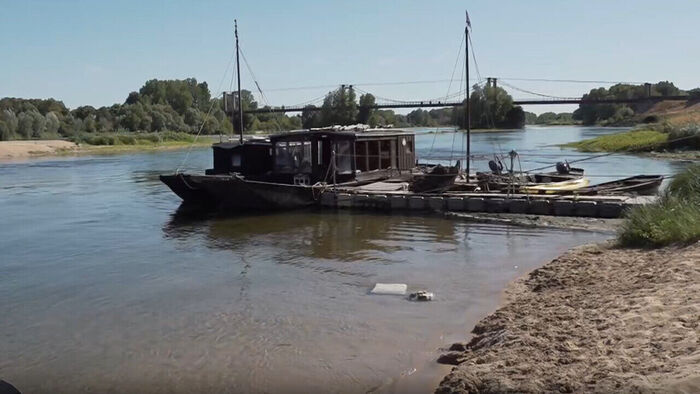
I also visited a spot where swimming was originally banned due to deep waters and strong currents. Even after I walked in for quite a distance, the water remained below my knees. France has slightly over 3,000 rivers. However, more than 1,300 of them have either dried up completely or had their water flow severed. The French government announced that 43 percent of its rivers have run dry. With circumstances like these, an emergency has been triggered.
When experiencing water shortages, France manages water usage in three stages. The most severe stage is the crisis level, and once designated at crisis level, water usage is drastically restricted. Excluding essential uses such as drinking water, sanitation, and medical care, even agricultural water usage is restricted. In France, administrative units similar to provinces in South Korea are called departments (départements in French). There are 96 departments in mainland France. Among these 96, crisis alerts have been issued in 67 departments. This does not mean every whole department has been designated, but rather that somewhere within each of these 67 departments has received a crisis alert. This shows just how severely the drought has spread across France.
The problem is that it does not end with just water shortages. When I visited a town in central France, the local municipality was accepting reports from residents regarding cracks appearing in building structures due to the drought.
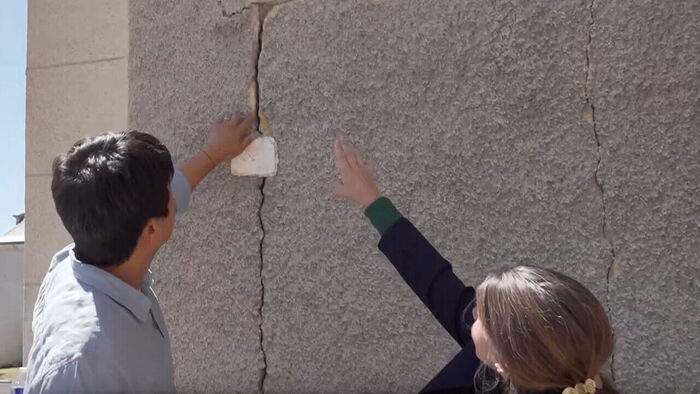
When asked how that relates to the drought, officials explained that in areas built on reclaimed riverbanks or wetlands where the ground consists of clay rather than bedrock, severe drought causes the soil deep underground to dry out and shrink. This soil shrinkage led to structural cracks in houses, and in that town, even the city hall building suffered severe cracking, prompting the municipal government to apply for a disaster area designation from the central government.
However, one of the most critical impacts of this drought is the power shortage. Nuclear power is a particular concern, as many European nations use river water to cool nuclear reactors. The scarcity of water is one issue, but the persistent heatwaves exceeding 40°C (104°F) have also heated up river waters. Not only is cooling water lacking, but the remaining water fails to cool effectively. In the end, France shut down operations at two nuclear power plants. Several others have reduced output. The reduction in nuclear power output has now reached an all-time high, and that figure is likely to rise further. Still, France is managing to endure for now because it has nearly 60 reactors across 20 nuclear power plants.
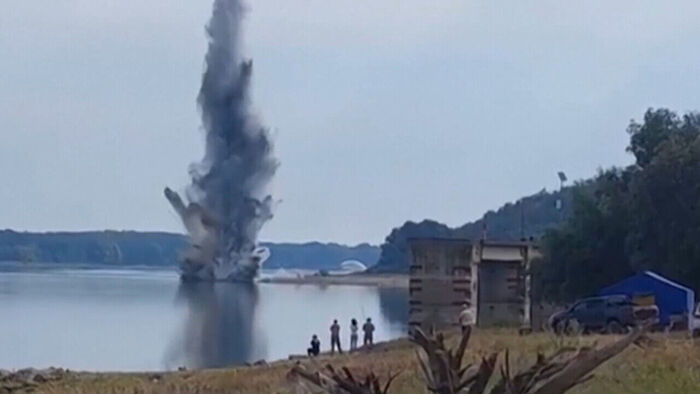
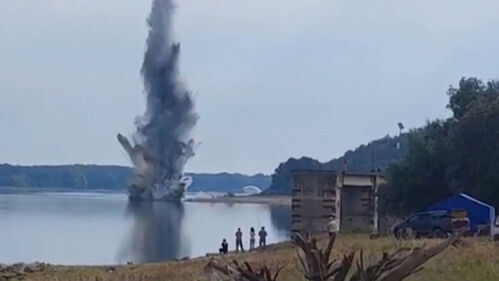
However, Eastern European countries relying on the Danube River face far more severe conditions. Hungary has four nuclear reactors, accounting for over half of the country's electricity production. Three of those four reactors have already been shut down, while the remaining one is barely maintaining operation at reduced output. Neighboring Romania is in even worse shape. One of its two reactors is completely shut down, and the other is on the verge of shutdown. The situation was so desperate that, due to a water shortage flowing toward the nuclear plant, underwater detonations were carried out to clear the waterway. Submerged bedrock that posed no issue under normal conditions acted like a dam blocking the waterflow once water levels plummeted. So, 180 kg of explosives were mobilized to blast it away.
With power plants unable to operate properly, electricity for public facilities is being cut first. As a result, the iconic night view of the Hungarian capital, Budapest, has vanished. Romania also declared a state of national emergency and turned off all non-essential lighting. In the UK, half of England is in drought conditions. Rain in this summer has reached only 7 percent of average levels. While immediate power rationing has not been imposed, the UK suspended power exports to countries such as the Netherlands.
The problem is that this year's European heatwave and drought, considered the worst on record, are far from over. This week, another heatwave is sweeping over France. Forecasts indicate that heatwaves and droughts so far will shrink the European Union's GDP this year by 1 percent, or about 295 trillion won. Europe already faces a long list of expenditures while revenue sources are dwindling. To make matters worse for Europe, even the weather is refusing to help.
 Video
Video
Cornfields Cracker-Dry: "Everything Is Scorched"
What you are looking at is a cornfield in central France. Here, corn cultivation is in full swing after the wheat harvest. However, the field is deeply cracked. Fissures are wide enough for two finger knuckles to easily slip in. Corn kernels could hardly form properly. The few ears that did grow were mostly dried up. France forecasts that this year's corn harvest will drop to an all-time low. I also met a cattle farmer. His situation was equally dire. The field you see now was originally a pasture for cattle. It used to be a grassland for grazing, but the grass has completely vanished due to the drought.
The farmer described it as being completely burnt up, saying there was no food left at all. As a result, he had no choice but to feed them fodder. However, the problem is that this is winter fodder. In winter, when it is cold and there is no grass, livestock are fed indoors, but that supply is being drawn down early. With that supply also running dangerously low, he said that if the drought persists, he will have no choice as a last resort but to use the straw stockpiled as bedding material for the cattle barn. What was meant to serve as beds and blankets for the cows will have to be fed to them.
Philippe / French livestock farmer
Nearly 70 to 80 percent of French livestock farms are facing severe fodder shortages as grass has disappeared from pastures. We are drawing from hay meant for winter, so our reserves are running critically low.
This farm is holding out on fodder because it was relatively well-prepared. However, across France, 70 to 80 percent of livestock farms are suffering from feed shortages. All of this stems from a lack of water.
"First Time Ever": 43% of Rivers Have Dried Up
Denis Rambaud / Cruise boat operator
Honestly, operating cruise boats this year is practically impossible. This is truly unprecedented. A drought like this is truly record-breaking.
I also visited a spot where swimming was originally banned due to deep waters and strong currents. Even after I walked in for quite a distance, the water remained below my knees. France has slightly over 3,000 rivers. However, more than 1,300 of them have either dried up completely or had their water flow severed. The French government announced that 43 percent of its rivers have run dry. With circumstances like these, an emergency has been triggered.
When experiencing water shortages, France manages water usage in three stages. The most severe stage is the crisis level, and once designated at crisis level, water usage is drastically restricted. Excluding essential uses such as drinking water, sanitation, and medical care, even agricultural water usage is restricted. In France, administrative units similar to provinces in South Korea are called departments (départements in French). There are 96 departments in mainland France. Among these 96, crisis alerts have been issued in 67 departments. This does not mean every whole department has been designated, but rather that somewhere within each of these 67 departments has received a crisis alert. This shows just how severely the drought has spread across France.
"Cracks in My House... What Should I Do?"
Aurore Caro / Mayor of Meung-sur-Loire
Our residents are extremely distressed right now. Inquiries are pouring into city hall asking, "Cracks are appearing in my house, what should I do?"
When asked how that relates to the drought, officials explained that in areas built on reclaimed riverbanks or wetlands where the ground consists of clay rather than bedrock, severe drought causes the soil deep underground to dry out and shrink. This soil shrinkage led to structural cracks in houses, and in that town, even the city hall building suffered severe cracking, prompting the municipal government to apply for a disaster area designation from the central government.
Nuclear Plants Halted, Night Views Disappear
However, Eastern European countries relying on the Danube River face far more severe conditions. Hungary has four nuclear reactors, accounting for over half of the country's electricity production. Three of those four reactors have already been shut down, while the remaining one is barely maintaining operation at reduced output. Neighboring Romania is in even worse shape. One of its two reactors is completely shut down, and the other is on the verge of shutdown. The situation was so desperate that, due to a water shortage flowing toward the nuclear plant, underwater detonations were carried out to clear the waterway. Submerged bedrock that posed no issue under normal conditions acted like a dam blocking the waterflow once water levels plummeted. So, 180 kg of explosives were mobilized to blast it away.
With power plants unable to operate properly, electricity for public facilities is being cut first. As a result, the iconic night view of the Hungarian capital, Budapest, has vanished. Romania also declared a state of national emergency and turned off all non-essential lighting. In the UK, half of England is in drought conditions. Rain in this summer has reached only 7 percent of average levels. While immediate power rationing has not been imposed, the UK suspended power exports to countries such as the Netherlands.
The problem is that this year's European heatwave and drought, considered the worst on record, are far from over. This week, another heatwave is sweeping over France. Forecasts indicate that heatwaves and droughts so far will shrink the European Union's GDP this year by 1 percent, or about 295 trillion won. Europe already faces a long list of expenditures while revenue sources are dwindling. To make matters worse for Europe, even the weather is refusing to help.
 Video
Video※ Please note: This article was translated by AI and may contain errors.
Copyright Ⓒ SBS. All rights reserved. Unauthorized reproduction, redistribution, and use for AI training are prohibited.