SBS News
Court Dismisses BMW Owners' Damage Suit Over 2018 Serial Fires, Citing Recalls
Published : Aug 13, 2026 12:33 PM

The 30th Civil Settlement Division of the Seoul Central District Court (Presiding Judge Kim Seok-beom) ruled against the plaintiffs today (August 13) in the damage suit filed by BMW owners against BMW Korea.
The ruling covered two separate lawsuits involving 55 and 65 plaintiffs, respectively.
The court delivered its conclusion on both cases simultaneously.
The BMW serial fire incident refers to a series of fires involving BMW vehicles in South Korea around 2018.
At the time, a joint public-private investigation team under the Ministry of Land, Infrastructure and Transport determined the cause of the fires to be cracks in the Exhaust Gas Recirculation (EGR) cooler and coolant leaks.
In response, BMW Korea implemented corrective measures (recalls) three times in July and November 2018, and January of the following year, followed by additional voluntary recalls.
The plaintiffs argued that the structural defects in the EGR system of BMW vehicles were not corrected through the recalls, and that BMW Korea committed illegal acts by importing and selling the vehicles while being aware of these defects, as well as concealing and minimizing them.
Consequently, they sought damages for financial losses resulting from decreased used car prices and emotional distress caused by a drop in brand value.
The claims amounted to 1.29 billion won and 310 million won, respectively.
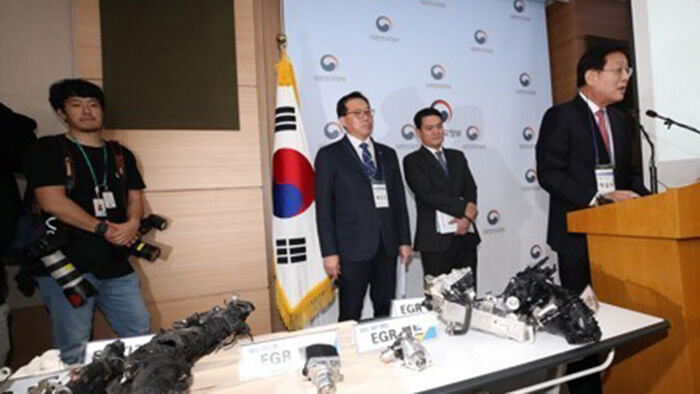
The court rejected all of the plaintiffs' claims.
This was because the design defects in the BMW vehicles were fully corrected through the recalls.
The court explained, "The Ministry of Land, Infrastructure and Transport also confirmed that the defects were corrected," adding, "After the recalls, the fire rate of BMW vehicles was not higher than that of vehicles from other manufacturers."
The court also found no illegal acts by BMW Korea, the official importer.
The court stated, "The design defects pointed to as the cause were completely remedied through the recalls, and even if there were defects in the vehicles, it is difficult to view the defendant, which is merely an importer rather than the manufacturer, as having been aware of the design defects from the time of import and sale."
It added that the causes of individual fire accidents varied, ranging from user negligence to vehicle defects, and that BMW Korea carried out recalls after confirming the range of vehicles with potential defects from its German headquarters, meaning it could not be considered to have concealed them or delayed corrective measures.
The court stated that it was difficult to see that the plaintiffs suffered financial losses and that there was insufficient evidence to prove they suffered irrecoverable emotional distress.
The car owners also argued that BMW Korea breached its obligations under the quality warranty issued for the vehicles, but the court ruled, "Warranty responsibility is the obligation to repair defective parts free of charge and does not include financial compensation."
(Photo: Yonhap News)
※ Please note: This article was translated by AI and may contain errors.
Copyright Ⓒ SBS. All rights reserved. Unauthorized reproduction, redistribution, and use for AI training are prohibited.