SBS News
20 Years of Templestay, Is Tax Money Being Well Spent? [Tax Money Buried in Silence Part 1]
Published : Aug 12, 2026 8:40 AM

Even for public facilities funded by government subsidies, the rule is generally not to cover operating costs. How are you going to manage the costs when places offering Templestays increase infinitely later on? There has to be a principle.
"Wait, does the government also provide funds for Templestay operating costs? How much?" This reporting started from such questions.
The government budget allocated for Templestays this year totals 27 billion won, combining facility construction costs and operational support funds. This is 20 billion won more than the 25 billion won in additional budget deployed nationwide by the government on the 10th to urgently respond to this summer's heatwaves and drought.
Some 380 Billion Won Supported Over 20 Years of Templestay... Is It Well Managed?
Excluding preliminary temples that do not receive government support, we first examined whether Templestays at a total of 159 temples could be easily booked on their official websites. We singled out places where searching was impossible or booking itself was unavailable on the website and went out for on-site inspections one by one. While there were cases with circumstances such as facility inspections, a significant number of cases could not be booked for unconvincing reasons. At one temple, official booking itself was blocked, but when we visited the temple and said we were a "group of guests," they replied that they could adjust the schedule.
Inspecting Templestays Across the Country
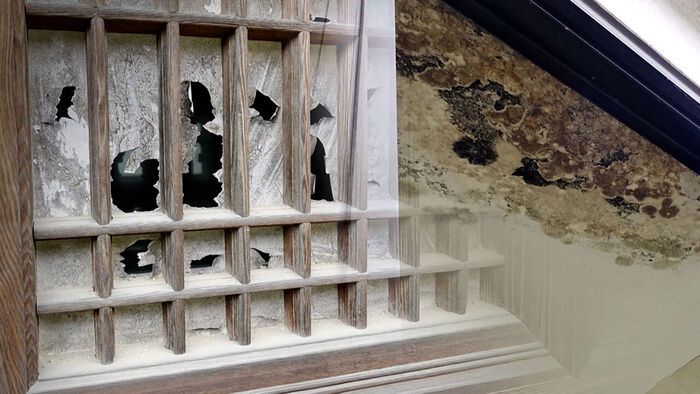
Banyasa, located in Yeongdong, North Chungcheong Province, received 500 million won in government funds to build a Templestay experience hall, but it appeared to be completely unused. The experience hall was locked tight with a padlock, and the interior was filled with bugs and dust. Furthermore, because it was located far away from the Templestay lodgings, it was not easy to find its location, and the reporter who actually visited the site spent 30 minutes wandering around unable to find where the experience hall was. The building was not even marked on the temple grounds map. The Jogye Order stated that they use the experience hall when group guests arrive. However, even when the reporter visited the site, inquired about a group reservation, and received guidance, that building was not mentioned at all.
Silleuksa Temple in Yeoju, Gyeonggi Province, has suspended Templestay operations since 2021. The building, which cost 750 million won combined from national and local government funds, has been virtually abandoned. The temple side stated that they could not operate due to water leaks in the building, but the government funds they received to fix the building amount to approximately 380 million won.
Jingwansa Temple in Seoul is running Templestays, but making reservations for the general public was as difficult as "plucking a star from the sky." Since booking was impossible on the website, we visited in person only to be told there were no plans for the time being, and we were only able to hear about a rough operational plan after contacting the Templestay manager by phone days later.
Reporter: I wanted to make a Templestay reservation, but since it wasn't working, I called.
Templestay Staff Member: There are no programs available for booking. We are planning around the end of July, so if you give us your phone number, should we contact you when the programs open?
Reporter: Yes, yes. Is it because of some construction work or something right now? We'd like to do it as a group...
Templestay Staff Member: The place that just called, are you an individual or a travel agency? (omitted below)
In response to SBS's question asking if it is acceptable for reservations to be this difficult for ordinary citizens to use, the Ministry of Culture, Sports and Tourism stated that the Cultural Corps of Korean Buddhism is also aware of this issue and has spoken to Jingwansa Temple multiple times. Then why hasn't it changed until now? The reason Templestay experience halls were built deep in the mountains, suspension of operations continued, and bookings remained difficult without change is ultimately due to a lack of proper management and oversight. Templestay operational regulations are not Ministry of Culture regulations, but "internal regulations" of the Cultural Corps of Korean Buddhism under the Jogye Order. On-site management and supervision also follow a "self-monitoring" structure handled by the Cultural Corps of Korean Buddhism. Moreover, the Templestay operational regulations established in 2012 included mandatory requirements for temples (such as days of operation), but no contents to penalize them when violated. That is how Templestays have been operated up to now. Following SBS's reports, the Ministry of Culture stated that it will directly visit the respective temples where issues were raised to assess the current status. As this is a project involving taxpayer money, it appears urgent to establish a continuous management and supervision system rather than a one-time check.
*Related Article: Musty Smell Despite Receiving Tax Money... "Monk's Cafe" Puts "Temple" on the Back Burner (Full Video) [SBS 8 News]
※ Please note: This article was translated by AI and may contain errors.
Copyright Ⓒ SBS. All rights reserved. Unauthorized reproduction, redistribution, and use for AI training are prohibited.