SBS News
King Danjong's Tears of Blood Left Out of 'The Man Living with the King'... Tragic History of 17-Year-Old Monarch
Published : Aug 7, 2026 3:12 PM

The story of 'that day' we want to tell 'you' this time is the episode titled "Hong-wei, Nosan, Danjong - In Search of the King's Name," broadcast on August 6. Lee Chae-young of the group fromis_9 and singer Jukjae appeared as guest listeners, while director Jang Hang-jun made a surprise appearance as a storyteller. (In line with the style of 'Tails of Tales', the review is written in an informal tone.)
▲ Munjong, a Prepared King
The year was 1452, during the reign of Munjong, the fifth king of Joseon. Late in the afternoon on May 14, in front of Gangnyeongjeon Hall inside Gyeongbokgung Palace in the capital Hanyang, someone cried out loudly.
"What on earth is the royal physician doing! Why haven't you presented the Cheongsimwon!"
King Munjong, who was bedridden, suddenly fell into critical condition. The person wailing and searching for the royal physician was Munjong's younger brother, Grand Prince Suyang. The royal physician hurriedly tried to administer the Cheongsimwon, but it was already too late. Munjong passed away at the age of 39, just two years and three months after taking the throne. Munjong's premature death is considered one of the most tragic moments in the entire history of the Joseon Dynasty. Let's hear why.
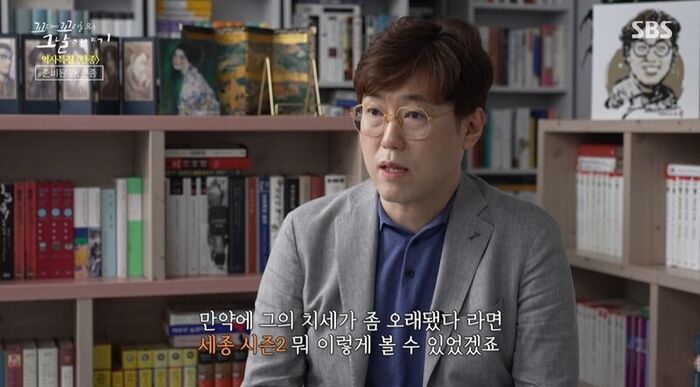
"From a ruler's perspective, Munjong as a fully prepared Crown Prince and King was a monarch who raised high expectations. If his reign had lasted longer, we might have seen something like 'King Sejong Season 2.' Munjong directly took lessons in and participated in many policies—such as the creation of Hangeul, state administration, tax system reform, and strengthening national defense—which were major achievements of King Sejong's era. Furthermore, during Sejong's later years, Munjong handled state affairs on his behalf. So if Munjong had lived longer, he likely would have been a monarch who met great expectations."
- Shim Yong-hwan, Historian and Director
In short, he was a prepared king—a monarch born with the qualities to become a wise ruler. Here is an entry from the Annals. When Munjong was the Crown Prince, he once received envoys from Ming China. Upon seeing Munjong, the envoys marvelled and said:
"This country must have outstanding mountains and rivers to give birth to such a beautiful and splendid Crown Prince."
- Annals of King Sejong, July 19 (Intercalary Month), 7th Year of Sejong's Reign -
He must have been that good-looking. But was he merely handsome? No. He was also brilliant at poetry and calligraphy. He was renowned as the finest calligrapher of his time.
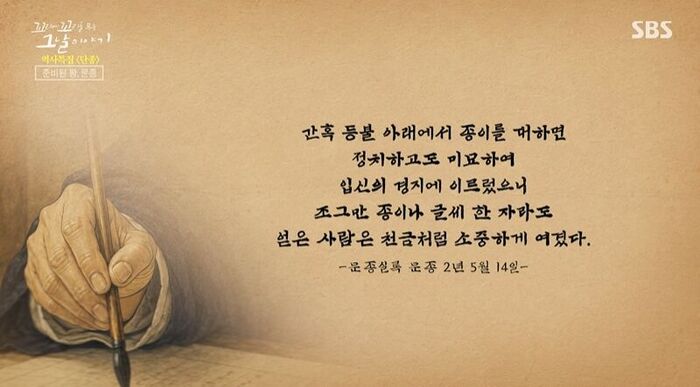
"When faced with paper under the lamp, his work was so refined and subtle as to reach a divine realm..."
- Annals of King Munjong, May 14, 2nd Year of Munjong's Reign -
In addition, he was proficient in martial arts, hitting the bullseye every time he shot an arrow. He was good-looking, excelled in studies, and was a great fighter. He was truly talented in both literary and martial arts. Generous by nature and deeply filial, he was a son cherished greatly by his father, King Sejong. Since his time as Crown Prince, he assisted his father in accomplishing many achievements and contributed to the creation of Hunminjeongeum (Hangeul).
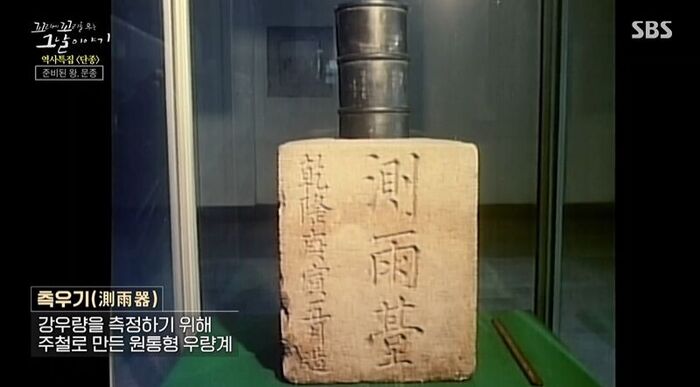
That's not all. Cheugugi, a rain gauge used to measure rainfall, was the world's first standardized meteorological instrument on a national level. Do you know who invented the rain gauge? Many know it as Jang Yeong-sil. But it was actually invented by Munjong. The day Munjong created the rain gauge has been designated as Invention Day and is still commemorated today.
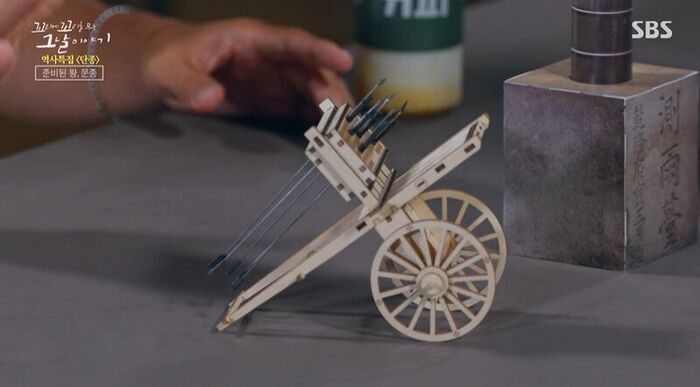
There is something else Munjong created. The name of this object is Hwacha. Built under Munjong's orders, the Hwacha was a cutting-edge weapon that launched 100 Jungsingijeon rocket arrows consecutively using gunpowder. In modern terms, it is a multiple rocket launcher. The Hwacha played a major role in defeating Japanese invaders during the Imjin War years later. Munjong's forward-looking preparation helped defend Joseon.
"Following King Sejong, Munjong strengthened national defense, particularly by developing gunpowder weapons. In terms of the strength needed to repel Japanese forces during the Imjin War, the expansion of military power and systems established during Munjong's reign played a vital role."
- Shim Yong-hwan, Historian and Director
Invested as Crown Prince at the age of eight, Munjong received royal education for as long as 29 years and took charge of state affairs on behalf of Sejong starting seven years before his accession. He was literally a prepared king. Everyone must have anticipated that a golden era of cultural politics would blossom once more upon the foundation laid by Sejong.
However, that expectation did not last long. The Annals record Munjong's death as follows:
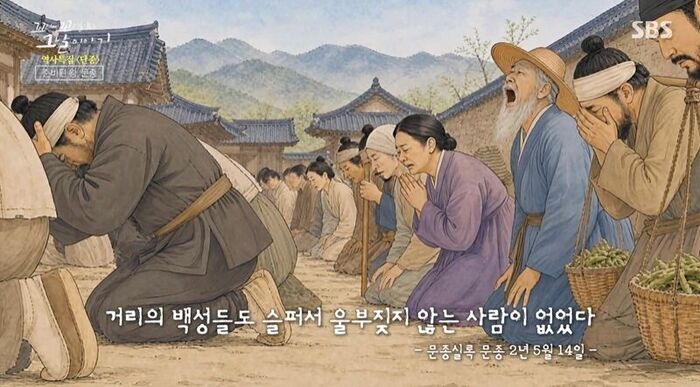
"The sound of all the ministers wailing at the top of their lungs shook the palace courts, and they could not stop themselves. Among the people on the streets, there was no one who did not cry out in grief."
- Annals of King Munjong, May 14, 2nd Year of Munjong's Reign -
Everyone weeping so genuinely shows what kind of ruler he was. There was a reason why their grief was even greater: the Crown Prince who would inherit the throne was far too young.
"At this time, the new king was young, leaving the people with nowhere to turn for support. The grief of the ministers and the subjects was greater than at the passing of King Sejong."
- Annals of King Munjong, May 14, 2nd Year of Munjong's Reign -
The Crown Prince who succeeded Munjong to the throne was King Danjong. He was the sixth king of Joseon.
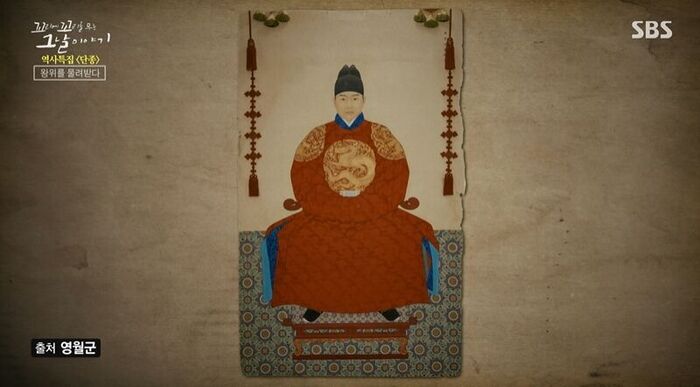
This is Danjong's Eojin. Eojin refers to a portrait painting of a king's face. On May 18, 1452, Danjong ascended the throne at the young age of 12. In modern terms, that is a fifth-grader—so very young. At that tender age, Danjong assumed the solemn position of king.
▲ Hong-wei (弘暐)
Danjong was born when Munjong was 28 years old. He was a precious, irreplaceable only son, born after 14 years of marriage. The child was given the name 'Hong-wei' (弘暐). The character 'Hong' means 'broad/wide' and 'Wei' means 'sunlight.' Perhaps it contained the wish for him to become a great king who shines bright sunlight widely upon the world. The Annals of King Sejong contain a record regarding young Hong-wei.
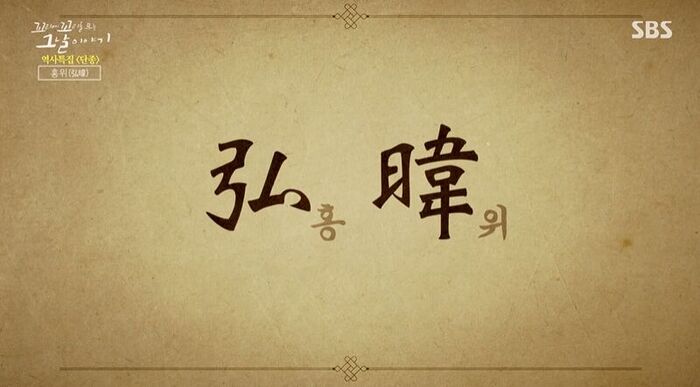
"You, Royal Grandson Lee Hong-wei, possess a natural intelligence and a brilliant disposition..."
- Annals of King Sejong, April 3, 30th Year of Sejong's Reign -
Hong-wei received affection from his grandfather King Sejong while undergoing education to become king. Was he good at studying? There is a record of his father Munjong evaluating his son Hong-wei.
"You, Royal Prince Hong-wei, have a gentle virtue, outstanding talent, love your parents, and respect your elders."
"Benevolence and filial piety are born in your nature. Respecting and exalting your teachers, your learning advances day by day."
- Annals of King Munjong, July 20, Accession Year of Munjong -
A gentle temperament combined with intelligence. He was born with all the qualities to become a great king. Moreover, Hong-wei possessed unprecedented legitimacy in Joseon history. In Joseon, a Confucian state, the principle was succession by the eldest legitimate son born of the primary queen. However, from Taejo, Jeongjong, Taejong, to Sejong, no eldest legitimate son had ever ascended the throne. Sejong's eldest son, Munjong, was the first king who was an eldest legitimate son. And Danjong was Munjong's eldest legitimate son. Inheriting the lineage of eldest legitimate sons over two generations made him royal royalty. This represented the ultimate legitimacy in Joseon dynastic society.
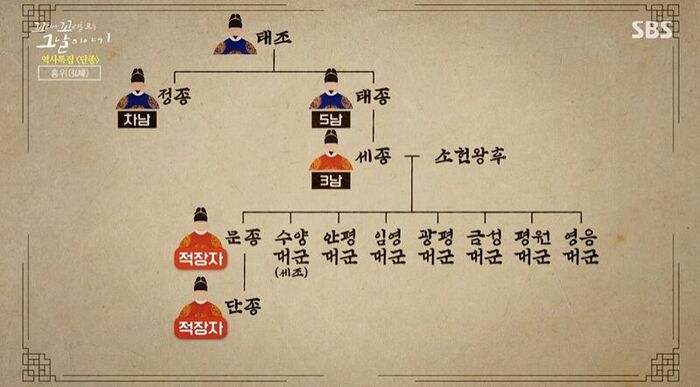
Yet there was just one thing lacking for him. Some say Danjong was a king more lonely and desolate than anyone else.
On the day Hong-wei was born, everyone rejoiced at his birth. Among them, King Sejong, who welcomed his grandson late in life, was overjoyed. However, a large candle inside the pavilion suddenly fell to the ground. Could it be an ominous sign? The very next day, sorrowful wailing echoed through the palace. Queen Hyeondeok, who gave birth to Hong-wei, passed away from postpartum illness. Without ever being properly held in his mother's arms, Hong-wei was raised by Hyebin Yang, a concubine of King Sejong.
Thus, by the time Hong-wei ascended the throne, his grandfather King Sejong and grandmother Queen Soheon, who adored him dearly, as well as his father Munjong, had all passed away. There was not a single royal elder left to look after this young king. He was a lonely monarch, much like an orphan.
His only remaining blood relative was his older sister, Princess Gyeonghye. Perhaps that's why, even after becoming king, Hong-wei often visited Princess Gyeonghye's house to sleep there.
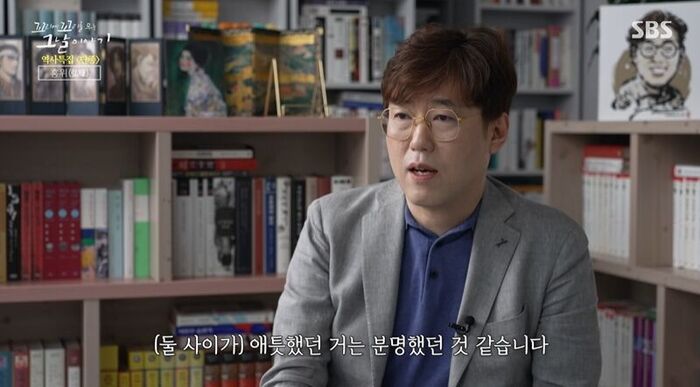
"He had one older sister. She married at age 15. Having stayed together, his sister departed after marriage. Both before and after ascending the throne, whenever Danjong had a spare moment, he constantly went to see Princess Gyeonghye. So we can tell they had a good relationship, and it seems clear that their bond was very affectionate."
- Shim Yong-hwan, Historian and Director
It seems the spacious palace and numerous ministers could not console Hong-wei's loneliness. Perhaps worried about his young son who would be left alone, his father Munjong summoned senior ministers of the court before closing his eyes and left this request:
"I say to you ministers, please assist the young Crown Prince well."
This act of a king requesting assistance for future affairs through his last testament is called 'Gomyeong.' The ministers who received Munjong's deathbed decree were Chief State Councillor Hwangbo In and Left State Councillor Kim Jong-seo, among others. They were called 'Gomyeong Daesin' (trustee ministers). They assisted the young king in deciding state affairs. Let me show you how it worked.
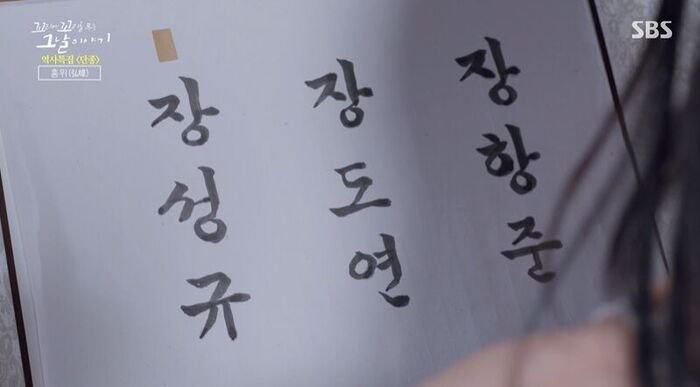
For example, suppose a new official had to be appointed. The young king wouldn't well know who was capable or not. So the ministers submitted a list of candidates. The ministers attached yellow slips of paper to the list, marking in advance the most suitable candidate. Then, the king simply had to place a dot under that name. Deciding state affairs using yellow paper markers was called 'Hwangpyo Jeongsa.'
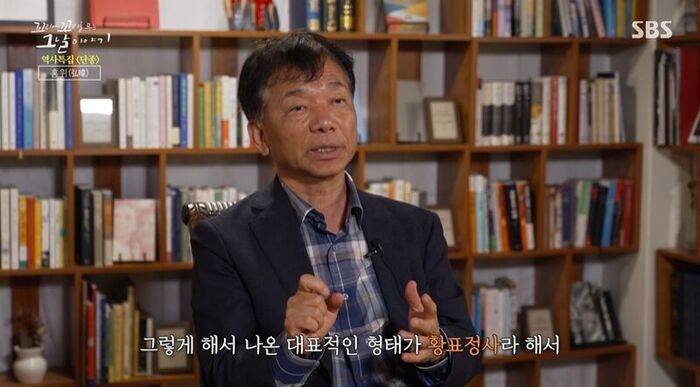
"To assist the young king well, we must take care of matters that the king cannot easily decide ourselves—the representative system resulting from this was Hwangpyo Jeongsa, led by ministers like Kim Jong-seo and Hwangbo In."
- Professor Shin Byung-ju, Konkuk University Department of History
With people helping like this, no matter how young the king was, he could manage, right? But this raised some controversy. Through Hwangpyo Jeongsa, the power of the trustee ministers grew immense, as they held personnel appointment rights. A prime figure among them was Kim Jong-seo. Although a civil official, he made great contributions to defense and territorial expansion. Dispatched as Military Commander of Hamgil Province during Sejong's reign, Kim Jong-seo commanded the development of the Six Garrisons (Yukjin), securing the territory south of the Tumen River for Joseon. He was the figure who shaped the map of the Korean Peninsula as we know it today. Though small in stature, his presence was so fierce that his nickname was 'Daeho'—meaning 'Great Tiger.'
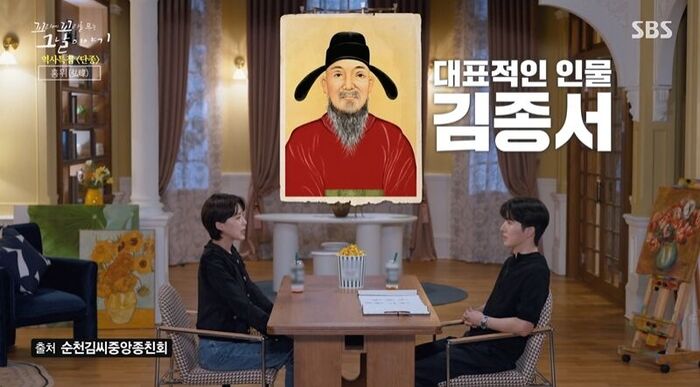
After Danjong's accession, Kim Jong-seo emerged as the most powerful figure in Joseon. But regarding Hwangpyo Jeongsa, one might think, 'Isn't the young king just a The Scarecrow then? Isn't Kim Jong-seo wielding power instead?'
"Hwangpyo Jeongsa itself was indeed a method to assist the monarch. The king was young, and there were certainly choices Kim Jong-seo had to make in leading the country. The life Kim Jong-seo demonstrated was almost precisely the archetype of a fine scholar who led the country responsibly and devoutly. Because he was such a noble individual, we cannot view Kim Jong-seo's Hwangpyo Jeongsa as an attempt to usurp power."
- Shim Yong-hwan, Historian and Director
So was Danjong merely a The Scarecrow king? That was not the case. There were quite a few matters he handled directly without asking the ministers' opinions. He had received thorough royal education starting from age eight. Even amid Hwangpyo Jeongsa, he clearly voiced his thoughts and possessed excellent judgment. Even if ministers opposed him, he did not bend his will if he believed he was right.
There is one example: after Danjong became king, a large monument stone had to be erected for Munjong. The ministers said they should quarry stone to make the largest monument to honor his great achievements. But Danjong opposed it: "It is the dead of winter right now, and our people are suffering to quarry that stone. Do it after winter passes and the weather warms up." Although the ministers insisted otherwise, Danjong held firm and carried his intention to the end. This showed his love for his people.
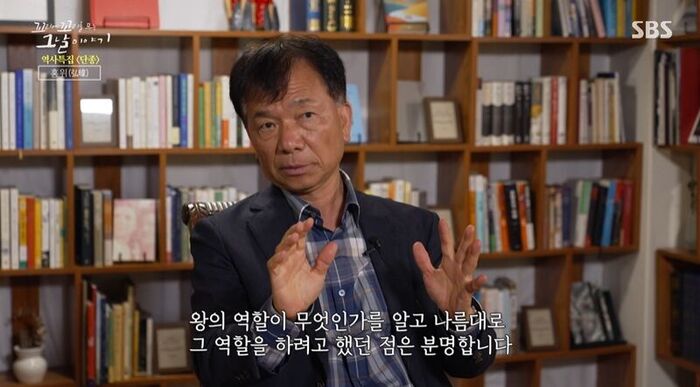
"Though young, Danjong had already been invested as Royal Grandson at age eight and received extensive lessons in becoming king. Furthermore, with King Sejong as his grandfather and King Munjong as his father, under their influence he knew what the role of a king was and clearly tried to fulfill that role in his own way."
- Professor Shin Byung-ju, Konkuk University Department of History
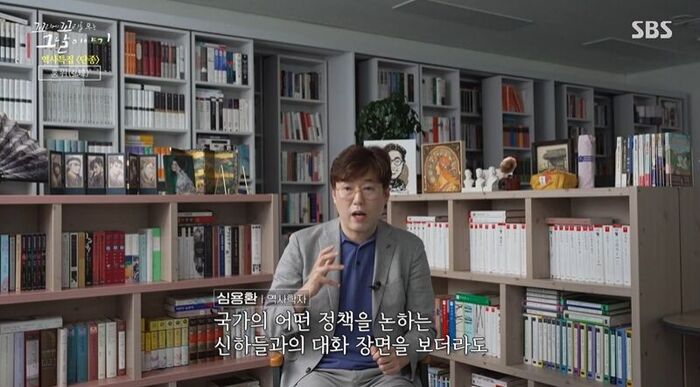
"Even looking at records of his dialogues discussing state policy with ministers, he had determination and sound judgment, making him quite sharp. He was moving toward the stage where in a few years he would govern state affairs himself."
- Shim Yong-hwan, Historian and Director
▲ The Emergence of Grand Prince Suyang
"The ministers' power has grown excessively large, and the king cannot exercise power properly. In this situation where ministers like Kim Jong-seo exercise power while weakening royal authority, the royal family must step up, and I must rectify this abnormal situation..."
- Professor Shin Byung-ju, Konkuk University Department of History
However, there was an individual who felt dissatisfied with this situation: Grand Prince Suyang. Suyang, the younger brother of Munjong and uncle to Danjong, was the figure who would later become King Sejo.
What image comes to mind when you think of Grand Prince Suyang? "Do I look like someone who will become king?" This is reportedly what the real Grand Prince Suyang looked like.
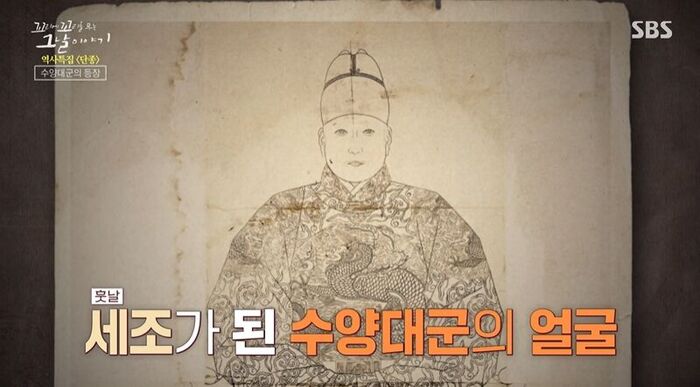
As King Sejong's second son, Grand Prince Suyang was said to excel in various fields. In particular, he possessed a born warrior's disposition. At age 13, while out hunting with his father King Sejong, he reportedly took down seven deer with seven arrows—a perfect hit every time. It is said that when inspected, all seven arrows had pierced through their necks. In addition, his administrative abilities were outstanding. Following Sejong's orders, he successfully carried out numerous tasks alongside his elder brother Munjong.
"Grand Prince Suyang himself was actually a remarkable individual. His personal capability was truly outstanding. Because he was so capable, King Sejong involved him heavily in his work and achievements. In most cases, it was because he was so competent."
- Shim Yong-hwan, Director and Historian
But he could not become king in terms of royal rank, because he had an elder brother who excelled in every way. As his brother ascended the throne, Grand Prince Suyang gradually drifted away from power. However, when his brother died and his young nephew succeeded to the throne, Suyang began to reveal his ambition for power. Outwardly, he claimed that treasonous subjects trying to grab power for themselves needed to be purged for the young nephew's sake, but inwardly, didn't he desire to become king himself?
"There was something he could not let go of: his ambition. 'Even if I have to destroy all of this, I want to become king.'"
- Shim Yong-hwan, Director and Historian
At the time, power in Joseon was split into a three-way dynamic: Kim Jong-seo, who assisted King Danjong and led the senior ministers entrusted with the royal testament; Grand Prince Suyang on the opposite side; and thirdly, Grand Prince Anpyeong.
Grand Prince Anpyeong was the third son of King Sejong, and the younger brother of King Munjong and Grand Prince Suyang. People called him 'Samjeol'—a term for someone who is a master of three arts: poetry, calligraphy, and painting. He composed poetry well, wrote calligraphy beautifully, and painted skillfully; in short, he was a top artist. As many literary figures gathered around Anpyeong, he emerged as a figure of formidable influence. But a change began to occur in this three-way power dynamic. The senior ministers led by Kim Jong-seo began building ties with Grand Prince Anpyeong. As Kim Jong-seo and Anpyeong stood on the same side, they formed a powerful coalition.
"If Suyang represented the martial side, Grand Prince Anpyeong represented the literary side. He was adept at poetry, calligraphy, and painting, and was quite a gentle figure. Naturally, people interacted and joined hands with Grand Prince Anpyeong, leading Suyang to judge that he ultimately had to eliminate not only Kim Jong-seo but also Grand Prince Anpyeong."
- Shin Byung-ju, Professor of History at Konkuk University
▲ Grand Prince Suyang and Han Myeong-hoe
Compared to them, Grand Prince Suyang's force was severely lacking. At that time, Kwon Ram, Suyang's closest confidant, made a proposal.
"Your Highness, you must recruit a couple of men to whom you can entrust life and death, so as to prepare for an unexpected emergency."
At those words, Suyang nodded.
"Your words are most right. But who is there that can be entrusted with such a task?"
Then, as if waiting for the question, Kwon Ram recommended a person to Suyang.
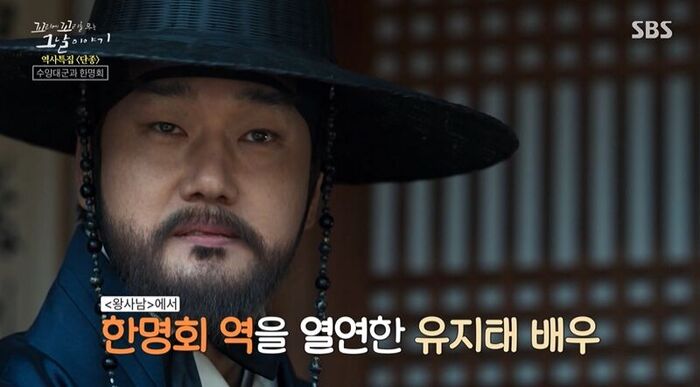
"A man named Han Myeong-hoe is fit for such a role."
Kwon Ram recommended Han Myeong-hoe.
"From his youth, Han Myeong-hoe possessed extraordinary spirit and lofty ambitions, but fortune did not favor him, leaving him in a low government position unrecognized by others. If Your Highness intends to set right a chaotic world, none other than this man can accomplish it."
- Annals of King Danjong, July 28 of the Year of Danjong's Accession -
Upon hearing Kwon Ram's recommendation, Grand Prince Suyang met Han Myeong-hoe immediately and was instantly taken with him. Suyang reportedly grasped Han Myeong-hoe's hand and expressed regret at not having met him sooner.
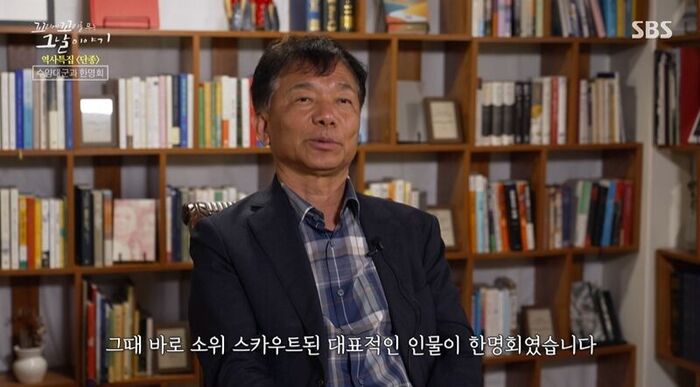
"It was a clash between the coalition led by Kim Jong-seo and Grand Prince Anpyeong against Grand Prince Suyang. In the end, Suyang needed to plant a key figure of his own who could rival Kim Jong-seo. The representative figure recruited at that moment was Han Myeong-hoe."
- Shin Byung-ju, Professor of History at Konkuk University
When Suyang asked what should be done about the current situation, Han Myeong-hoe said:
"Your Highness is the eldest prince of the royal house, so you have legitimacy, meaning failure is impossible. It is said that failing to act when decisiveness is needed brings misfortune instead; please consider this carefully."
"Things completely changed once Han Myeong-hoe joined. Once Suyang, Kwon Ram, and Han Myeong-hoe teamed up, they transformed into a glaringly capable power group. Beyond Han Myeong-hoe's strategizing and genius organizational ability, it is also necessary to mention how top prominent clans gathered to leverage networks and carry out an organized recruitment process."
- Shim Yong-hwan, Director and Historian
After meeting Han Myeong-hoe, Suyang made up his mind: he would strike down Kim Jong-seo and Grand Prince Anpyeong, who held power. The meeting between Suyang and Han Myeong-hoe was perhaps the very event that dramatically changed Joseon's history.
Afterward, Grand Prince Suyang recruited Shin Suk-ju, a scholar from Jiphyeonjeon (Hall of Worthies). He also began expanding his influence by gathering brave military men. And finally, the fateful day arrived.
At dawn on October 10, 1453, Grand Prince Suyang summoned trusted followers including Kwon Ram and Han Myeong-hoe, saying:
"Today, I will wipe out treacherous bandits and bring peace to the realm. I will take a few warriors to Kim Jong-seo's house and strike him down."
Grand Prince Suyang had finally drawn his sword.

"Grand Prince Suyang took a pretext: 'I had no choice but to step forward to protect the young king.'"
- Shim Yong-hwan, Director and Historian
He gathered his trusted warriors for archery practice and hosted a drinking party starting during the day. Since this had occurred before, everyone enjoyed themselves freely. As the sun set, Suyang gathered the warriors and declared his intention to carry out the operation. How did the warriors react? Some agreed, but many opposed, saying, "This matter should naturally be reported to the royal court first," and "It must be reported to King Danjong first." Some even fled in fear. As the panicked Grand Prince Suyang hesitated over what to do, Han Myeong-hoe spoke up:
"Building a house by the roadside is something that cannot be completed even in three years. If even small matters are like that, how much more so for a great undertaking? Since it has already been decided, can we abandon it just because opinions are divided?"
Upon hearing these words, Grand Prince Suyang made up his mind. Shaking off those who tried to hold his clothes to stop him, he stood up abruptly.
"The fate of the dynasty rests upon my shoulders, so I commit my destiny to Heaven. Those who will follow, follow; those who will leave, leave."
Mounting his horse, Grand Prince Suyang headed for Kim Jong-seo's house accompanied by only a few subordinates. The arrow had already left the bowstring. There was no turning back.
A short while later, at Kim Jong-seo's residence, news reached Kim Jong-seo, who was resting, that Grand Prince Suyang had arrived. Kim Jong-seo asked, "How many did he bring? If few, receive him; if many, shoot." The reply came: "There are few." Hearing this, Kim Jong-seo came outside to greet Grand Prince Suyang. But the atmosphere was strange. Grand Prince Suyang stood at a distance and would not approach.
"As the sun has set, I cannot enter through the gate, but I have come to ask a favor of you, High Minister."
Kim Jong-seo repeatedly invited him to enter, but Suyang refused to the end. Having no choice, Kim Jong-seo stepped forward. As he came closer, Suyang said:
"On my way here, the horn of my official hat fell off and was lost. May I borrow a horn from your hat, High Minister?"
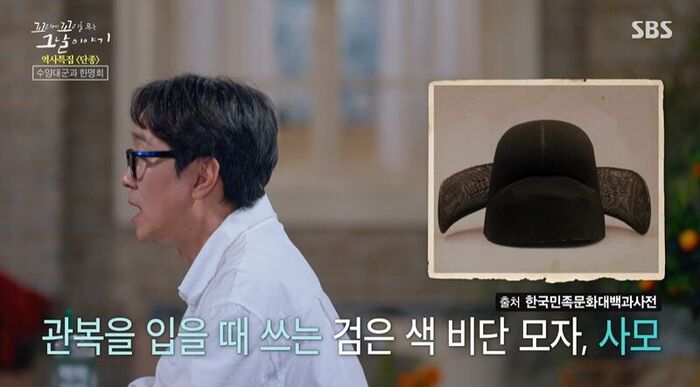
A samo refers to the black silk hat worn with official robes. He was asking to borrow the decorative horn attached to its back. Hearing this, Kim Jong-seo lowered his guard and immediately handed over his hat's horn. Grand Prince Suyang continued:
"I also have a letter requesting another favor."
Then an attendant who accompanied him handed a letter to Kim Jong-seo. But it was night, and too dark to see clearly. Just as Kim Jong-seo raised the letter toward the moonlight to read it, Grand Prince Suyang signaled to the attendant with his eyes. The attendant pulled out an iron mace from his vest and struck Kim Jong-seo's head mercilessly. As Kim Jong-seo's son threw himself over his fallen father in shock, a warrior following Suyang drew his sword and slashed him. Thus, on the night of October 10 in the year of Gyeyu (1453), Grand Prince Suyang's coup d'état finally began.
▲ Gyeyu Jeongnan (The Coup of 1453)
Meanwhile, King Danjong was sleeping at Princess Gyeonghye's house that night. He never dreamed his uncle would visit in the late hours. Grand Prince Suyang spoke:
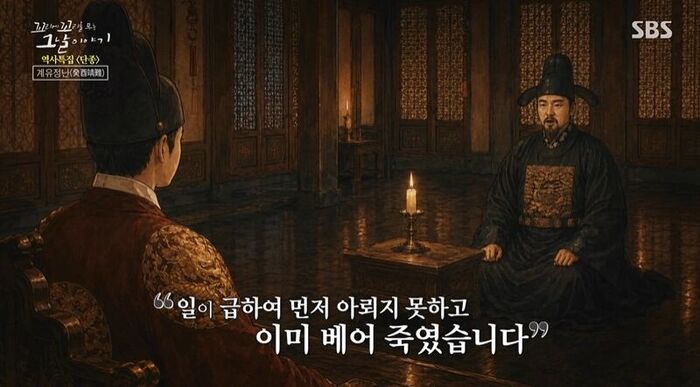
"Kim Jong-seo plotted treason, and as the situation was urgent, I could not report it first and have already struck him down."
How terrified King Danjong must have been. Having lost his parents and grandfather, Kim Jong-seo was someone he truly relied on. In the Annals of King Danjong, it is recorded:
"King Danjong ordered eunuchs to bestow wine and food from the palace to treat Grand Prince Suyang and various ministers."
It implies he praised his uncle's achievement. However, in Donggak Japgi, written by civil official Lee Jeong-hyeong at a later time, it is recorded quite differently:
"Because the king was young, he woke up in terror and said, 'Uncle, save my life.' Suyang replied, 'That is not difficult; I, your subject, will handle it.' He then issued royal tokens to summon all ministers, deployed palace guards to secure various posts, created a triple gate, and had Han Myeong-hoe sit inside holding a list of targets to kill or spare. As ministers entered the first gate, their accompanying servants were separated; when they entered the second gate, those whose names were on the death list were struck down with iron maces by warriors. A great many people died, including Hwangbo In and Minister of Personnel Jo Geuk-gwan."
- Donggak Japgi -
This indicates that King Danjong complied with Suyang's intimidation while trembling in fear. Why do official historical records like the Annals of King Danjong differ from later private records? The Annals of the Joseon Dynasty were not written during a king's reign. They were compiled by subjects during the next king's reign after the monarch passed away. The Annals of King Danjong were compiled by King Sejo's ministers, so much of it was beautified from King Sejo's perspective. One must carefully discern which version is the truth. The subsequent events are recorded similarly in both accounts.
That night, ministers rushed to the palace upon receiving royal orders. However, waiting for them was Han Myeong-hoe. Han Myeong-hoe consulted the death list to decide who to spare and who to kill. In this way, figures who opposed Grand Prince Suyang were slaughtered. As Suyang's bloody purge swept through, Kim Jong-seo, who was thought dead, regained consciousness. Though severely injured in the head, he had survived.
"At that time, Grand Prince Suyang assumed Kim Jong-seo was dead and went straight to his own home to command forces again. Astonishingly, Kim Jong-seo did not die then; he suffered injuries."
- Shin Byung-ju, Professor of History at Konkuk University
"Kim Jong-seo awakened and dispatched Won-gu to hurry to the guard at Donuimun Gate to report: 'I was attacked by someone tonight and am near death. Quickly report to the State Council so a physician can bring medicine to save me. Also, inform Grand Prince Anpyeong quickly and report to His Majesty to dispatch the Royal Guards. I intend to capture the person who injured me.'"
- Annals of King Danjong, October 10 of Year 1 of Danjong's Reign
Thus, Kim Jong-seo attempted to rush to the palace in a palanquin disguised in women's clothing, hoping to inform the court and set matters right.
"He likely thought, 'If I enter the court and fully explain, I can resolve this.' Or as a proper subject, he believed that even in such an unfair situation, he should go to court and appeal his grievance so the King could resolve it. He was a very upright, rigid scholar."
- Shim Yong-hwan, Director and Historian
However, because the city gates were tightly closed, he could not fulfill his intent. Forced into hiding, Kim Jong-seo was ultimately discovered by Suyang's warriors and killed. Thus, in just one night, the power map of Joseon completely changed.
The sun rose as usual the next day, but it was a different world. Grand Prince Suyang's era had opened. This event that occurred on the night of October 10, 1453, is called Gyeyu Jeongnan (The Coup of 1453). 'Jeongnan' literally means 'subduing a disorder.' In reality, however, it was a coup d'état wielded by Grand Prince Suyang to seize power.
"'Jeongnan' literally means 'setting right chaos,' as its Chinese characters imply. It carries the meaning of 'establishing the country upright through my decisive action for national interest to eliminate Kim Jong-seo's faction.' It is literally a record of the winner, which makes it somewhat unpleasant."
- Shim Yong-hwan, Director and Historian
The day after Gyeyu Jeongnan, King Danjong issued a royal decree:
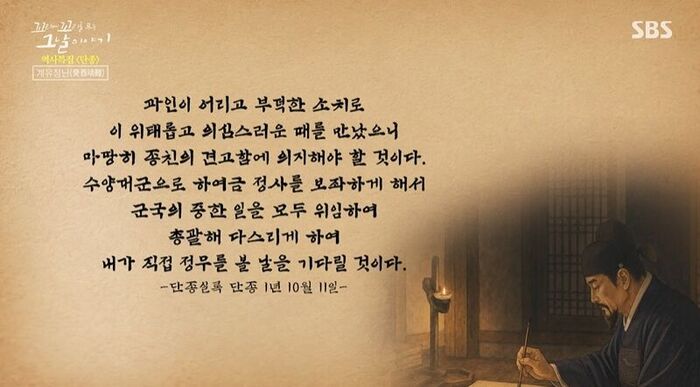
"Because I am young and lacking in virtue, I have encountered this perilous and suspicious time, and must rely on the strength of the royal relatives. I shall have Grand Prince Suyang assist in governance, entrusting and overseeing all major military and state affairs, and await the day I can personally handle government affairs."
- Annals of King Danjong, October 11 of Year 1 of Danjong's Reign
This meant entrusting all executive authority to his uncle. Was this truly King Danjong's sincere wish? How terrified he must have been. Grand Prince Suyang appointed himself to high positions. The title was exceptionally long: Chief State Councillor, Director of Royal Lectures, Director of the Bureau of Astronomy, and concurrent Minister of Personnel and Military Affairs. He held the posts of Chief State Councillor, Minister of Personnel, and Minister of Military Affairs all at once. In modern terms, it would be equivalent to simultaneously serving as Prime Minister, Minister of the Interior and Safety, and Minister of National Defense—monopolizing power entirely. He then appointed those who helped him as meritorious subjects, conferring prominent official posts upon them. The court was now completely dominated by Suyang's faction. Hearing this story might bring a certain event to mind.
"You may recall after the December 12 Military Coup in our recent modern history. Chun Doo-hwan concurrently held key posts including Chairman of the Standing Committee of the Special Committee for National Defense Measures, Acting Director of the Central Intelligence Agency, and Chairman of the Social Purification Committee. It is remarkably similar to that scene."
- Shin Byung-ju, Professor of History at Konkuk University
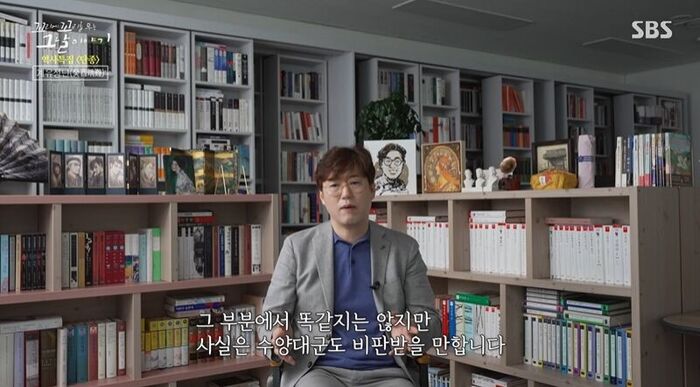
"Chun Doo-hwan and Roh Tae-woo ultimately delayed Korea's democratization, leaving severe corruption and military culture evils in society, while causing immense harm through human rights violations and bloodshed like the May 18 Democratic Uprising. While not identical in every aspect, Grand Prince Suyang deserves similar criticism."
- Shim Yong-hwan, Director and Historian
The process of seizing power in a single night using armed force, and the coup instigators capturing key positions to control state power, closely resembles the December 12 Military Coup of 1979. Looking at it this way, one cannot help but feel that history repeats itself.
Even after securing power, Suyang's bloody rampage continued. He killed all remaining members of Kim Jong-seo's faction and exiled his own brother, Grand Prince Anpyeong, along with Anpyeong's son, to Ganghwado Island. Shortly after, he forced Anpyeong to drink poison, killing his own kin.
King Danjong could do nothing as he watched his supporters being cut down one by one. Though a king, he was utterly isolated, unable to act as he wished—a terrifying predicament where he didn't know when his uncle might kill him.
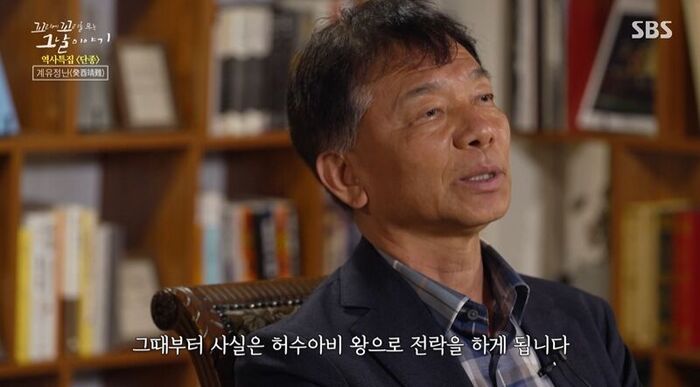
"When people say he was swayed by someone like Kim Jong-seo, he wasn't a figurehead king back then. It was after Grand Prince Suyang concentrated all power following Gyeyu Jeongnan that Danjong was truly reduced to a figurehead king."
- Shin Byung-ju, Professor of History at Konkuk University
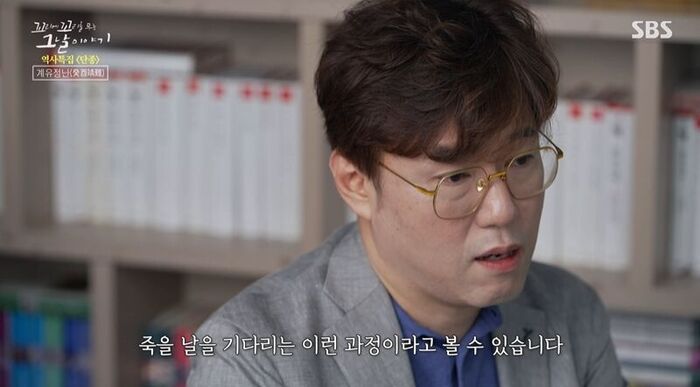
"Policy decisions could only be made by Grand Prince Suyang, and those submitting policy proposals to Suyang were all his close confidants. From this point on, King Danjong was virtually no different from a living corpse—a process of waiting for the day of his death."
- Shim Yong-hwan, Director and Historian
▲ Stepping Down from the Throne
Now, the practical ruler of Joseon was Grand Prince Suyang. Finally, the following year, on the 11th day of the leap 6th month in the 3rd year of King Danjong's reign, King Danjong told his subjects:
"I now wish to hand over the great responsibility to my uncle."
He announced that he would voluntarily step down from the throne. He was fifteen years old at the time, just three years after ascending the throne.
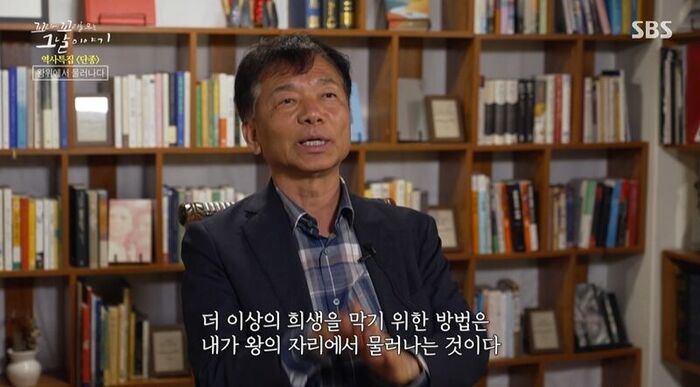
"Voluntarily stepping down from the throne is what we call abdication (seonwi). Right before that, led by Grand Prince Suyang, figures like Grand Prince Geumseong, Prince Hannam, Prince Yeongpung, Royal Consort Hyebin Yang, and Danjong's brother-in-law Jeong Jong were subjected to fierce demands claiming, 'They are plotting treason' and 'These people must be punished.' Pushed by this pressure, King Danjong officially orders their exile. At the same time, he realized that as long as he remained king, he could not guarantee their lives. He concluded that unless he abdicated, the sacrifice of those around him was inevitable. The only way to prevent further sacrifice was for him to step down from the throne."
- Shin Byung-ju, Professor of History at Konkuk University
Grand Prince Geumseong was an uncle who had cared for Danjong since childhood. Royal Consort Hyebin Yang was like a mother who had raised Danjong since he was a baby. Nominally still the king, Danjong had no choice but to issue orders for their exile with his own hands. He knew that as long as he stayed on the throne, his uncle would remain wary and would surely kill those around him. For their sake as well, he had no choice but to step down from the throne.
Regarding the moment King Danjong handed over the royal seal, the Annals record: "Grand Prince Suyang bowed low, shed tears, and declined, but accepted as he could refuse no longer." Is this really the truth?
Thus, Danjong became King Emeritus and retired to Changdeokgung Palace, while Suyang finally took the throne. He became King Sejo, the seventh monarch of Joseon. Even after ascending the throne, he relentlessly purged those who supported Danjong. Royal Concubine Hyebin of the Yang clan, who was like a mother to Danjong, and Mok Hyo-ji, who tried to protect Danjong through geomancy, were both killed during this time.
▲ Movement to Restore the Retired King
Meanwhile, there were those who swallowed tears of indignation while watching this unfold: civil officials from Jiphyeonjeon (Hall of Worthies) nurtured by King Sejong, including Seong Sam-mun, Bak Paeng-nyeon, and Ha Wi-ji. They had remained silent when Kim Jong-seo's faction was purged.
"Seeing how things were turning out, figures like Seong Sam-mun and Bak Paeng-nyeon belatedly realized, 'Ah, this isn't right. In the end, they are driving out the king. Grand Prince Suyang is trying to oust King Danjong,' and reacted late. It was far too late."
- Shim Yong-hwan, Director and Historian
To the scholar-officials, the sight of King Sejo ousting his own nephew and killing his own brothers to become king was utterly unacceptable. To them, Sejo was a traitor who had betrayed the former king's last injunctions. They believed the true king they served was Danjong. Together with like-minded civil officials, they began secretly devising a plan. Their goal was to restore Danjong to the throne—to reinstate the King Emeritus. Their plan was as follows.
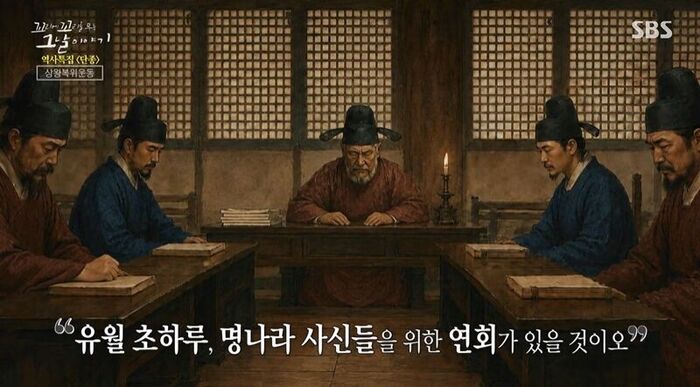
"On the first day of the sixth lunar month, there will be a banquet for envoys from the Ming Dynasty. That is when we must strike King Sejo."
The banquet for the Ming envoys proceeded according to prescribed protocol. No one was allowed to carry weapons inside the banquet hall. However, military escort officers known as Byeolungeom were allowed to carry weapons to guard the king.
"As it happened, Seong Seung—father of Seong Sam-mun—and Yu Eung-bu, a military officer, were appointed as Byeolungeom, acting as special bodyguards for the event. Viewing this as a heaven-sent opportunity, they decided to assassinate King Sejo and his crown prince, Crown Prince Uigyeong, at that moment."
- Professor Shin Byung-ju, Department of History, Konkuk University
However, as the day of the plot drew near, strange occurrences began to happen. In the Joseon Dynasty, the state always observed changes in the sky. A glowing star with a long tail moving across the night sky was spotted—what we call a comet. During the Joseon Era, comets were viewed as omens of natural disasters or uprisings. Remarkably, in the fifth lunar month alone, comets were recorded to have appeared 11 times. It was even recorded that comets were visible in broad daylight.
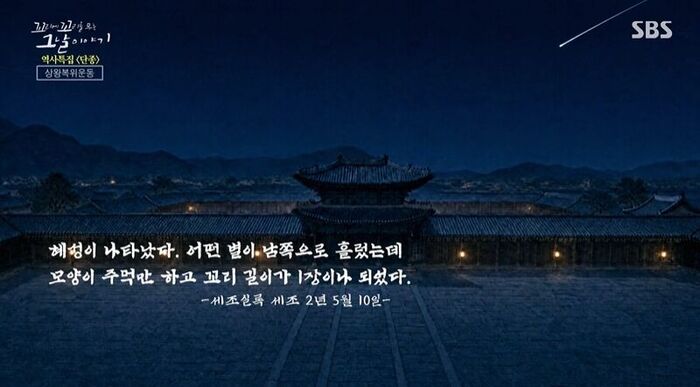
"A comet appeared. A star drifted southward, about the size of a fist, with a tail one jang long."
- Annals of King Sejo, May 10, 2nd Year of King Sejo -
Furthermore, rumors spread that in Sahongbang, the palace kitchen responsible for food preparation, a rice steamer began wailing on its own. A steamer for rice cakes. Was this a good omen, or an ominous sign?
Meanwhile, the first day of the sixth lunar month, the day of the plot, arrived. The fate of Joseon was about to be decided. But then, something completely unexpected occurred.
"The royal hall is too cramped to receive the envoys, so exclude the Byeolungeom."
King Sejo suddenly commanded that the Byeolungeom be excluded. If so, the plot couldn't even begin. Hearing the order, Seong Sam-mun immediately appealed:
"The ritual for receiving envoys must follow prescribed protocol, so the Byeolungeom should not be removed."
However, King Sejo did not rescind his order. As it turned out, cancelling the Byeolungeom was also a scheme by Han Myeong-hoe. After inspecting the banquet venue beforehand, whether driven by intuition or suspicion, he had immediately reported to King Sejo:
"The banquet location is cramped and sweltering, so please do not allow the Byeolungeom to enter."
He requested King Sejo to cancel the Byeolungeom guard. In the end, the plot collapsed before it could even be executed. Yu Eung-bu, who had been chosen as a Byeolungeom, argued that they should proceed with the uprising anyway. But other civil officials, including Seong Sam-mun, urged caution, saying, "Now does not seem to be the right time, so let us wait for another day." And this decision brought about the absolute worst possible outcome.
The day after the banquet ended was said to be dark even though it was daytime. Two figures entered the palace to meet King Sejo. They were Kim Jil, a civil official at Seonggyungwan, and his father-in-law. Having accepted Seong Sam-mun's proposal to join the plot to restore the Retired King, Kim Jil grew terrified when the uprising was delayed and decided to inform on them to King Sejo.
All those who conspired to restore the Retired King were dragged to the Uigeumbu (State Tribunal). King Sejo conducted the interrogation himself and spoke to Seong Sam-mun first:
"I have known you the longest, and I have treated you generously. I am interrogating you personally, so do not hide anything and speak the truth."
Then, agonizing torture was inflicted, searing his body with red-hot branding irons and flogging him until his bones were crushed.
"During the direct interrogation by the king, Seong Sam-mun endured without uttering a single groan. Believing, 'I lost this fight, but when it comes to who is right, I am right,' he endured immense pain and held out."
- Shim Yong-hwan, Director and Historian
"In that process, Seong Sam-mun and Bak Paeng-nyeon resisted to the very end. A prime example is that they never referred to Sejo, who was the king at the time, as king. They called him 'Nauri' (My Lord). Naturally, this made Sejo even more furious. When Sejo questioned them, saying, 'Did you not receive the stipend I granted you?' it turned out upon searching their homes that the official salaries they received as wages were untouched, completely intact."
- Professor Shin Byung-ju, Department of History, Konkuk University
It meant they never recognized Sejo as their king. Sejo also said to Bak Paeng-nyeon:
"Did you not address yourself as my subject every time you submitted an official report to me?"
Bak Paeng-nyeon replied:
"My Lord, please inspect the reports I submitted."
King Sejo re-examined the official reports Bak Paeng-nyeon had submitted while serving as provincial governor, and trembled with rage.
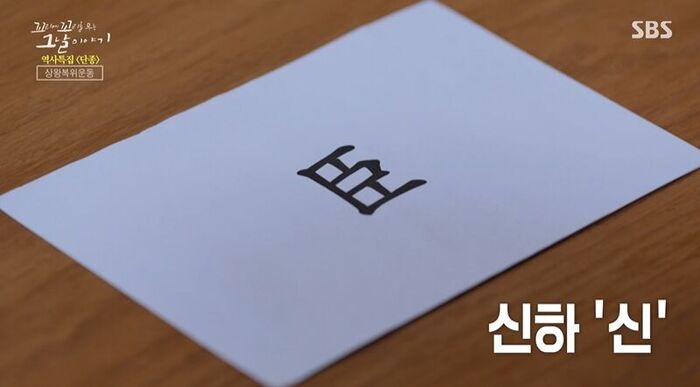
This character is 'Sin' (臣), meaning 'subject'. It was clearly written in the reports. But looking closely, the character was odd. A stroke was missing from the character 'Sin' (臣), making it the character 'Geo' (巨), meaning 'great' or 'big'.
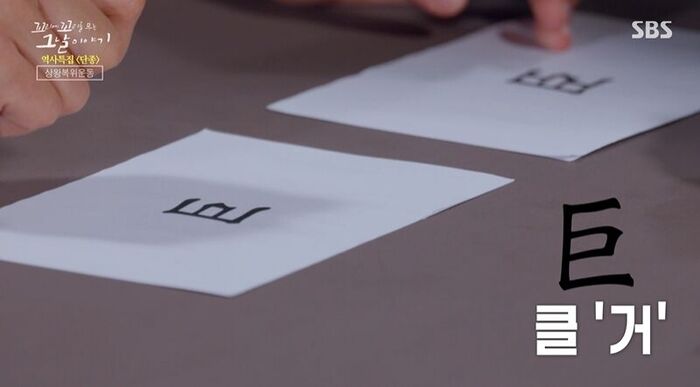
It meant, 'I am not your subject. I am the subject of King Danjong.' Bak Paeng-nyeon had never once referred to himself as Sejo's subject. King Sejo immediately issued an order:
"Execute the treacherous traitors by dismemberment."
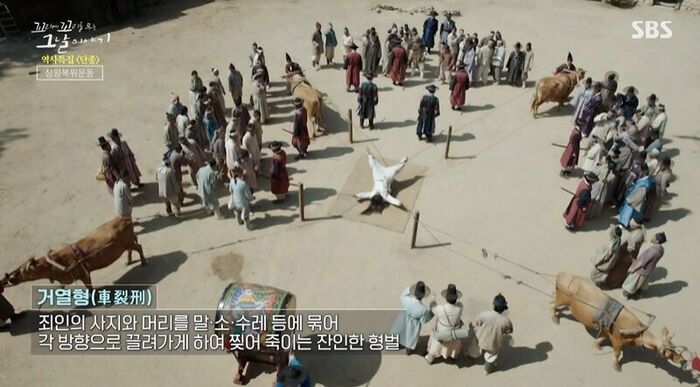
Dismemberment (geoyeolhyeong) was a brutal punishment where ropes were tied to the neck, arms, and legs, and oxen or horses pulled them to tear the limbs apart. King Sejo ordered their severed heads to be displayed in public and their remaining body parts to be scattered across the eight provinces. You can imagine how enraged King Sejo was.
On the way to the execution ground, Seong Sam-mun recited a poem. Its title was "Jeolmyeongsi" (Death Poem).
"The beat of the drum hurries my life away, turning around, the sun is about to set. There are no inns in the underworld, so in whose house shall I stay tonight?"
They did not waver in their loyalty to King Danjong until the moment of death. Later, they came to be known as the 'Sayuksin' (Six Martyred Ministers).
King Sejo referred to this incident as 'Seongbyeon' (Comet Disturbance), meaning a comet appeared and brought turmoil. Thus, the plot to restore the Retired King ended in failure. King Sejo thought, 'As long as my nephew remains inside the palace, rebels will never cease to plot.' Ultimately, he ordered Danjong to be exiled on charges that he was behind the treason.
"He had to deal with the aftermath. This could serve as a pretext for a coup. Leaving Danjong behind as a potential pretext meant no one knew what might happen in the future."
- Shim Yong-hwan, Director and Historian
Danjong was stripped even of his status as Retired King. Sejo demoted him to Prince Nosan and exiled him to Yeongwol, Gangwon Province. Danjong was no longer a king.
▲ Nosan
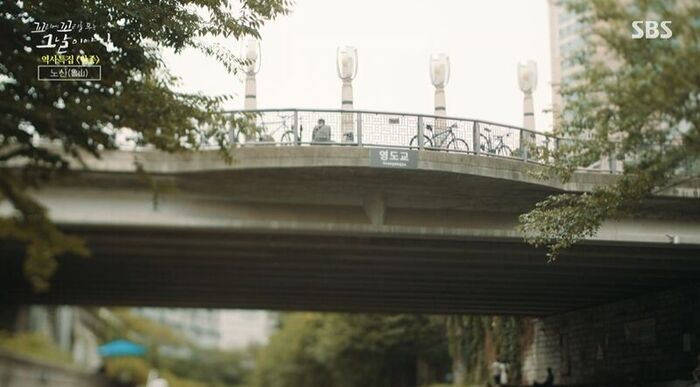
In the sixth lunar month of the third year of Taejo, Prince Nosan set off on the road to exile in a palanquin. He was 17 years old. He was expelled from the palace where he had lived since birth. After leaving the eastern gate of Hanyang and before crossing the stone bridge over Cheonggyecheon, the exile procession stopped. Here, Prince Nosan faced a heartbreaking farewell with one person: his wife, Queen Jeongsun of the Song clan. The two had married after he ascended the throne, but now, after just three years, they were forced into a lifelong separation.
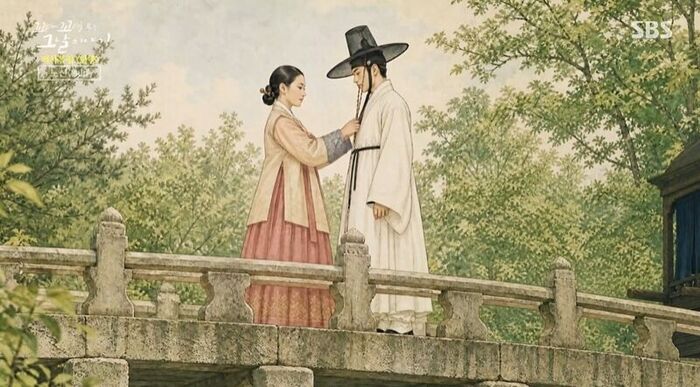
The time granted to them was brief. Lady Song adjusted Prince Nosan's clothes and gazed at his departing figure to engrave it in her heart. The two never met again for the rest of their lives. The stone bridge where they let go of each other's hands remains in place today under the name Yeongdogyo Bridge, meaning crossing a path from which one can never return.
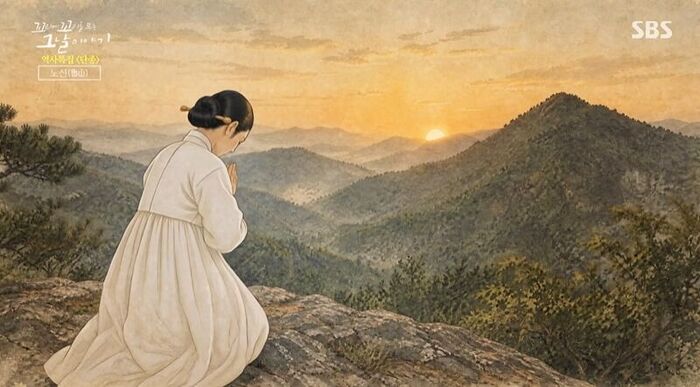
Lady Song came to live at Jeongeobwon, a Buddhist nunnery. Every morning at dawn, she climbed the mountain to look toward the east and pray for her husband. People called that peak 'Dongmangbong,' meaning the peak that looks toward the east.
Prince Nosan took a boat from Gwangnaru and disembarked at Iponaru in Yeoju. From there, passing Wonju to Yeongwol, he traveled 700 li across mountains and rivers. With every step he took, he must have thought, 'I will never be able to return along this road again.' Every moment on the journey into exile must have been agonizing.
Seven days later, Prince Nosan arrived in Yeongwol. The place of exile where he would reside was Cheongnyeongpo, as featured in the film 'The King's Warden.'
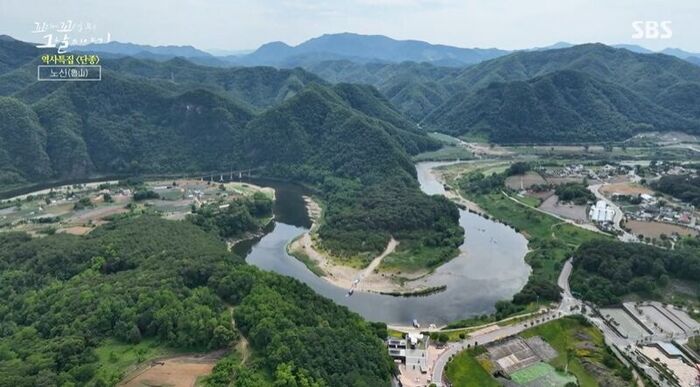
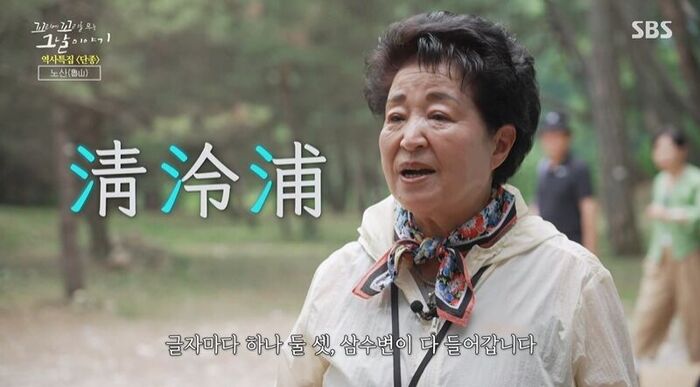
"Is this the place where King Danjong was exiled? That's right. This is where King Danjong lived for two months after being exiled. You need to look at the Chinese characters for Cheongnyeongpo. It uses 'Cheong' for blue, 'Nyeong' for clear, and 'Po' for waterside. Every character contains the water radical. That's because the land is formed that way. Surrounded by rivers on three sides, with the six-peaked Yukyukbong behind it. It's like a natural prison that can only be reached by boat. Isn't it so easy to manage? Just checking if someone crosses the river is all it takes. Besides, King Danjong couldn't leave on his own from a place like this. So it was probably the most ideal location for King Danjong's exile."
- Lee Gap-sun, Cultural Commentator
A place where the river flows somewhere, but the person inside cannot flow out—a place impossible to escape. Prince Nosan must have felt it too: 'I will never leave this place before I die.'
"The sequence was set. They hold you accountable for a crime, send you into exile, and then dispose of you there. He was placed in a fate where death was inevitable."
- Shim Yong-hwan, Director and Historian
There is a poem said to have been written by Prince Nosan during his exile.
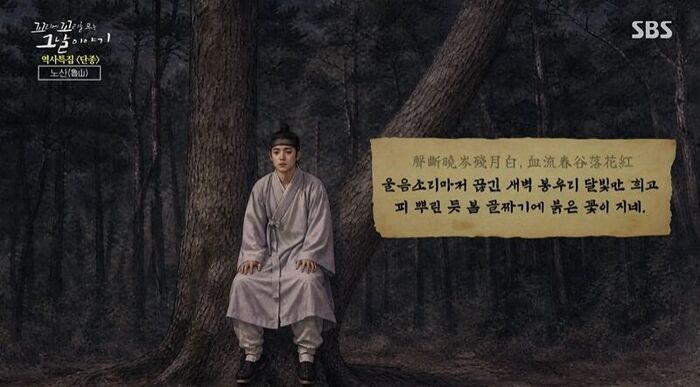
"A solitary, aggrieved bird left the palace hall, wandering as a lonely shadow among green mountains. Night after night I seek sleep, but sleep will not come; year after year I try to dispel my sorrow, but sorrow knows no end. On dawn peaks where even cries fall silent, only moonlight shines bright; red flowers scatter in spring valleys as if sprayed with blood. Heaven is deaf and cannot hear my sorrowful plea, why then is my grief-laden ear alone so sharp?"
The title of this poem is "Jagyesi" (Poem of the Cuckoo). Jagye refers to the cuckoo. Unable to sleep late at night, Prince Nosan must have shed bitter tears listening to the cuckoo's cry. But there was someone who heard Prince Nosan's bitter weeping.
"Danjong must have felt so wronged and distressed. So he usually lived gloomily, sometimes crying or shouting. But according to records, the Sayuksin appeared to him in a dream that day. How agonizing it must have been as they poured out their grievances and grief. Overwhelmed by deep regret, he came outside and wept aloud. Upon hearing news of this, Hojang Eom Heung-do came running."
- Shim Yong-hwan, Director and Historian
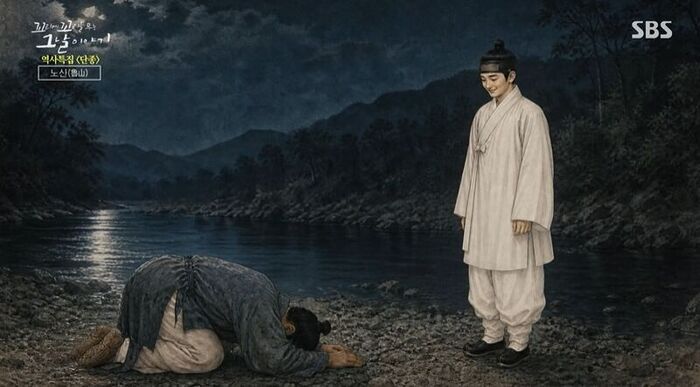
That was Eom Heung-do, the hojang of Yeongwol. A hojang was a local petty official working at the magistrate's office.
"In modern terms, he was a local clerk, akin to an administrative director. Naturally, since Danjong was in exile, he handled food supply and managed the residence where Danjong stayed. So he was someone who actually interacted with Danjong. Therefore, it is highly likely that he formed a close bond with Danjong."
- Professor Shin Byung-ju, Department of History, Konkuk University
"It has been a long time since I stayed here, yet no one came to comfort me. Today you have come to visit me, and your sincerity is truly commendable."
After their first meeting, Eom Heung-do reportedly swam across the river every night, evading surveillance, to meet Prince Nosan. This story has been passed down by word of mouth for a long time. In fact, no further records remain regarding Prince Nosan's life in exile. So the movie fills in the blanks left unrecorded in the Annals. Yet in the lonely life of exile, perhaps Eom Heung-do was the sole figure who could soothe his resentful heart?
▲ Do Not Leave My Son Alone
And there was someone who had not forgotten the young king. Sunheung, Gyeongsangbuk-do—present-day Yeongju. There was a figure holding secret conversations here: Grand Prince Geumseong. The sixth son of King Sejong, he was the younger brother of King Munjong and King Sejo. He was the uncle whom Danjong was most attached to when he was young. Before passing away, King Munjong reportedly summoned Grand Prince Geumseong and shared these words:
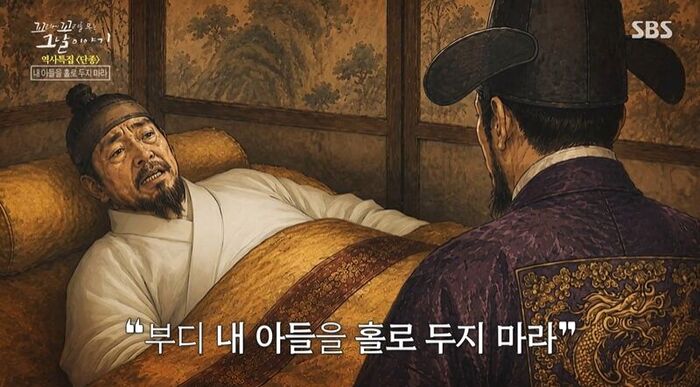
"Please, do not leave my son alone."
That was not a royal command, but an elder brother's plea. After the world became Suyang's, Grand Prince Geumseong decided to honor his brother's last wish. While other grand princes remained silent, he took the side of his young nephew. As a result, he was exiled to Sunheung by King Sejo. What was he trying to do now?
"If we gather soldiers and march up to Hanyang, we will surely achieve our goal."
Grand Prince Geumseong planned to restore Danjong by joining forces with Lee Bo-heum, the magistrate of Sunheung, and local scholars.
"From Grand Prince Suyang's perspective, Grand Prince Geumseong relentlessly launched movements to restore Danjong to the point where Suyang might wonder, 'Hey, what is wrong with him?' So after being exiled to various places and eventually sent to Sunheung, he joined forces with Lee Bo-heum, the magistrate of Sunheung, to raise warriors and attempt to march all the way to Seoul. But an informer emerged, and the plan was leaked in advance."
- Professor Shin Byung-ju, Department of History, Konkuk University
A manifesto written by Grand Prince Geumseong fell into the hands of the Andong governor's office. Someone had informed on him. This news was immediately delivered to King Seojo in Hanyang.
"'Yi Yu (Grand Prince Geumseong), while in Sunheung, secretly colluded with ruffians to plot treason,' and submitted a silk belt given by Yi Yu as evidence."
- Annals of King Seojo, June 27, 3rd year of Seojo's reign -
Ultimately, he was arrested and sentenced to drink poison. A royal investigator stood before Grand Prince Geumseong with the poisonous draft. "This was bestowed by the King, so bow toward where the King resides and receive this poison." He meant for him to bow toward Hanyang, where King Seojo was. Grand Prince Geumseong rose from his seat and quietly bowed. However, he did not bow toward Hanyang, but toward the north—toward King Danjong.
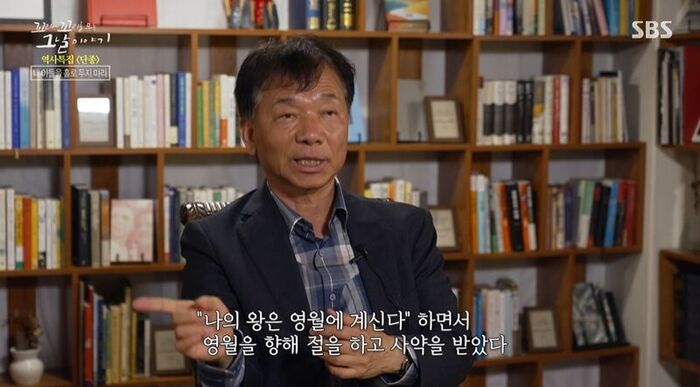
"'My king is in Yeongwol,' he said, bowing toward Yeongwol before taking the poison, according to folklore."
- Professor Shin Byung-ju, Department of History at Konkuk University
This story is not recorded in the official Annals. It is a tale passed down as folklore over a long time. "Please do not leave my son alone." Grand Prince Geumseong kept his older brother's request until the moment of his death.
Yet King Seojo's anger was not appeased by Grand Prince Geumseong's death alone. Everyone involved in the treason plot was executed. There is a stream in Sunheung called Jukgyecheon, and this stream was completely stained with blood. It is said that the red river water flowed for 10 li.
"That's why the village upstream of Jukgye is named Pikkeut (Blood's End) Village. The entire area was utterly devastated, to the extent that such legends remain."
- Professor Shin Byung-ju, Department of History at Konkuk University
▲ Record of the Winner
The news of Grand Prince Geumseong's death was delivered to Prince Nosan in Yeongwol. On October 21, in the 3rd year of King Seojo's reign, it was recorded in the Annals as follows:
"Prince Nosan, upon hearing this, hanged himself and passed away, so he was buried with proper courtesy."
- Annals of King Seojo, October 21, 3rd year of Seojo's reign -
'Jolhada' (passed away) is a term used when high officials or royalty die. It is recorded that upon hearing the news of Grand Prince Geumseong's death and even the death of his own father-in-law, Prince Nosan hanged himself.
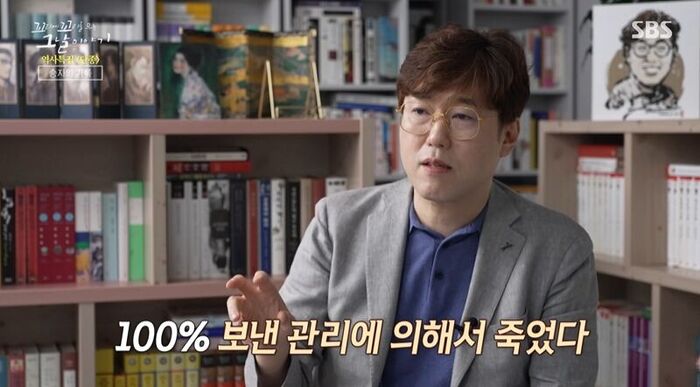
"The record of King Danjong's death is presented very simply in the Annals: 'He died by his own hand, so he was buried with courtesy.' That means, 'He took his own life, but we showed utmost courtesy in burying him.' It is truly deceptive. It was written briefly to evade the responsibility of the royal court and Grand Prince Suyang. In contrast, the folk tales remaining in the Gangwon-do area are 100% murder. Here, the deliverer of the accurate truth is folk legend rather than historical documents. Highly credible legends remaining in Gangwon-do unanimously say that he was killed by the official sent to him—meaning King Seojo killed Danjong, which is passed down precisely."
- Director Shim Yong-hwan, Historian
In Yeonryeosilgisul, written in a later generation, the death of Prince Nosan is described like this. A royal investigator named Wang Bang-yeon arrived carrying the poison sent by King Seojo. However, he hesitated, unable to bring himself to hand over the poison. At that moment, someone stepped forward to take his place.
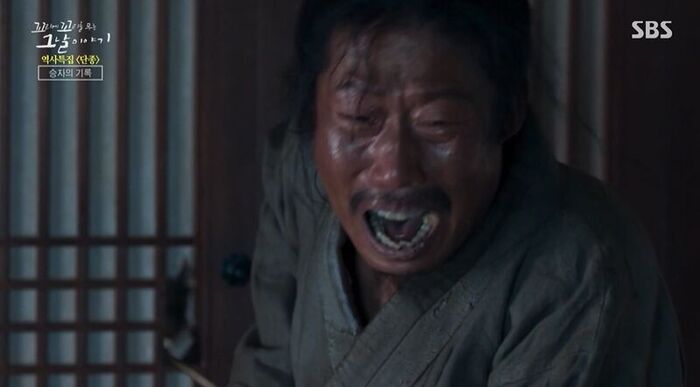
"A servant had been attending to Nosan, and he volunteered to do it himself, tying a long string to a bowstring and pulling the cord through the window behind where Nosan sat."
The Annals of King Seojo is the only document recording that King Danjong committed suicide; all other records document it as a homicide. Although details vary slightly, there is one common thread: 'King Seojo sent the poison.' A historical record titled Eumeui-ilgi states:
"It is said that Nosan committed suicide in Yeongwol upon hearing of Prince Geumseong's failure, but this was merely the treacherous and flattering penwork of fox- and rat-like scoundrels at the time."
As mentioned earlier, it was the officials of the next king's reign who compiled the Annals. Perhaps the officials serving Seojo at the time could not bring themselves to write that the King had killed his own nephew. In the end, the essence of history is a record written by the winners. The reason historians are needed is to synthesize these records of the victors with unofficial historical records to judge what is truly closer to the truth.
This is a story passed down through the mouths of the common people. The body of the boy who was once the King of Joseon was thrown into Donggang River. He was only 17 years old—far too young. Since it was October of the lunar calendar, it was midwinter. The royal body floated on the freezing river water, with his ten slender, delicate fingers remaining above the surface. However, retrieving his body meant risking death. Prince Nosan had died under charges of high treason. If one were implicated even slightly, it would mean treason for them as well.
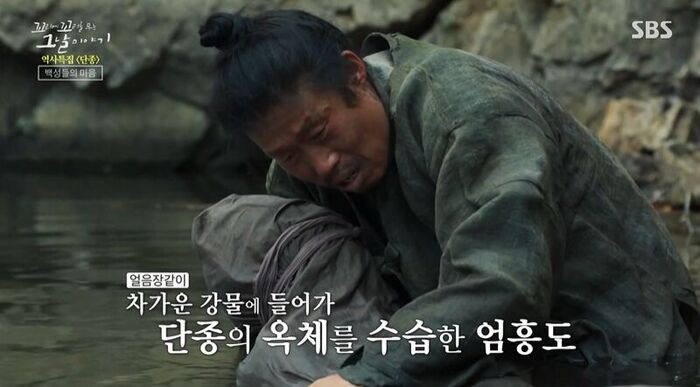
Yet there was something that even the fear of death could not stop—the devotion of the people toward the young king. Eom Heung-do, a local official (hojang) in Yeongwol, left his house at early dawn with his three sons. He could not leave King Danjong's body abandoned. Everyone around tried to stop him. But Eom Heung-do reportedly said, "Even if I die doing a righteous deed, I will gladly accept it."
Carrying the shroud and coffin he had prepared for his elderly mother, he headed to Donggang River. He waded into the ice-cold water and retrieved King Danjong's royal body.
Straightening the frozen body, placing it into the coffin, and carrying it on an A-frame carrier, he climbed the ancestral mountain. After choosing a good plot and conducting the funeral, Eom Heung-do reportedly scattered across the country with his three sons. Having incurred King Seojo's wrath, what he did was a fatal offense. Because staying together was dangerous, they fled.
In fact, Eom Heung-do's name was not recorded in the Annals of his time. His name first appeared 60 years later during the reign of King Jungjong.
"People said, 'Initially when Prince Nosan passed away, the whole town was in turmoil, but an official named Eom Heung-do went to mourn him, prepared a coffin, and buried him,' and the villagers still grieve deeply with sorrow to this day."
- Annals of King Jungjong, December 10, 11th year of Jungjong's reign -
As time passed again to the reign of King Seonjo, an official was dispatched by royal order to Yeongwol to hold a memorial service at Prince Nosan's tomb. Naturally, one would think that a long-abandoned tomb would be derelict, since it had been buried in secret. But upon arriving at Prince Nosan's tomb, he was astonished. The path leading to the tomb was neatly maintained, and the site was well cared for. As it turned out, the people of Yeongwol had continued to look after it. The citizens had never forgotten the young king who suffered a tragic life.
▲ King Danjong (端宗)
Did the prayers of these people reach the throne? Later, King Sukjong, the 19th monarch of Joseon, finally restored the young king's status. He granted him the temple name Danjong, officially restoring his royal title. King Sukjong explained the meaning behind the name as follows:
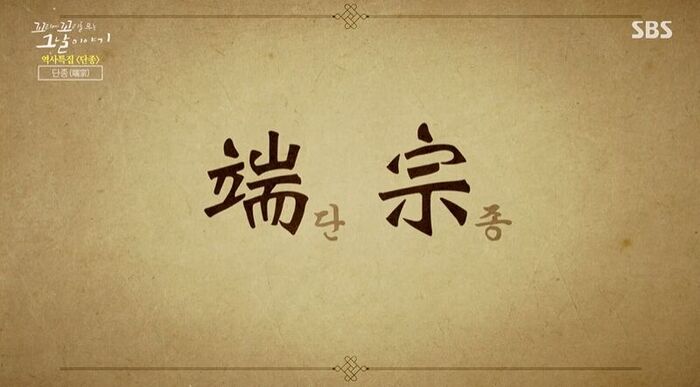
"Upholding propriety and grasping righteousness is called 'Dan (端).'"
The name Danjong, as we remember it today, was bestowed at this time. This happened 241 years after King Danjong passed away.
With King Danjong's reinstatement, history was rewritten. His wife, Lady Song, was posthumously elevated to Queen Jeongsun. The Sayuksin (Six Martyred Ministers), who maintained their loyalty to Danjong unto death, came to be praised as symbols of fidelity. And Eom Heung-do, who guarded Danjong's final moments, was awarded the position of Minister of Works in recognition of his loyalty to the king. Later, Emperor Gojong bestowed upon him the posthumous title of Chunguigong, honoring his achievements.
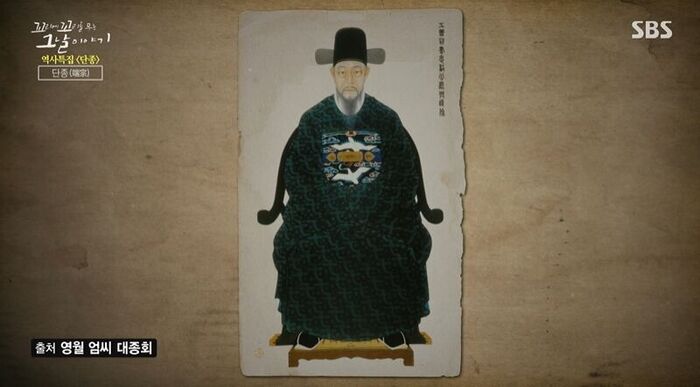
Tails of Tales met directly with a descendant of Eom Heung-do.
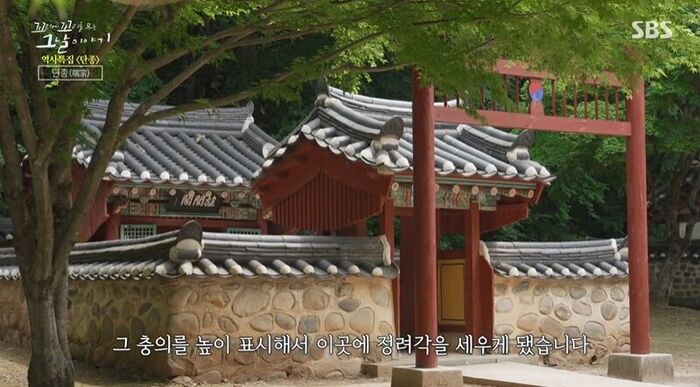
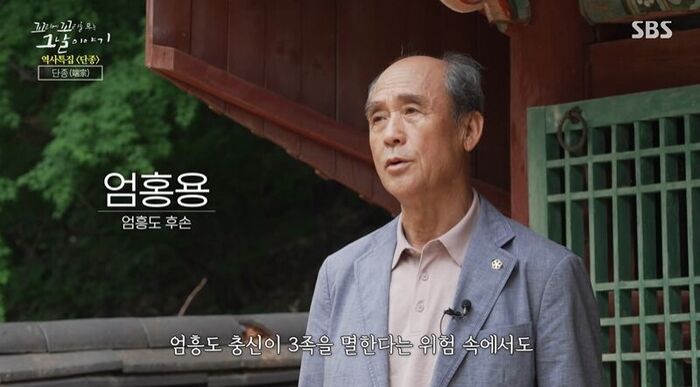
"This is the Jeongryeogak (commemorative pavilion) for the loyal subject Eom Heung-do, Chunguigong. Because Eom Heung-do secretly enshrined King Danjong in a wardrobe despite the danger of his three generations of family being executed, this pavilion was erected to highly honor his fidelity. Master Eom Heung-do brought King Danjong's royal robe to Donghaksa Temple in Gongju. There, he met Kim Si-seup, one of the Saengyuksin (Six Living Ministers), and together they performed a ritual calling upon the King's soul and observed three years of mourning. This story has been passed down within our Eom family."
- Eom Hong-yong, descendant of Eom Heung-do
King Danjong and the ministers who served him as king were once recorded as traitors who plotted treason. Although a long time passed, their honor was finally restored. It has now been 569 years since Danjong's passing. How is King Danjong remembered by people today?
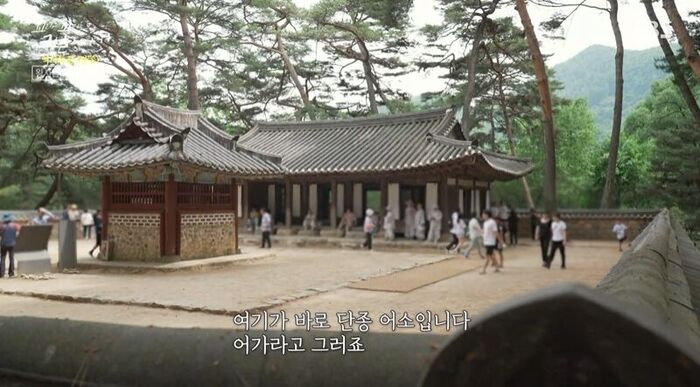
"This is King Danjong's royal residence in exile. It's called Eoga. Back then, it wasn't this big. It consisted of two rooms without even a fire lit in the underfloor heating stove—one room where King Danjong lived, and one room where a court lady lived. It was recorded as surprising that tile was even placed on the roof. Imagine how tiny of a thatched hut it must have been to be recorded like that."
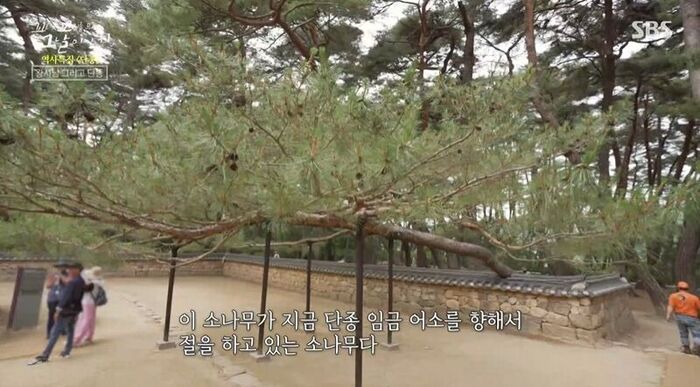
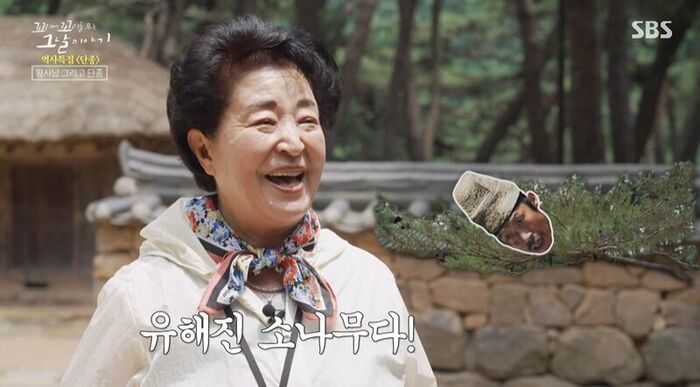
"This pine tree is bowing toward King Danjong's residence. Some call it the 'Loyalty Pine Tree.' But these days, when I say, 'This is the Eom Heung-do Pine Tree,' people always respond, 'It's the Yoo Hai-jin Pine Tree.' Now, so many people naturally say, 'It's the Yoo Hai-jin Pine Tree' because of 'The King's Warden.'"
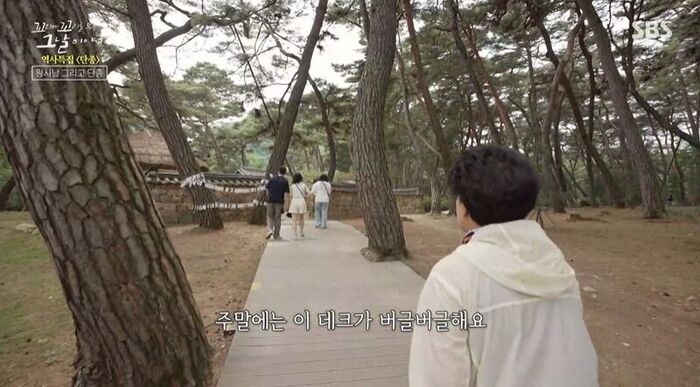
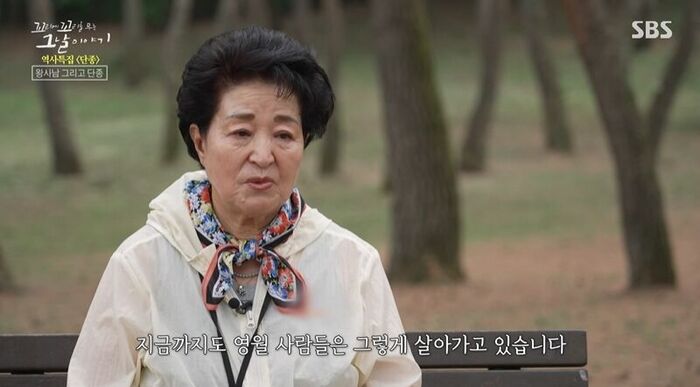
"On weekends, this wooden deck is packed with people. At least 6,000 visitors come a day. I couldn't be more grateful. People say, 'I watched The King's Warden. I feel like something terrible would happen if I didn't visit Yeongwol.' Oh, hearing that made me so thankful. One person said, 'I watched it six times.' Then the person next to them raised their hand and said, 'I watched it seven times.' I thought that was a lot. But someone in the corner raised their hand and said, 'I watched it eleven times.' To myself, I thought, 'I don't think it's something you need to watch that many times...' To us people in Yeongwol, King Danjong is not just any king. When times are tough and difficult, visiting his tomb to gain strength gives us hope that everything will turn out fine. And to this day, the people of Yeongwol live with that faith."
- Lee Gap-soon, Cultural Commentary Guide
People often call Danjong the 'tragic king.' Right after he was born, he lost his mother, and then lost his grandfather and grandmother who cherished and loved him. His father, whom he thought would protect him, also passed away early. Although he ascended the throne at the age of 12, he lost everything to his uncle and ended his short life in exile.
If one were to sum up his life in a single word, wouldn't it be loneliness? Although a long time has passed since King Danjong's death, many people still seek his traces, remember him, and feel deep sorrow for him. So, the hope is that he is no longer lonely.
Until recently, we learned that Danjong was merely a young and weak king, while King Seojo ascended the throne in his place and achieved many accomplishments. However, that assessment has completely changed now. The history we learned in the past was, after all, the record of the winners. Yet now we know that usurping the throne from a young nephew and driving him to his death was fundamentally wrong.
The reason we feel compassion for Danjong and anger toward Seojo—perhaps it signifies that we no longer want a history where the weak are unjustly sacrificed for someone else's ambitions. So that such tragedy is never repeated in history, we hope everyone remembers it.
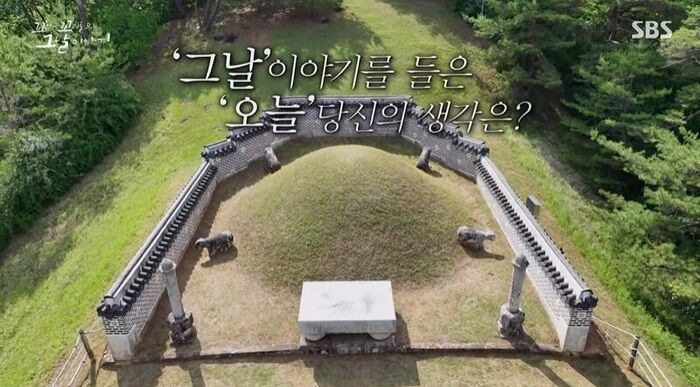
What are your thoughts 'today' after hearing the story of 'that day'?
(Kang Seon-ae, SBS Entertainment News)
※ Please note: This article was translated by AI and may contain errors.
Copyright Ⓒ SBS. All rights reserved. Unauthorized reproduction, redistribution, and use for AI training are prohibited.